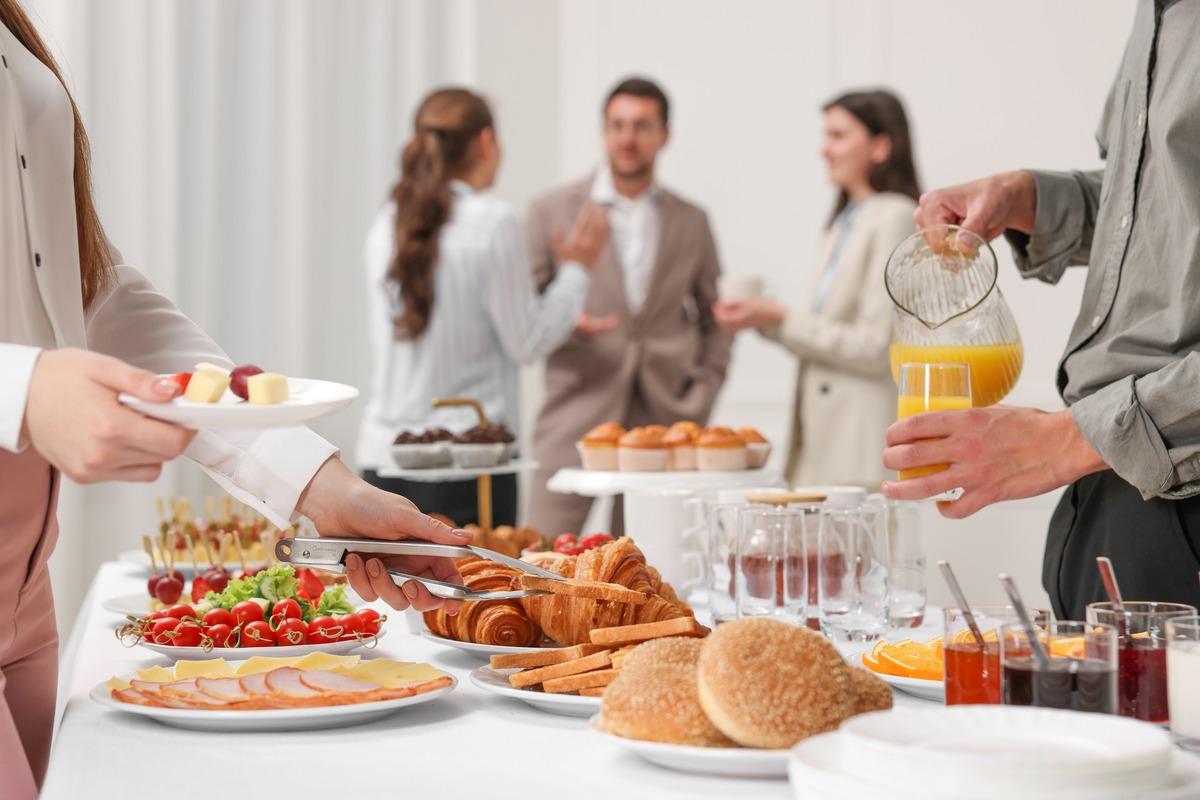
Chicago offices run on patterns. People arrive early, coffee in hand, settle in, and by noon they start asking: “Is it worth leaving the building for lunch today?”
In January, the answer is usually no. In July, maybe. Either way, the Chicago office lunch becomes a hinge point. Get it wrong, and half the office disappears. Get it right, and nobody’s rushing anywhere.
A solid option for Chicago lunch delivery changes the day completely. Meetings end on time because people are excited about eating together. Someone who usually keeps their head down grabs a plate and sticks around longer than expected. It’s subtle, but it adds up, especially in offices where attendance already feels fragile.
The hard part isn’t finding food people like. It’s finding delivery that actually works in your building. Plenty of restaurants crush it in a dining room and then fall apart once they’re dealing with badge access, elevators, and a dozen people waiting at once.
Fooda exists because of that gap. It works with Chicago restaurants to actively plan for office orders and builds delivery around real workplace logistics instead of pretending every meal is headed to a front porch. That’s why it makes meals in the workplace feel better for everyone.
Most Chicago offices don’t choose a lunch delivery system. They inherit one. Someone ordered from a certain online platform once, it kind of worked, and now that’s just how lunch happens. Until it doesn’t.
The first option most teams bump into is app-based delivery. It’s convenient at a small scale, but once more than a handful of people are involved, things get strange. Orders trickle in at different times, drivers hover in the lobby, and someone ends up sending messages like “has anyone seen the salad?”
Catering feels like the grown-up alternative. One delivery, big trays, a clear time. That part works. What doesn’t is the sameness. After a few weeks, people already know what’s in the boxes before the lids come off. There’s always extra food, and somehow also not enough of the thing people actually want.
Some offices try to solve this with cafeterias or snack-heavy setups. Those help on busy days, but they don’t always replace a real Chicago office lunch.
Fooda is different because we give offices a chance to build the meal system that works for them. Our Chicago lunch delivery services come from restaurants who know they’re cooking for an office.
Meals arrive together. Someone handles the timing, the setup, the awkward building logistics. Nothing’s improvised. Plus, you can combine delivery options with other systems, Popup Restaurants, workplace pantries, or corporate event catering.
Chicago has an almost unfair amount of good food. That’s not the problem. The problem is that a lot of restaurants that are fantastic for everyday customers at 7 p.m. don’t always hit the mark in an office building at noon.
What works for a Chicago office lunch is a very specific mix of things: food that holds its shape, flavors that don’t fade after twenty minutes in a bag, and kitchens that understand they’re feeding a group, not a couple of walk-in customers. These restaurants check those boxes consistently.
They’re part of Fooda’s partner network, which means they don’t treat office orders as an afterthought. They plan for them. Prep is intentional, quantities are right and delivery windows are respected. If you want lunch options that don’t feel like a gamble, there’s plenty here worth relying on.
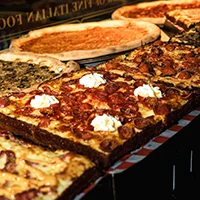
Details: Pizza and subs made for group orders, with a setup that’s clearly designed around office volume.
Best for: Large teams, all-hands lunches, and days when the priority is feeding everyone without friction.
Dough Bros earns its spot in any Chicago office lunch rotation because it removes decision fatigue. Everyone already knows what they’re getting, and they’re usually happy about it.
The menu keeps things broad without getting complicated. Classic pies, solid veggie and vegan options, plus subs for anyone who wants a break from pizza. No one feels like the order forgot about them. Where Dough Bros really shines is scale. Ordering for ten people or fifty feels the same. Full pies, slices, a mix of both, it all shows up ready to go.
When this food hits the table, lunch settles itself. No questions. No hovering. No one asking what’s inside which box. People grab a slice, maybe circle back for another, and sit down. In Loop and River North offices where lunch breaks get squeezed from both sides, that kind of smoothness matters. The food doesn’t demand attention. It just feeds the room and lets everyone move on.
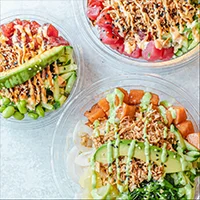
Details: Build-your-own poke bowls with fresh fish, rice bases, and a setup designed around weekday office demand.
Best for: Mixed-diet teams, offices trying to keep energy up, and lunches where people want to feel good afterward.
Aloha Poke feels built for downtown Chicago in ways that are easy to miss until you’ve ordered it a few times. Weekday hours line up with office demand. Assembly is quick. Choice is baked in. You pick your bowl size, base, marinade, and extras, which means everyone ends up with exactly what they wanted. That level of control cuts complaints off before they start.
No one’s trading meals or picking around ingredients they didn’t ask for. What makes Aloha Poke work so well for a Chicago office lunch isn’t just that it’s lighter. It’s that it actually satisfies. People finish the bowl, feel full, and don’t immediately start scanning the room for coffee.
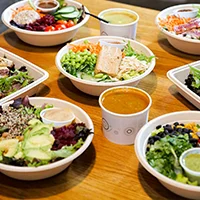
Details: Custom salads and bowls with a wide protein roster, assembled quickly and packed individually for office pickup.
Best for: Teams that want lunch to feel fresh without slowing the day down.
Otherwise known as “The Salad Joint”, Mixed Greens works in Chicago offices because it removes friction almost completely. The bowls arrive sealed, labeled, and uniform, which sounds boring until you remember how chaotic lunch tables get when people start opening lids and asking questions.
Here, nobody needs help. People spot their name, grab their bowl, and move on. That efficiency matters in Loop buildings where lunch overlaps with meetings and calendar reminders don’t stop just because food showed up.
What’s easy to overlook is how much choice there actually is. This isn’t lettuce-forward punishment food. The protein list alone: grilled chicken, steak, salmon, ahi tuna, tofu, covers most diets without forcing the organizer to split orders across restaurants. Add grains that still have texture and vegetables dripping with flavor and you can see why people love this place.
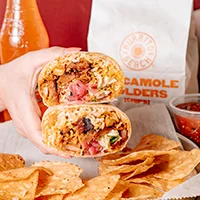
Details: Burritos, bowls, tacos, and sides made from scratch-prepped ingredients and portions that assume people didn’t eat breakfast.
Best for: Days when the office walks in already starving.
Burrito Beach feels like it was designed for downtown lunch traffic. The food arrives hot enough that steam actually escapes when trays open. Rice stays fluffy, and the proteins are packed with flavor. That consistency suggests a kitchen that’s used to volume and timing, not one scrambling between individual orders.
There’s also a confidence to the menu that works well in offices. The chef-crafted creations are perfect for anyone who wants to make a quick choice. Plus, you’re free to build your own bowls and meals too. The guac disappears fast. So do the chips. That’s usually the first sign you picked well.
For a Chicago office lunch, Burrito Beach hits a very specific need: filling without feeling careless. People eat, actually feel full, and don’t complain about heaviness afterward.
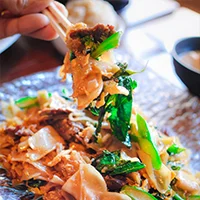
Details: Thai staples and fusion cuisine from a South Loop kitchen that openly offers catering for larger groups.
Best for: Cold days, long afternoons, and offices that want lunch to feel wholesome.
Amarit is the kind of place offices return week after week. Largely because there’s always something different to try. You’ve got traditional Thai cuisine, mixed with sushi and brand new creations. The chefs are always experimenting too, with new ideas like Moo Ping, or chive dumplings.
There’s a very specific tone to the menu that works well in offices. The flavors are clear and familiar. Heat levels don’t surprise anyone. That restraint matters when you’re feeding people who still have emails to answer afterward. On cold winter days, the soup options genuinely feel like self care.
For a Chicago office lunch, Amarit feels grounding. People sit down, eat the whole thing, and don’t rush back to their desks like they’re escaping something.

Details: Steamed bao, dumplings, and rice bowls from a Chicago-born concept built around fast service and compact food.
Best for: Tight lunch windows, smaller kitchens, and days when movement matters more than setup.
Wow Bao behaves the way office food should behave. It’s predictable in the best way. People already know what to expect from the popular options here, like the Teriyaki chicken and chicken soup dumplings, that makes ordering quick and easy.
The real strength here is temperature and timing. Steamed food forgives small delays better than most lunches, and Wow Bao leans into that. Bao stay warm longer than you expect. Rice bowls don’t dry out, and you even get reheating instructions if you need them.
Plus, there are no nasty surprises, since Bao highlights all of the allergen information you might need right there on their menu.
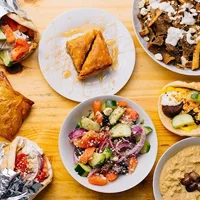
Details: Gyros, plates, and bowls built around spit-roasted meats, rice, potatoes, and sauces that travel separately.
Best for: Offices where people want a real meal and don’t want to feel hungry again at 3 p.m.
Lil’ Greek Kitchen builds trust by feeding people the way they expect to be fed. The gyro meat comes sliced thick and stays juicy. Rice shows up fluffy instead of clumped. Everything’s packaged individually, which makes serving a busy group feel manageable instead of frantic.
This is food that holds up when the schedule slips. If a meeting runs long, it still tastes right. If someone eats at their desk instead of the kitchen, it doesn’t fall apart. Offices notice that quickly. Once a few orders land cleanly, people stop worrying about timing and start trusting that lunch will show up the way it’s supposed to.
For a Chicago office lunch, Greek food solves a lot of quiet problems. It satisfies people who want something hearty, but it doesn’t knock anyone out afterward. You finish eating and still feel ready for action.
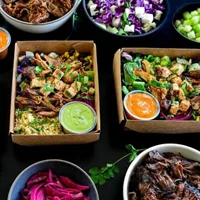
Details: Latin-inspired bowls with clearly listed ingredients and proteins portioned for balance, not spectacle.
Best for: Offices that talk about food quality and actually mean it.
Palmita feels like it was designed by someone who’s ordered lunch for a team before. The menu impresses clients just as much as teams, with home-made salsa, plant-based signature options, and customizable ingredients for every bowl.
What really separates Palmita in a Chicago office lunch rotation is how transparent it is. Ingredients are obvious. There’s no guessing, no “wait, what’s in this?” moment at the table. That clarity speeds everything up and quietly removes tension from group orders, especially in offices where dietary preferences come up every single time.
Palmita meals don’t feel heavy either, you can finish an entire bowl and actually feel revitalized, instead of weighed down.
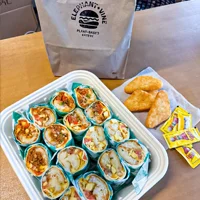
Details: Plant-based bowls, wraps, and comfort food built around proteins that actually feel like the main event.
Best for: Offices with lots of vegetarians, and offices without many that still want lunch everyone enjoys.
Elephant + Vine works because it doesn’t apologize for being plant-based. That’s the difference. The food isn’t trying to mimic something else or quietly stand in for meat. It’s confident in its own lane, and that confidence shows up when it lands on an office table.
The bowls are dense in a good way. Not heavy, but substantial. Proteins have substance. Sauces are layered, and usually unforgettable. You don’t finish eating and feel like you just had “a healthy option.” You feel like you ate lunch.
What stands out during a Chicago office lunch is how evenly Elephant + Vine lands. No one feels like they got the short end of the order. People who usually look for meat don’t wander off afterward, and vegetarians aren’t left piecing together a meal. Everyone eats, finishes, and gets back to their day without making it a thing.
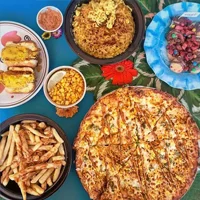
Details: Indian-inspired pizzas and comfort dishes built around familiar formats with unexpected flavors.
Best for: Teams that want something different without turning lunch into a risk.
Moti Café surprises people, and that’s its strength. Indian flavors on pizza shouldn’t work as well as they do, but once the boxes open, the hesitation disappears fast. Paneer holds its shape. Sauces stay balanced instead of soaking the crust.
What makes Moti valuable is how accessible it feels. People who might skip a curry tray don’t think twice about grabbing a slice. The format lowers the barrier, but the flavors still land. Lunch turns into conversation without turning into confusion.
This is one of those restaurants you turn to when your teams love pizza, but they’re sick of the same old Chicago flavors. Moti Café doesn’t show up every week, and that’s part of why it works. It’s memorable without being exhausting.
Most lunch problems in Chicago offices don’t start with food. They start with buildings. Security desks that won’t guess who a delivery is for. Elevators that stop everywhere except where you need them to. Lunch windows that disappear the second a meeting runs long. A lot of Chicago lunch delivery options ignore those realities. Fooda doesn’t.
Chicago offices already juggle enough variables. Lunch works better when it’s handled by a system that respects how the day actually unfolds, rather than one that treats every delivery like it’s headed to a front porch.
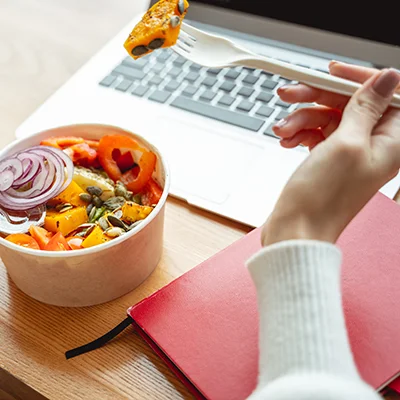
Chicago doesn’t struggle with food. It struggles with coordination. Buildings are dense. Schedules are tight. People move through the day in uneven waves. A Chicago office lunch strategy either fits into that rhythm or it disrupts it.
The restaurants above thrive because they understand how lunch lands in an office. Not plated, photographed, or even eaten all at once. Food shows up during meetings, between calls, sometimes late, sometimes rushed. When flavor and texture still hold together under those conditions, people notice.
Fooda makes delivering that experience easy and straightforward for your entire workplace. If you’re ready to make office lunch delivery in Chicago feel a little smoother, learn more about how our solutions can help you.
Alternatively, if you’re running a Chicago restaurant, find out how you can become a Fooda partner, and serve offices without headaches.