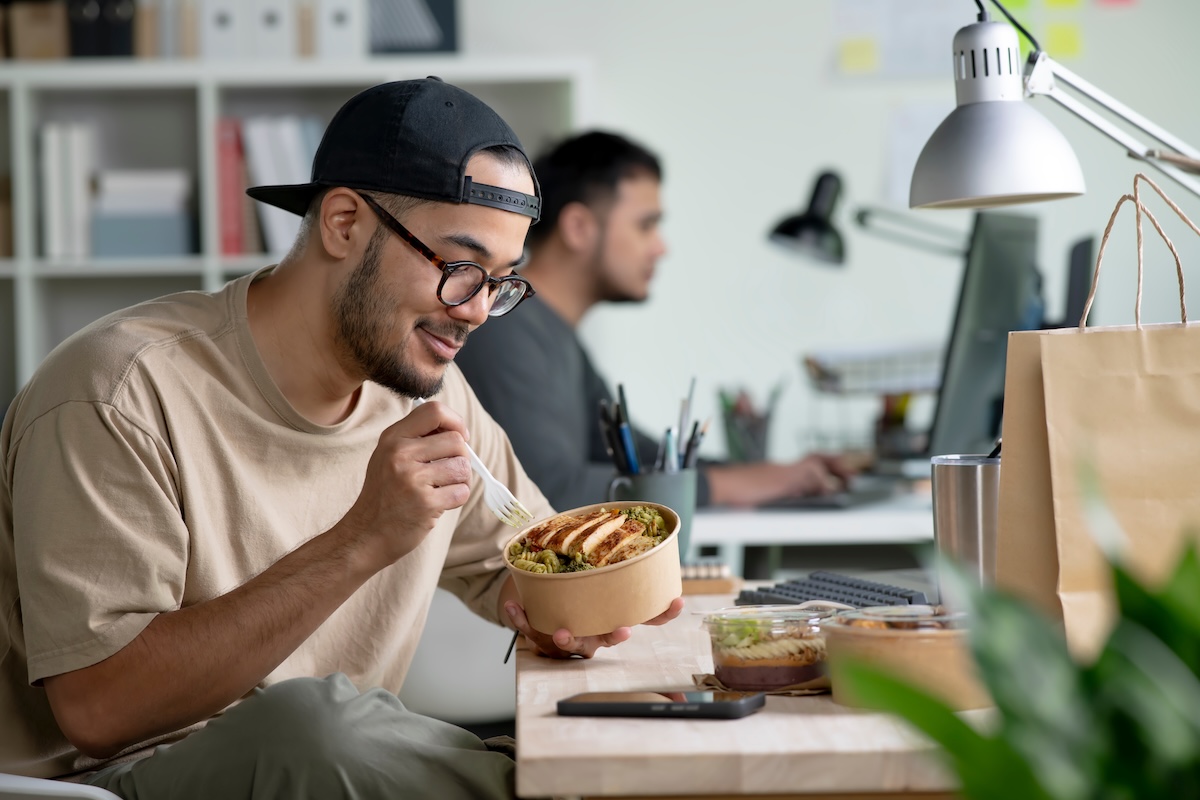
You ordered 40 lunches. 26 people showed up. Now there’s a table full of food nobody asked for, and someone with a nut allergy is picking through containers trying to figure out what’s safe.
If that sounds familiar, you’re not alone. A report from Gallup shows that half of U.S. employees now work hybrid schedules, so daily office turnout swings way more than it used to. Add in the fact that roughly one in six adults follows a specific diet, and “ordering lunch for the office” has quietly become one of the most annoying recurring tasks on any office manager’s plate.
That’s why corporate boxed lunch catering has taken off. The idea is simple: instead of guessing for the group, you let people choose their own meals ahead of time. Food only gets made for the people who plan to eat and waste drops because you’re no longer ordering for an imaginary version of the office.
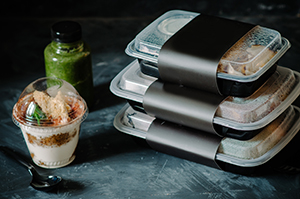
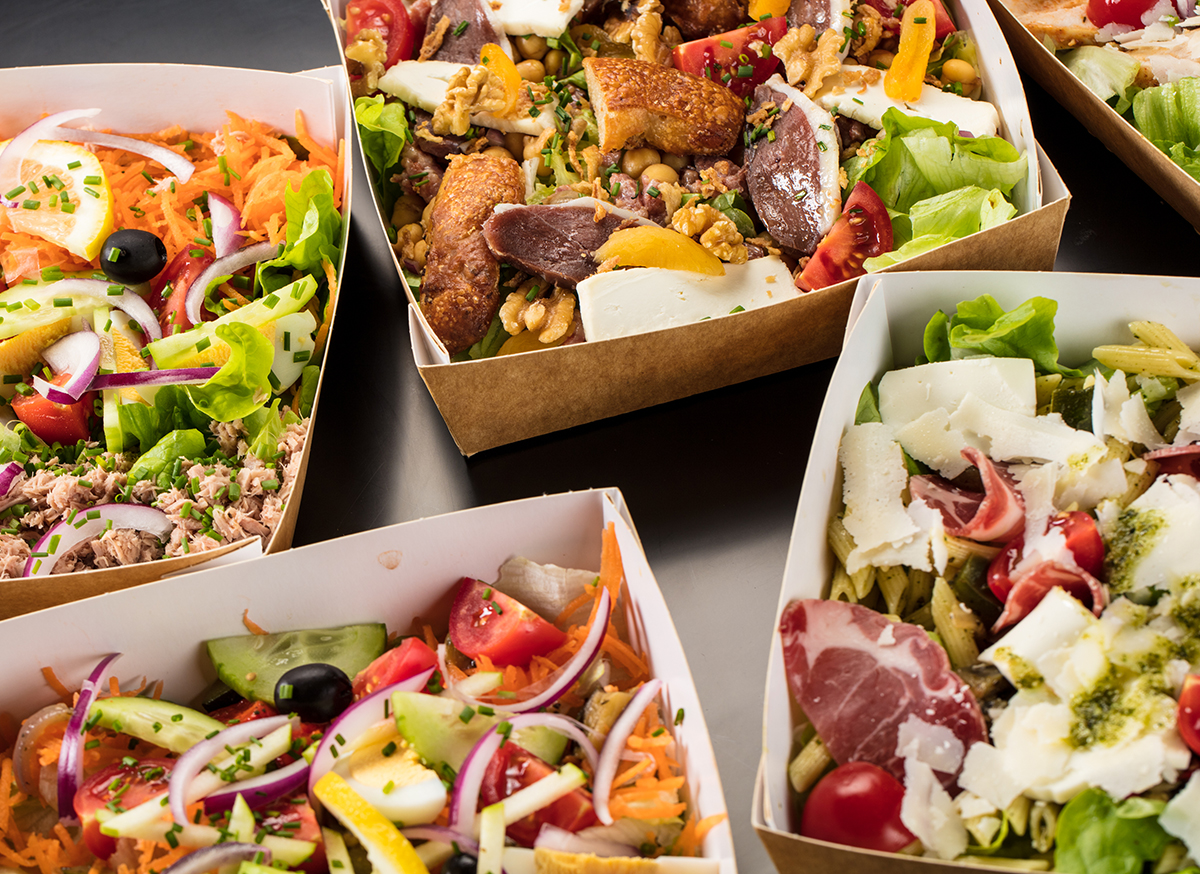
Picture a stack of individually labeled meals that people can grab and go. Each box belongs to whoever ordered it and the whole pickup takes a few moments rather than half a lunch break.
That’s why the format works so well when time is tight. Think training sessions, lunch-and-learns, or those all-hands meetings that always run long. With corporate boxed lunches, eating doesn’t interrupt the agenda. People open a box, eat, and keep listening.
And these have come a long way from the basic deli sandwiches you might be picturing. A modern boxed lunch catering menu usually features bowls, wraps, or bento-style meals that are designed to hold their temperature and texture. Utensils come sealed, ingredients are listed right on the box, and the food still tastes good even if someone doesn’t get to it for another thirty minutes.
For people with allergies or specific diets, it’s a game-changer. Instead of skipping lunch because they’re not sure what’s safe, they pick something they know works, check the label when it arrives, and eat with confidence.
The other big shift is volume. Because meals only get produced when people select them in advance, you don’t end up with trays of leftovers sitting around on hybrid days. It’s a noticeable difference and eliminates almost all complaints about workplace food.
Nobody ever puts “fix the lunch situation” on the company roadmap.
It usually happens after enough small frustrations pile up: meetings that start late because people are still in line, a few team members who quietly stop eating, or too much burden for the administration team to handle. Most companies switch to corporate boxed lunches as a practical fix, not a grand strategy.
Today’s hybrid offices don’t behave consistently enough to reward optimism.
If your office is hybrid, you already know the pattern. Tuesdays and Wednesdays are packed, Fridays are a ghost town, and any given Monday is a coin flip. The problem is that traditional catering needs you to commit to a number before you know who’s coming in, and that guess is hard to get right.
With boxed lunch catering, you stop guessing. People place orders if they plan to eat, and that exact quantity gets made. When turnout drops, food volume drops with it. When it spikes, the program scales up without any extra coordination on your end.
Dietary restrictions are extremely common. Roughly 17% of U.S. adults follow a specific diet and more than 10% manage some sort of food allergy. In traditional catering setups, those numbers surface as skipped meals, late lunches, or people leaving the room.
Corporate boxed lunches flip that dynamic. Everyone picks what they want in advance, ingredients are listed right on the box, and nobody has to flag their restrictions in front of the whole team. Lunch just becomes something people can trust, and more people end up eating together as a result.
You’ve probably seen it happen: the meeting is supposed to start at noon, but half the room is still in line for food. By the time everyone sits down, you’ve lost ten minutes. Multiply that across a week’s worth of working lunch meetings and the total lost time adds up fast.
Corporate boxed lunches cut all of that out. People grab their box, sit down, and start eating. The meeting starts on time because lunch has already been handled.
Most food waste in offices comes from one habit: ordering for the best-case scenario. Traditional catering assumes full rooms, but hybrid offices rarely deliver them, and the gap between what’s ordered and what’s eaten ends up in the trash.
With boxed lunch catering, meals are only produced because someone chose them. On lighter days, fewer meals arrive. On busier days, more do. There’s no need to “round up” for safety, and waste drops naturally without portion control tactics or reminders to take leftovers home.

Repetition kills participation in food programs faster than most people expect. When the same vendor shows up week after week, interest drops off. Even the office favorites stop registering and lunch becomes background noise. That’s why rotating variety matters more than any single menu upgrade.
A rotating boxed lunch catering menu, especially one sourced from local restaurants, keeps interest steady over time. Different cuisines naturally accommodate different restrictions, menu fatigue disappears, and people keep showing up because lunch offers them the same variety they can expect when choosing to eat outside of the office.
This is where corporate boxed lunches quietly outperform fixed menus: variety is much easier to pull off when every meal is its own order.
Food planning often creates a surprising amount of invisible work: chasing head counts, collecting allergy info, adjusting invoices, and apologizing when something goes wrong. Most of that effort doesn’t show up in anyone’s budget, but it definitely shows up in their stress level.
That’s why corporate boxed lunches reduce so much friction. Fewer decisions means fewer follow-ups. Each person orders once, everything shows up as expected, and cleanup is minimal.
When lunch works, people stay. They don’t rush off to find food. They don’t skip eating altogether. They don’t disengage halfway through the afternoon.
Research consistently links positive ROIs from successful workplace food programs, plus higher energy and improved focus across the organization. The benefits of free food at work show up as stronger attendance on in-office days and improved workplace community and engagement.
Lunch budgets usually fail when they’re unpredictable. You over-order on quiet days, scramble for emergency add-ons when food runs out, and end up paying for meals nobody eats. Those swings disappear when spend is tied directly to real orders.
With a designated corporate boxed lunch catering partner, spending aligns more closely with reality. You get fewer surprises, cleaner reporting, and a lot less debate about whether lunch is “worth it.”
Most offices don’t commit to one catering style. They mix and match a few to reduce problems over time. Here’s how the most common approaches actually compare once hybrid schedules, dietary needs, and meeting-heavy days enter the picture.
When offices compare options this way, corporate boxed lunch catering usually ends up carrying the day-to-day load because it absorbs variability without constant intervention.
Volume scales up and down with turnout, restrictions are handled quietly, meetings don’t pause for food logistics, and waste stays contained. For office managers, that means less time juggling backup plans.
Other formats still have their place. Traditional catering still works when attendance is guaranteed, Popup Restaurants work when the goal is experience, and pantries fill the gaps.
But for recurring lunches and working meetings, corporate box lunches tend to cause the fewest follow-up problems, which is usually what offices are optimizing for.
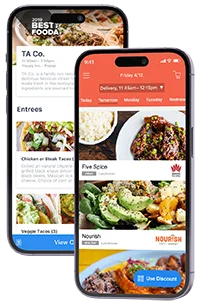
Most offices don’t need another catering option. What they need is a system that holds up when schedules shift and lunch keeps coming back on the calendar.
Fooda is built for exactly that.
The core difference is how orders work. Instead of guessing who’ll show up, employees select their own meals in advance, and food is prepared based on those selections.
On top of that, variety comes from rotation rather than reinvention. The corporate boxed lunch catering menu features different local restaurants, cuisines, and formats, and it changes often enough that people keep checking what’s available. But the process itself stays the same from week to week, so your team never has to relearn anything.
Fooda also goes well beyond boxed lunches. Depending on your office’s size, schedule, and goals, you can mix and match from several workplace dining programs:
Whether you start with corporate boxed lunches for recurring meetings and layer in Popups for anchor days, or use delivery for day-to-day lunch and catering for bigger events, the programs work together through a single platform. Restrictions are captured once, ordering stays simple, and everything scales with your office instead of against it.
If you’re ready to stop revisiting the same lunch problems every week, connect with Fooda to design a highly customizable workplace food program that improves the daily experience across the entire organization.
What does corporate boxed lunch catering actually cost?
Pricing depends on a few factors: the restaurant, the menu, and how many meals are being ordered on a given day. Because boxed lunch catering is tied to individual orders rather than a fixed headcount, there aren't a lot of hidden costs or surprise charges. You're paying for what people actually eat. Fooda doesn't require minimums, so quiet days don't cost more than they should. For a specific quote based on your office size and needs, reach out to the Fooda team directly.
What happens if there's an issue with an order or a meal?
Since nobody is 100% perfect, it does happen sometimes. If you get a wrong meal, something that didn't hold up, or have a labeling issue - the fix is usually faster than people expect because individual orders are tracked. Fooda knows exactly what was supposed to show up and for whom. Most issues get resolved same-day, either with a replacement or a credit. No one has to dig through a group order trying to figure out what went wrong.
Does boxed lunch catering work for one-off events, or is it better for recurring programs?
It works for both, but it really shines in recurring setups. For a single all-hands or training day, boxed lunches are still a solid option - no serving lines, no dietary guesswork, no cleanup drama. For ongoing weekly or anchor-day lunch, the model gets even stronger over time because ordering becomes routine and participation stabilizes. Either way, the process stays the same.