Ask a few locals “What food is NYC known for?” and you’ll probably get more answers than you’d expect. New York food didn’t become famous because it was clever. It became famous because it matched the pace of life in the city.
Bagels that deliver anytime of day. Pizza that stays intact on a crowded subway platform. Sandwiches heavy enough to carry you through lunch and whatever comes after. Street food that shows up every day, even when the weather’s a mess.
What’s really impressive here is the diversity. More than 36% of the people living in Brooklyn were born outside of the US, and a surprising portion of the city’s most recognizable foods trace directly back to immigrant communities solving everyday problems: how to feed a lot of people, quickly, affordably, without cutting corners on flavor.
You still see that same logic play out at work. Lunch in New York offices rarely looks relaxed. Meetings run long. Headcounts change. People eat at their desks. That’s why conversations around office lunch delivery tend to settle on the same themes: reliability, choice, and variety.
New York’s always been a place where eating gets wedged into the day, not planned around it. Early alarms. Long commutes. Jobs and environments that keep moving whether you’ve eaten or not.
That pressure shaped what people cooked and sold. If food took too long, needed explaining, or couldn’t survive a short trip, it faded out. Walk a few blocks and it’s still obvious. Bagel shops unlocking before sunrise. Pizza places that never fully shut down. Vendors setting up shop in the same spot every day because office workers build lunch into their routes.
The city’s makeup matters too. Many New Yorkers were born outside the U.S., and the foods that became “New York food” came with them. Jewish bakeries. Italian slice shops. Chinese takeout counters. Halal carts. Caribbean steam tables. These weren’t novelty cuisines. They are systems for feeding a lot of people, fast, without wasting anything.
That mindset hasn’t softened over time. If anything, it’s sharper now. Offices run leaner. Schedules shift. People eat between meetings. That’s why food decisions at work carry weight here, and why businesses put so much thought into how they feed people at work.
Any list answering, “What Food is NYC Known For?” only works if you judge food the way New York does. New York keeps foods that don’t slow the day down.

Bagels might be the most relied-on food in New York. The city sells more of them per person than anywhere else in the country, and it’s not hard to see why. They don’t demand much. You can eat one at 6:30 in the morning or grab it at noon when the day slipped sideways. They keep their shape. They don’t drip. They don’t fall apart in your bag.
People argue about bagels because they trust them. When a shop gets them wrong, everyone notices. That’s why so many places open before sunrise and why offices still reach for bagels when they need food that won’t cause headaches later. They scale easily, they vanish fast, and nobody needs a walkthrough.
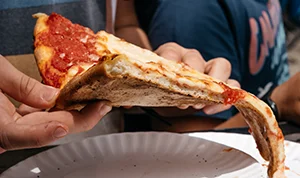
Pizza sticks around here for the same reason people rely on the subway. It’s fast, cheap, familiar, and it rarely lets you down. In New York, the slice is what counts. It has to fold without cracking, feel like a real meal, and cool off just enough that you can eat it without stopping.
New Yorkers eat more pizza per person than any other U.S. city, and most of it isn’t ceremonial. It’s lunch grabbed between errands and dinner at anytime of the night. Something you eat standing up because there isn’t time to do it properly. That’s why pizza still dominates group meals and team-building sessions. It doesn’t interrupt the day. It fits into it.
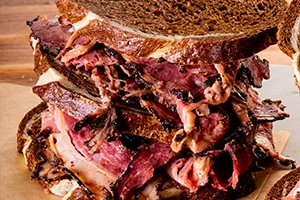
New York deli sandwiches are heavy on purpose. They were built for people who probably weren’t going to be eating again until much later or the next day. Made with fresh baked bread and packed with thick meats (pastrami is particularly popular), portions are substantial and keep you full.
Jewish delis figured out early that lunch needed to count. One sandwich had to hold you through the rest of the day. That logic stuck, even as jobs changed. People still expect a deli sandwich to be enough on its own.
There’s also something else there that feels very New York: control. Mustard or no mustard. Rye or white. Extra pickles. No one finds that annoying. It’s assumed. That expectation for choice shows up everywhere now, especially in how people approach food at work. Nobody wants to eat around something they didn’t ask for.
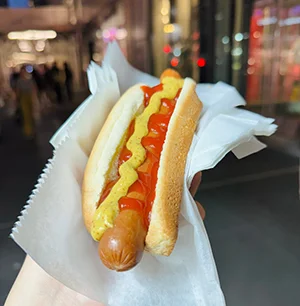
New York hot dogs don’t win on flavor alone. They win on availability.
They’re always there when nothing else is. Outside subway entrances. Near office buildings. After events empty out. The carts stay put long enough that people plan around them. Same corner, same routine, same order.
“Dirty water” isn’t a joke here, it’s shorthand. A boiled dog, held hot all day, dressed how you want it, eaten standing up. It’s simple, fast, and it works.
Hot dogs are also one of the earliest examples of New York street food solving a work problem: quick calories, minimal cost, zero time wasted. That logic hasn’t changed. It’s just moved indoors.

New York cheesecake exists because people want indulgence.
Dense. Heavy. Cream cheese forward. A slice that feels like it should probably be shared, but usually isn’t. Jewish bakeries locked in on this style decades ago and it hasn’t budged much since. That’s part of the appeal.
This isn’t dessert you forget about. It sits with you. It shows up at celebrations, holidays, office birthdays, the end of long weeks. It’s not trying to be light. It’s trying to be satisfying.
You can see how much this style stuck by how often “New York–style” still shows up on menus across the country. It became the reference point. Everything else explains itself relative to it.

Black and white cookies have been around forever, even if people forget that. They survived because they’re easy to deal with. You can leave them sitting out and nothing bad happens. They don’t melt. They don’t crumble everywhere. Nobody needs a plate.
Bakeries have been selling them the same way for years and nobody’s argued about it. Chocolate on one side, vanilla on the other. No decision required. That’s why they keep turning up at office birthdays and casual lunches, because they tend to satisfy everyone and don’t create extra work or orders.
Some of the most popular New York foods aren’t tied to restaurants at all. They’re tied to counters that respond to whoever walks in next.
The chopped cheese wasn’t some big idea. Nobody planned it. Someone was hungry. Someone was behind a counter. That was it. Same thing with bacon, egg, and cheese sandwiches. Mornings here don’t wait. Egg-and-cheese on a roll stuck because it feeds most people and is fast to make.
Bodegas stay relevant because they’re always there to fill in the gaps. That’s why these foods spread without marketing and stick without nostalgia.
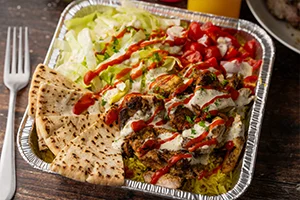
Halal carts didn’t become iconic because of branding. They became unavoidable in New York. Chicken over rice shows up when offices empty out at night, when shifts overlap, when lunch runs late and dinner isn’t happening yet. The line moves fast. The portions are heavy. The price makes sense. White sauce, hot sauce, both, no explanation needed.
This food works because it respects time. You order, you step aside, you eat. For a lot of office workers, especially in Midtown, halal carts replaced the idea of a “proper lunch” years ago. They’re dependable in a way most restaurants aren’t.
That reliability is exactly why halal platters made the jump from sidewalks to catering trays and office lunches. It’s the same street food logic, just brought inside, and New York hasn’t questioned it for a second.
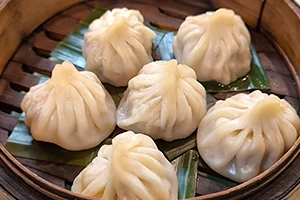
Some of the most New York foods don’t announce themselves.
Soup dumplings. Pork buns. Plates that arrive steaming and disappear just as fast. Chinatown built a way of eating that prizes speed and sharing without feeling rushed. You eat what you need, you move on.
Chinese-American food adjusted to how the city eats. Dishes that travel without falling apart. Portions you can split or save for later. Menus built for repeat orders. That practicality is why these foods spread far past Chinatown and settled into everyday eating all over the city.
Burgers are everywhere in New York because they don’t ask much from anyone. You can keep it simple or pile things on. You can sit down and enjoy one or take it on the go. Everyone orders a burger their own way and nobody comments. That flexibility goes a long way in a city like this.
People in New York are always experimenting with burgers too. Restaurants keep throwing in premium ingredients, like gourmet and dry-aged meats or cheeses. Smash burgers are a big deal these days too, often sold alongside hot dogs and other deli staples.
Everyone knows the classic “New York Strip.”
Steakhouses became part of the city’s business language decades ago. Deals closed over ribeyes. Promotions celebrated with porterhouses. Expense accounts learned the menu by heart. That tradition still lingers, even if the settings changed.
Steak signals intention. You don’t order it accidentally. It shows up for milestones, client visits, and as a reward at the end of a long day. That’s why it remains part of corporate food conversations, even as everyday lunches get lighter and faster.
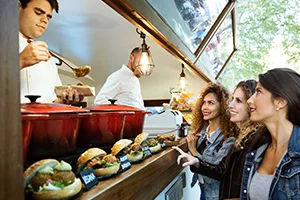
Food trucks are where New York tests ideas.
If something works on a truck, it might work anywhere. If it doesn’t, it disappears quietly. Trucks survive on repeat customers, not hype. They have to cook fast, move lines, and stay consistent block after block.
That’s why so many New York restaurants started as trucks, and why truck-style menus keep showing up in offices when companies start exploring Popup dining opportunities. The logic is the same: short but rapid service windows, varied diets, no room for waste.
This is where offices usually start sighing. Everyone knows lunch could be better but they’re stuck with the unsatisfying or overpriced options that fit into their schedule. When it comes to ordering - nobody wants to guess how many people are coming in, chase down who can’t eat what, or explain why there’s still food sitting there at the end of the day.
Based on the number of people alone, New York makes that harder than most cities. Buildings are complicated. Attendance shifts. People decide whether they’re coming in before their morning meetings or after lunch. The old “order for everyone and hope” approach tends to break down.
That’s why so many office managers start searching for better answers around office catering and ways to reduce the friction that shows up around lunch. The setups that hold up here follow the same logic as street food and delis: remove guessing, respect time, and let people choose.
Fooda meets these expectations with:
Fooda fits New York offices because it adapts to whatever they need. Companies aren’t forced to fit a traditional mold. They get to choose the system that works for them. We aren’t trying to reinvent how New York eats at work, just making it easier to keep up with employee expectations and wants.
If there’s one simple answer to “What Food is NYC Known For?” it’s this: food that survives pressure.
The dishes that stuck didn’t do it because they were trendy. They just worked. Bagels that don’t fall apart. Slices you can eat standing up. Meals that don’t need explaining. That same logic still runs the city, even when the setting shifts from sidewalks to office floors.
Fooda fits because it respects those habits instead of trying to fix them. Individual ordering. No minimums. Real local restaurants. Formats that scale up or down without drama. However you handle it, the goal doesn’t really change.
If you’re thinking about how food fits into your office day, or why lunch keeps feeling like a guessing game, it’s worth looking at how Fooda works and how teams in New York have found success with it.
When food lines up with how people work, it stops drawing attention to itself. And honestly, that’s usually when it’s working best.
NYC office lunch typically runs $15-25 per person depending on the type of food and restaurant. Street-food-style options (halal platters, sandwiches) tend to land on the lower end, while steakhouse-quality meals or specialty cuisines push higher. The bigger variable is usually waste. If you're ordering based on guesses rather than confirmed headcount, you'll overspend regardless of the per-meal cost.
It depends on the system you're using. Traditional catering often requires 24-48 hours notice and minimum headcounts. Individual ordering platforms like Fooda allow same-day orders with cutoffs just a few hours before lunch, which gives people time to actually know if they're coming into the office that day. That flexibility matters more in hybrid workplaces where attendance shifts constantly.