Looking to upgrade your workplace dining program in 2026? There's a lot to consider when making a decision that often requires a long-term commitment because choosing the wrong cafeteria partner can lead to low employee participation and dissatisfaction that impacts retention.
But a well-crafted Request for Proposal (RFP) is your roadmap to finding the right office cafeteria partner. Whether you're launching a new cafeteria in your building, wanting to switch providers, or simply exploring your options, an RFP helps you communicate your needs clearly and compare vendors on a level playing field.
Whether your team calls it an office cafeteria or a corporate cafeteria, this guide and the free template below walk you through the entire process.
An RFP, or Request for Proposal, is a formal business document that organizations use to solicit proposals from potential vendors. Think of it as a detailed invitation that outlines your project requirements, expectations, and evaluation criteria.
In the context of corporate dining, an office cafeteria RFP helps you:
Choosing a corporate cafeteria provider without a formal RFP process is like hiring without job descriptions. You might get lucky, but you're more likely to end up with misaligned expectations. It’s extra effort, but this process is important because it protects your budget, holds your future partner accountable, and gets you ahead of any deal breakers.

If you’d like to build your RFP internally from the ground up, it’s best practice to include these 5 must-have sections.
Start your corporate cafeteria RFP by painting a clear picture of your workplace and dining needs. Without this, it’ll be hard for a food service company to respond with a proposal that meets your needs and lives up to your expectations.
Here’s what to include in this section:
Why this matters: Vendors need context to propose solutions that truly fit your situation. A 200-person tech startup with millennials working flexible hours needs a completely different approach than a 2,000-person distribution facility with three shift changes.
Pro tip: Include floor plans, photos of your current space, and any relevant employee survey data about food preferences. The more detail you provide, the more accurate and customized proposals you'll receive. If you’re also rethinking the physical space, our guide to office cafeteria design covers layout, flow, and seating.
This section is important because it defines what you want your cafeteria to deliver on a daily basis. If a company can’t provide the food your team wants, there’s little incentive to go forward with them as a partner and this section can ask the questions to figure that out quickly.
Key elements to specify:
Why this matters: "Good cafeteria food" has different meanings for each company. One organization might prioritize grab-and-go convenience while another wants a full hot lunch experience. Be specific about what success looks like for your workplace.
Sample RFP questions:

Your cafeteria is only as good as the team running it. This section of your request for proposal should clarify staffing expectations and operational standards.
Why this matters: High staff turnover leads to inconsistent food quality and service. Understanding how vendors hire, train, and retain their teams gives you insight into long-term operational stability, which is often the biggest predictor of whether a workplace food program lasts.
Questions for your RFP:
Understanding staffing responsibilities upfront is required, especially if you're considering running an in-house cafeteria where labor costs become your direct expense rather than being bundled into vendor costs.
Transparency around costs prevents budget surprises and buyer's remorse. When you have a strict budget, it’s important to know that you’ll always be able to stay within it and more importantly, maximize your returns.
When building your RFP, ask about these financial elements:
Why this matters: Corporate cafeteria pricing models vary dramatically. Some vendors charge management fees but pass food costs through directly. Others build profit margins into food pricing. Without standardized financial questions in your RFP, you can't compare vendor proposals accurately.
Key RFP language: "Please provide a complete breakdown of all fees, including management fees, administrative costs, and any other charges. Specify which costs are fixed and which are variable. Provide sample P&L statements for accounts similar to ours in size and scope."
Clear responses that show a vendor has your best interest (and budget) in mind will get the new partnership off on the right foot. If there’s unclear wording or discrepancies in what they’ve said, it’ll be hard to trust they can meet your budget requirements.
How will you know if your new cafeteria partner is delivering on their promises? This section defines success metrics and accountability mechanisms.
Metrics to specify:
Sample questions:
Why this matters: Regular reporting keeps your vendor accountable and gives you the data you need to assess performance objectively. Without defined metrics in your RFP, you'll have no baseline to measure success or identify when course corrections are needed.
Once vendors receive your corporate cafeteria RFP, they’ll need a timeline and want to know what to expect during evaluation. You can speed this process up a bit or even extend it to meet your needs, but make sure the timeline is communicated from day one.
When evaluating, use the chart below to help assess responses on a level playing field. Adjust the percentages based on what matters most for your corporate cafeteria.
Pro tip: Have multiple stakeholders independently score each proposal, then compare results to identify consensus and discuss discrepancies before making your final decision.
Your RFP is just the beginning of your corporate cafeteria relationship. Whoever you end up choosing, the best vendor partnerships evolve through ongoing collaboration, communication, and shared commitment to strengthening the daily employee experience. To maintain consistent success:
When your organization implements a successful corporate cafeteria program, you’ll quickly notice gains in employee engagement, retention, and satisfaction. Making the daily lives of your employees easier by saving them time and money also works wonders for productivity.
Ready to transform your workplace dining? Orange by Fooda offers a modern approach to corporate cafeteria management that goes above and beyond traditional food service.
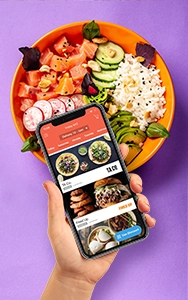
Unlike national cafeteria suppliers stuck with repetitive institutional menus, Orange by Fooda connects your workplace with local restaurants through flexible service models. Employees get authentic local restaurant variety without leaving the office and the logistics of running a cafeteria are handled.
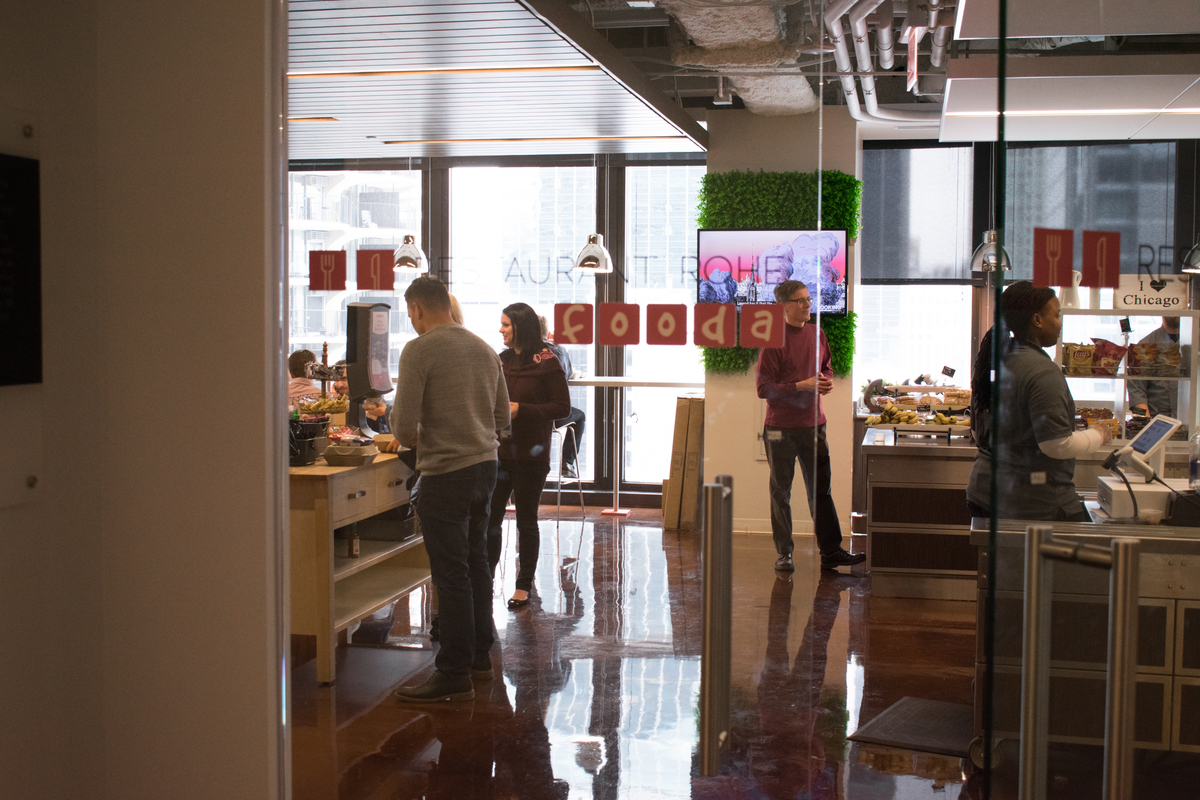
Fooda offers more than full cafeteria management - we also provide rotating Popup restaurants, lunch delivery programs, and corporate catering or pantry services. If you're ready to issue an RFP or are exploring options for workplace dining, Orange by Fooda can help you create a fully customizable food program employees actually love.
Don’t forget to download our free Corporate Cafeteria RFP Template to begin your evaluation process with confidence. The template includes all essential sections, sample questions, evaluation criteria, and worksheets to compare proposals objectively.

What should an office cafeteria RFP include?
A strong corporate cafeteria RFP covers five core sections: a company overview with your cafeteria requirements, service model and menu expectations, operational and staffing details, pricing structure and financial terms, and performance metrics with reporting. Each section should pair your requirements with specific questions so every vendor answers the same way. Adding weighted scoring criteria at the end lets you compare proposals objectively rather than on gut feel.
How do you choose the right corporate cafeteria company?
Score every proposal against consistent, weighted criteria such as menu quality, pricing transparency, relevant experience, staffing stability, technology, and sustainability. Beyond the paperwork, request food tastings, check references at accounts similar to yours in size and industry, and run site visits to see the vendor’s operations in person. The right partner should show clear alignment with your goals and a track record of high participation and retention at comparable workplaces.
What questions should you ask cafeteria management companies in an RFP?
Focus on the areas that predict long-term success: staff retention rates, food safety certifications, menu rotation and sourcing, technology for ordering and reporting, food waste practices, and a full breakdown of fees. Ask who your on-site manager will be and how satisfaction is measured. These questions separate providers that simply promise good food from those that can prove consistent, accountable service over the length of a contract.
Is it better to run an in-house or outsourced office cafeteria?
An in-house cafeteria gives you the most control but puts labor, equipment, food sourcing, and compliance squarely on your plate, and labor becomes a direct, ongoing cost. Outsourcing to a cafeteria management provider shifts that operational burden to a specialist and usually delivers more menu variety and better technology. The right answer depends on your headcount, budget, and how much internal bandwidth you have, which is exactly what a clear RFP helps you quantify before deciding.
How much does corporate cafeteria management cost?
Costs depend on your service model, subsidy level, headcount, and how much kitchen infrastructure already exists. Providers typically use a management fee (flat, a percentage of sales, or a hybrid) layered on top of food and labor costs, and some build margin into menu pricing instead. Because structures vary so widely, the only reliable way to compare cost is to require a standardized fee breakdown and sample P&L statements in your RFP, so every bid is measured the same way.