Having your own cafeteria staff gives you more control over the workplace dining experience. But dealing with high turnover and increasing overhead will have you weighing whether the payoff is worth it.
The good news is there’s always a solution, whether it’s rethinking your staffing strategy or outsourcing other parts of your operation. This post breaks down the best practices for staffing a cafeteria so you can maximize returns while improving overall quality.
Download our free Corporate Cafeteria RFP Template to get started immediately - complete with all essential sections, sample questions, and evaluation criteria.
Running an in-house cafeteria means hiring for multiple roles – from cashiers who manage orders to cooks and dishwashers. Managing all of your employees across is another challenge all on its own. But it’s not cheap either, running a cafeteria for a large company can cost upwards of $30,000 a month.
We’ve consolidated national average data from Indeed to show you exactly how much cafeteria staffing costs.
Cafeteria managers take care of everything, whether it’s ordering supplies or planning staff schedules. Larger corporate cafeterias may delegate responsibilities between multiple managers – one to run general operations, one to manage the kitchen, and so on.
Average Pay: $47,332
In an office cafeteria setting, everyone’s in a rush to get back to their desks, so they have to be quick. That’s why it's necessary to have a lead cook who oversees the menu, other cooks, and places importance on orders going out on time.
Average Pay: $63,804
Prep cooks help with prepping workstations and ingredients, so cooks can move quickly between receiving an order and handing it to the customer. They reduce friction, ensuring that there is nothing slowing the team down in the kitchen.
Average Pay: $39,395
Another important role in the corporate cafeteria is the cashier. They can take employee orders, handle payments, and run the front counter. So they’re the ones making sure that food orders are accurate and that lines move quickly.
Average Pay: $27,819
Janitors clean up once the cafe is closed for the day. They’re the ones making sure that the space is clear of garbage, spills, and clutter. Sometimes this can also be a maintenance person (you may need someone for each role). So they play an essential role in keeping your cafe compliant and maintaining hygiene standards.
Average Pay: $36,949
They keep your cafeteria supplied with clean and sanitized dishware, so you can keep your operations running without having to resort to paper plates or wasteful packaging.
Average Pay: $35,799
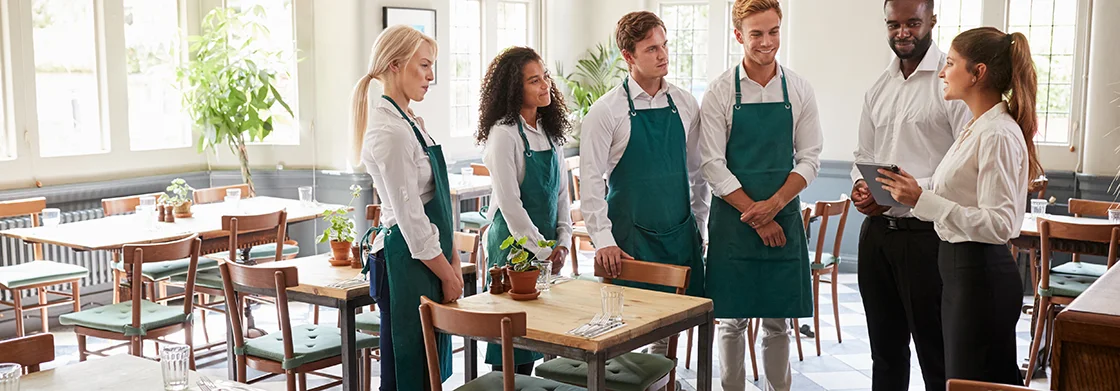
With all these different roles to keep on your payroll, corporate cafeteria staffing can be tricky to navigate. Here are some of the biggest challenges that you might have to face:
As you know, having your own cafeteria staff is expensive. Even with just one employee for each role, staffing is a large part of the budget. If you’re a big corporation, there’s a good chance you’ll need multiples of each role to stay up and running.
There’s also the question of scheduling. Who’s going to work when? This is especially important for offices that operate long hours. Think: hospitals, distribution centers, and logistics companies, which typically run 24/7.
You’ll want to staff your cafeterias strategically so there’s always something to eat, even for employees working odd hours. At the same time, you don’t want to overstaff the kitchen during low traffic hours. Maintaining this balance can be complex and more so if attendance patterns shift throughout the week.
Your cafeteria staff are also responsible for maintaining hygiene and food safety standards. This isn’t just for regulatory compliance, but also for employee safety.
Making sure each member of the cafeteria team lives up to those standards poses a new challenge. You’ll have to constantly review their sanitation and food safety practices, creating a checklist to review things like:
Keeping track of all these details means you’ll have to dedicate a major chunk of time to overseeing staff.
And you’ll also need to conduct regular training to make sure they’re on top of the latest food safety practices. That’s more money and time you need to spend on managing your in-house cafeteria staff.
If high overhead costs and endless cafeteria lines sound familiar to you, it’s time to do something about it. Let’s take a look at the best practices to staff cafeterias strategically and reduce your bottom line.
The first thing you need to look at is how you’re scheduling staff for the cafeteria. Are you getting more people to come in than you actually need? Don’t be surprised if your labor costs rack up at the end of the quarter.
On the flip side, if you’re regularly short-staffed, you might see lines moving more slowly while an overwhelmed kitchen staff hustles to keep up with orders. An optimized cafeteria design alone won’t fix this. You need to get strategic with how you plan your cafeteria team’s schedule, especially if your office is open 24/7.
Plan to have more staff available during periods that see higher order volumes, such as during the lunch rush or end-of-quarter crunch times. Similarly, you can arrange for fewer people to come in when things are typically slow, such as breakfast for early morning shift workers, for instance.
This is hard to do without the proper data but when you schedule based on your staffing needs, you can reduce costs without sacrificing efficiency.
Having more staff on payroll than you actually need can eat away at your bottom line. While you might need the extra hands during periods of high-demand, keeping them on as permanent staff doesn’t always make sense. It means you’re still paying them even for those days when you have just a few people eating at the cafeteria.
That’s why it helps to outsource your corporate cafeteria staffing as much as possible. This gives you the flexibility to adapt based on changing demand. You don’t have to keep staff on permanent payroll on the off chance that you might need them.
With modern corporate cafeteria solutions, you get to outsource parts of your operation and save on labor costs. So whether you need cooks for a fully functional kitchen or a catering manager to oversee your operations, you can save if you don’t have to hire permanent cafeteria staff.
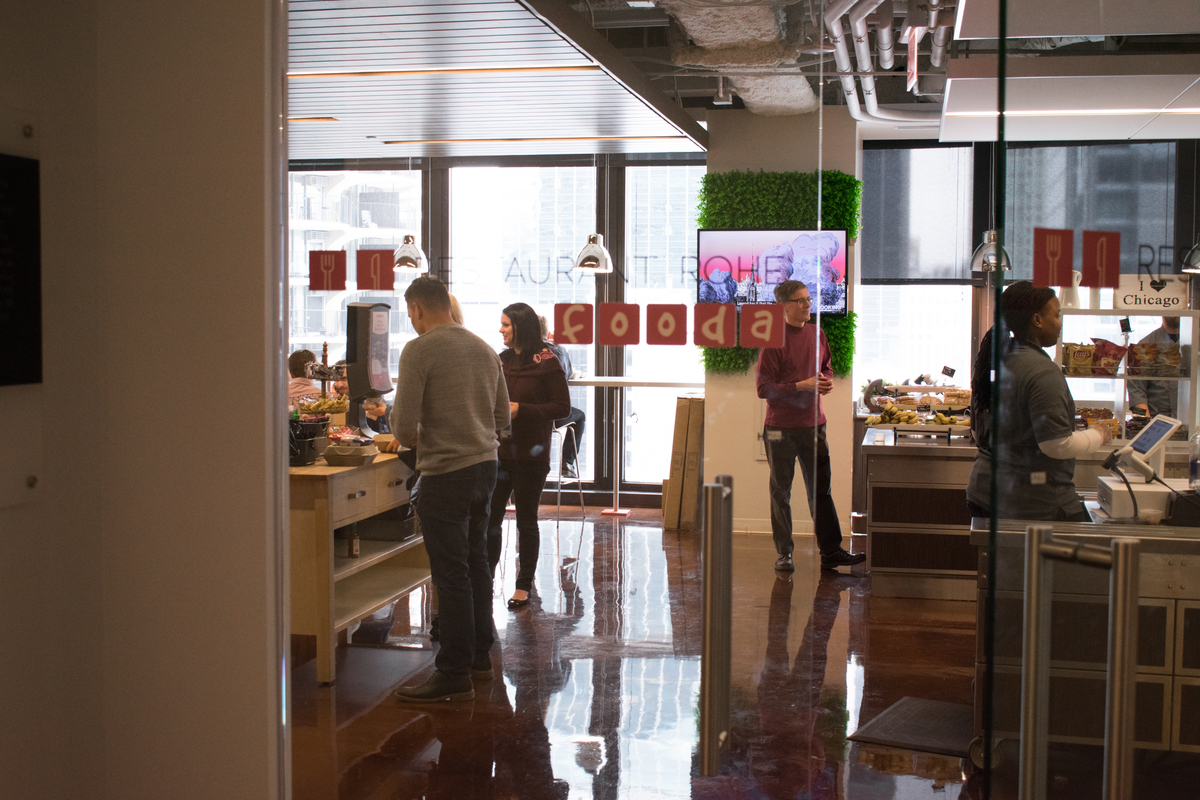
Fooda works with local restaurants to handle everything from labor to food prepping and cleanup. Instead of hiring multiple cooks, you can simply tap into the talent of the best local chefs for a specified duration.
Whether you want to rotate between restaurants daily or keep them on as a resident restaurant, you can serve up a diverse range of delicious meals – all without having to hire or manage your own staff.
Outsourcing to a cafeteria management company is especially useful for places like hospitals, which need to keep their cafeterias open 24/7 to serve both employees and patients’ families. The same goes for data centers, logistics companies, and call centers that have employees working long shifts and odd hours.
Got more employees on shift to help with the holiday rush? Or fewer people coming in as things slow down early in the year? Perhaps you typically see more cafeteria orders at the end of the quarter when everyone’s working on-site.
Use data to inform how you plan your cafeteria staffing needs and keep track of order data throughout the year and identify patterns in demand. Combine these insights with your main employee calendar so you can schedule your cafeteria teams in advance.
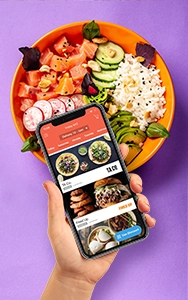
Another way to reduce labor costs is by investing in contactless dining solutions. This could mean having a system for employees to order online or scan a QR code to pay for their meals.
Instead of having someone manually put in orders and process payments, employees can do it all on their own with the right tech solutions. This means you get to save on the cost of having a cashier on payroll.
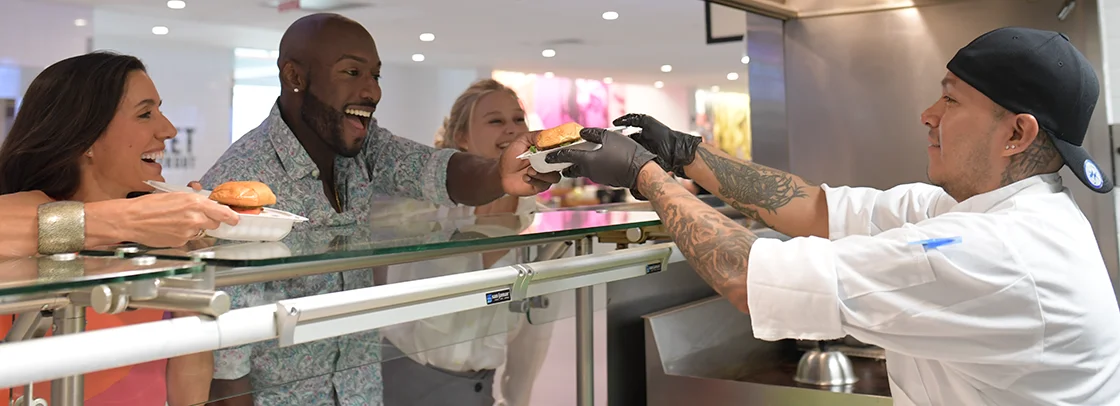
Fooda makes it easy to lower your corporate cafeteria staffing costs without sacrificing quality and efficiency. With solutions like Orange by Fooda, you can tap into the best talent and resources minus the headache (and expenses) of hiring your own cafeteria staff.
Orange by Fooda lets you scale exactly according to your needs – even if those needs change daily. With tech that utilizes AI and keeps track of the important KPIs, you can see when there’s higher demand and make plans accordingly. For instance, if more employees are coming on-site on Mondays, you can arrange to schedule more restaurants to offer additional variety or accommodate dietary restrictions.
The best part? You don’t have to hire multiple cooks because you get to outsource the entire process to the best local chefs.

On that note, Fooda’s partnership with the best local restaurants means you get to bring in a diverse selection of menus and rotate them daily. Whether you want to serve sushi one day or tacos the next, you have the freedom to change the menu at your discretion. This helps you keep things fresh and interesting, so employees don’t have to deal with menu fatigue.
That results in higher participation because people are always looking forward to trying something new. And you don’t need to have different cooks on payroll for various types of cuisines just to serve a diverse or inclusive menu.
Not sure which restaurants your employees love? Orange by Fooda uses ordering data to inform your restaurant scheduling.
That means you get to see which restaurants get the most love from your employees and on which days. So you can bring in the right restaurants at the right time. And when you serve food that your employees love, it instantly improves their satisfaction.
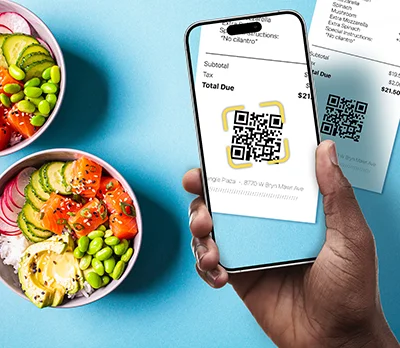
With tech-enabled ordering, Orange by Fooda eliminates the need for additional cafeteria staff. You can have employees order online instead of having to do it through a cashier. And they can pay online or scan a QR code to pay for their meal as they pick it up. That means more money saved on dedicated staff to handle orders and payments.
Every Orange by Fooda location is staffed by a professional team that’s trained to meet the highest hospitality standards. So employees get to enjoy an elevated dining experience that keeps bringing them back. With a dedicated on-site catering manager overseeing everything, you can always be certain that operations are flowing with no setbacks.
Meanwhile, Fooda oversees staff training and management across all our sites, so you don’t have to spend your time or resources training your own cafeteria staff.
Looking for a corporate cafeteria staffing solution to help you cut down on labor costs and improve ROI? Explore Orange by Fooda to learn more.
Cafeteria positions often see high turnover due to demanding schedules and physical work. To improve retention, offer competitive wages, create clear advancement paths, maintain reasonable shift schedules, invest in ongoing training, and foster a positive work environment. Many companies find that outsourcing eliminates turnover concerns entirely since the management company handles staffing continuity.
Cafeteria staff must comply with local health department regulations, OSHA workplace safety standards, and food handler certification requirements. This typically includes proper food storage temperatures, handwashing protocols, allergen handling procedures, and regular equipment sanitation. Most jurisdictions also require food manager certifications and regular health inspections.
Yes you can. Strategic scheduling based on demand patterns, contactless ordering and payment systems, and outsourcing non-core positions all help reduce costs while maintaining service quality. The key is using data to identify where you're overstaffed and investing in technology that streamlines operations without requiring additional headcount.