Your company just published its annual sustainability report. The numbers are finally starting to look better. You've switched to LED lighting, optimized HVAC systems, and added solar panels to the roof. But there's a problem: Scope emissions are barely budging. In fact, for most office-based companies, they're still sitting at 70-90% of the total carbon footprint.
Here's what's missing from most climate action plans: the 200+ employees leaving the building every day at noon, driving 5-10 miles roundtrip for lunch, then coming back to finish their workday. That's roughly 100,000 miles of unnecessary driving per year for a mid-sized company and almost nobody's tracking it.
To achieve net zero emissions and have a true impact on climate change, companies need both short and long-term strategies that make a large impact in multiple ways over time. Most organizations focus on the usual suspects: energy procurement, business travel policies, supply chain optimization. What they miss is one of the simplest, most effective options available: workplace food programs.
Your office food strategy directly influences whether employees stay on-site or get in their cars multiple times a day. It determines how much energy your building uses for food preparation. It affects how much food waste ends up in landfills generating methane. Done right, workplace dining becomes a powerful tool for reducing emissions across scope 1, 2, and 3 (while improving employee satisfaction at the same time).
The Greenhouse Gas (GHG) protocol is a standard framework created by the World Resources Institute and World Business Council for Sustainable Development. It’s used for measuring and managing greenhouse gas emissions from private and public sector operations.
The GHG Protocol breaks emissions into three buckets based on who controls the source and where it happens in your operations.
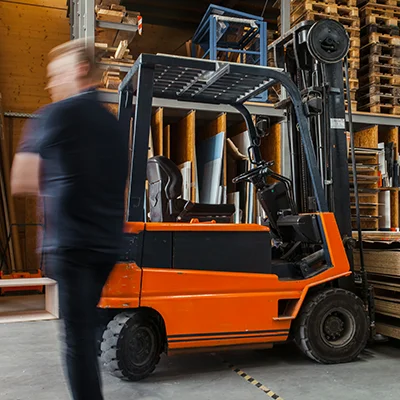
These are the emissions you own. If your company burns the fuel, you're counting the carbon. Company vehicles running on gas or diesel. Forklifts in your warehouse. The boiler heats your office. Kitchen equipment running on natural gas. Manufacturing equipment that burns fuel on-site.
Any time your organization directly combusts fuel or releases greenhouse gases from equipment you control, that's Scope 1. For most office-based companies, this is the smallest slice of the pie. You might have a small fleet or a gas-powered HVAC system, but that's typically it.

Scope 2 is the carbon footprint of keeping the lights on…literally. These are indirect emissions from the electricity, heating, and cooling you purchase.
Your utility company burns coal or natural gas to generate the power that runs your computers, keeps your building comfortable, and powers your kitchen equipment. You didn't burn the fuel, but you bought the energy that required burning it. That's Scope 2.
How much this matters depends entirely on your local grid. If you're pulling power from a coal-heavy grid, your Scope 2 emissions are substantial. If you're on a renewable-heavy grid or purchasing renewable energy credits, they're much lower.

Scope 3 is essentially everything else. All the indirect emissions in your value chain that you don't directly control but are responsible for because of your business activities. Employee commuting, business travel, the production of everything you purchase, how your suppliers get materials to you, what customers do with your products. The list goes on…
The GHG Protocol breaks Scope 3 into 15 categories, and for most companies, it's the majority of their total footprint. This is both the problem and the opportunity.
You can't directly control whether your employees drive to work or how your suppliers run their operations. But you can influence these activities through smart policies, partnerships, and program design. This is where workplace food programs are most impactful.
You can't manage what you don't measure. Before launching into reduction strategies, you need to know where your emissions come from and which sources matter most.
Start with the basics. Pull together twelve months of data across all three scopes.
Pick a baseline year (typically the most recent full year you have complete data for) and establish that as your starting point. Everything you do from here gets measured against that baseline.
While you’re gathering this data, it can be easier to understand the impact of your emissions sources if you know how to calculate your corporate carbon footprint as well. Most companies don't do this manually anymore as software handles the heavy lifting, but it’s still good to know how it’s calculated.
The calculation itself is straightforward: activity data × emission factor = carbon footprint.
You collect the activity data, multiply by the appropriate emission factor, and sum it all up across categories and scopes. The result is your carbon footprint in metric tons of CO2-equivalent emissions.
Once you've calculated your baseline, look at where the big numbers are. For office-based businesses, the usual suspects are: employee commuting, purchased electricity, business travel, and all types of waste (food included).
Focus your reduction efforts where the numbers are highest. For most office companies, that means Scope 3 categories. Employee commuting is often the biggest lever you can actually pull. This is where workplace food programs start to look less like an employee perk and more like a carbon reduction strategy.
Now that you understand where your emissions come from, here's how workplace food programs actually reduce them.

Let’s work backwards now and look at scope 3 first since we know it’s the most problematic for businesses. Let's say you've got 200 employees. About 70% of them will drive alone to work (that's the national average). During lunch, maybe half of those drivers leave to grab food so that's 70 people getting in their cars.
Average roundtrip for lunch? Let’s call it 5 miles. That's 350 miles driven per day just for lunch. Over 250 working days, that's 87,500 miles annually. An average gas-powered car emits about 0.4 kg of CO2 per mile. You're looking at 35 metric tons of CO2 per year… just from lunch runs.
Scale that up to 500 employees and you're at 87 metric tons. For 1,000 employees, it's 175 metric tons. Unfortunately, most companies have zero visibility into this number. When you consider that the average commute involves multiple trips per day: coming to work, leaving for lunch, returning from lunch, and heading home, those emissions multiply quickly.
This is where workplace food programs deliver their most substantial emissions impact. When employees have access to quality food options on-site. Whether through popup restaurants, delivery services, managed cafeterias, catering, or well-stocked pantries, they eliminate the need for midday car trips.
Companies serious about their climate commitments need verifiable data and employee commuting reductions from workplace food programs provide exactly that. By tracking participation rates and calculating the reduction in vehicle miles traveled, organizations can report concrete, auditable emissions reductions that contribute directly to Scope 3 targets.
Scope 2 is smaller in impact but still worth addressing. It mostly applies to workplaces or companies that run their own in-house cafeterias.
Commercial kitchen equipment is an energy hog. Refrigeration units running 24/7. Ovens and ranges. Dishwashers. Ventilation systems working overtime. When you manage a cafeteria efficiently, energy consumption drops.
The big opportunity here is taking advantage of demand-based operations. Traditional cafeterias keep equipment running regardless of whether anyone's eating. Newer models scale operations to actual demand by heating, cooling, and prepping only what's needed, when it's needed. This gets easier over time as you acquire more data on employee lunch patterns.
Well-designed office snack and pantry programs can also replace energy-intensive vending machines that run constantly. A single refrigerated unit for grab-and-go items consumes less power than three or four vending machines scattered across floors.
Scope 1 is the smallest play here, but it matters if you're running your own kitchen.
Traditional corporate cafeterias and dining facilities often run on natural gas. Ovens, griddles, etc… all burning fuel on-site. Those emissions go straight onto your Scope 1 ledger.
Switch from an owned kitchen with gas appliances to consolidated local delivery or Popup restaurant models, and you eliminate those direct emissions. You could spend time and money upgrading to more efficient gas equipment but why not take a different route and remove the emission source from your books entirely (while supporting the local economy).
For companies chasing net-zero targets, this is low-hanging fruit. Direct emissions you can actually eliminate rather than just reduce.
The three-scope framework doesn't capture everything. Workplace food programs hit emissions sources that don't fit neatly into Scope 1, 2, or 3 boxes. Check out the table below for more information.
Here's the practical part: how do you actually implement this?
Fooda's model is built around keeping employees on-site through variety, quality, and convenience. That's what drives participation rates, and participation rates are what deliver emissions reductions.
We offer four core solutions, each addressing different needs but all contributing to the same outcome of fewer cars on the road at lunchtime and less waste.

Fooda's restaurant network is local by design. Shorter supply chains. Fresher ingredients. Less time in refrigerated trucks. Lower transportation emissions compared to national chains pulling from across the country.
Local restaurants typically buy from regional suppliers, which keeps the whole food chain tighter. Less packaging for long-haul shipping. Less fuel burned moving food hundreds of miles.
You need numbers to report emissions reductions. Fooda provides the operational data to back up your claims:
If mandatory reporting is required by your organization, this is a great opportunity to provide concrete data that contributes to reducing all forms of scope emissions.
But at the end of the day - workplace food programs deliver more than carbon reductions. They also come with higher employee satisfaction rates, increased productivity and engagement, stronger recruitment and retention, and improved workplace culture.
For companies ready to treat workplace dining as a climate strategy rather than just employee perk, the infrastructure already exists. Contact us today and partner with a solution that delivers measurable impact backed by verifiable data.
All three scopes contribute to climate change by adding greenhouse gases to the atmosphere. Scope 1 and 2 emissions come from direct fuel burning and purchased energy. Scope 3 emissions, while indirect, typically represent the largest chunk of a company's impact and include high-emission activities like transportation and supply chains. Together, these emissions drive rising temperatures, extreme weather, sea level rise, and ecosystem disruption.
Immediate. Unlike building retrofits or supply chain overhauls that take years to implement and measure, workplace food programs deliver emissions reductions the day employees start eating on-site instead of driving for lunch. You can measure impact within the first month.
Industries with complex supply chains and heavy resource extraction see the highest Scope 3 emissions. Tech and electronics manufacturing (upstream component production), food and beverage companies (agriculture and distribution), retail and consumer goods (purchased products), financial services (financed emissions from loans and investments), and construction (materials production) all have Scope 3 emissions that dwarf their Scope 1 and 2 combined. For these industries, Scope 3 often represents 90-95% of total emissions.