Quiet quitting - it may sound like a buzzword, but it’s a growing and costly reality for businesses around the world.
When the economy and labor market stalls, many workers feel like they can’t freely leave their jobs. This stagnation breeds frustration and a need to self-protect. Employees silently draw back and retreat, disconnecting from the workplace.
While turnover and burn out is inevitable for any business, it’s important for company leaders to understand what is quiet quitting and ways they can help their teams. No single perk can solve the problem - but taking active measures builds up!
For employers wondering how to prevent quiet quitting, keep reading. We’ll show you how a workplace food program can be one of the most effective ways of improving the daily office experience and promoting employee wellbeing.

Quiet quitting (also known as silent quitting) is the act of actively disengaging from the workplace. This can include saying no to tasks, reducing participation in meetings, or rejecting invites to team outings. Workers choose to stop going above and beyond, and opt to meet solely the necessary job requirements.
An important distinction: quiet quitting isn’t simply “laziness”. It isn’t a lack of “gratitude” to an employer. It’s about sticking to tasks that align with your core job description, prioritizing work-life balance, and refraining from chasing promotions. When workers no longer feel incentivized to go above and beyond in their careers they pull back.
These behaviors can stem from a variety of reasons. Quiet quitters can suffer from a poor relationship with work, and feel that their concerns go unaddressed - leading to a lack of trust in company leadership. This builds over time. For many, quiet quitting is the long-term consequence of “too little, too late”.
In general, silent quitters feel:
These are all valid reasons for wanting to leave a job.
As job dissatisfaction increases, quiet quitters make up a growing percent of the workplace.
Even your organization’s best performers are susceptible to quiet quitting. A culture of overloading high performers with more work, setting extended work hours as the norm, and micromanagement, lead to a toxic working environment.
Over time, as their enthusiasm wanes, quiet quitters will slowly pull back and silently look for new opportunities to move on to. Expectations go both ways but thankfully there are many strategies for building a loyal workforce.
Here are some ways your company can address quiet quitting:
Here at Fooda, we believe access to great food in the workplace can have a dramatic impact on employee retention and happiness. From Popup restaurants in the office, to authentic local delivery, or even a full cafeteria - having high-quality food at affordable prices in the office makes the lives of your employees easier.
Whether you’re a food lover or not, our lives revolve around our meals. Food fuels us, provides comfort, invokes memories, and gives us a true opportunity to connect with others. That rings true in the workplace as well and providing meals for your organization directly combats quiet quitting.
Quite simply, food and snacks make the office more attractive to workers. A warm coffee in the morning, an employer subsidized lunch, and a pick-me-up snack for the commute home. When everyone has this employee perk, these moments allow departments to slow down and have quality face-to-face time outside of meetings.

Sharing a meal is how relationships are built. Eating a meal with the team, grabbing lunch with a colleague, or having a coffee talk with a manager are opportunities to strengthen professional relationships.
Offering fresh and dynamic meals to your staff makes them feel appreciated and cared for, bringing positivity into the office culture. Plus, featuring food from different cuisines highlights inclusivity as a priority for your company.
Here’s Fooda in action: A&E, a Fooda client, struggled with bringing their employees together organically. Their company is spread across multiple floors, limiting the number of colleagues staff would interact with each day. If there wasn’t a scheduled meeting, there was practically no chance of crossing paths.
The company opted to address this by partnering with Fooda to bring local restaurant Popups to their space. Amy Pape, A&E’s LA Office Manager outlines the impact: “It helps make people want to come to work to be with the amazing people they work with. We’ve made the office more fun, it’s as simple as that.”
A&E employees now feel a better sense of belonging in the workplace, enjoying tasty meals together and building stronger connections.
Amy explains it best, “Food is what binds relationships. People love to eat, people love to converse over eating. That’s why you go to dinner on first dates. That’s why we have lunch meetings. It provides a sense of community. And that sense of community has trickled down into everything we do.”
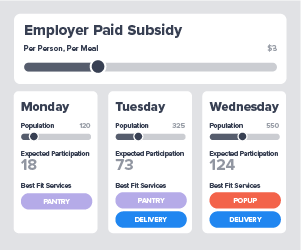
In addition to bringing local restaurants on site, many employers give back to their team by offering meal subsidies. Free food is a huge work benefit - directly contributing to higher job satisfaction rates! Fooda’s technology makes it easy to build and oversee a bespoke payment system. See Food subsidies in action here!

Every company has busy and slow periods. Naturally, the busy season brings an increased workload, often cutting into lunch time. We’ve all worked through lunch before, but having to regularly skip or reduce break times can have a dramatic effect on the daily workplace experience.
The solution is offering a flexible workplace dining program. To protect employee wellbeing, your company and management need to actively promote break and meal times. By providing free or subsidized lunch, you show employees exactly how much you value their effort and time in and outside of work.
Hulu has been a Fooda partner since 2016. Management noticed how busy their staff was and that they were losing a lot of it trying to find food off-campus.
Wanting to show their appreciation and find a way to improve downtime, Hulu opted by bringing local restaurants on site. This program significantly reduces time spent sourcing and purchasing meals, helping Hulu employees fully enjoy their breaks.
Their Manager of Facilities explains: “Fooda has absolutely increased our employee productivity. And most importantly people are eating and lunch is fun again. Sometimes when you have back to back meetings there’s no time to eat, causing you to be ravenous toward the end of the day. Now, employees are always satisfied and excited to see what restaurant is coming next.”
Thanks to Fooda, Hulu employees have more energy and support to tackle their work days, and are motivated to work from the office.
It’s more than just words of encouragement, this is a tangible action that can deeply impact your team. Encouraging workers to take time for themselves is your company culture at work.
After understanding your needs and space, Fooda will create custom programs that are based on your team's needs. For busy employees, our meal delivery, catering, and grab-and-go options are convenient and cost effective ways to implement a program.

Actively supporting employee mental health and wellness prevents quiet quitting.
Outside of interacting with colleagues, lunch is an opportunity for workers to recharge and prepare for the afternoon. Many workers prioritize a quiet period to enjoy a meal on their own. Listening to music or reading a book while they eat helps people decompress. Especially useful for introverts, or conversation-heavy roles like sales and customer support, eating alone is important for reflection and regrouping.
It’s all about balance. While we at Fooda encourage time spent together, accommodating everyone’s needs - whether through destigmatizing meals taken alone or offering a variety of food types, makes your entire team feel valued and validated.
Don’t just take our word for it - Hyatt, a Fooda client, wanted to transform their food and beverage offerings for their employees at their corporate headquarters. Rather than settling for a regular food service provider, they wanted a diverse meal system to accommodate all their employees.
Partnering with Fooda, Hyatt’s Food Hall now hosts a dynamic rotation of restaurants on site. This integration has improved attendance and morale at the office. Hyatt employees have the freedom to spend more time together over lunch, or recharge on their own.
Anne Hanch, Senior Vice President Global Procurement explains, “Our associates appreciate the number of choices. They like that it’s all fresh, nutritious, and affordable. I would say 80% of my team eats at the Food Hall every day.”
Menu fatigue and wondering what to eat next can be stressful. This can contribute to a lack of excitement around being in the office. A rotation of local restaurant Popups in your cafeteria organized by Fooda ensures there’s always something to look forward to at work.
Based on your schedule, frequency, and cuisine preferences, you can customize an assortment of restaurants to host in your office. Fooda handles all the logistics, including delivery and cleanup, so your entire team can sit back and focus on enjoying fresh and healthy meals!

We’ve all had our gripes with work, but quiet quitting doesn’t happen overnight. It’s the final result for employees who feel unheard, unsupported, and overwhelmed. While there are many reasons for leaving a job, reviewing your company benefits, and weighing them with what your employees value can help.
Being proactive sets an important example for your organization and can have a dramatic effect on employee morale. A great workplace food program is more than just a meal - it’s about culture, care, and connections.
Whether through restaurant popups, corporate catering, reimagined food halls, or convenient pantries, Fooda can help your team mingle more frequently and create lasting relationships that inspire new ideas.
If you’re ready to rethink food at work and prevent quiet quitting, talk to Fooda today!
Workplace food programs support employee wellbeing by encouraging breaks, promoting networking opportunities, and reducing stress. High-quality meals help staff feel valued and appreciated, fostering a stronger sense of community. As mood and morale improve, active disengagement becomes less likely.
Yes! Our clients have noticed higher attendance rates when meals are provided. In fact, a recent Fooda survey shows 80% of employees are happier to work onsite when their employer pays for their meal. Get the report here!