Some days the workplace is full. Some days it runs quiet. With 45% of professionals on hybrid schedules, that swing is a standing feature of the week rather than a disruption to wait out, which is why Tuesday attendance rarely resembles Friday's.
Most workplace food programs were designed before that was true. They assume a fixed headcount, budget, and service format, so any shift in one input leaves the program paying for meals nobody claims or running short in front of the people it was meant to serve.
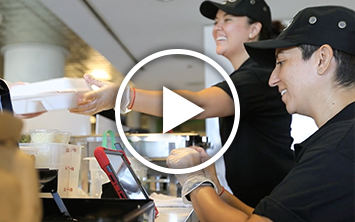
In our August webinar, The Rise of the Adaptive Food Program, Fooda's Joey Turman and Stafford McKay covered why fixed programs give out and what leading companies run instead.
An adaptive program flexes with population, budget, and company stage without a vendor change, because every format sits inside one relationship instead of one contract each.
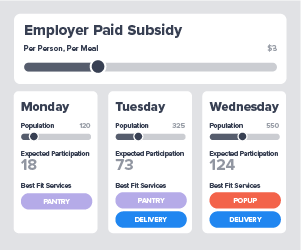
In practice, that means pairing live and static service:
Choosing one column is not the goal. Adaptive programs support live days, static days, and blended days, which is what lets one program cover a 350-person Wednesday and a 25-person Friday.
The webinar zooms in on the combination built for hybrid teams, since it gives planners and day-of deciders each a workable path:
Joey and Stafford close the webinar by talking about a Burbank entertainment company running both formats in a tight job market where employees hold restaurant-level expectations for lunch.
Meeting that standard traces back to sourcing: Fooda draws on 4,500+ restaurants that are 80.5% independently owned, so no single kitchen caps the menu.
Attendance moves week to week now, and a program scoped to one headcount number will keep missing on either side of it. Adaptive programs plan for the range instead of the average. Watch the full webinar on demand
Have more questions about Fooda? Check out our FAQ page. If you’re ready to get started and build your adaptive employee meal program, reach out to us today!
Does offering free or subsidized lunch bring employees back to the office?
For a meaningful share of hybrid employees, it does. 58% say a free or subsidized lunch would bring them onsite three or more days a week. Lunch works as an attendance lever because it removes a daily cost and a daily decision, and because it gives people a reason to be onsite at the same time as their team.
Can you run a workplace food program without a cafeteria or commercial kitchen?
Yes. Popup and food truck formats have restaurants prepare food offsite and serve from a temporary setup in a lobby, breakroom, or open space, so no build-out, hood, or dedicated kitchen is needed. This is typically the fastest way for a company in leased space to launch a program.
How does a lunch subsidy work, and how does it scale as a company grows?
Employer subsidies are usually set per person, per meal, so total cost tracks actual participation instead of headcount. Growing companies commonly start with full coverage and shift to a fixed employee contribution later, which holds the benefit in place while keeping spend predictable. Fooda's program planner lets you model subsidy levels against daily population to see estimated weekly cost.
How do you accommodate dietary restrictions and allergies across a whole office?
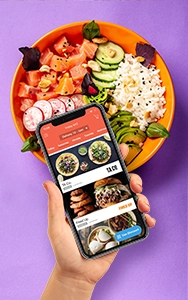
Two mechanisms carry most of the load. Individual ordering lets employees choose their own restaurant and customize a specific order, which suits anyone managing an allergy or a strict diet. Rotating restaurant variety covers the rest, since a program drawing on many independent kitchens offers a wider cuisine range than a single commissary preparing everything in bulk.