Pharmaceutical companies face unique challenges that HR and people leaders have to navigate. Non-standard hours, tight deadlines, and shifting priorities can lead to chronic stress, burnout, and turnover. In an industry with such a tight talent market, it’s important to keep your employees productive and happy. One of the most common ways to do this is by implementing a robust pharma employee wellness program.
For a program to be complete, you should provide resources for mental and physical health and offer a good work-life balance. Although food and nutrition are often overlooked, they’re also vital parts of a complete employee wellness program. If employees don’t have easy access to good, nutritious food in the workplace, they’ll experience unnecessary friction throughout the workday.
This guide covers why wellness programs matter in pharma, what makes an effective program, and why workplace food is a critical part of it.
The pharmaceutical industry is fast-moving with an extremely limited talent pool, both of which make it important to prioritize employee wellness. Pharma employees are also health-literate and more likely to notice half-hearted or poorly executed programs, so executing them thoughtfully is key.
.jpg)
Whether they’re on R&D, clinical operations, sales, or regulatory teams, pharma employees face tight deadlines and heavy workloads. Over time, these stressors can weigh employees down and lead to burnout.
Burnout is a state of continuous mental, physical, and emotional exhaustion from ongoing stress and overworking. It can lead to lower productivity and engagement, with an Asana study finding that 30% of employees feel disengaged when burned out. According to Deloitte, 43% of employees report often or always feeling exhausted. In high-stress fields like pharmaceuticals, these numbers are likely even higher.
If you want your team to make the most out of their days, take care of them by providing meaningful wellness benefits. Otherwise, you’ll see disengagement, productivity loss, and a weakening workplace culture.
Trying to fill specialized roles can be difficult. Scientists, biostatisticians, and regulatory specialists are in short supply, and pharma companies have to compete with other pharma companies, biotech startups, and research institutions to attract qualified candidates.
Additionally, turnover can be expensive. Replacing a single employee can cost 50-200% of their annual salary, and for pharma companies, that price leans on the higher end. Lost institutional knowledge, delayed project timelines, and recruiting costs are major setbacks that make it incredibly important to make an active effort to increase and maintain employee satisfaction rates.
That’s why employers should use every tool at their disposal to stand out as a viable employment opportunity. A Selirix survey found that 63% of employees would leave their current jobs for better benefits, even if it meant equal or even lower pay. A robust employee wellness program not only prevents burnout and keeps employees from looking for other opportunities, but it also positions you as a company that truly cares about its teams, making you a more attractive option than your competitors.

Pharma employees work with health data daily. This gives them foundational knowledge that can make them more critical of employee wellness initiatives. If your programs are thin or lack meaningful substance, they’ll notice.
One-time treats or the occasional self-care webinar can come off as an attempt to check a box rather than a show of genuine care. If you execute these programs halfheartedly, employees will feel distrustful, disappointed, and devalued.
Instead, they want programs with real, provable benefits. To make a difference, make a visible effort to support employee physical and mental health, nutrition, fitness, and work-life harmony.
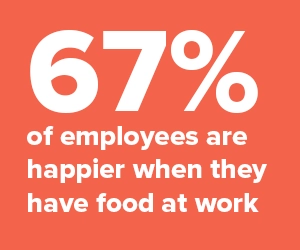
While vacation time and monthly self-care seminars are helpful and effective ways to support employee wellness, they’re not daily perks. Food, on the other hand, whether it’s in the form of subsidized lunches or all-day snack access, is a tangible benefit that provides an immediate and enjoyable experience. Unlike gym access, which they may or may not choose to use, employees need to eat daily. This means they'll be significantly more inclined to take advantage of the program.
Easy access to healthy food also supports other components of a comprehensive wellness program. Here’s how:
Even though food programs are one of the most immediately visible ways to support employee wellness, they are often overlooked. In fact, a recent survey of 100+ workplace and people leaders found that one in four employers has no food benefits at all. By giving employees convenient access to great food, you can set yourself apart and demonstrate a commitment to improving the daily workplace experience.
Pharmaceutical companies operate very differently from corporate offices. This can make implementing a workplace food program slightly more challenging, however with the right design, you can build a successful program.
Although not all pharma employees work in shifts, continuous manufacturing, lab testing and monitoring, and quality control require certain team members to work non-standard hours. If you’re providing food for employees, excluding those that operate outside the weekday 9-5 is a mistake. While your weekday employees will enjoy the perks of workplace food, the rest will feel neglected if they’re not offered the same perks. This could end up hurting you more than it helps you.
Solution:
Work with a food provider that’s willing to adapt to your needs. A one-size-fits-all solution won’t be enough. Look for a partner that offers flexible, customizable models.

With such busy schedules and strict deadlines, pharma employees won’t always have time to take a full lunch break. If your workplace food program requires them to wait in long lines, they’ll be less inclined to take advantage of it.
Solution:
Go with a model that offers quick, efficient, grab-and-go service. Reliable point-of-sale systems prevent delays, and online ordering capability keeps lines short, allowing employees to simply drop by and pick up their meals.
Pharmaceutical company headquarters and manufacturing plants are often located in large campuses with few nearby food options. This can make sourcing lunch offerings difficult. If you don’t provide consistent variety, employees will grow tired of eating the same things on repeat.
Solution:
Work with a workplace food provider that has plenty of experience curating restaurant partnerships. This will make it easier for them to offer variety that keeps employees engaged and excited about their lunch options.
Once you know what you’re looking for, make sure the provider you choose is able to accommodate your workplace. With so many factors to consider, it can be easy for certain details to slip through the cracks. To help you cover all of your bases, we’ve put together a short checklist.
Here are some questions to ask to make sure a provider will be a good fit:
There are multiple ways to adjust food programs to fit your budget, which is especially important for pharma companies with large headcounts. Common budget models include:
A good provider will make it easy to adjust or add subsidies so you don’t have to start over from scratch every time budgets shift or priorities change.
Performance metrics allow you to monitor ROI and justify spend. Workplace food partners should provide clear reporting on:
Internally, they should also help you track key metrics such as:

Fooda offers flexible, customizable workplace dining solutions that allow you to feed employees without overstretching your budget or putting unnecessary strain on your admin team.
Work with dedicated account managers to find the solution that suits your organization, then let them handle the rest. You can always go back and make adjustments for fluctuating hours, headcounts, or budgets.
Fooda is powered by our network of 4,500+ restaurant partners, providing quality, variety, and affordability that keep employees happy and engaged over time. This variety also makes it easy to account for dietary preferences and restrictions, meaning everyone will be able to find something they want to eat.
Even though all of Fooda’s programs are fully managed, that doesn’t mean you’re left out of the loop. Transparent reporting on participation, spending, and community impact metrics help you keep track of your program as it goes on, making it easier to make the case for ROI to upper management and allowing you to make continual improvements over time.
Fooda has a lot to offer, and we can mix-and-match any solution to meet your needs. Here’s a quick rundown of our products:
Want to find out what Fooda can do for your pharmaceutical company? Reach out to Fooda to get started.
What are examples of employee wellness programs in pharma?
Common examples include onsite gyms or fitness stipends, free preventive screenings, employee assistance programs, mindfulness and manager training, financial and family support, flexible scheduling, and workplace food programs. Food stands out because employees use it every day. Office lunch delivery, local restaurant Popups, a stocked office pantry, or a managed cafeteria can each fit pharma schedules, including off-hours shifts.
How much do employee wellness programs cost per employee?
Costs vary widely between companies. A single-benefit program costs far less than a comprehensive one. For food, cost depends on the model: fully subsidized, partially subsidized or employee paid. A flexible provider can adjust subsidies as budgets change, so you don’t have to rebuild the program.
How do you measure wellness program ROI?
Start with participation rates and total program cost, which a good vendor should report. Then track employee satisfaction, retention, productivity and how employees perceive the program. Compare those against pre-launch baselines, and weigh them against the cost of turnover, which can reach 50%–200% of an employee’s annual salary. It’s best practice to review results quarterly so you can adjust the program over time.