For most C-suite teams, the question is not "Should we invest in a workplace food program?" but rather: "How much will a successful workplace food program cost?"
It’s no surprise that free or subsidized meals get people in the office and improve the daily experience. On top of that, they also make an almost unbeatable perk for hiring and retention. But when it comes to justifying additional costs in a tough market, that’s where most leadership teams back out.
Corporate food program costs are never a fixed target, but that doesn’t mean that a well-designed program can’t be fit for your budget and organizational needs. That's why this guide breaks down workplace food program cost factors, pricing models, and strategies to help you build a program that delivers measurable ROI.
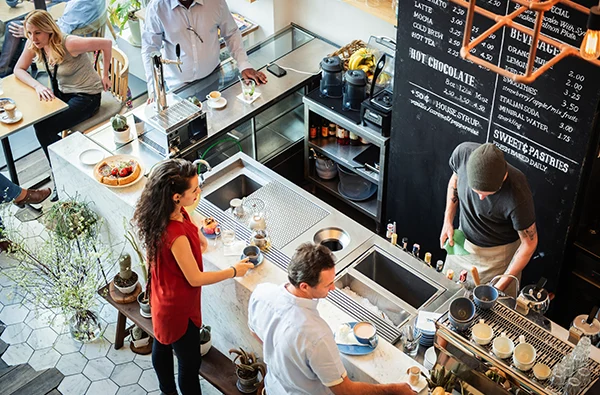
When employees have access to high-quality, affordable meals at work, they're more likely to stay on-site, eat with coworkers, and come back to their desks energized. The appeal is straightforward - people are happier, more connected, and more productive when food is part of the daily workplace experience.
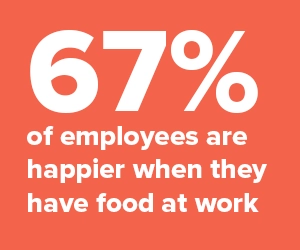
The data backs this up. This Population Health Management study found that employees with unhealthy diets are 66% more likely to experience productivity loss, which makes workplace meals a direct performance lever. And 67% of employees report being happier at work when their company offers food, which correlates directly to stronger engagement and lower turnover.
The ROI case gets even stronger when you factor in retention, attendance, and recruiting. Research from the Maumee Valley Group shows that 78% of employees say access to food at work makes them feel more valued, and 56% say they've stayed longer at a company because of quality break room and meal perks.
But to be fully effective, these programs need to be implemented with clear frameworks that balance projected gains against the corporate food program's cost. Providing subsidized meals for employees should be treated as a strategic investment — not a luxury line item.
Which brings us to the real question: How much will your company's workplace food program actually cost?
As with any product or service, details matter when determining the cost of an employee meal program. The following elements all factor into the price of a workplace food program.

Meal type: Are you providing buffet-style catered lunches or individual boxed meals? Will these meals include drinks, sides, and desserts?

Headcount: How many employees are you planning to feed per meal? Will this number be consistent, or will it fluctuate by day or shift?

Participation rate: How many employees do you expect to actually use the program? Some may opt out due to dietary preferences or habits, while others may participate inconsistently.

Frequency: Will this be a daily lunch program, or something offered a few times per week? Frequency is one of the biggest levers for managing total cost.

Location: How accessible is your facility to the restaurants and caterers you'd work with? Urban offices with dense restaurant scenes will generally see lower delivery costs and more vendor options than suburban or remote campuses.

Market: Local food costs vary significantly. A program in San Francisco will price differently than one in Indianapolis, even with identical headcount and frequency.

Budget per person: What is your target all-in cost per meal? This should include food, packaging, delivery fees, and service. Not just the price of the entrée.
Using this model, it becomes much easier to understand the foundational costs of providing meals for employees. No one factor determines the entire cost, and even similarly sized organizations in the same geographic area can have significantly different needs and budgets.
This complexity is also why it often makes sense for organizations to work with a dedicated partner when designing their office lunch programs. While most companies are fully capable of ordering the occasional catered meal for their workers, they often lack the resources needed to create a standalone program.
Because of this complexity, many organizations partner with a workplace food provider to design and manage their programs more efficiently.
The ranges below represent an average of all-in costs per person for corporate food programs and can be used as a planning baseline.
For context, the average office worker in the U.S. now spends over $100 per week on work lunches out of pocket. A well-structured subsidy, even a partial one, can meaningfully offset that cost for employees while driving measurable returns for the organization.
A successful food program requires the same management rigor as any other recurring operational expense. Leadership teams that treat it as a strategic investment, and optimize accordingly, will see significantly better returns.
Here are six concrete ways to optimize your program:
When evaluating, it’s also important to consider the costs of NOT having an office lunch program.
The dining model you choose is the single biggest driver of both cost and employee experience. Here's how the main options compare.

Popup Restaurants: Local restaurants prepare food in their own kitchens, set up a service area in your building (lobby, break room, or conference area), and clean up when the lunch window is over. Employees get a rotating selection of cuisines with minimal logistical overhead for your team. Food trucks are also an option here, giving employees a chance to step outside and enjoy fresh air with their meal.

Office Lunch Delivery: Employees place their own individual orders from a rotating selection of local restaurants each day. All orders are consolidated and delivered together by a dedicated driver who's pre-approved to come directly to your office. It's a consumption-based model, you only pay for what people actually order, so there's no food waste and no need to guess headcount.
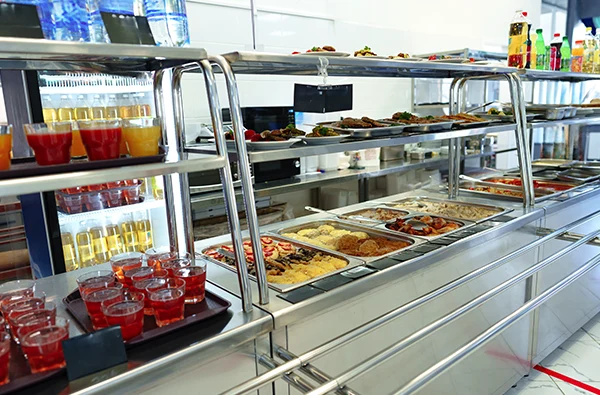
Corporate Cafeterias: Perhaps the most familiar subsidized corporate food program, company cafeterias typically rely on long-term contracts with food service vendors. This model has struggled over the years, as vendors may reduce menu options and ingredient quality to retain their profit margins. Solutions like Orange by Fooda solve this by bringing in rotating top local restaurants to serve their most popular menu items and resident restaurants to keep consistency.

Corporate Event Catering: While typically not used for daily employee meal programs, corporate catering is a great option for meetings or events. From boxed lunches to fully staffed white-glove service, this model can be easily adjusted to the needs of a specific location. When your partner has a large network, menus can be further customized beyond standard options, making it easier to take employee preferences and dietary restrictions into account.

Pantry: While not every workplace is suited for an office lunch program, most can still benefit from on-site food options. Self-service workplace pantries provide workers with grab-and-go meals, beverages, and snacks designed without the overhead of a dedicated program or company cafe.
Fooda is a dedicated workplace food program partner built to help organizations design, launch, and manage cost-effective meal programs, from Popup restaurants to full cafeteria replacements.
Wondering what sets Fooda apart from the others?
Ready to see what a customizable workplace food program would cost for your organization? Get in touch with Fooda for an estimate.

In a fully funded program, the company covers the entire cost of the meal. In a subsidized program, the company covers a portion (typically $5-10 per meal) and employees pay the difference. Subsidized models give companies more budget flexibility while still providing a meaningful perk.
It depends on the program type. Delivery programs can work for teams as small as 15–20 people since employees order individually and there's no food waste from overproduction. Popup restaurants and cafeteria models typically require larger populations to be cost-effective, but a good food program partner can help you find the right format for your size.
Most organizations start seeing participation data within the first few weeks of launch. Broader metrics like employee satisfaction, retention impact, and attendance trends typically take three to six months to establish meaningful baselines. Starting with clear goals and tracking from day one makes it easier to demonstrate ROI when leadership asks for it.