Between sourcing ingredients, planning your menus, and managing an entire kitchen - providing good food to your employees takes a lot of work. Sure, you could just keep serving the same generic food over and over again. But that’s not you – you want the best for your employees, and that means serving them meals that they love.
That’s why smart organizations no longer try to run it all in-house because it’s not always feasible to balance it with other operational tasks. Instead, they outsource their workplace food programs to a corporate food service provider.
In this post, we dig deeper into the benefits of partnering with a food service provider and how to choose one for your company. Let’s take a look.
Now the question becomes: is it worth investing in a corporate food service provider?
If you're weighing the decision, you're probably wondering whether it'll actually make your life easier or just shift the problems around. The short answer? When done right, outsourcing takes a massive load off your plate - literally and figuratively.
Here's what changes when you let a third-party handle your office food program…
With experts handling everything from your vendor relationships to your ingredient sourcing and food prep, you save plenty of time and planning.
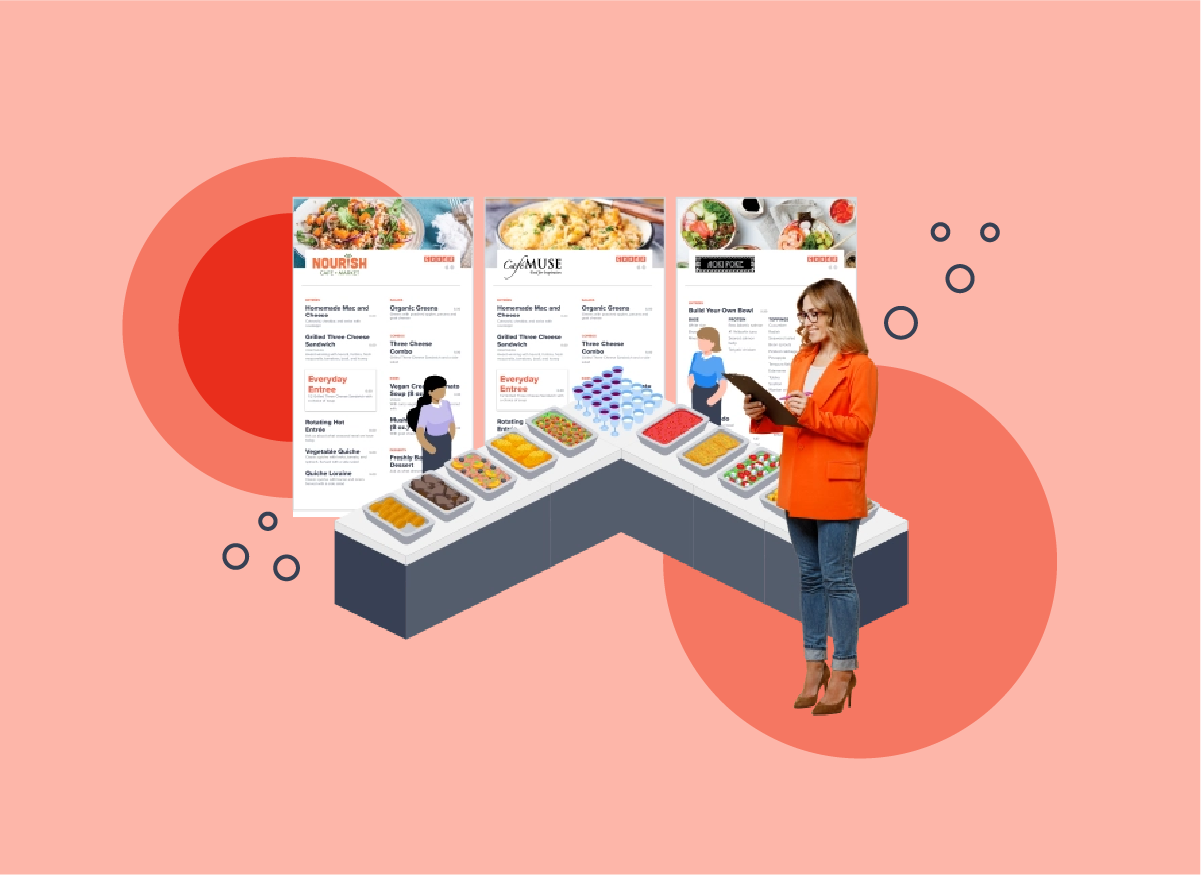
Most cafeteria management companies will handle all the complexities of running a food service operation. They’ll hire the workers, negotiate with vendors, plan the menu, and oversee everyday food preparation.
This eliminates the time and energy needed to manage your own in-house cafeteria.
A food service provider has menu diversity on their side. They may work with multiple local chefs or partner with restaurants that can serve up a vast range of dishes across different cuisines. So unlike having a dedicated in-house chef, you’re not just sticking to a few set items that the chef can cook.
When employees have something new to look forward to every day, it makes the office dining experience more exciting. The result? Better ROI and increased office attendance and participation.
Running an in-house food service means hiring your own staff and buying your own equipment (and the costs will add up quickly). Even with just the most essential roles filled, corporate cafeteria staffing can cost hundreds of thousands of dollars each year.
With a corporate food service provider, you’ll rely on experts to staff and manage the program. There’s no long-term commitment or investment needed for staffing and equipment.
Organizations will get a ton of proposals from companies interested in becoming their food service partner. Here are the most important questions to ask when vetting a provider to help you figure out if they’re right for your business.
The easiest way to filter your options is by looking into the company’s service offerings. Do they provide the kind of dining service you need for your organization?
For instance, you may want to focus on providers who can manage on-site food prep and serve freshly made meals for your office cafeteria. Or you may consider companies that provide office lunch delivery with the occasional on-site catering for special events. Can they help you set up micro-markets and office pantries? Or high-end beverage vending machines?
Consider their full range of workplace food solutions to see if they’re the right fit.

What good is an expansive menu if the food isn’t at the quality employees desire? Anyone can claim to serve butter chicken or some tacos al pastor. But when the food is in front of you, authentic flavors and fresh ingredients will make all the difference.
So never skip the part where you assess the provider’s menu offering and food quality.
Look into the full range of menu items they can serve. Which cuisines do they specialize in? Do they offer enough variety to let you rotate between multiple cuisines? Is there enough menu diversity to help you accommodate different dietary needs?
For instance, you may focus on companies that can provide vegetarian, vegan, and gluten-free options to build an inclusive workplace food program. Or you may even want to go for companies that can serve a vast range of keto-friendly diets and nutrient-dense meals to go with your employee wellness program.
Don’t forget to check client reviews to see if their food actually tastes good. If possible, arrange to taste their food before you commit to a contract.
The best provider is one that can adapt and scale their offerings exactly according to your needs – whether it’s in terms of headcount, dietary preferences, employee schedule, and more. So you can build a workplace food program that’s tailored specifically for your organization – be it a full-fledged food hall with rotating guest restaurants or individual boxed meal deliveries.
Think of a national corporate food service provider that can incorporate local vendors and authentic local flavors when customizing a program for different companies.
This ensures better flexibility to tailor your program based on your changing organizational needs and employee feedback, such as rotating between different cuisine options or switching from regular lunches to catered meals on special occasions.
Affordability is another major consideration when deciding on a provider for your workplace food program. How much does a typical meal cost per employee? And does that align with your budget?
You’ll want to consider this regardless of whether you’re offering free food or letting employees pay for their own meals. For employer subsidized meals, you need to make sure the per-employee cost is within budget. For cost-sharing models and employee-paid options, you still need to make sure the meals are affordable for your employees.
Otherwise, you’ll just end up with a bunch of delicious meals your employees can’t afford to eat.
And we’re not just talking about what’s affordable as a one-off meal but for regular, day-to-day meals. $20 for lunch may not seem unreasonable until you add it up and it becomes $400 per month. So it may not be sustainable for employees to keep spending a significant portion of their paycheck just to get a decent meal.
On a related note, make sure the vendor can provide you with a transparent breakdown of potential expenses and fees. Besides the cost of daily meals, how much does it cost to set up everything? Are there any added fees that could add to your recurring expenses?
Ensure to get an itemized list of estimated costs and fees so it doesn’t catch you by surprise once you get the first invoice.
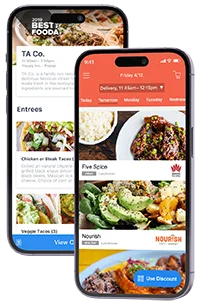
From apps that let you order meals ahead of time to self-checkout kiosks that let employees scan to pay for their meals, tech fuels convenience. It could make all the difference between long lines at the cafeteria vs. employees who get to eat on time.
The time spent figuring out lunch is valuable to employees, so when choosing a corporate food service provider, you should look into the tech and equipment that powers their dining amenities.
Do they have an app where employees can browse menus and place their orders? Do they offer flexible payment options like scan to pay and digital wallets? At the bare minimum, the vendor should support app-based ordering and payment tools for contactless dining.
But there’s a lot more innovation they could implement to further enhance tech-driven convenience. For instance, smart vending solutions that provide refrigerated storage and nutritional information for healthy grab-and-go meals. These systems can even monitor inventory in real time and send alerts when it’s time to restock or notifications about technical issues.
How does the provider plan on taking over if you do decide to work with them? And how long will it take to transition? You want to ensure a seamless transition with minimal interruption to your existing program, so your employees aren’t left without meal options while the provider gets everything set up.
Make sure they can lay out a clear plan for transitioning to their management, complete with the timeline specifications.
Fooda is a national corporate food service provider with an extensive range of solutions that can be tailored to the specific needs of your business. Whether you’re starting small and need smart vending machines for your breakroom or going all out with a full-fledged kitchen setup for your cafeteria, Fooda’s got you covered.

Fooda’s solutions range from Popup restaurants and cafeteria replacements to workplace pantries and individual boxed meal deliveries. You can handpick the services that you need for your corporate food program, even if it means combining multiple options.
So you could set up a food hall that features a combination of rotating guest restaurants, resident cafes, and micro-markets. And you could also arrange for on-site catering during special events.
For instance, solutions like Orange by Fooda let you bring in a rotating lineup of local restaurants, allowing employees to enjoy authentic local flavors freshly prepared on site. You can combine this with workplace pantry solutions to offer a diverse range of dining options for employees with different schedules and dietary preferences.
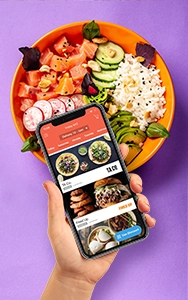
The Fooda app serves as a virtual food hall where employees can browse menus and order their meals online. It even lets them order ahead and schedule their meals to be ready at a specific time. So they can skip the long lines at the cafeteria and simply pick up their order when it’s time to eat.
With flexible payment options, employees can scan QR codes to pay for their meals instead of waiting for a cashier to process their payment.

Fooda’s partner network consists of 2,500+ independent chefs and local restaurants, allowing you to tap into an expansive selection of local eateries to serve fresh and authentic flavors in your office. This gives you the freedom and flexibility to build tailored food services with some of the best local vendors in the market.
Fooda even works with smart vending solutions like Farmer’s Fridge and Bevi. So healthy snacks and nutrition-packed beverages are more accessible than ever.
If you’re providing employer-subsidized meals, the Fooda app makes it easy to manage it all in one place. You can add members, allocate funds, and adjust allowances in just a few taps.
So whether you’re subsidizing meals for entire teams or offering partial subsidies for a handful of employees, Fooda lets you build a customized subsidy program that works for your business.
Ready to partner with a corporate food service provider? Explore Fooda’s solutions and build a program that works for you.
A corporate food service provider is a company that manages workplace dining operations for an organization. They take care of food preparation, ingredient sourcing, menu planning, and staff management on behalf of the business.
On-site cafeterias, boxed meal deliveries, event catering, micro-markets, and vending solutions are some of the most popular types of corporate food services.
Corporate food services typically cost between $12 and $20 per employee per meal, depending on the range of items and additional services.