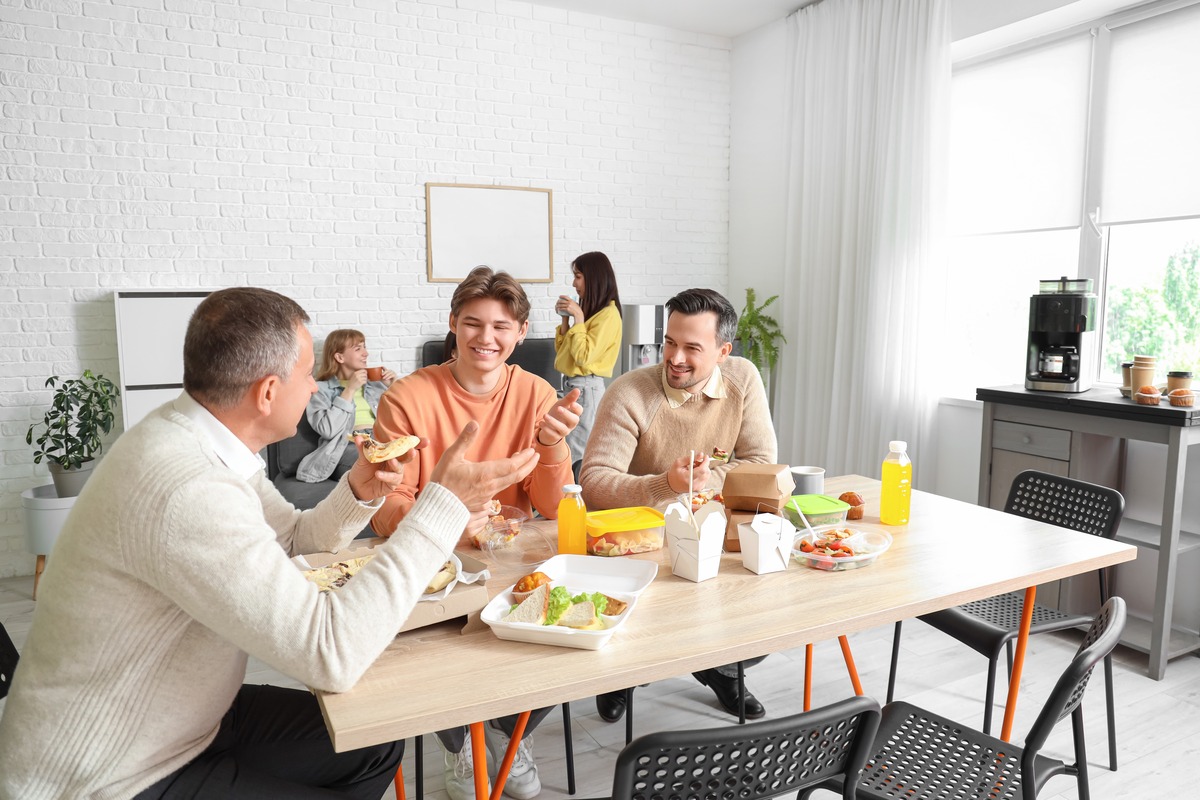
Companies didn’t actively announce they were giving up on hybrid work.
You've probably noticed it happening: three-day office weeks quietly becoming four. "Flexible Fridays" that somehow stopped being mentioned. Team lunches scheduled on days when nobody officially has to be there, but everyone shows up anyway.
This is hybrid creep - the gradual, unannounced expansion of in-office expectations that never shows up in a policy doc but definitely shows up in your calendar.
According to Owl Labs, 34% of workers are now expected to be in the office four days a week, up from 23% just two years ago. But here's what makes hybrid creep particularly messy: attendance is climbing without becoming predictable. Companies want people back for consistency, but the return is happening in scattered, uneven waves.
For office managers, this creates an operational nightmare. Attendance swings wildly day to day. Planning food becomes impossible - order too much and you're wasting budget, order too little and people are frustrated by noon. What used to be routine (lunch for 40 people on Tuesday) suddenly requires constant recalculation.

Hybrid creep is the slow, almost subconscious expansion of in-office expectations without a formal notice.
Owl Labs coined the term, but you’ve probably seen the signs of hybrid creep even if you didn’t know the phrasing. Most companies started out “fully supporting hybrid schedules.” Then they introduced a two-day office rhythm. Eventually, your leadership team sends out a message saying, “It’d be great to have teams in on Thursdays, too”.
Before anyone sends an official memo, a three-day expectation begins to feel like the norm.
Owl Labs’ statistics show the return to the office isn’t happening quickly, but it is happening. For most of us, the early stages are just easy to miss, because they appear in:
Your operations team might see this first in lunch patterns and RSVPs. Some days feel packed, the ones with big meetings, collaborative projects, or guest speakers. Other days feel quiet, almost deserted. But there’s no official “core attendance policy” to point to. That’s hybrid creep in action: behavior shifting faster than policy.
The shift isn’t formalized, so it creates ambiguity about what counts. Managers spend hours trying to interpret signals, and office teams try to balance wildly unpredictable attendance with hybrid catering, space, and event planning.
Most offices don’t notice hybrid creep initially, because it’s so sneaky. You start to spot things gradually. Lunch orders don’t match attendance. Certain days feel overcrowded. Others feel strangely empty. You start planning around patterns that were never officially agreed on.
Office managers usually spot these patterns first, because they show up in food orders, room bookings, and crowding long before they show up in policy conversations.
When you stack these moments together, a pattern emerges. Expectations are changing. Behavior is adapting. Policies aren’t keeping up. Office operations, especially food and space, are left absorbing the mess.
Hybrid creep is less of a cultural debate for most businesses and more of a daily headache. You think having more people in the office would make planning easier. Potentially even cheaper, if you can figure out how to optimize the costs for feeding large groups.
Really, though, office managers see attendance rise, but unevenly, which means more spikes. In many offices, daily lunch participation can swing by 20 to 40 percent week to week, even when the headcount on paper hasn’t changed at all.
Stack these problems together and you end up hedging a lot more. Managers start ordering extra “just in case,” then explaining why leftovers went to waste. Or ordering conservatively, then fielding messages when lunch runs out. Either way, someone’s unhappy, and the decision gets second-guessed.
That admin load adds up fast. Chasing RSVPs. Updating headcounts. Tracking dietary needs that change each day. Explaining to leadership why costs look inconsistent even though nothing “major” changed.
This is why hybrid creep feels so draining to manage. It turns routine tasks into constant judgment calls. There’s no stable baseline to plan against, just patterns that shift quietly over time.
Most companies want people back in the office because they want operations to be predictable and collaborative across the organization. Hybrid creep, unfortunately, increases attendance pressure without fixing the underlying unpredictability.
Leadership often looks at weekly averages and sees stability; operations teams live inside the daily extremes those averages hide.
When expectations rise without being formalized, people don’t spread out across the week. They converge. Data from Kastle Systems shows this clearly. Office occupancy has risen year over year, but it still clusters heavily on Tuesdays and Wednesdays. Mondays and Fridays lag far behind.
Food, space, and services feel strained on peak days and wasted on lighter ones. You can’t plan for the average anymore.
People come in for the meeting, then leave. They arrive late, skip lunch, or head out early once the visible part of the day is over. Others show up specifically because something is happening, a team session, a lunch and learn, free food, and wouldn’t have otherwise.
None of this technically violates policy, but it makes demand unpredictable hour by hour, not just day by day.
Most office systems still assume consistency:
Hybrid creep undermines all three. The office looks “busier,” but behaves less reliably. Pantry snacks disappear on peak days and sit untouched the rest of the week. Lunch orders spike when there’s a reason to be present, then drop off without warning.
Operations are just the start of your problems. Businesses facing hybrid creep are starting to notice other side-effects too, like:
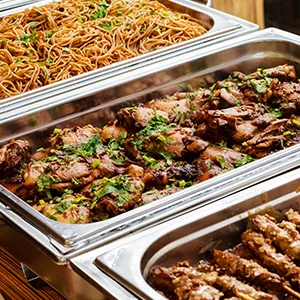
When hybrid creep starts taking hold, lunch becomes one of the few levers companies can pull to boost engagement without rewriting policy. You can’t require people to come in more without backlash. But you can make certain days more attractive. And food is immediate. People feel it the same day.
There’s solid data behind that instinct. Multiple workplace studies show that access to food correlates with higher satisfaction and longer in-office stays. Gallup's research shows that highly engaged teams deliver 21% higher profitability and 17% higher productivity, and food is one of the few engagement tools office teams actually control day to day.
This is why lunches, snack programs, and catered events suddenly cluster on the busiest days. It’s not random. Food becomes a signal. This is a day that matters.
This is where things get tense for office managers. Food is the most visible operational call you make. If attendance spikes, lunch runs out. If it falls short, leftovers stack up. Either way, people notice, and someone has questions.
That’s why offices that treat food as an afterthought struggle the most under hybrid creep, and why the ones that rethink how food is delivered often stabilize faster than the rest.
There’s no switch you can flip to make hybrid creep disappear. Most offices are stuck operating in the gray for a while. What works isn’t more forecasting. It’s designing around uncertainty instead of fighting it.
This is the hardest mental shift. Most office processes were built on the idea that attendance is knowable. It isn’t anymore.
Badge data, calendar RSVPs, and Slack or Teams polls all lag behind real behavior. People decide whether to come in the morning of, not two days earlier.
The fix isn’t better guessing. It’s accepting that variability is normal and building systems that don’t punish you for it.
A weekly average hides what actually matters. One packed day can cause more stress than four quiet ones. Most offices see the same shape:
Once you name those patterns, planning gets easier. Food, staffing, and services should anchor to peak days, not be spread thin across the week.

Whenever you have to guess is when problems start and compound.
Food is the clearest example. When businesses order lunch based on estimates, waste and shortages are guaranteed. Offices that shift to models where people opt in, instead of being counted, see immediate stabilization. Fewer leftovers. Fewer complaints. Cleaner budgets
The same principle applies elsewhere. Self-booking desks. Clear cutoffs. Simple defaults. Let behavior declare demand.
People don’t need certainty. They need rhythm.
When people know food will be there on certain days, they plan around it. Fewer last-minute decisions. Less back-and-forth. Team days stop feeling improvised. Offices that keep those rhythms tend to see steadier turnout and a lot less scrambling.
Hybrid creep makes everything feel tentative. Good operations counter that with small, reliable anchors that hold, even when the week doesn’t.
Hybrid creep breaks food programs that rely on guessing. Fooda works because it removes guessing entirely. Here’s what actually makes the difference.
Fooda isn’t trying to dictate when people show up. It assumes attendance will fluctuate and builds around that reality. That’s why it holds up under hybrid creep. The office stops firefighting lunch issues, and food goes back to doing its job, supporting the day without taking it over.

Hybrid creep might feel like a phase, but it’s one that’s going to last a while.
Most companies aren’t snapping back to five days a week and they aren’t locking into clean hybrid rules either. They’re hovering. Nudging. Watching what happens.
That leaves office managers and ops teams stuck in the middle. You’re asked to support an office that’s clearly busier than it used to be, but still just as unpredictable. Attendance goes up, consistency doesn’t. Yet, somehow, the experience still has to feel thoughtful.
The offices that struggle most are the ones waiting for clarity before they act. The ones that stabilize sooner accept that uncertainty is part of the job now. They stop trying to guess perfectly and start building systems that bend without breaking.
Food is usually the giveaway. When lunch runs out, people feel it immediately. Same thing when it goes untouched and ends up in the trash. But when food shows up consistently, actually works for different diets, and lines up with who’s in the office that day, everything feels easier. The day moves better.
That’s the real opportunity inside hybrid creep. Not to fight it or pretend it isn’t happening, but to operate honestly inside it. Fooda helps with that. If you need insights into how you can adapt your food program for the age of hybrid creep, start by learning more about how Fooda works.