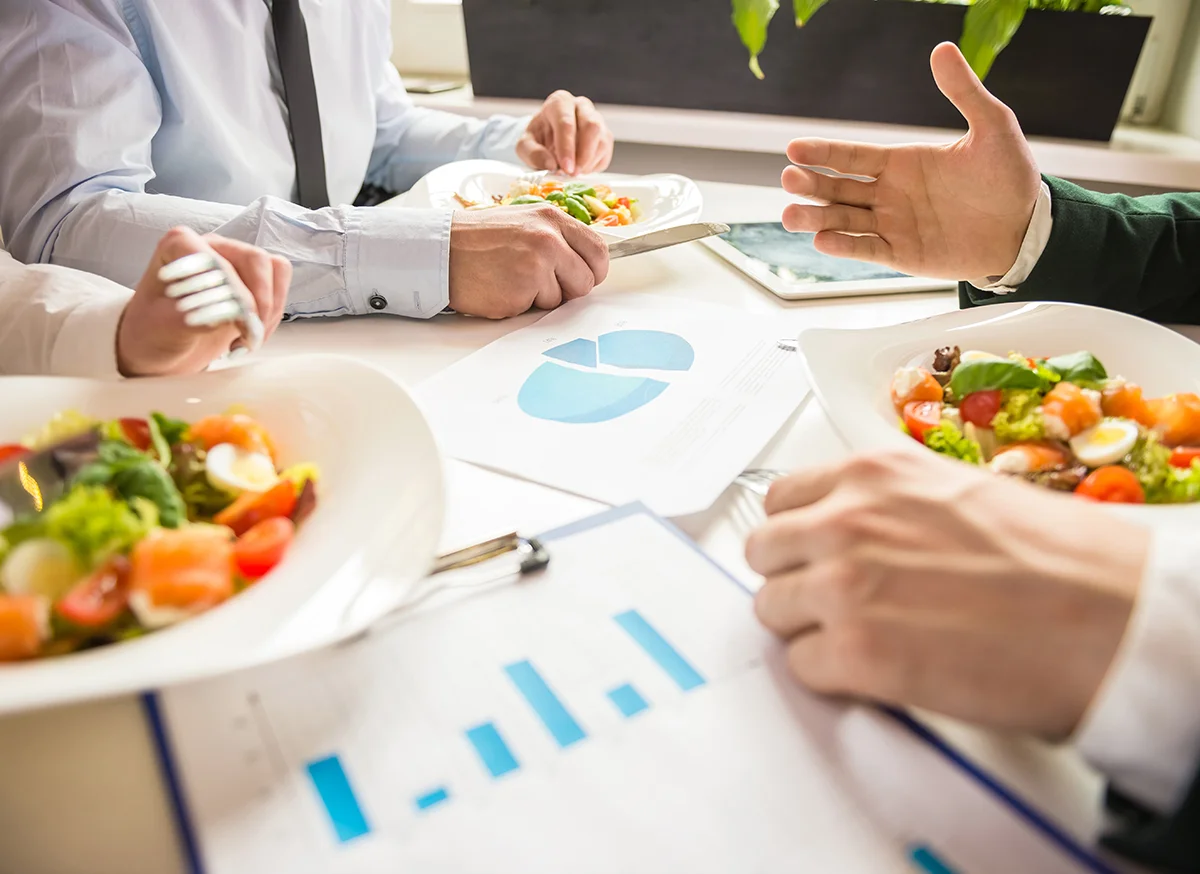
Meetings drag. They wear people out. And somehow, there always seem to be too many of them. Nearly half of employees today attend more than three meetings every day. Eventually, one of those meetings will happen at a time when people are thinking more about their rumbling stomachs than what’s actually happening throughout the conversation.
Having food ready in those moments actually matters. Access to food lowers stress and helps people stay focused during long meetings. When calendars are packed and nerves are already tight, that difference shows fast.
The issue is that most staff meeting food ideas are stuck in an older version of office life. One where attendance was predictable, diets were simpler, and “ordering for everyone” actually worked. That’s not how meetings run now, hybrid schedules and varied dietary needs changed things.
In this article, we’ll help you discover ways of making meetings easier to sit through, easier to focus on, and easier to justify showing up for, with the right food.
Most companies already know that having food at work is worthwhile. It improves productivity, health, wellness, and employee satisfaction (67% of employees are happier when they can eat at work).
It also helps with employee retention, and makes people less likely to wander out of the office in the middle of the day. It’s easy to miss why food plays such a big role in meetings. It feels minor until you see what happens without it.
Getting food for work meetings right doesn't have to be part of the presenetaiton, it's simply about removing friction so people can focus.
Short attention windows, packed calendars, different diets, and hybrid schedules - sound familiar? Good food ideas for staff meetings are important because they match how people move through the day. The goal shouldn’t be to impress everyone, it should be to make the meeting easier to sit through and easier to focus on.
The ideas below show up consistently in offices where meetings run better and waste goes down. They also scale, which matters for any growing company.
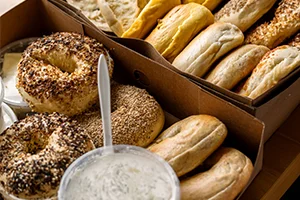
Morning meetings are deceptive. Everyone looks alert, but in reality, half the room isn’t.
Breakfast works when it’s light, familiar, and fast. Heavy, greasy food slows people down. Nothing at all leads to distraction by mid-meeting. The middle ground is where most effective staff meeting food ideas land. What works well in real offices:
People who eat breakfast pay attention better. That’s been shown over and over. Offices see it too. When recurring morning meetings include food, more people show up on time and fewer drift in late. When breakfast is covered, people aren’t scrambling or distracted. They’re ready.
You don’t need a huge cafeteria either. For offices running regular morning sessions, breakfast delivery or a stocked pantry setup often makes more sense than one-off orders.
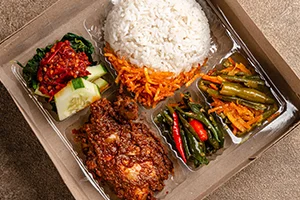
Lunch meetings fail when food becomes the main event instead of background support. Long lines, messy setups, and complicated menus pull attention away from the important conversations at hand.
The most effective meeting food ideas for lunch are simple and individual.
Reliable options include:
Individual meals chosen in advance and handled by a lunch delivery service solve several problems at once. People eat what works for them. Dietary needs don’t turn into side conversations. That means meetings start on time and waste drops.
Flexible options matter most in hybrid environments, where headcounts shift week to week. Offices using individual lunch ordering report fewer leftovers and higher satisfaction, especially during longer sessions like training or lunch-and-learns.
Short meetings don’t need traditional catering (usually), but small snacks can make a big difference.
This is where a lot of staff meeting food ideas miss the mark. Someone orders trays “just to be safe.” People stand up and the meeting stops. Ten minutes are gone and nobody’s sure why.
For quick meetings, the food should be invisible until you want it.
Things that actually work:
It’s also worth saying out loud that snack-style meetings waste a lot less food than full spreads. That matters even more for recurring meetings where attendance shifts week to week. Offices that rely on stocked snacks from something like Fooda’s pantry service instead of last-minute orders spend less time planning and throw away less at the end of the day.
Afternoon meetings are tougher. Everyone’s already worn down, even the ones pretending they’re fine. This is where food choices either help… or make people desperate to leave.
The usual move is sugar. Cookies. Pastries. Something “fun.” It works for about fifteen minutes. Then the crash hits and the rest of the meeting drags. Better staff meeting food ideas in the afternoon focus on keeping sugar levels steady, not perking people up.
What holds up:
Snacks pull more weight than people give them credit for. Back-to-back meetings paired with bad food choices don’t immediately wreck one afternoon. They grind people down over weeks. Having something steady in the afternoon slows that drain.
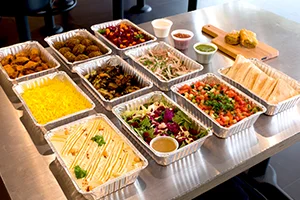
Most staff meeting food ideas assume people will eat quietly and get back to the agenda. Food stations flip that. People stand. They move. They end up talking to someone they usually don’t. That’s not right for every meeting, but it works well when interaction actually matters. The trick is keeping it simple. Too many options slow everything down. Familiar setups move fast.
Ones that work in real offices:
What these setups do well is remove decision fatigue. Everyone knows how to use them. People build their plate, then get back to the meeting. The social upside of these staff food meeting ideas can be incredible. They work particularly well for workshops, planning sessions, and meetings that double-up as team building activities.
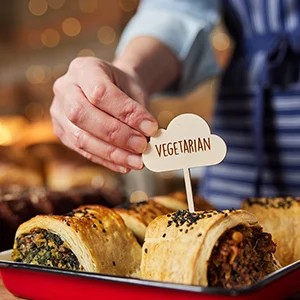
Dietary needs are normal. When staff meeting food ideas ignore that, people don’t complain, they disengage.
Roughly 1 in 6 U.S. adults follows a special diet, and food allergies affect more than 10% of adults. Add religious restrictions, medical needs, and plain old preferences, and it’s obvious why “ordering for everyone” keeps failing.
Things that make a real difference:
Be cautious about waste here. Offices often over-order to “cover everyone,” then throw food out because half the room can’t eat it. Programs built around individual choice solve that. People take what works for them. Less food gets tossed. Less explaining is required.
Choosing food for hybrid teams means breaking most of the old rules. In-person attendance changes, some people are in a conference room, others are on Zoom, and someone always gets left out by accident.
The mistake is trying to force one solution. What works instead is flexibility.
Hybrid work has shifted how people decide to come in. Food plays a bigger role than most leaders admit. Offices that handle meals well see stronger turnout on meeting days. When food for hybrid teams feels fair, whether you're remote or in-person, participation climbs.
There’s no perfect setup for meeting food. Most offices don’t land on one solution. They piece a few things together because that’s what real schedules force you to do.
If you’re planning food ahead of time, it helps to stop thinking only about what sounds good.
Here’s what actually matters.
Most problems with food for work meetings start with guessing. Guessing who’ll show up. Guessing what people can eat. Guessing how much food will actually get eaten versus tossed. Over time, that guessing turns into waste, awkward moments, and quiet frustration for whoever’s stuck managing it.
Fooda works because it removes that guessing. You build your food strategy to suit you. That could mean:
Or you can mix and match a range of options. Fooda doesn’t rely on minimums or padded headcounts. Meals are made based on actual orders. If 18 people order, food is made for 18 people. Not 30. Behind the scenes, there’s also tech doing the work:
That’s what keeps meeting food from becoming another recurring task to manage. At a certain point, good staff meeting food ideas stop being about creativity. They’re about reliability.
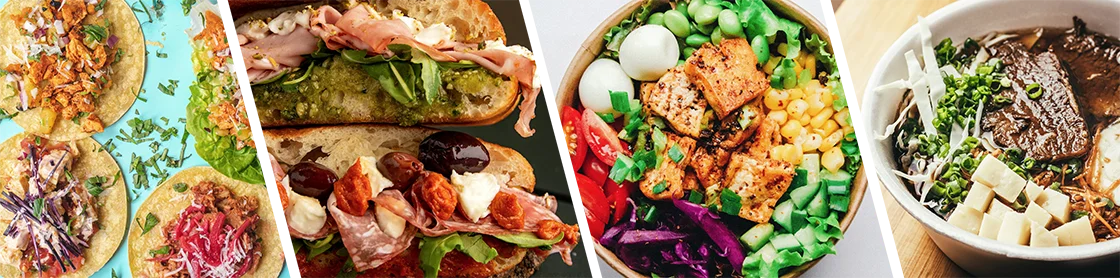
Most people won’t remember last month’s meeting agenda. They’ll remember how being there felt.
They’ll remember whether they were hungry halfway through. Whether they could eat what was offered. Whether the meeting dragged because people were standing in line for food, or whether it stayed focused because lunch just worked.
That’s why staff meeting food ideas matter more than they get credit for. They don’t fix bad meetings, but they shape how long people stay engaged, how willing they are to participate, and whether showing up feels worth it.
The best food ideas for staff meeting planning are simple. They respect people’s time. They account for real diets, schedules, attendance patterns, and reduce the amount of guessing that makes meeting food such a drain to manage.
If managing meeting food keeps turning into more work than it should be, that’s usually a sign the structure needs to change, not the menu. Learn more about how Fooda works today, and how we can help you run meetings staff members actually want to attend.