Terms like “burnout,” “work stress,” and “quiet quitting” have become shockingly common, even normalized. And that’s left HR and team leaders wondering: How can we start reducing stress in the workplace to prevent losing employees?
Overly stressful workdays shouldn't be the norm. And yet, 49% of North American workers report feeling daily stress due to work. And this can create a fast-tracked path to burnout, which impacts not only your employees but your business as a whole.
Luckily, there are many changes you can make to help reduce workplace stress, create a better environment for your employees, and improve your entire business.

At its surface, the benefits of reducing stress in the workplace seem simple: nobody wants to be known for a toxic or negative workplace…and nobody wants to work in one, either.
But the benefits of reducing stress in the workplace go much deeper than the nice-to-haves like getting a better Glassdoor score or more employee advocacy on social media. Committing yourself and your business to reduce workplace stress can have a real impact on your business, from employee engagement to recruiting and retention.
Let’s dive into three key benefits:
It probably comes as no surprise that a stressful work environment can be detrimental for employee turnover. According to a SHRM survey, a whopping 30% of US workers reported that they would even take a pay cut for better mental health support at their workplace.
Fostering a supportive, mentally healthy work culture is a strong piece of the employee retention strategies puzzle. Additionally, it can also help boost work office attendance.
That said, you should still foster an environment where employees are encouraged to use their PTO. According to over half of employees, employers respecting their time off is a key contributor to work-life balance.

Burnout may sound like a buzzword, but it’s an important canary in the coal mine to pay attention to.
A little work stress is normal. But consistent work stress can easily turn into burnout, which can have a serious impact on productivity and how much employees put into their work.
And it’s no surprise that this can also impact retention. Burnt-out employees are about three times as likely to look for another job as those who aren’t.
Creating an environment that’s supportive of mental health can boost morale and show employees that you care about their well-being. Employee engagement can have a business-wide impact, as engaged employees tend to output better business results and help grow the company.
From shifting economic tides to large-scale industry shifts, you can’t control every stressor. But there are plenty of changes you can make to create a better work environment and make employees feel supported; one perk, lunch break, or training course at a time.
Here are a few roadmap updates and changes to consider so you can cultivate an environment where employees thrive, vs. just survive.

How many times have you skipped lunch to finish a project? Forgot lunch at home? Wanted to eat but didn’t have time to pick up?
Ensuring employees are taking their lunch breaks is bigger than a best practice; it’s crucial for the brain. Food has a real impact on our minds, and there have been connections found between nutrition, brain health, and even anxiety.
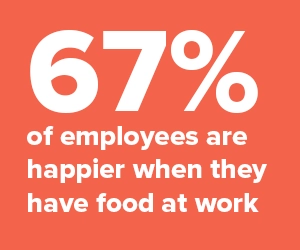
When it comes to reducing stress in the workplace, food is one of the most important elements. An easy win is making healthy snacks and healthy, whole-foods-based lunches easy to access through employee nutrition programs.
Using a corporate catering service like Fooda makes this easy by taking the admin of ordering and finding lunch spots off your plate. Here are a few ways Fooda can keep your employees fueled:
Encouraging employees to take their lunch is one thing. Removing common barriers to make it easy for them to get lunch every day? That’s a game-changer and saves your employees time and money. If you’re ready to start your workplace food program, let Fooda take the stress of organizing lunch off your plate.
You can’t fix what you don’t know is broken. The first step of reducing stress in the workplace is being aware of how your employees feel.
And it’s easy to get this wrong. About 59% of employees said their company thinks their work environment is more mentally healthy than it really is.
So go straight to the source. An anonymous or confidential employee survey can help you understand where your team is at. How is their work-life balance? What are their biggest stressors? Use a 1-5 or strongly disagree/agree scale.
And be sure to include space with clear prompts for constructive feedback on what’s missing. For example: “What is a perk you feel is missing to support your mental health?” or “When you take time off, do you feel like you can truly sign off?
It’s one thing to talk about a healthy work-life balance. It’s another to actively enable it.
Ensure your workplace policies actually enable a work environment that supports mental health. A few ideas:
I can’t stress this enough (no pun intended): it’s not enough to say you support work-life balance; you need to act on that promise. Employees see through empty promises, and the need for employers to prioritize work-life balance is only growing. Assess what you’re actually doing and where you need to do better.
Workplace benefits and how “real” their encouragement of work-life balance is represents how much they care about employees. In fact, it often represents the “true colors” of a company to employees.
And that goes a long way, especially considering that in the past year, employee confidence that their employer cares about their well-being has gone down.
Providing ample access to mental health resources and training as part of your benefits can help employees manage stress while showing that you care. Here are a few methods to consider:
If you’re not convinced these perks work, consider this: According to Headspace, 95% of employees who tapped into mental health benefits from their employer said they felt better. And who doesn’t want to hear that?

Regular movement, like yoga, is a great way to boost mental and physical health. It even has benefits beyond the body, like improved learning, memory, and boosted mood.
I’ve personally worked at companies that offered occasional yoga classes for employees, and it was such a special perk. Even on the days that I didn't attend, knowing that this was available showed that we were cared for and seen.
Psychological safety is the ability to feel that you can safely express yourself (i.e. bring up ideas, opinions, mistakes, and struggles) and bring your full self to work.
When this is not felt, there can be a very real impact on employee stress. According to the APA, 43% of workers report feeling stressed at work; when they don’t feel psychological safety, that number grows to over 61%.
Here are a few steps to consider:
Promoting psychological safety in the workplace can have a profound impact on reducing stress in the workplace and on employee performance. But it takes intentional, org-wide, dedicated change.

What your manager and leaders say or do sets a standard. Encourage them to lead by example whenever possible. Look into professional, qualified training tools for managers to better support their teams, promote mental health resources, and create psychologically safe spaces.
For example, according to the 2025-2026 Aflac Workforces Report, two two key drivers of workplace stress are workloads and long hours. Train managers to recognize signs of stress and have them promote time management and open communication on expectations.
This can even be as simple as how a manager structures their team syncs; Calm recommends that employers encourage managers to have regular one-on-ones with direct reports. This creates space for an employee to talk through concerns and for managers to share mental health resources and stay connected with their team.
Pro tip: There are also legal implications when it comes to supporting mental health, including accommodating disabilities and prohibiting discrimination and retaliation as the SMRH highlights. Consider highlighting this in your training as well.

Reducing workplace stress isn’t a light switch or quick fix. It’s a process. But there are so many steps you can take to foster a healthier, happier environment now as you grow your plan over time.
To reduce your own stress, start with an easy win: keep employees fed with readily available lunches from local restaurants or even something as simple as providing workplace snacks. Fooda takes the stress of daily lunch planning off your plate and turns it into a benefit employees actually love.
A fast-paced world requires fast-paced (and delicious) solutions. If you’re ready to start reaping the benefits of reducing stress in the workplace by feeding a healthier workplace culture, reach out to one of our reps and give Fooda a try.
It depends on the initiative, but most companies start seeing improvements within 3-6 months. Quick wins like adding a workplace food program or encouraging regular breaks can boost morale within weeks. Larger cultural shifts, like improving psychological safety or work-life balance policies, typically take 6-12 months to fully take effect. The key is consistency and employees need to see that these aren't temporary perks but permanent commitments.
Work stress is a normal response to demanding situations and usually goes away after the stressor is resolved. Burnout is what happens when stress becomes chronic and overwhelming. Think of stress as short-term pressure, while burnout is long-term depletion that requires significant time and intervention to recover from.