Workplaces can feel tense these days. Performance looks fine, and projects move forward as planned, but there’s a growing strain underneath the daily experience. Eventually you start to notice things. Energy levels aren’t as high, ideas don’t travel as far, and conversations seem to fall short of expectations. That’s “quiet cracking.”
It isn’t the same as the burnout we’ve seen before, and it doesn’t include dramatic resignations or arguments. Companies just begin to see evidence of capable employees rationing effort to get through their week. It’s happening more and more.
More than half of employees in the US say they’re quietly cracking under pressure. One in five say they feel it constantly. That’s not a small pocket of burnout - that’s a pattern. The cracks don’t explode overnight. They build. A little less energy here. A little less initiative there. Eventually engagement splinters, burnout gets the better of your team, and key people start drifting out the door.
This isn’t some trending workplace phrase. It’s a measurable business risk that shows up long before anyone updates their LinkedIn bio…
Keep reading and learn how to protect your workplace from quiet cracking in this blog.
Quiet cracking at work started getting attention in 2025, but the behavior itself isn’t new. It’s what happens when employees keep pushing through stress without speaking up about the causes of it. They’re overwhelmed, frustrated, and disconnected but they continue to stay quiet.
They just slowly detach. Motivation fades. Ideas stay unspoken. Work gets done, but only what’s required. Nothing extra.
That might sound like natural progression for any employee, but reports are showing that people experiencing quiet cracking are:
This isn’t laziness, or quiet quitting. It’s protective behavior. People scale back effort when the return doesn’t match the effort put in. The chart below breaks down the three main forms of workplace disengagement:
Burnout is what happens when strain goes unchecked. Quiet quitting is what happens when someone redraws their line. Quiet cracking sits earlier in the sequence. It’s the point where capable employees start pulling back internally, even if their output hasn’t caught up yet.

The spike in quiet cracking isn’t about attitude.
It tracks directly with measurable shifts in how work feels and what we all feel we’re getting from employers in return for our effort. Some employees could also be feeling the stress of society and world events on top of an already stressful workplace.
82% of employees say they feel secure in their current job, Only 62% feel secure about staying with their company long term. 18% aren’t even cetrain there’s a long-term place for them at all. That gap changes behavior. People may trust the paycheck but they’re not convinced about the path ahead. That’s where employee disengagement tends to start taking shape.
People stop volunteering to help on extra projects. They delay long-term planning. They conserve energy instead of expanding it. Performance may remain steady, but discretionary effort narrows.
Almost half the workforce didn’t receive any employer-paid training last year (42%). That’s a lot of people going a full year without structured development. Employees in that group are 140% more likely to feel insecure about their job.
That insecurity shows up in quiet cracking reports too. The employees who say they’re frequently quiet cracking are 29% less likely to have received training than their peers. When people don’t see growth, they stop stretching.
Most employees aren’t panicking about AI and automation. They’re recalculating and learning how to adapt to it. With shifting roles and performance expectations, tools are replacing certain tasks faster than companies are retraining staff. That mismatch creates uncertainty about long-term value.
Uncertainty doesn’t always lead to exits. It often leads to reduced risk-taking or fewer bold ideas. People will have less of a desire to be creative and will do what they have to in order to meet the requests of those above them.

The cost of life today is stressful. Healthcare costs keep climbing. Rent doesn’t ease up. Grocery bills creep higher. Even people with strong salaries feel stretched. So they stay in their roles because stability matters - not because they’re energized and hungry to help grow the company.
Financial stress doesn’t stay at home. Someone can be sitting in a meeting thinking about expenses instead of the work agenda in front of them. That kind of mentally taxing distraction drains focus quietly.
The whole reason why quiet cracking is so complicated for business leaders is that it’s silent. People won’t tell you that something’s wrong. They won’t complain about exhausting meetings, or unrealistic deadlines. You’re left relying on signals.
The first thing to disappear is discretionary effort.
That extra 10 %. The idea after the meeting. The suggestion to fix a clunky workflow. The junior employee who used to ask, “Why do we do it this way?”
Instead, work becomes literal. Assigned tasks get completed. Nothing more. Which makes sense if they don’t have additional mental bandwidth. On a balance sheet, that shows up as stagnation. Fewer improvements. Fewer new revenue ideas. Slower problem-solving.
Engagement research consistently links higher discretionary effort with stronger financial performance. When engagement dropped globally from 23 % to 21 % last year, productivity losses were estimated at $438 billion.
80% of employees who aren’t experiencing quiet cracking say they feel valued and recognized. Among frequent quiet crackers, that drops to 26%.
Employees who don’t feel recognized recalibrate. They stop overdelivering, they stop mentoring, and they avoid turning up for “voluntary” experiences like lunch and learn sessions. They stop caring about improvements that aren’t noticed.
They might not quit straight away, but they’re less interested in showing effort that doesn’t get acknowledged. Eventually, roles where recognition is doled out more often start to feel appealing.
A little over 60% of employees say their manager listens to their concerns. That sounds reassuring at first. Then you look at the employees who report quiet cracking. Almost half of them say they don’t feel heard at all. That’s not a small gap - it’s a clear yes or no for most people - and when someone feels like speaking up won’t change anything, they stop trying.
At first, meetings feel smoother. Less pushback. Fewer hard questions. But smoother doesn’t mean healthier. It often means people have disengaged from influencing outcomes. Problems tend to resurface later, mistakes get more expensive, and teams become reactive instead of preventative.

Nearly a third of employees feel overloaded by work. On top of that, 15 % say their role expectations aren’t clear. When work feels heavy and direction feels fuzzy, people protect themselves. They focus on what’s measurable in order to prove their output when the time comes.
From a management perspective, you might see discipline. From a business perspective, it slows adaptability and reduces internal leadership development.
Employees experiencing quiet cracking are six times more likely to burn out.
Burnout isn’t just exhaustion. It drives absenteeism. Healthcare costs rise. Turnover follows. Short-term disability claims increase. It spreads because energy is contagious and a lively workplace is a massive difference maker in the daily experience.
When one person is exhausted, it affects the team. The resignation letter is the visible outcome - but the quieter withdrawal that started months earlier is the part most companies never saw.
You don’t reverse early employee disengagement with a town hall. You change the conditions that made people pull back in the first place.

Recognition naturally improves engagement. You don’t need huge award ceremonies or expensive prizes, just little things. Thank employees for their effort publicly, give them a free lunch, and make them feel like you’re actually paying attention.
Recognition shouldn’t only come from management. When coworkers call out each other’s contributions, team dynamics shift. Effort often increases because appreciation feels real compared to when praise only travels from the top down, it slows and sometimes feels forced.

People who don’t get training feel less secure in their roles, and less capable. Development doesn’t have to be limited to training hours or promotions, all you need is visible forward movement.
If promotions are slow, find a way to show skill progression. Map out competencies and let employees see what the “next level” looks like even if the title doesn’t change yet.
Practical moves:
Growth doesn’t always need to be vertical, just obvious and tracked in a way that lets employees prove the value they provide.

Micromanagement accelerates quiet cracking. When employees feel monitored instead of trusted, they stop stretching. They play it safe. They default to exactly what’s required. Shift to outcome clarity instead of activity tracking. Agree on results and let other people determine execution.
Hybrid environments add another layer. Visibility bias sets in quickly. The people who are physically present often get assumed to be contributing more, even when output says otherwise. That assumption shapes who gets trusted, who gets rewarded, who gets more autonomy.
If leaders aren’t careful, remote employees end up working harder for the same acknowledgment and that imbalance feeds quiet cracking.

Chronic urgency feels productive, but it’s not sustainable. Employees crack under constant pressure, they need you to build recovery into their calendar.
After major launches, lighten the load. Protect real lunch breaks, with good food, where people can connect and unwind. Normalize slower weeks and cancel meetings that don’t move work forward.
A lot of employees already say their workload is unmanageable. Layering nonstop urgency on top guarantees they’ll break.

If you’re not listening to employees when they try to tell you something is wrong, you’re asking for quiet cracking, followed by resignations. Don’t wait until someone decides the only option is leaving. You should be running regular stay interviews instead, asking:
Then act on something visible. Even one change shows you’re trying and want them to feel heard and seen by management in the workplace.

Not all employees experience quiet cracking evenly.
Junior staff often feel it earlier because growth feels slower. Hybrid employees feel it when visibility becomes currency, or when they miss out on opportunities at work. Underrepresented employees may feel it when recognition patterns skew unevenly.
Watch where initiative drops first. If fractures cluster in one segment, the issue isn’t individual resilience. It's a structural imbalance.

If quiet cracking is about contraction, the counterweight is expansion. More conversations, trust, and shared experiences. That doesn’t happen in quarterly strategy meetings.
What really makes a difference is thinking about the smaller things that usually get overlooked. Look at food, for instance.
When teams share meals consistently:
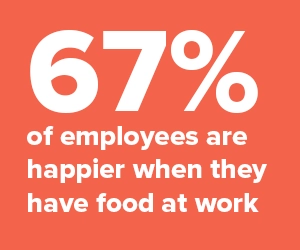
There’s the energy factor, too. When staying fed at work is another task an employee needs to solve, their energy drains faster. Reliable access to nutritious food, even if it’s just the occasional snack at a team meeting, removes the stress.
Plus, offering free food reduces financial strain, it adds another “wellbeing benefit” to the list you have to offer your employees, and it actively encourages hybrid workers to spend more time in the office, which leads to less fragmentation, and better collaboration.
Food doesn’t fix culture on its own. But consistent, inclusive rituals create conditions where recognition spreads, conversations surface earlier, and effort expands again.

If food is going to help interrupt quiet cracking, it needs to be operationally simple, or it just becomes another headache to manage. Fooda helps with that.
It gives companies the freedom to build a food program that works for them, whether that’s a regular lunch delivery strategy, or a pantry packed with healthy snacks.
Fooda offers:
Creating consistent moments where people connect without friction while providing a fantastic employee benefit and perk is one of the best ways to prevent quiet cracking. On top of that, when those moments happen regularly, early employee disengagement becomes easier to spot.
Most organizations won’t lose people because of one bad week.
They’ll lose them because of months of strain that went unnoticed. The question leaders should be asking isn’t “what is quiet cracking?” it’s “are we paying attention early enough?”
The good news is that early-stage employee disengagement is reversible. Recognition can be rebuilt. Growth can be made visible. Autonomy can be restored. Everyday connection can be designed into the rhythm of work.
If shared rituals around food make connection easier and more consistent, they stop being perks. They become infrastructure. If you’re ready to see how the right food program can help repair the cracks breaking your teams apart, contact Fooda today.
Quiet quitting is a conscious decision to set boundaries and stop going above and beyond. Quiet cracking happens earlier and is less intentional, it's a gradual internal withdrawal driven by unmet needs like recognition, growth, or trust. Someone who's quietly cracking may not even realize they're pulling back yet.
Yes, and they're often the most at risk. High performers tend to push through stress longer without flagging it, which means the erosion happens silently. By the time their output visibly dips, they may already be deep into disengagement or actively exploring other opportunities.
Traditional annual surveys often miss it because quietly cracking employees still report acceptable satisfaction levels if they haven't hit a breaking point yet. Shorter, more frequent pulse surveys with questions about energy, recognition, and growth tend to surface the early signals more effectively.