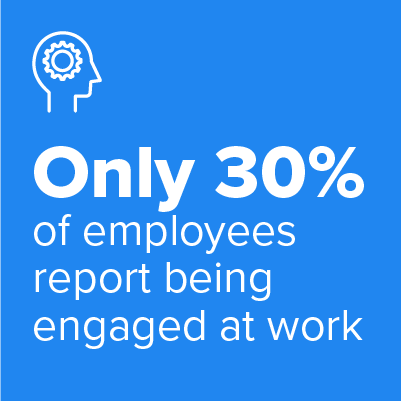
Company mandates are bringing employees back into offices across the country, but pulling people through the door is only the first step. Getting them engaged once they arrive is a separate challenge, and a much bigger one. As of August 2025, only 30% of U.S. workers reported being engaged at work, an all-time low since the pandemic.
Fooda's "What's Happening in the Workplace Now?" survey found that 41% of companies are working on-site full time, a 2x jump between 2024 and 2025, and that figure is expected to keep climbing through 2026.
Yet 37% of employees in the survey say they come in only because of company policy, and 51% of employers have clear policies requiring on-site attendance. The result is higher attendance metrics that often mask quiet disengagement, burnout, and turnover risk.
So as companies scale up their return to office (RTO) plans, a better question to ask is how to make the office somewhere employees want to be. That shift starts with thoughtful return to office strategies that pair company benefits with a workplace experience people genuinely enjoy.
In this guide, we break down the most effective return to office strategies for 2026, fresh statistics on what is working, and a set of frequently asked questions to round out your plan.
Few perks move the attendance needle like food, and the impact runs deeper than morale. In Fooda's 2026 Workplace Lunch Report, 83% of workplace and people leaders said food has a moderate to significant impact on their workplace culture, and 41% called it a core part of culture outright. The employee side aligns with the leadership view: in Fooda's earlier "What's Happening in the Workplace Now?" survey, 80% of employees said they feel more enthusiastic about work when they get lunch from the company, and the two most frequently cited factors that would make the office experience better were both food-related: better snacks and drinks, and good food with cuisine variety.
The why behind the response is practical. Owl Labs reports that in-office workers spend about $14.25 per day on lunch and $8.46 per day on breakfast and coffee. Multiply that by 200 office days and a free or subsidized meal program puts thousands of dollars back into each employee's pocket every year. It also reclaims time, since people no longer need to prep meals at home or leave the building to find lunch.
To make a workplace food program part of your RTO strategy, consider:
The deeper effect is psychological. When lunch is solved, it removes a daily friction point and reframes the office as a place that takes care of you, not a place you have to be.
Long drives and rising fuel prices are one of the biggest reasons employees push back on RTO. Clever Real Estate found that the average commuter spends about $8,466 each year getting to and from work, roughly 19% of annual income.
Worth flagging for benefits leaders: the IRS raised the 2026 pre-tax limit for transit and parking to $340 per month each, and qualified pre-tax programs save employees up to 30% on commuting costs while trimming employer payroll taxes. Common levers worth combining:
Picking up part of the bill makes the commute to work worthwhile and signals that the cost of showing up is one the company is willing to share.

Culture is the sum of dozens of small moments: the Monday huddle, lunch with a teammate, a quick win recognized in a group chat. None of these matter in isolation, but together they build the connection that pulls people back through the door.
Practical ways to make culture a draw rather than a chore:
The reason rituals work: they create predictable, low-stakes social bonds. People come back when they know a friendly conversation is waiting, regardless of policy.
Leaders see the same thing in their own programs. In the 2026 Workplace Lunch Report, 61% said they actively encourage employees to take a real break away from their desk, and 47% said they encourage team members to eat together, both small habits that compound into the kind of culture mandates cannot manufacture.
The office your team needs in 2026 looks different from the one designed in 2019. After years of focused remote work, employees often associate the office with noise, distraction, and back-to-back meetings. The fix is intentional zoning that matches your space to the type of work happening.
Spaces worth investing in:
Quiet spaces where employees can concentrate and comfortable break areas ranked among the top five factors people said would make the office experience better in the Fooda survey. The deeper reason: when an employee can predict that the office will support their work rather than fight it, the commute starts to feel worth it.
Most workers today want work to fit their lives, not the reverse. Breakfast with family, an early cut-out for a vet appointment, a flexible morning for a school drop-off: these are quality-of-life issues that drive both retention and engagement.
A rigid five-day mandate ignores that reality and often backfires, with strict policies linked to measurable spikes in voluntary turnover among high performers (covered in the statistics section below). A more durable approach uses a structured hybrid model, like three anchor days mid-week with autonomy outside of them, so employees get the collaboration benefits of in-person time without losing control of their schedules.
The reasoning is simple: flexibility signals trust, and trust is what employees say they want more than free coffee.
Connection is the most reliable draw a company has, and it rarely happens by accident. A Harvard Business Review study found 84% of employees would be motivated to come in if they could socialize with coworkers. Programming gives people a concrete reason to pick a given day, turning a vague mandate into something on the calendar worth showing up for.
Formats that consistently pull people in:
Concentrate events on the days your teams already overlap so the office feels full rather than scattered. The aim is a rhythm employees can anticipate, where coming in means seeing people and being part of something, not relocating their laptop to a different chair.
Most of the strategies above are programs. This one is people. Research suggests managers drive roughly 70% of the variance in team engagement, which makes the front-line manager the single most powerful lever a company has over whether employees want to be in the office at all.
The catch is that many managers were promoted during the remote era and were never trained to lead a hybrid team. Running a meeting where half the room is on video, coaching someone you see twice a week, and setting norms for in-office days are learned skills. Investments that pay off:
When managers know how to make in-office time meaningful, the rest of these strategies land. When they do not, even a strong food program and well-designed office struggle to carry a disengaged team.
It helps to understand the business case driving the RTO push. Executives are not bringing people back for nostalgia. They are responding to specific gaps that opened up during the remote era.
After years of remote work, many leaders found that "asynchronous" too often meant "delayed." A question that takes 15 seconds in a hallway can take three days over Slack.
In-person teams compress that loop, which speeds up decisions and surfaces the casual, unstructured interactions that build trust and generate new ideas.
Quick coffee chats and impromptu desk visits sound minor, but they are where mentorship, problem-solving, and culture quietly compound.
When teams are physically present, managers can read body language, spot a struggling teammate before issues escalate, and give real-time feedback rather than wait for a scheduled one-on-one.
Because managers carry an outsized influence on team engagement, that day-to-day visibility has a direct line to retention. Hands-on coaching is hard to replicate over video.
Remote employees often rely on home routers or public WiFi at cafes and libraries. Each unmanaged network is a potential entry point for a breach. Working on site routes traffic through secure, monitored infrastructure and gives IT teams more control over how sensitive data moves, which matters increasingly for regulated industries.
Working from home brings convenient distractions: laundry, deliveries, pets, the second screen running a show. On site, those interruptions go quiet. Combined with real-time collaboration, teams get more done with less back-and-forth and finish projects sooner.
Worth noting: research from Stanford economist Nicholas Bloom finds that employees who work from home two days a week are roughly as productive (and as likely to be promoted) as fully office-based peers. The productivity case for RTO is real, but it lands strongest for collaborative, team-dependent work rather than solo deep work. That nuance shapes the strategies above.
A few numbers worth letting shape your strategy:
Two takeaways stand out: mandates alone are a blunt instrument that put top talent at risk, and the energy is concentrated mid-week, which is why anchor days and programming work better than a flat five-day rule.
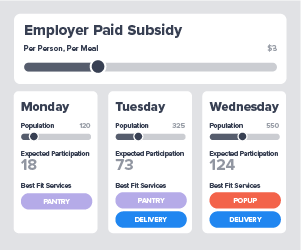
Fooda's corporate dining solutions make it easy to build a workplace food program that supports your RTO plans. Whether you are setting up a full-service cafeteria with rotating and resident restaurants or ordering individual boxed meals for lunch, you can design a program that gives employees a reason to come in.
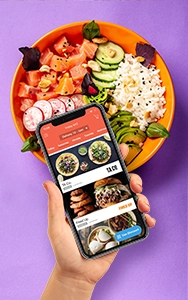
Save employees the trouble of bringing meals from home or running out at lunch. Fooda Popup restaurants prepare food at the partner kitchen and bring it on site so employees get authentic, chef-driven flavors at their desks. With the Fooda app, teams can also order from local restaurants and use consolidated delivery so the whole office eats together.
Same menu, same lunch, same shrug. A rotating lineup of local restaurants serving different cuisines every day keeps food interesting, supports neighborhood businesses, and gives employees a small reason to look forward to tomorrow at the office. That preference is widely shared: in the 2026 Workplace Lunch Report, 87% of leaders said supporting local restaurants matters to them and 83% said variety is important or extremely important in their food program.
Ready to build a workplace food program that anchors your RTO plan? Contact Fooda to learn more.

Start with listening sessions to understand specific concerns, whether the friction is commute cost, childcare, or home office investments. Use that feedback to refine your approach, perhaps with a phased transition or hybrid anchor days. Transparency about the "why" behind the policy, combined with visible flexibility where possible, is what reduces resistance most effectively.
Focus on low-cost, high-impact moves like flexible scheduling, which costs nothing but signals trust. For food programs, start small with Popup lunches twice a week or partially subsidized meal delivery, both of which carry low barriers to entry and high perceived value.
Tuesday, Wednesday, and Thursday are the most popular and highest-energy days for in-person collaboration, with Tuesday consistently the busiest. If your team is hybrid, anchoring at least two of those three days as in-office days gives you the densest collaboration window without forcing a full five-day mandate.
Mandates reliably increase attendance numbers, but they do not automatically translate into engagement, retention, or productivity. ResumeBuilder reported that 8 in 10 companies admitted to losing talent because of their RTO policies. The most successful programs pair clear in-office expectations with reasons to be there, like programming, food, and meaningful collaboration, rather than relying on policy enforcement alone.
Most companies see attendance shifts within 30 to 60 days, but cultural and engagement gains take three to six months of consistent programming. Plan in quarterly cycles, with a launch phase, a feedback phase, and an iteration phase, so you can refine perks, days, and policies based on what your specific workforce responds to.
Food, commuter support, and connection-driven programming tend to outperform one-off bonuses. Free or subsidized meals, transit or parking benefits, and on-site events that create social anchors give employees recurring, tangible reasons to show up rather than a single splashy incentive that fades after a few months.