Creating a positive work environment goes beyond offering competitive salaries and benefits. One of the key factors that contribute to employee satisfaction and productivity is access to convenient, healthy, and delicious food options.
As companies continue to prioritize employee well-being, implementing a workplace or employee food program has become an increasingly popular solution. However, the success of such a program relies on thoughtful planning and careful consideration of your team’s unique needs.
If you’re contemplating a workplace food program, this checklist will guide you through the essential steps to ensure a smooth and successful implementation.
Workplace food programs have evolved far beyond the food trays, traditional corporate cafeterias, and unorganized individual delivery.
Today, employee food programs are a strategic move that improves talent retention, culture-building, and productivity. According to a 2026 survey of over 100 companies done by Fooda, 83% said that food has a moderate to significant impact on workplace culture.
The numbers speak for themselves. The average employee spends around 30 to 60 minutes leaving the office to find lunch. When you multiply that across your workforce, you're looking at thousands of hours of lost productivity each year. A well-run employee food program eliminates wasted time and encourages employees to stay on-site while keeping them energized and focused.
For HR and operations leaders, the ROI case is equally compelling. Companies that invest in employee well-being see measurably stronger retention. We all know how costly replacing any level employee can be, but a food program that costs a few dollars per employee per day can more than pay for itself in productivity and reduced turnover alone.

A workplace food program is measurable business investment. To start, a successful workplace food program has a visible return on investment and valuable data that comes along with it.
Data on participation rates, employee satisfaction scores, cost per meal, and return-to-office correlation become available, which means you can build a clear business case for the program at budget time and defend it with numbers.
Alongside ROI, workplace food programs also support employee health and wellbeing. When employees don't have a good on-site food option, they default to whatever is fastest and most convenient, which usually means fast food, vending machines, or skipping lunch altogether. None of those outcomes are good for energy levels, focus, or long-term health.
A good workplace food program makes it easy for employees to eat balanced, satisfying meals without having to plan ahead or leave the building. Over time, this contributes to lower stress, better energy management throughout the workday, and a workforce that overall feels excited to be there. These results can be seen in improved engagement scores and lowered absenteeism rates.
Although not as easily measured, the impact that a good workplace food program has on community and company culture is just as real. Shared meals are one of the oldest and most reliable ways humans build relationships.
When employees eat together, especially in a relaxed, enjoyable setting with good local food, they have conversations that wouldn't happen in a meeting room. The result is the formation of cross-functional relationships, faster integration for new hires, and a stronger sense of community within the workplace.
Now that you’ve evaluated the different aspects of launching a workplace food program, it’s time to consider how to bring your vision to life. Partnering with an experienced and reliable food service provider like Fooda can simplify the process, offering your team access to a wide variety of meal options without the logistical headaches.
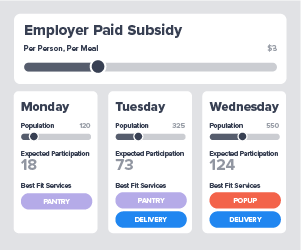
Fooda offers several different program models depending on your office size, budget, and how hands-on you want the experience to be. Here's a breakdown of what's available so you can identify the right fit before your first conversation with our team.
Fooda's flagship Popup Restaurant service rotates local restaurants through your office or building lobby on a scheduled basis. A different restaurant sets up each day, serving freshly made food directly to employees. There's no fixed menu, no kitchen buildout required, and programs can run at zero cost to the employer if employees pay at the point of sale.
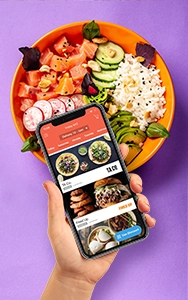
If a scheduled Popup isn't practical for your office, Fooda offers Office Lunch Delivery. Employees order from a rotating selection of local restaurants through the Fooda App and meals are delivered by a dedicated driver in one drop. It gives employees the variety of a virtual food hall with the flexibility of on-demand ordering.
For one-off needs like all-hands meetings, client lunches, team offsites, or onboarding days, Fooda offers Boxed Lunch Delivery and Corporate Event Catering. Orders are placed through the platform, sourced from local restaurant partners, and delivered ready to serve. There’s no need to manage a separate catering vendor for events when your food program partner can handle it.
For snacks, beverages, and grab-and-go items between meals, Fooda's Pantry Solutions keep your breakroom stocked with the options your team wants most. This works as a standalone perk or as a complement to other Fooda programs. This service helps cover the gaps before lunch arrives or late in the afternoon when people need a boost.
Orange by Fooda is a full cafeteria replacement solution for larger offices or campuses that currently operate a corporate cafeteria (or have the space to support one). It brings in rotating restaurant operators alongside permanent fixed options to run the space rather than a single fixed concept, solving the menu fatigue and operational complexity of traditional corporate dining. If you're spending a significant amount on a cafeteria program and not seeing the participation to justify it, this is worth exploring.
Investing in a workplace food program is the same as investing in your company’s most valuable asset: the people.
By prioritizing your employees’ nutritional needs and culinary preferences, you’re not only improving their daily workplace experience, but also boosting morale, productivity, and overall well-being.
Whether you’re starting from scratch or looking to revamp your existing food program, following this checklist and partnering with Fooda will ensure your employees stay happy, healthy, and engaged. So why wait? Take the first step toward a more exciting and productive workplace today!
There's no universal minimum, but most Popup-style programs become logistically viable at around 75–100 on-site employees per day. Below that threshold, individual lunch delivery programs tend to be a better fit. Employees still get access to rotating local restaurants through an app, without requiring a minimum headcount for a physical setup. For pantry and snack programs, there's effectively no minimum. The right starting point is less about headcount and more about what your team actually needs day-to-day, which is why a brief consultation with a provider is usually the fastest way to get a clear answer.
Yes, hybrid offices are actually one of the strongest use cases. A well-designed food program doesn't require every employee to be in the office every day to deliver value. Popup programs can be scheduled on your highest-attendance days to maximize participation, while delivery programs give remote or flex employees a way to access the same benefit from home. Some employers also offer meal stipends through their food program platform that employees can use regardless of where they're working that day.
Corporate catering is typically event-driven. You order for a specific meeting, headcount, and date, then the relationship ends. A workplace food program is an ongoing, structured benefit that operates on a recurring schedule. The distinction matters because a food program is managed like a service partnership: participation is tracked, menus are curated over time based on employee feedback, and the vendor relationship deepens rather than resetting with every order. Many companies run both by using a food program for daily employee meals and the same vendor for event catering needs, which simplifies procurement and vendor management.