Between the Great Detachment, the rise of hybrid work, and an increasingly competitive benefits market - companies are learning that not everyone is replaceable and employee retention is a major factor in a business's success.
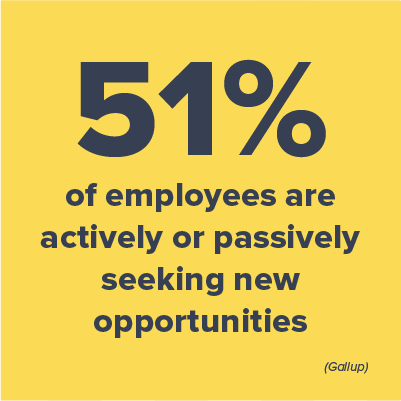
According to Gallup, more than half of all employees are currently considering leaving their jobs, making self-reported turnover risk the highest it has been since 2015. But it's not all doom and gloom. Some employers are thriving right now. Their success hinges on making employee retention a strategic priority.
Meanwhile, research from Eagle Hill Consulting shows that while retention sentiment improved across 2025 (with culture, compensation, and organizational confidence indicators reaching near-historic highs) the job market as a whole remains uncertain.
Employees are staying for now, but their loyalty is conditional.
Employees may not be jumping ship en masse, but they are watching, waiting, and evaluating daily. This creates a critical window of opportunity for employers.
The organizations that invest in meaningful retention strategies now - particularly around workplace culture, benefits, and food programs - will be the ones that keep their best people when the market inevitably shifts again.
For HR managers, office managers, and facilities teams at mid-size companies (100–1,000 employees), retention directly impacts productivity, morale, institutional knowledge, and the company’s bottom line.
Throughout this guide, we’ll explore the most effective employee retention strategies, with a particular focus on how workplace benefits, especially food programs, make a large impact when it comes to keeping top talent engaged and committed.
Before diving into solutions, it’s essential to understand what’s at stake.
Sometimes it doesn’t resonate until you see the true costs associated with losing any level of employee. Considering turnover is one of the most expensive and underestimated drains on a company’s resources, the costs often extend far beyond the price of posting a job ad.
Industry research consistently estimates that replacing a single employee costs between 50% and 200% of their annual salary (depending on the role’s seniority and specialization). For executive-level positions, that figure can climb to 213% or more.
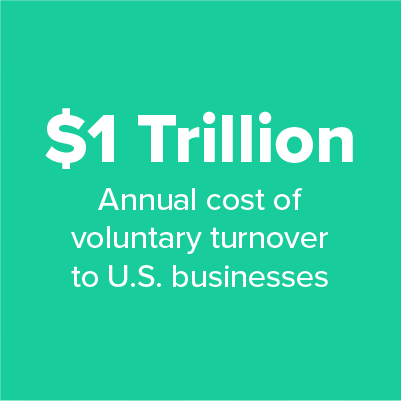
On an aggregate level, voluntary turnover costs U.S. businesses roughly $1 trillion annually.
To put that in perspective: a 200-person company with an average salary of $60,000 and a 15% annual turnover rate could be spending upward of $2.7 million per year just to replace departing employees. That’s money that could be reinvested into the benefits, programs, and culture initiatives that prevent turnover in the first place.
The financial line items, recruiting fees, onboarding expenses, training costs, are just the beginning. The hidden costs of turnover often inflict even greater damage:
Effective retention takes more than one perfect perk or benefit.
It’s most effective when you’re able to build your strategies around what your employees care most about. Based on current research and workplace trends, here are the top strategies driving retention in 2026:
Compensation remains foundational. While money alone doesn’t guarantee loyalty, below-market pay is one of the fastest ways to lose talent.
In 2026, leading companies are going beyond competitive salaries to embrace pay transparency, regular compensation reviews, and equity-based incentives. When employees understand how their pay is determined and trust that it’s fair, they’re significantly less likely to explore external opportunities.

LinkedIn Learning research indicates that 93% of employees say they are more likely to stay with an organization that invests in their career development. Yet one in three employees still plans to leave within their first year due to a lack of advancement opportunities.
Companies that offer structured mentorship programs, skills training, tuition reimbursement, and visible promotion pathways retain talent at significantly higher rates than those that don’t.

Glassdoor research shows that 56% of employees say workplace culture is a deciding factor in whether they stay. Culture is about inclusive leadership, psychological safety, clear communication, and a genuine sense of belonging.
Companies that actively nurture their culture through shared meals, team-building activities, and social events see measurable improvements in retention. For more approaches, explore our blog on easy ways to improve employee engagement.
The benefits landscape has evolved far beyond medical, dental, and vision coverage. Today’s most effective benefits packages include workplace food programs, mental health support, flexible PTO, wellness stipends, childcare assistance, financial planning resources, and more.

BambooHR data reveals that 70% of new employees decide whether a job is the right fit within their first month, and companies have roughly 44 days to convince new hires to stay. A thoughtful onboarding experience - complete with welcome meals, structured training, mentorship pairings, and early cultural immersion - dramatically reduces first-year attrition.
Not all benefits are created equal when it comes to retention.
While standard healthcare coverage is table stakes, the benefits that truly influence employee decisions are those that tangibly improve employees’ daily work experience.
Here’s what the data says about which perks actually keep people around:
The most effective benefits strategies layer multiple high-impact perks together.
For example, pairing a Fooda workplace food program with flexible scheduling and professional development creates a benefits ecosystem that addresses employees’ physical, professional, and personal needs simultaneously.

Workplace food programs are one of the most cost-effective, high-impact retention investments a company can make, and the data backs it up.

Food is fundamentally social. When employees share meals together, they build relationships that transcend departmental silos, strengthen team cohesion, and create the kind of informal collaboration that formal meetings can’t replicate.
Harvard University Dining Services research has shown that, “People who eat more meals with others tend to be more satisfied with their lives and are more likely to express positive emotions.” These casual lunchtime connections build trust, spark ideas, and contribute to a workplace that is directly linked to higher engagement and lower turnover.
Traditional workplace food programs often fail because of a single, predictable menu that leads to “menu fatigue.” Employees get bored, stop using the program, and the retention benefit evaporates.
Fooda solves this problem through a unique rotating restaurant model that brings different local restaurants into the workplace on a regular basis. This means employees get the variety and quality of eating out with the convenience of staying in the office.
Fooda’s approach works across multiple formats to match different workplace needs. Popup restaurant programs bring local restaurant chefs directly onsite to serve fresh meals, creating an experience that feels like a daily event rather than a routine cafeteria visit.
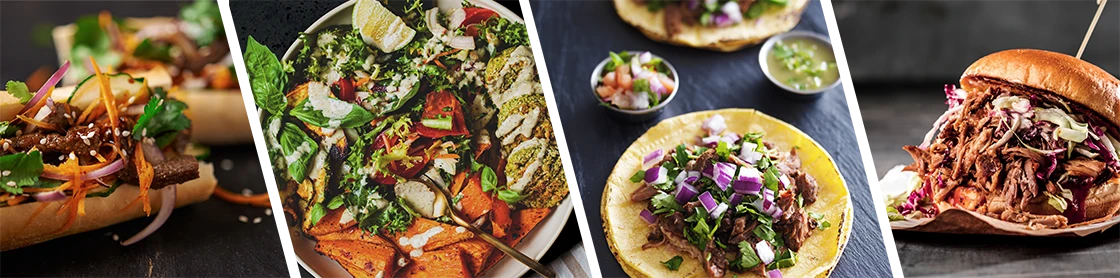
For companies that need full-service dining, Fooda’s cafeteria management brings the same variety-first philosophy to a permanent kitchen. Delivery and catering options extend the benefit to meetings, events, and hybrid teams. And pantry solutions keep the office stocked with quality snacks and beverages throughout the day.
The result is a food program that employees actually look forward to - and that keeps giving them reasons to come into the office, engage with their colleagues, and stay with the company long-term.
Research consistently shows that people don’t leave companies, they leave managers.
Data suggests that 71% of voluntary turnover stems from poor management, while great managers can reduce departure likelihood by 40%. Investing in manager training, regular one-on-one check-ins, and leadership development programs pays dividends in retention.
Recognition is one of the most powerful (and sadly most underutilized) retention tools available. Gallup research shows that employees who feel valued are 56% less likely to look for a new job, and high-engagement workplaces see a 43% reduction in turnover.
Yet many organizations still treat recognition as an afterthought, relying on annual reviews and occasional “employee of the month” awards rather than building a culture of ongoing appreciation.

Effective recognition is frequent, specific, and tied to company values. It goes beyond generic praise to acknowledge particular contributions, behaviors, and outcomes.
The most successful programs combine top-down recognition (managers celebrating team wins) with peer-to-peer recognition (colleagues acknowledging each other’s efforts). This creates a culture where appreciation flows in all directions and reinforces the successes that matter most.

Some of the most memorable recognition moments happen over shared meals. A catered team celebration for hitting a quarterly goal or a surprise lunch from a favorite local restaurant creates an emotional connection to the workplace that pure cash bonuses can’t match.
Employers need to hire good managers and provide training for those who struggle. Great recognition from managers can go a long way too. To learn more, check out our article on the top employee recognition programs for ideas that enable managers to show appreciation.
Work-life balance has evolved from a buzzword into a non-negotiable expectation.
Employees who feel their employer respects their time, personal commitments, and overall wellbeing are dramatically more likely to stay and work harder while they’re with you.
Conversely, organizations that demand constant availability or rigidly enforce outdated policies are hemorrhaging talent to competitors who offer more flexibility.
Forward-thinking organizations are establishing clear boundaries around after-hours communication.
This includes policies around email expectations outside business hours, meeting-free focus blocks during the workday, and respect for personal time during weekends and holidays.
These boundaries are about preventing burnout (which we’ll cover in the next section) and communicating respect, which is one of the strongest drivers of employee loyalty.
For roles where full remote work isn’t feasible, hybrid models and flexible hours provide a middle ground that still delivers significant retention benefits. The key is offering employees autonomy over how and where they work, rather than mandating a rigid schedule that ignores individual needs and preferences.

Generous PTO policies only work if employees feel empowered to use them. Companies seeing the best retention outcomes are those that actively encourage time off, implement mandatory minimum vacation policies, and ensure managers model healthy time-off behavior.
When employees return from genuine rest, not “workcations” where they check email constantly, they’re more productive, more creative, and more committed to their team. Being able to unplug from work is important, as it resets the mind and allows employees to come back refreshed and ready to bring their best.
The most retention-focused companies recognize that their employees are whole people, not just workers. As a manager or executive, it can be easy to lose sight of the individuals that make up the whole organization.
Benefits like childcare support, elder care resources, parental leave (for all parents), pet-friendly policies, and commuter benefits show employees that the company understands and supports their life outside the office.
When employees don’t have to choose between being a good employee and being a good parent, partner, or person, they reciprocate with loyalty.
Burnout and quiet quitting are two sides of the same coin - and both are retention killers.
Burnout drives employees out the door entirely, while quiet quitting keeps them physically present but mentally and emotionally checked out. Either way, the result is the same: you’re losing the full potential of your workforce.

Burnout is not simply being tired or overworked. The World Health Organization classifies it as, ”a syndrome resulting from chronic workplace stress that has not been successfully managed.” It manifests as exhaustion, cynicism, and reduced professional efficacy.
With many employees navigating heavier workloads due to leaner teams and AI-driven productivity expectations, burnout risk is elevated across nearly every industry.
For actionable prevention tactics, read our deep dive on preventing employee burnout with workplace food programs.
Quiet quitting is where employees do the bare minimum required without fully disengaging or formally resigning and is often a precursor to actual turnover.
Warning signs include declining participation in optional activities, reduced initiative, withdrawal from team interactions, and a shift from proactive problem-solving to passive task completion. By the time quiet quitting is visible, the employee’s emotional departure has already happened.
Learn more about recognizing and addressing this in our article on how to prevent quiet quitting.
Addressing burnout isn’t easy and it might be even harder for an employee to admit when they’re feeling it. Fortunately, there are ways to get ahead of it and keep your team happy and operating at high productivity levels.
Post pandemic, it’s not much of a surprise that hybrid work has solidified as the dominant model for workplaces.
But hybrid creates unique retention challenges: fully remote employees can feel disconnected from culture, in-office employees may resent perceived inequities, and maintaining team cohesion across locations requires additional effort.

The fastest way to lose remote employees is to create a two-tier system where in-office workers get better access to leadership, recognition, and perks. Retention-focused organizations ensure that benefits, communication, and opportunities are accessible regardless of location.
This means offering food delivery credits for remote team members when in-office colleagues enjoy a lunch perk. It’s also important to make sure remote employees have an equal voice in meetings and access to virtual social events that complement in-person ones.
For hybrid teams, in-office days should be intentional rather than arbitrary. Leading companies are designing in-office time around collaboration, relationship-building, and team activities - rather than tasks that could easily be done from home.
Anchoring in-office days around shared meals (like a bi-weekly Fooda Popup) gives employees a positive, social reason to come in, which is far more effective than mandates.
For more ideas, see our guide to team building activities for hybrid workers.
Hybrid environments amplify the outcomes from poor communication. When information flows unevenly between office and remote workers, the gears stop turning.
Retention-focused organizations invest in communication infrastructure by having regular all-hands meetings, transparent decision-making processes, accessible documentation, and multiple channels for feedback.
Today’s workforce currently spans four generations: Baby Boomers, Gen X, Millennials, and Gen Z and each have distinct expectations, motivations, and retention drivers.
A one-size-fits-all retention strategy inevitably misses the mark for significant portions of your team. Research shows that workplaces with tailored, multi-generational retention strategies experience lower overall turnover compared to those using a uniform approach.

Despite generational differences in communication styles, career priorities, and technology adoption, one thing unites every demographic: the need to eat.
A quality workplace food program is one of the few retention investments that appeals equally to a 25-year-old software developer and a 55-year-old operations director.
Shared meals break down generational gaps, create opportunities for mentorship and knowledge transfer, and build the kind of cross-generational camaraderie that makes a workplace feel like a community.
As they say… you can’t improve what you don’t measure.
Effective retention strategy requires consistent tracking, honest analysis, and a willingness to act on what the data reveals. Here’s how to build a retention measurement framework that drives real results.
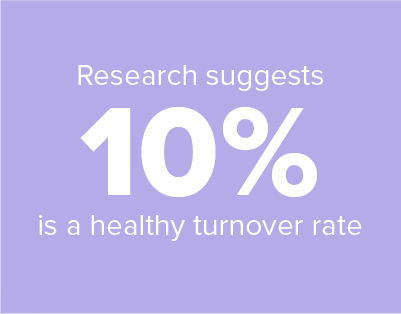
Research suggests that a healthy turnover rate is approximately 10%, though this varies significantly by industry and role type. The global median turnover rate sits around 13–16%, while high-turnover industries like hospitality can exceed 75%.
Set your retention goals based on your industry benchmarks, company stage, and strategic priorities - then track progress quarterly and adjust your strategy based on what you learn.
Employee retention isn’t a problem you solve once - it’s a commitment you make every day. The companies that thrive are the ones that have made employee retention a strategic priority.
The strategies outlined in this guide work because they address the fundamental human needs that drive workplace loyalty: feeling valued, supported, connected, and fed.
The most impactful retention strategies don’t have to be the most complicated or expensive ones. Sometimes, the simplest gestures, like providing a quality meal during a long work day, send the loudest message that you care about your people.

Fooda partners with companies of all sizes to deliver workplace food programs that employees love.
From rotating restaurant Popups to full cafeteria management, delivery, catering, and pantry solutions, Fooda makes it easy to offer a benefit that keeps your team well-fed, connected, and committed.
Get connected with Fooda today and learn more about how a workplace food program can support your retention goals.
How long does it take to see results from a new employee retention strategy?
Most organizations begin seeing measurable improvements in engagement scores within 3–6 months of implementing new retention initiatives. However, meaningful changes in actual turnover rates typically take 6–12 months to materialize, since retention is a lagging indicator. Quick wins like launching a workplace food program or improving recognition practices can boost morale almost immediately, even before the numbers shift.
What's the difference between employee retention and employee engagement?
Retention measures whether employees stay with your company, while engagement measures how emotionally invested and motivated they are while there. The two are closely related and highly engaged employees are far less likely to leave - but they're not the same. An employee can be retained but disengaged (quiet quitting), and a highly engaged employee might still leave for a life change or relocation. The best strategies improve both simultaneously.
How do small and mid-size companies compete with large corporations on retention?
Smaller companies can't always match enterprise-level salaries, but they can compete on culture, flexibility, and personalized benefits. Mid-size companies often have an advantage in offering faster career progression, closer relationships with leadership, and more agile decision-making around perks. Targeted benefits like a workplace food program can deliver an outsized impact without requiring a Fortune 500 budget.
How do you retain employees during periods of organizational change like mergers, layoffs, or restructuring?
Transparency is the single most important factor during times of change. Communicate early, communicate often, and be honest about what you know and don't know. Maintain or even increase investment in daily benefits like workplace meals and wellness support - these provide stability and routine when everything else feels uncertain. Stay interviews become especially valuable during transitions to surface anxiety before it becomes attrition.
What role does compensation play compared to non-monetary benefits in retention?
Compensation needs to be competitive enough that it's not a reason to leave, but beyond that threshold, non-monetary benefits often matter more for long-term retention. Research consistently shows that culture, growth opportunities, management quality, and daily workplace experience outweigh salary as reasons employees stay. The most effective approach is ensuring fair pay while layering on meaningful benefits that improve quality of life.
How can we improve retention without significantly increasing our benefits budget?
Many high-impact retention strategies are low-cost or cost-neutral. Improving manager effectiveness through training, implementing peer recognition programs, conducting stay interviews, and being more intentional about team connection all require time more than money. For benefits spending, focus on consolidating underused perks and redirecting budgets toward what employees actually value - workplace food programs, for example, often replace scattered spending on less impactful perks.
Can employee retention be too high?
Yes. A certain amount of healthy turnover is normal and even beneficial. It brings in fresh perspectives, prevents stagnation, and allows organizations to evolve. If your retention rate is near 100%, it may indicate that underperformers aren't being managed out or that employees feel stuck rather than loyal. The goal is retaining the right people, not retaining everyone at all costs.
How do return-to-office mandates impact employee retention?
Rigid return-to-office mandates without clear rationale tend to increase attrition, particularly among high performers who have more options. However, companies that frame in-office time around meaningful experiences - collaboration, mentorship, and shared perks like workplace dining - see better compliance and lower resentment. The key is giving employees a compelling reason to come in rather than simply requiring it.