As the older generation moves towards retirement, Gen Z continuously occupies more of the workforce. Since businesses are constantly undergoing development and evolutions, a smooth transition is crucial for all employers. Ultimately, companies who don’t keep up, won’t be able to stay open.
Now more than ever, your workplace needs to adapt to the needs of a younger and technologically-savvy workforce. To set your company up for long-term success, management needs to understand how to properly support and cultivate your rising leaders.
Keep reading, and we’ll cover what the modern workforce looks like now, different working styles, and how accommodating Gen Z in the workplace with Fooda will future-proof your business.
Recently, the US Bureau of Labor Statistics reported that there are about 171.6 million people in the US civilian labor force. Of these, Zippia states there are 1.9 million managers, with the average age of 44.5 years old.
The future of the workforce - its growth and decline, is in flux. In 2025, the American labor force was affected by an unstable economy, resulting in federal and private layoffs, increased barriers to entry for recent grads, and growing reliance on AI tools.
As businesses like yours look forward, increasing employee retention rates, while reducing quiet quitting, layoffs, and unfit hires, is a key part of creating a successful and sustainable organization. That’s why investing in the Gen-Z workforce is the same as investing in the future of your business!

Gen Z, formally called Generation Z and informally known as “Zoomers”, are the generation following Millennials, and are succeeded by Generation Alpha. Born between 1997 and 2012, Gen Zers are projected to make up 30% of the US workforce by 2030.
Growing up in a digital-first world, this generation has been quick to stay on top of news stories and technological innovations. They’ve also faced economic recessions, came of age during the COVID-19 pandemic, and experienced mass layoffs.
Compared to generations before them, Gen Z has a reputation for being more cynical and pragmatic due to the high barriers to entry in the workforce and housing market. This might be the biggest disconnect between senior management: Gen Z saw how the system of getting educated, working hard, and loyalty to employers isn’t always rewarded.
But Gen Z’s lack of trust in “the system” shouldn’t be viewed so negatively. Rather, this generation is redefining success in the workplace, reinventing how technology is utilized, and changing how we collaborate.
Companies and management must be willing to modify their processes and structures to appeal to incoming top talent and get the most out of their young employees. Before we dive into the best ways to accomplish that, let’s explore the different types of workers we collaborate with every day.
The way we work and collaborate with others has dramatic effects on office dynamics. All workplaces need a harmonious environment to keep operations running smoothly. When hiring, it’s important to understand the type of working style you want or need for each role and how to set them up for success.
That’s why it’s essential for managers to understand how to work with all types of employees. Extending beyond simple personality types, working styles outline a person’s preferences around problem-solving, task management, communication, and collaboration.
There are no “official” work styles - but sources like Asana, BetterUp, and Indeed, outline 4-6 widely recognized types. These include:
Your company’s leadership and management styles should balance each of these work styles. The best managers understand how to effectively connect with each team member, and get the most from them!
If you want to dive deeper, there are many assessments you can take. Working styles are an amalgamation of three key models in psychology: the Meyers-Briggs (MBTI), Herrmann Brain Dominance (HBDI), and Dominance, Influence, Steadiness, and Conscientiousness (DISC).
These tests are vital for improving self-understanding and how to interact with others in the workplace.
Management needs a strong comprehension of Gen Z and their preferences as they deepen their roots in the workforce. After all, it’s different ideas and working types that lead to increased productivity and innovation and Gen Z is on track to influence a workplace evolution!
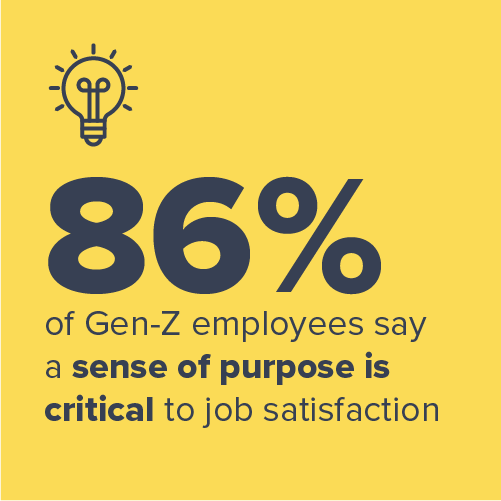
Overwhelmingly, this generation values flatter organizational structures, flexibility, empathy, transparency, and work-life balance. 86% of Gen-Z employees say a sense of purpose is critical to their job satisfaction. They don’t want to work just for the sake of work. What’s inspiring about this generation is that they have a strong desire to make real impacts on both their local communities and the world.
Notably, Gen Z is defined by their desire to learn (which we will cover more below), and are acutely aware of social responsibility. These workers have strong senses of self-value and will question structures and expect change - which can often get misconstrued as entitlement or selfishness.
Managers can reframe this as an opportunity to educate Gen-Z employees while being open to implementing change. It’s a two-way street: companies and their staff can help each other improve.
Sadly, many leaders in the current workforce don't have much faith in Gen Z. In fact, 40% of leaders claim Gen Z is not prepared for work. Why is this?

It happened to all of us at some point: your generation is misunderstood by the one that came before it. They don’t understand what’s hip, are behind on social progress, and call you lazy and unpassionate.
You grow and move forward in life, and the new generation follows behind you - you can’t understand their decisions sometimes (but they also don’t understand yours). They have new pop culture references, are too sensitive, and “don’t want to work hard” like you had to.
Then you realize: now you’re the old-fashioned one stuck with outdated practices and mindsets. Truly understanding and empathizing with others takes a dedicated effort. Assumptions and misjudgements are the easy way out.
Yes, it sounds simple and silly, but: we really aren’t so different after all. Whether you’re a Boomer, Gen X, Millennial, or Gen Z in the workplace, we all want the same things in life: stability, peace, happiness, and work-life balance.
The most effective managers understand that fluidity and an open mind will make onboarding and long-term development achievable.
Cake.com reports 75% of managers do not understand what Gen Z needs in the workplace.
A “back to the basics” approach can be most effective. Managers and senior leaders need to recognize that the world just isn’t the same as when they first entered the workforce. Adjusting expectations, management hierarchies, and communication styles can help Gen-Z employees integrate with your business and flourish in their careers.
Remember: a strong company identity and values resonates with this generation. Here are some ways your business can appeal to Gen-Z employees.
Gen Z craves strong relationships and mentorship in the workplace. Adobe’s Future Workforce Study reports 83% of those polled say a workplace mentor is crucial for their career.
They want to learn, and they want to learn from established leaders in their companies. The issue? Time. In that same report, 55% participants state they attend career development training programs less than once a month - due to lack of time and availability.
The key is for you as the employer to actively prioritize and organize opportunities to connect.
Here at Fooda, we believe sharing a meal is the perfect way to start. We help companies like yours build custom workplace meal programs, bring local restaurants into your space, and cultivate a sense of community via lunch. Organizing 1-on-1 lunch meetings, coffee breaks, or team events are practical opportunities for managers and leadership to connect with their Gen-Z employees.

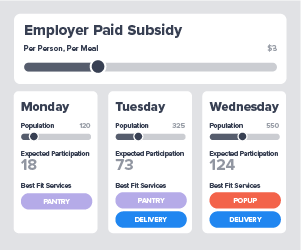
Adobe reports that 81% of Gen-Z surveytakers consider on-site office experiences important. Popup restaurants organized and hosted by Fooda make it easy to bring your company together. Simply choose the local restaurant you want to have on site, how many employees will be participating, and when, and Fooda will handle the rest!
Plus, you can further incentivize employees to participate by offering meal subsidies.
This way, you can make sure employees have increased access to regular feedback and facetime with their managers outside of everyday tasks and meetings. It gives leadership an opportunity to understand what makes their employees tick, what they want out of their careers, and how they can guide them towards success in a casual setting.
As mentioned earlier, learning and development is one of the most important values of Gen-Z workers. In fact, in a 2022 survey by the NSHSS, 67% of pollsters ranked “Gaining skills to advance my career” as the most important attribute when weighing potential employers.
Even more, the 2025 ADP research report shows Gen-Z employees are 3x more likely to self-describe as “productive” when training is provided. Additionally, 8% of pollsters noted free meals and snacks as an incentive to stay with their current employer.
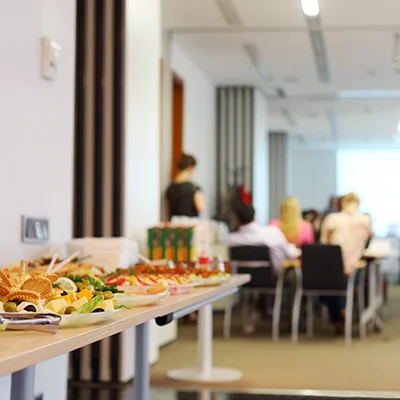
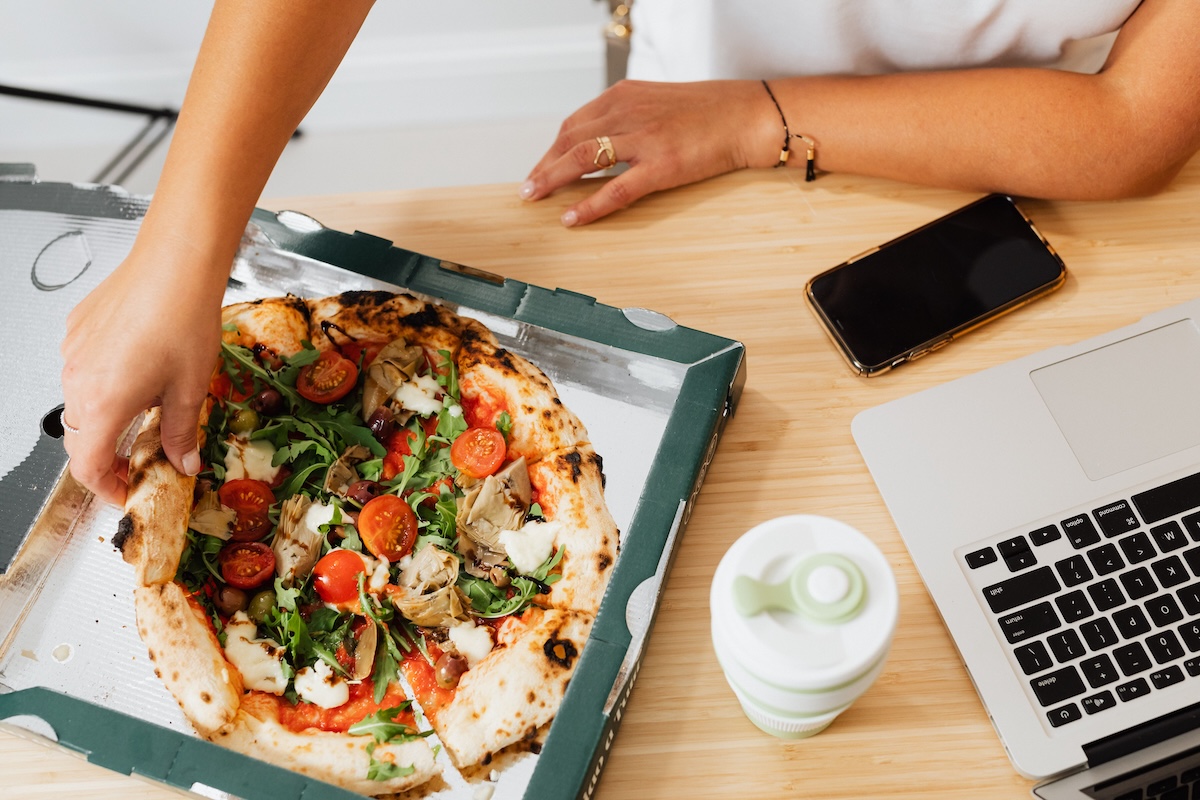
If you want to boost engagement in the workplace, consider hosting relevant lunch and learn sessions for your employees. Perfect for larger group settings, these meetings make it easier to unite your business. Depending on your goals, you can arrange company-wide, or team-specific lessons.
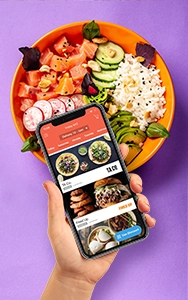
When planning large events, office lunch deliveries take the weight off your team. Rather than have a restaurant on-site, Fooda can pick-up and drop-off meals from rotating groups of restaurants directly to your office. All your team needs to do is select their orders on the Fooda mobile app.
Ready to design your custom workplace food program?
See how much Fooda can save you here!
Climate change and its impact is impossible to overlook and avoid. Increasingly, more young people care deeply about the environment and how corporations affect it.
According to Deloitte, Gen Z heavily values employers who commit to tackling societal problems, including “sustainability, climate change, and hunger.” This generation cares deeply about their future in and out of the workplace. They shared that 70% of survey respondents report considering a company’s environmental credentials and policies when evaluating a potential employer.
We believe your cafeteria’s design and eco-friendly practices can set your entire company up for success. From a business perspective, understanding corporate dining and the waste it generates, is vital for costing-saving and revenue. It’s also an opportunity to champion social responsibility to employees.
From reducing food waste, to using LED lighting, and participating in recycling programs, implementing a sustainability-focused cafeteria and food program thoroughly demonstrates a commitment to tackling issues your workforce cares about.
In any workplace and profession, the “old guard” will struggle to accept and integrate with the upcoming workforce. Emphasizing constant business development, learning, and open mindedness will help your company stay dynamic during periods of change.
Regardless of generation, your employees want to make an impact and drive results for the company. While Gen Z may come across as picky and opinionated, they are deeply loyal to companies who prove to genuinely care for them.
Investing in a quality workplace food program is how the best companies give back to their employees. Bringing your entire team together, to build organic and trusting relationships is the best way to increase retention and prepare for the future.

Don’t get stuck in the past: it’s time to transform how you provide for Gen Z in the workplace. Meet with Fooda today and learn how to provide your employees with a workplace food program that keeps them engaged and excited.
Treating them like a monolith. Just like any generation, Gen Z employees have diverse working styles, career goals, and preferences. The mistake isn't failing to offer flexibility or mentorship - it's assuming all Gen Z workers want the exact same things. Focus on creating systems that allow for individual choice rather than blanket policies that assume what "Gen Z wants."
Not necessarily. Your hiring process should reflect what Gen Z values: transparency, purpose, and authenticity. Be upfront about compensation ranges, career progression timelines, and company challenges. Showcase actual employee testimonials and real projects they'd work on rather than corporate marketing speak. Gen Z can smell BS from a mile away, and they've got Glassdoor reviews at their fingertips. Your hiring process should be honest about who you are, not aspirational about who you want to be.
Start with what costs nothing: clear communication, regular feedback, and genuine mentorship opportunities. Gen Z values access to leadership and transparency more than free snacks. A 30-minute monthly coffee chat with a senior leader can be more impactful than catered lunch if that conversation is meaningful. But Fooda’s low barrier to entry makes it possible for companies of all sizes to incorporate a workplace food program of some type.