It’s no surprise that the expectations and realities surrounding the employee experience have changed in recent years. From learning how to navigate hybrid work models to preventing burnout and maintaining company culture, these shifts have brought new challenges for employers. These issues, if not addressed, can drastically impact satisfaction and retention.
Workplace food programs are the perk that makes a big impact on day one. They create an immediately visible change that proves that you care. Easy access to healthy, affordable, and high-quality meals can boost productivity, support employee wellbeing, build company culture, and encourage in-office attendance. Keep reading to learn how…
Workplace food programs offer unique solutions to these new challenges. While traditional benefits are important, many companies are focusing on improving smaller day-to-day interactions. These little moments add up to improve the employee experience, facilitate smoother operations, and create a positive impact on the local community.
Even six years after the start of the COVID-19 pandemic, companies are still struggling to ramp up in-office operations. Many are utilizing hybrid models. Others are using perks to motivate employees that create hybrid creep and slowly increase their expectations around office days.
Still, low in-office attendance remains an issue for many companies. The corporate landscape has been irrevocably changed. Now that it’s been proven they can work from home, employees need a reason not to. Providing office space simply isn’t enough anymore.
Additionally, commuting to and from the office takes a considerable amount of time. This is especially true in Chicago, where traffic jams and congested public transit systems make commuting especially frustrating. To make employees feel like the lost time is worth it, the office needs to offer something they can’t get at home.
In the absence of food programs, employees must either bring their own lunches, go out to eat, or order for delivery. These options require work and planning outside of the office, eat up valuable break time, or are expensive and unreliable. This creates a major issue for those that may already view in-person work as disruptive to their lives.
Workplace food programs offer affordability and accessibility around lunchtime that isn’t available in their home office.
Outside of the office, employees either have to make their own lunches (inconvenient) or order for delivery (expensive). The benefits offered by workplace food services offset the inconvenience of their commutes, making coming into work feel like a more viable option again.
Exhaustion, high-stress environments, and heavy workloads can wear workers down over time and lead to burnout.
When employees become overwhelmed, it becomes harder for them to dedicate themselves to their work. So much of their energy is consumed by stress that they lose the ability to effectively do their work, causing even more stress and overwhelm. Burnout decreases productivity, damages company culture, and oftentimes drives staff to leave the company.
Deloitte found that only 56% of employees believe that their executives actually care about their wellbeing. It’s as simple as this: employees need to know that you care about them. Providing them with regular access to healthy meals is a great way to show them that.
Office food programs also encourage employees to take lunch breaks every day. By building lunch into their daily schedules, employees will be less inclined to hurriedly eat at their desks or worse, skip lunch altogether.
Additionally, having food readily available takes any choice fatigue or stress out of their breaks. They get a chance to truly relax and reset, so they can approach the rest of their day with renewed energy and enthusiasm. They can divide their time into two manageable halves instead of powering through for 8+ straight hours.
Productivity is valuable, and it needs to be encouraged. Especially in fragmented hybrid environments, it is important to make those valuable in-office days predictable.
When employees have to worry about tracking down lunch each day, they lose valuable time and focus.
They have to leave the office to find food, wait in lines, then make the trip all the way back. Or they may order for delivery, pay extra fees, and then have to track down lost drivers.
Employers need to identify places this fragmentation can occur and address them. It makes your employees’ days easier and less stressful, letting them dedicate their time and energy to the tasks at hand.
Workplace lunch programs create convenience that relieves stress and distraction. Structuring lunch into the work day fosters further consistency.
Employees can build their schedules out around that one structured point. Instead of dividing the day into multiple, fragmented tasks, they can divide it neatly into “before lunch” and “after lunch.”
Additionally, Fooda’s “What’s Happening in the Workplace Now?” survey found that 64% of employees report having more energy after taking lunch breaks. By prioritizing their lunch experience, you are supporting their ability to maximize their performance and productivity.

Providing space for employees to bond and build genuine connections is difficult in fast-paced office environments. When employees are always focused on achieving their next goal, they don’t have the opportunity to get to know the people outside of their silos. This creates a disconnect that not only leads to feelings of isolation, but inhibits employees’ ability to effectively collaborate, especially across teams.
This problem is exacerbated in hybrid offices, as limited face time makes forging meaningful relationships even more challenging.
According to Fooda’s workplace survey of 100+ companies, 41% of employees believe food has a significant impact on company culture. Lunch breaks can be a great place to support your employees’ social needs, but they need to be handled correctly.
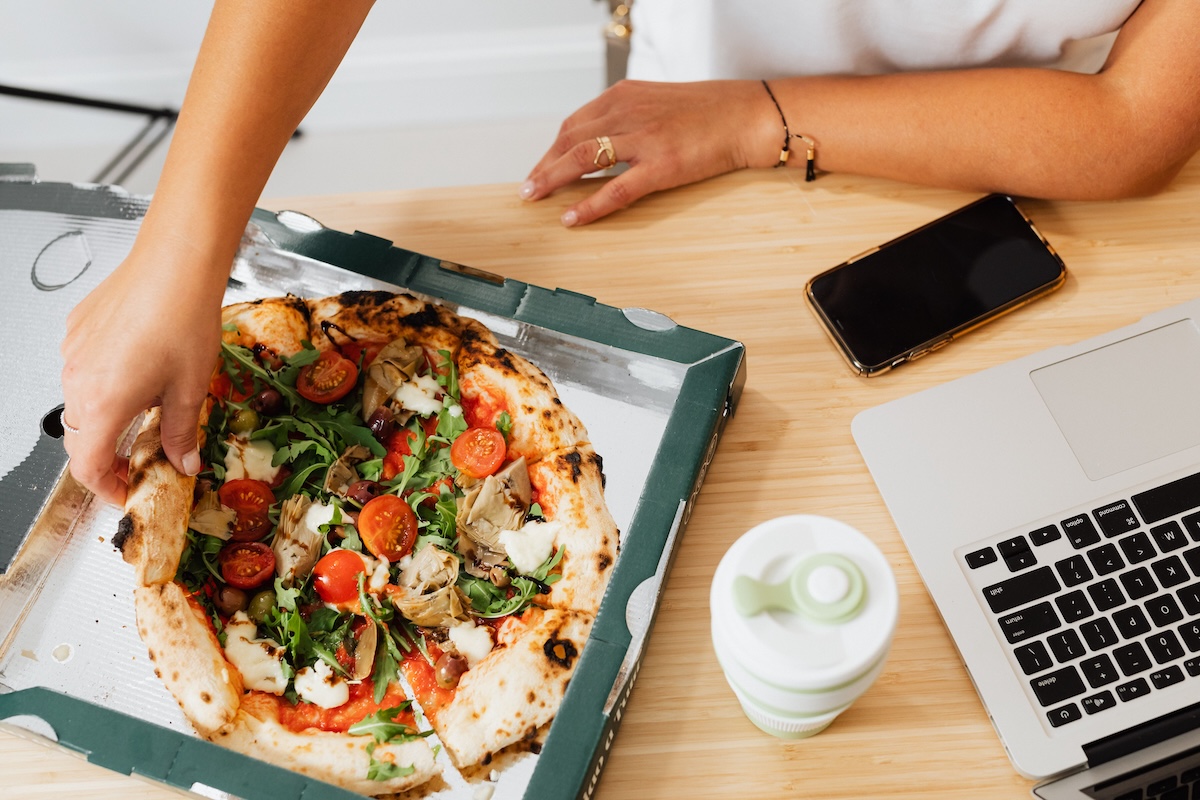
Providing food in the workplace prevents employees from scattering to go find their own lunches. Instead of eating alone or in small, isolated groups, they’re encouraged to spend breaks together. People communicate across teams, spark new ideas and build stronger working relationships.
When employees feel supported by and connected to their colleagues, they become more engaged. Employee satisfaction soars and collaboration feels more natural.
According to the UN, food waste accounts for 8-10% of all greenhouse gas emissions. That’s a significant contributor that is often overlooked in sustainability initiatives. With sustainability becoming a growing priority for many Chicago businesses, it’s important to consider sustainable food practices in your green initiatives.
Large food service companies often come with long, unsustainable food supply chains caused by longer transport times, more packaging, and more food going to waste. The way you implement these programs matters.
One of the easiest ways to reduce food waste in the workplace is to implement an employee meal program. If implemented thoughtfully, these programs reduce food waste, lower carbon emissions, and support the local economy.
Scalable programs allow you to accurately predict how many people will participate in your lunch programs, meaning you can add to or subtract from food quantities day to day. This flexibility means less food goes unused, greatly reducing your environmental impact.
Working with local restaurants is another step in the right direction. Large food service companies come with unsustainable supply chains. Working with local restaurants that source their food locally reduces travel emissions considerably, all while supporting Illinois agriculture.
Chicago has a thriving local restaurant scene, and food is a huge part of the city’s culture. By supporting it, you help support the neighborhoods you explore regularly and contribute to the city’s economic growth.
Working with these businesses also shows your employees and the public that you care about the city you operate in. Choosing neighborhood restaurants over larger food service corporations can build community trust, create strong local connections, and further your reputation as a place employees are proud to work.
Although office food programs have many benefits, it’s important to pick one that won’t create more problems for you down the road. When looking for a program that best suits your company’s needs, here are four things you should look out for:
The last thing you want from your workplace food service is inconsistency. In order for these programs to boost productivity and support employee wellbeing, they need to be predictable. If employees are regularly let down, they are likely to stop participating altogether.
A good program will be professional, undistracting, and consistent. Food should arrive at the same time each day. Drop-off and setup can’t be distracting. Quality must be continuously excellent. Ultimately, employees need to come in to work each day knowing that you’ve got lunch covered. Otherwise, nobody benefits.

Meal options need to feel fresh and exciting to keep people coming back. If they begin to feel stale, employees lose interest and the program flops. This is especially true in Chicago, the endless variety and high quality of food keep standards high.
You also need to be able to account for dietary restrictions and preferences. Gluten free, vegan, allergy-friendly, and religiously compliant meals need to be available on a daily basis to keep anyone from feeling left out. These programs are meant to grow employee engagement, but failing to be inclusive can drive employees away, instead.
Implementing meal programs can become more difficult in hybrid offices. With inconsistent attendance and last minute schedule changes, accurately estimating how much food you should order can be challenging.
Certain workplace food programs have little room for this variability. You have to over-order to ensure everyone gets fed, leaving you with a lot of leftovers or waste. Especially in hybrid spaces, adaptability needs to be built in, or it simply doesn’t work in your favor.
A good workplace food program will alleviate operational burden, not create it. You shouldn’t be bogged down with additional responsibility. Vendor coordination, scheduling, set-up, and implementation should all be handled for you.
If providing food for your employees creates additional work for you, your attention will be divided. And the rest of your organization will feel the strain. These programs need to improve the daily employee experience. If not implemented correctly, however, they can have the opposite effect.
Fooda provides a variety of different workplace food programs. All of them are customizable solutions that offer exciting, high-quality menu choices. These programs are reliable, professional, and can be seamlessly integrated into the workday. The best part? We handle all of the logistics for you.
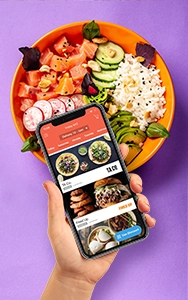
Fooda’s Popup Restaurant solution brings food from local restaurants right to the office floor. With new offerings every day, this is a convenient, exciting way to turn lunch time into an engaging experience. Food is prepared ahead of time and brought on-site. Employees can see each day’s menu ahead of time, allowing them to plan ahead. Everything is taken care of for you, and employees can count on having diverse, affordable meals every day.
Fooda Office Lunch Delivery is an easy way to provide employees with quality meals, no extra space required. Everyone gets to mix and match from different rotating options and order exactly what they want. No group consensus needed. Everything is dropped off in one reliable, seamless delivery.
Orange by Fooda is a modern alternative to the traditional workplace cafeteria model. Local restaurant partners rotate through, keeping options fresh and exciting and are paired with resident restaurants that keep lunch consistent. We handle all on-site operations for you, allowing you to provide a powerful perk without the administrative burden.
Fooda Pantry is the perfect way to keep your employees fed, hydrated and energized all day long, at no cost to them. Our AI powered management software ensures that your pantry is always stocked with their favorites. With grab-and-go options available at any time during the day, employees can grab what they need to refuel whenever they need it.
Reach out to Fooda to see how we can help you design your own highly flexible workplace food program.

Can workplace food programs work for hybrid offices with changing attendance?
Yes. Fooda’s programs are designed to adapt with variable hybrid work schedules. Adaptable pre-ordering ordering systems allow operations to be scaled up or down each day depending on attendance. Additionally, you can offer different services on different days, allowing you to customize your program to suit your needs.
How much do workplace food programs cost for Chicago companies?
The total cost depends on what model you choose. Corporate cafeterias typically cost more to operate, while delivery services offer a relatively low-cost option. It also heavily depends on how much you choose to subsidize each meal. Fooda can work with you to get the most out of your budget.
What types of companies benefit most from workplace food services?
All organizations benefit from workplace food service programs, but they can be especially valuable in hybrid offices and fast-growing organizations competing for new talent. Chicago companies also see significant impact due to the city’s long commute times, which make convenient, on-site office food a great time-saving perk. Industries with demanding schedules, such as finance, tech, and healthcare, also see strong results. In-office food programs create a smoother employee experience that helps ease daily friction and boost engagement.