Employees who have to pay out of pocket for expensive meals don’t exactly come back from lunch refreshed and happy. Not everyone has the time or energy to cook for the week, and not everyone can absorb $20 lunches on top of a commute.
The costs, stress, and decision fatigue add up quickly, and that’s why a solid employee meal benefit program results in more productive and engaged employees. In this post, we explore what meal benefits for employees look like, why employers benefit most, and how to implement one at your office.
An employee meal benefit program is a workplace perk that helps employees pay for their meals during the workday. The employer covers the cost of employee meals either partially or in full, offsetting daily food costs for workers. So even a $5 daily meal stipend could help employees save about $100 each month.
Corporate meal benefits typically come in the form of cafeterias with subsidized menus or meal stipends and vouchers that can be used with approved food service partners. Some workplaces also provide catered meals entirely for free.
Let’s take a closer look at the most popular models used for providing food benefits at work:
Employers can also choose from different dining options to incorporate their meal benefits based on factors like budget, office space, and team size.
Here's how the most popular workplace dining models compare:
Having easy access to free or affordable meals at work saves employees money and time. But what’s in it for employers? Here are the key reasons why businesses need to invest in an employee meal benefit program.
Perks like free food are a major draw to get employees into the office. One poll found that 88% of business leaders say corporate meal programs increase in-office attendance. So a solid employee meal benefit program can incentivize employees to work onsite and support your return to office strategy.
Meal benefits, especially when designed around community, can foster bonding and culture. Think: shared lunch breaks, designated dining spaces, and other mealtime rituals that encourage employees to connect over a meal.
In Fooda's 2026 Workplace Lunch Report, 83% of leaders said food influences workplace culture.
Download The Workplace Food Program Playbook to learn more about how food perks can become a culture asset for your office.
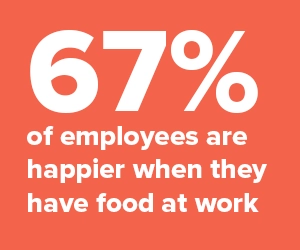
When there’s free food at work or exciting new menus to look forward to, employees are enthusiastic about coming into work. According to Fooda’s “What’s Happening in the Workplace Now?” survey, 80% of employees are more excited about work when lunch is covered.
And enthusiastic employees make for engaged employees who perform better. One study found that food-related benefits directly improved responsiveness among customer-facing workers.
Free or subsidized meals also serve as extra perks for a larger, more comprehensive benefits package. That’s exactly what you need to boost satisfaction and employee retention.
As you evaluate a corporate meal benefits program for your workplace, cost will be a major consideration. The goal is to create a program that eases the financial burden for employees without completely blowing your budget. Having a better idea of how much workplace food programs typically cost will help you plan benefits that align with your finances.
Can you afford to cover the full cost of daily employee meals? Or will you pay for a portion of it?
Between sky-high grocery prices and rising food costs, people are looking to make every dollar count. So even just a $5 stipend could make a difference for your employees.
Here’s how much food benefits at work typically cost depending on the type of program:
Use this to figure out the best type of food program to implement and how to design your own benefits program. For example, a $10 daily meal stipend for lunch delivery will cover all or most of the food cost for your employees. If someone wants to get a $14 meal, they can pay the balance out of pocket.
With customizable food solutions and transparent pricing, Fooda streamlines how you design and manage meal benefits for employees.
Fooda offers a wide range of food solutions that you can incorporate into your corporate meal benefits program. Whether you want to bring in a rotating lineup of popup restaurants to serve food onsite, have food delivered from outside, or even set up a full-fledged cafeteria replacement, there’s a Fooda solution for you.
Fooda lets you tailor your program to include:
The Fooda model makes it affordable for employers to set up an employee meal benefit program. Unlike traditional contract models that force you to pay for unsold trays or pre-buy meals that go to waste, Fooda programs are built around consumption.
For instance, the Delivery program lets employees choose their own meals. Meanwhile, food prep is done based on actual orders under Popups and Orange by Fooda. Across these programs, you only pay for the meals that your team orders, which helps you keep costs low.
This also reduces food waste, so there’s no wasted spend on meals that only end up in the bin. You can simultaneously save money and meet your sustainability goals.
Fooda lets employers layer on meal subsidies at any level and manage them through a centralized dashboard. You can allocate funds, add members, and even adjust amounts within the Fooda platform.
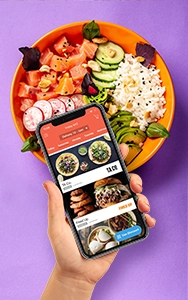
For employees, subsidies are effortless to redeem across Fooda locations. When employees want to get food from a popup restaurant or at an Orange by Fooda location, all they need to do is scan a QR code to verify their identity. Meal subsidies are automatically applied to mobile orders, allowing for a smooth checkout process. This makes it convenient for your team to get subsidized meals and skip the reimbursement headache.
And whether you’re funding meals partially or in full, billing is centralized across locations and services. The cost you’re covering for delivered meals and the subsidies you’re providing for popups are all billed in one invoice. So it’s seamless to manage funds and expenses for your corporate meal benefits program.
Ready to provide food benefits for your teams at work? Talk to Fooda to get started.

What is the difference between a meal stipend, a subsidized menu, and free meals?
With a meal stipend, the employer funds a set amount that employees spend where they choose. With a subsidized menu, the employer absorbs a share of each item's price so employees pay a reduced amount at checkout. With free meals, the employer covers the full cost, typically through catering. Stipends offer the most choice, and free catered meals usually offer the narrowest menu.
Which meal benefit model works best for a hybrid team?
Popup restaurants and lunch delivery suit hybrid teams best, because both scale to whoever is onsite that day instead of a fixed headcount. Popups fit mid-sized to large hybrid offices with dedicated space, while delivery works without any kitchen infrastructure. Pairing either with a subsidy or stipend keeps spend tied to attendance, which matters when daily onsite numbers swing week to week.
Do meal benefits increase in-office attendance?
Employers report that they do. In one poll, 88% of business leaders said corporate meal programs increase in-office attendance, making food benefits a common component of return-to-office strategy. In Fooda's 2026 Workplace Lunch Report, 83% of leaders said food influences workplace culture, and 80% of employees in Fooda's workplace survey said they are more excited about work when lunch is covered.
How much does an employee meal benefit program cost per employee?
Costs run roughly $3 to $8 per person for an office pantry, $8 to $20 for a cafeteria, $10 to $20 for popup restaurants, $7 to $25 for lunch delivery, and $15 to $30 or more for drop-off catering. At a $10 daily subsidy across about 20 working days, employers spend near $200 per employee per month, and partial subsidies bring that figure well below full coverage.
How does a consumption-based meal program differ from a traditional food service contract?
Traditional contracts commit employers to prepaid meal counts or fixed volume, so unclaimed meals become both wasted food and wasted spend. Consumption-based programs, including Fooda Popups, Delivery, and Orange by Fooda, prepare food against orders placed and bill only for what employees buy. The result is spend that tracks attendance, which also cuts food waste and supports sustainability targets.
How do employers manage meal subsidies across multiple offices?
A centralized platform is what makes multi-site subsidies workable. In Fooda's dashboard, administrators allocate funds, add members, and adjust subsidy amounts by group or location. Employees scan a QR code to verify identity, and the subsidy applies at checkout with no reimbursement paperwork. Delivery costs and popup subsidies across every location consolidate into a single invoice.
What dining formats can employers offer through Fooda?
Fooda supports five formats employers can combine: Popup Restaurants, where local restaurants serve freshly prepared food onsite; Office Lunch Delivery, consolidating individual orders into one delivery; Corporate Event Catering, as boxed meals or drop catering; Fooda Pantry, combining micromarkets, snack stations, and vending; and Orange by Fooda, a cafeteria replacement pairing resident cafes with rotating guest restaurants.