If there's one thing employees love, it's not having to worry about paying for lunch out of their own pocket. Knowing that the company will pick up the tab for a meal is a great perk, as it allows workers to feel appreciated while also saving them money. Not surprisingly, employee meal programs are also popular with employers, as they are a cost-effective way to boost morale and enhance overall productivity.
That said, there is something of a controversy among employers about the best method for implementing these company-funded food benefits. On one side are the advocates for traditional meal stipends, who argue that fixed-rate or per-meal reimbursements provide employees with greater flexibility and choice. This perspective is opposed by those who believe that a customizable employee meal program offers more opportunity for increasing worker engagement and strengthening company culture.
In this article, we'll be examining the pros and cons of each employee type of program. Both have their merits, but this does not mean that they are equally impactful in every workplace setting.

One of the biggest advantages of an employee meal stipend program is that it's easy for everyone to understand. The company provides a daily allowance for meals, and reimburses workers for their out-of-pocket expenses.
This is a very traditional approach, and it often relies on increasingly antiquated systems like turning in paper receipts for purchased meals. These receipts then need to be manually entered into a payroll program, allowing the employee to be compensated in their next paycheck. While there are some labor-saving options, such as company-issued expense cards, it's usually not cost-effective to provide these to rank-and-file employees.
There are benefits to meal stipends, of course. Employees are able to purchase their meals from anywhere they like, with meal delivery services making it easy to order from any nearby restaurant. This may also result in hidden costs to the employer, as employees who go off-site will be subjected to lunch-rush traffic and other delays. This can result in workers returning late from their break, reducing overall company productivity.
While workers may occasionally go in a group to an off-site restaurant, this usually happens within existing teams of social groups. As a result, meal stipend programs tend to reinforce existing silos and disincentivize casual cross-team interaction and collaboration.
Additionally, there are logistical issues to consider. Entering receipts and issuing reimbursements is a labor-intensive task, adding to the overall expense of the meal stipend program. Workers must also pay upfront for their meals, and retain their meal receipts for days or weeks at a time. In purely practical terms, meal stipend programs are often inefficient and expensive compared to other employee meal programs.
In short, employee meal stipends can be a mixed bag for employers.

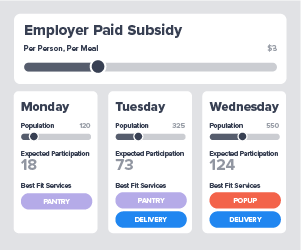
Unlike the individual focus of meal stipends, employee meal programs are designed to create a collective meal experience. These programs can take many forms, from group orders for delivery from a local eatery to Popup catering and food truck experiences. Workers still have a high degree of meal choice, as they are ordering from a menu, while also having more variety than the restaurants they can reach in a short drive.
Not only does this make lunch breaks less stressful for workers, it also helps their wallets. There are no upfront costs for meals, and no receipts for employees or administrative staff to keep track of. The company only needs to manage payment for a single invoice, rather than process dozens or hundreds of individual receipts and reimbursements. Onsite and delivery programs can also save the company money, as the lower per-unit price for these group meals are often less expensive than individual meals purchased off-site.
The real savings, however, is in administrative costs. Accounting staff only need to manage payment for a single invoice, rather than dozens or hundreds of individual receipts and reimbursements. This means that employee meal programs are much easier to scale, as it's just as easy to manage a delivery or catering order for an entire company as it is for a small team. This makes employee meal programs a very attractive perk for growing companies.
The productivity benefits are obvious, as workers who stay onsite are never late returning from lunch. Employees are also incentivized to socialize in shared spaces, like lobbies and breakrooms, helping to create cross-company social connections over shared meals.
There are many benefits to employee meal programs, particularly when compared to meal stipends.
From the perspective of company leadership, employee meal programs offer many unique advantages. Not only are these programs more cost-efficient than the meal stipend model, they also streamline other aspects of the operation. Quarter-to-quarter costs are much more predictable with employee meal programs, for example, making budgetary demands more consistent.
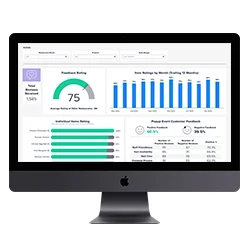
The reduced administrative costs of employee meal programs are another welcome benefit, as are the boosts to productivity and efficiency from keeping workers onsite. Unlike meal stipend programs, participation rates, per-meal costs, and usage trends can be tracked by integrating meal program data with existing management tools.
Executives can easily see the impacts of these programs on their dashboards, and use those data to inform future decisions. This also allows for streamlined reporting, allowing other leaders to easily see the positive impact of the program across different teams and departments.
There are many employer-funded meal program options available. While this article is primarily concerned with employee meal programs and meal stipends, these programs can take many forms.

Employee meal programs are widely recognized as one of the most effective ways for companies to increase worker loyalty and morale. Companies offering workplace food programs as an employment perk tend to have a much easier time recruiting and retaining top talent. According to recent surveys, 67% of employees report being happier on the job when provided with food at work.
As a result, companies with robust employee meal programs also consistently report higher levels of productivity. Without the need to leave the office for their daily meals, these workers are able to retain more focus on their daily tasks. Shared meal breaks also encourage workers to network and socialize within the company, creating stronger professional connections and increasing the potential for internal collaboration and innovation.
These workers are more engaged than workers at companies with no employee meal programs, or with older perk programs like meal stipends. This can have a real impact on workplace performance, as companies with the highest levels of engagement are 22% more profitable than those reporting low engagement.

One of the most overlooked problems with meal stipend programs is the limitations they place on the kinds of food experiences workers can have. Most workers have less than an hour for their daily meal break, rushing to hop into their cars and drive to the nearest fast-food place to grab a quick bite before rushing back.
Even in an area with multiple restaurant franchises nearby, most employees will prioritize fast and inexpensive food. As a result, many employees are limited to highly unhealthy meal options. Not surprisingly, their productivity in the later half of the day tends to suffer.
Most cities have great fast-casual restaurants offering a range of delicious, healthy and revitalizing meals. These local eateries can provide a wide range of meal types, from regional and national cuisines to classic American favorites. In many cases, these are the exact same local restaurants that employees patronize in their free time. By connecting these restaurants with local companies and their hungry workers, everyone wins.
Unfortunately, working with local restaurants is not something that most employers are set up to handle. It requires a specialist vendor, such as Fooda, to provide the technology and infrastructure needed to power these employee meal programs.

When developing your organization's employee meal program, it's important to look for an experienced vendor with a strong understanding of multiple industries and needs. While many food delivery companies offer some version of a workplace meal option, they often lack the robust ordering and management technology needed to deploy these programs consistently at scale. Many also have poor or non-existent relationships with local restaurants, severely limiting your options.
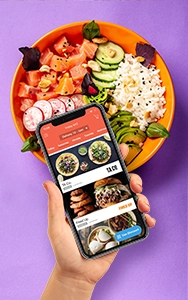
Founded in 2011, Fooda has more than a decade of experience in providing affordable and high-quality employee dining programs. We work closely with our 2,500+ local restaurant partners to provide exceptional delivery and onsite experiences. Our proprietary technology is easy to use, flexible, and integrates seamlessly into existing management and accounting workflows. Our mobile and online ordering tools are highly intuitive to use, making them perfect for any workplace.
Curious to learn more about how Fooda can help your company build an employee program that your workers will love? Let's talk.
An employee meal program is an employer-funded food benefit in which a company provides meals to employees through group delivery orders, onsite pop-ups, catering, or food trucks. Unlike meal stipends, employees do not pay out of pocket or submit receipts, and meals are centrally ordered and paid for by the employer.
The primary difference is how meals are purchased and managed. Meal stipends reimburse employees for individual meals they purchase themselves, often requiring receipts and payroll processing. Employee meal programs centralize ordering and payment, reduce administrative work, keep employees onsite, and encourage shared meal experiences that support engagement and collaboration.
Yes, employee meal programs are often more cost-effective than meal stipends when considering administrative labor, productivity loss, and scalability. Group ordering typically lowers per-meal costs, and centralized invoicing eliminates the need to process individual reimbursements, saving time and operational expenses.
Employee meal programs improve productivity by keeping employees onsite during meal breaks, reducing late returns caused by off-site dining. Shared meals also encourage social interaction and collaboration across teams, which can increase engagement and efficiency throughout the workday.
Specialized vendors provide the technology, logistics, and local restaurant partnerships needed to run employee meal programs at scale. They offer streamlined ordering, centralized billing, and access to a diverse range of local food options, making programs easier to manage and more appealing to employees than standalone delivery or reimbursement solutions.