The struggle to maintain work-life balance has existed for decades.
And yet, even with various initiatives to achieve this balance, professionals still find work bleeding into their personal lives. It shows up in subtle ways, like the shopping and food prep you have to do for office lunch or the mental load you carry when the gym session keeps getting pushed to "maybe tomorrow.”
That’s how you know it’s time to shift the conversation from “balance” to “harmony.”
When work and life are seamlessly integrated into each other, it creates a harmony where one makes the other better. So instead of worrying about how work will “bleed” into life, life naturally fits into work and vice versa.
This post takes a closer look at what work-life harmony means, how it’s different from work-life balance, and how to achieve it for your workplace. Let’s dig in.
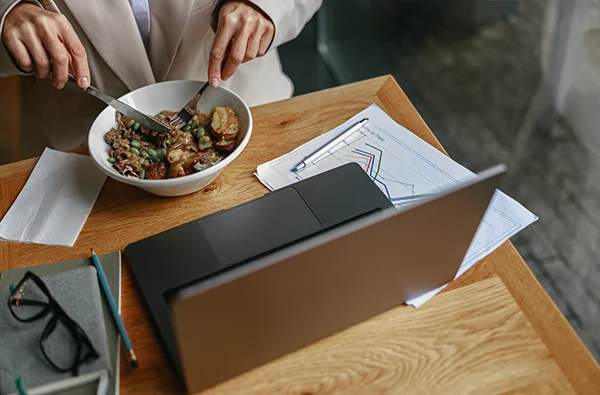
Work-life harmony is the concept of integrating work and life in a way that complements each other instead of keeping them separate. This allows employees to effortlessly manage their personal and professional priorities without one getting in the way of the other.
Both work-life harmony and work-life balance deal with the relationship between an individual’s personal and professional lives. Although they share the same goal of supporting employee wellbeing, that’s where their similarities end.
The traditional concept of work-life balance treats “work” and “life” as two separate things, where “balance” implies a scale with two competing forces needing to be kept equal. And the responsibility often falls on the individual employee to maintain this balance – setting boundaries, not picking up calls after work, and taking time off regularly.
Employers may make a few accommodations – providing enough vacation time, no work calls after 6 p.m., being flexible with time-off requests – but that’s usually it.
With work-life harmony, however, “work” and “life” are viewed as two interdependent elements that can coexist harmoniously. “Harmony” implies integration, where an individual’s personal and professional lives fit together naturally and even complement each other.
Unlike with work-life balance, employers are primarily responsible for supporting work-life harmony in the workplace. They’re responsible for building policies, cultures, and environments that make it possible for employees to manage both life and work without having to sacrifice the other.
While work-life balance offers enough paid time off, work-life harmony makes room for more than just regular sick days and vacations. For instance, minimum days off requirements and mental health PTO gives employees the freedom to take days off without having to feel guilty or use time off they don’t truly have.
Over the past few years, the conversation has shifted from maintaining work-life balance to maintaining work-life harmony. While the traditional concept also intends to support employee well-being, it primarily holds employees responsible for balancing their own personal and professional lives.
This means it’s on the employee to set their own boundaries, schedule their own downtimes, and work on their own health, often with little to no help from their employers. Employees are planning and making their own healthy meals in their personal time, paying for and figuring out a way to fit in their exercise, and more all on top of the daily commute.
Regardless, the mental and financial load adds up over time and starts to weigh on an individual. When work adds more stress to a day, it can quickly lead to issues like quiet cracking.
That’s why work-life harmony has become the new focus - it prioritizes giving employees the support they need to manage both their personal and professional lives with ease. Instead of one getting in the way of one another, it helps improve both aspects simultaneously.
Think: flexible work structures that allow employees to organize their schedule around their personal lives or wellness programs that encourage and even incentivize employees to work on their health.
With this framework, employees aren’t constantly thinking about how to fit in their personal needs between managing their professional responsibilities. Some benefits of this are:
So how exactly can employers bring work-life harmony in the workplace?
The answer is much simpler than you'd think… It’s food.
Recent studies show that food perks had the strongest positive impact on workers and outperformed other company-driven benefits like social activities, physical wellness programs, mindfulness resources, and health initiatives.
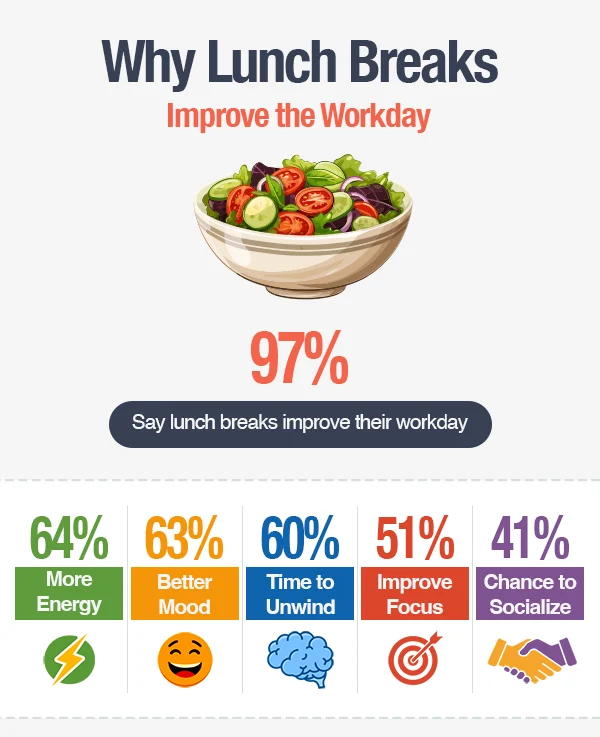
The numbers support these findings as well, with 97% of office professionals saying that taking a lunch break improves their workday. Here’s why:
The data doesn’t lie - food creates a better workplace experience for employees, empowering them to be more productive, more focused, and more engaged. This ultimately boosts morale and creates more opportunities to attain work-life harmony for employees. That’s why it’s crucial for companies to give their employees easy access to food at work.
But it’s not as easy to achieve this if workers are spending a significant portion of their personal time planning their office meal, grabbing groceries, and preparing food at home.
Unfortunately, you can’t just provide some snacks and frozen meals. The food has to be good and it’s even more impactful when subsidized. According to the study, meal benefits would entice nearly 1 in 3 professionals to go to the office more often. When asked which benefits they’d use most often, most workers chose “free meals from restaurants of their choice.”
In fact, 61% might even switch jobs if it means getting meal benefits like free lunch.
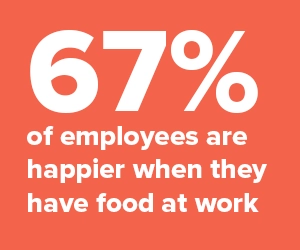
Fooda’s own “What’s Happening in the Workplace Now?” survey found that 80% of employees are more excited about work when the company provides lunch.
When asked what would improve their office experience, the top choices were food-related. Most employees want better snacks and drinks. There’s also a demand for food that is authentic and menus that offer a variety of cuisines.
So even as workers balance heavy workloads and jam-packed schedules, they can still achieve work-life harmony with easy access to good food. Being able to eat what they want, when they want it, means work isn’t as stressful and is more rewarding.
While food is the obvious answer to work-life harmony, how exactly do you incorporate it into your workplace? And what else can you do to support employees?
Let’s look at some practical work-life harmony tips to inspire your efforts:
Work-life harmony means giving employees more autonomy over how, where, and when they work. Flexible work hours alone aren’t enough. You need flexibility across every aspect of your organizational structure.
This gives employees the freedom they need to effortlessly make work and life fit together.
If the job allows for it - let them choose whether to work from home, on-site, or even while traveling. Or which days to come in and which days to take time off. This can even be looked at from a different perspective - let them even choose when they eat lunch too, so they don’t have to adjust their schedules around specific lunch hours.
For work and life to coexist in harmony, folks should be able to bring their personal lives into the workplace when needed. Whether this means bringing a pet to work or providing them with space to take a nap, companies need to make more accommodations to support employees’ personal needs.
Other ways to make room for your employees’ personal needs include:
While the specifics may differ for every company, it’s about adopting policies and providing amenities that make life easier for employees. When these personal needs are met, it reduces employee stress and gives them time and mental space to focus on work.
It also gives them more time and support to work on their personal wellness goals, which helps to promote health equity in the workplace.
Easing daily stressors for employees also means offering perks beyond the usual compensation and bonuses and the ones that actually move the needle are the ones employees experience every day, not once a year.
Workplace meal programs are the clearest example. The average employee spends $12–20 per workday on lunch, nearly $100 a week, and up to $4,500 annually (and that’s before factoring in the time spent figuring out where to go). Free or subsidized meals eliminate that friction and improve retention by creating a daily reminder that working here is better than working somewhere else.
PTO is another area where the details matter more than the headline. Unlimited PTO sounds generous, but employees under unlimited policies often take less time off without clear norms to follow. Setting a minimum number of required days and building in company-wide rest weeks removes that pressure.
And while gym memberships are a common go-to, they only benefit employees who actually use them. Lifestyle spending accounts - stipends employees can put toward fitness, childcare, home office upgrades, or personal services - deliver real value across your entire workforce.
Perks like free meals, flexible time-off policies, and lifestyle spending accounts do more than check a box. They solve real daily problems and give employees concrete reasons to stay when recruiters come calling.

If you’re ready to implement a workplace food program that actively improves the lives of your team on day one: Fooda offers an extensive range of flexible and customizable workplace food solutions to support work-life harmony.
Whether you set up chef-driven restaurants or have local food delivered from outside, Fooda lets you customize your food program to fit your employees’ wants and needs.
This includes Popup restaurants that bring in fresh and authentic meals and an office lunch delivery service that delivers individual meals consolidated from different restaurants that rotate daily.
Or, if you have the need, you can even set up a full-fledged cafeteria with rotating and resident restaurants with Orange by Fooda, where guest restaurants cook fresh meals on site.
Combining it all with Fooda Pantry lets you provide a vast assortment of healthy snacks and gourmet beverages to add variety and convenience regardless of operations.
With Fooda’s workplace dining solutions, your employees can choose their meals from a rotating lineup of restaurants. From nutrition-packed meals and allergen-free options to global flavors, there’s something for everyone.
And when employees have options, they don’t have to worry about bringing their own lunch to fit a specific dietary need or nutrition goal.
If free food is a workplace perk at your office, Fooda makes it easy to manage your meal subsidies. You can use the app to tailor your subsidized meal program exactly according to your needs.
Whether you need to add members, remove them, allocate more funds, or adjust funds for a specific team, you can easily manage everything in one place.
Think a workplace food program will bring work-life harmony for employees? Get in touch with Fooda and explore our range of workplace food solutions.
Track a combination of quantitative and qualitative signals: employee retention rates, productivity metrics, and utilization of benefits like meal programs or PTO. Regular pulse surveys asking employees how supported they feel at work are equally important. Work-life harmony shows up in the data over time, but it also shows up in how people talk about their jobs.
A significant one. Policies only go so far if managers don't model or reinforce them. A team that sees their manager send emails at 10 p.m. or skip lunch will follow suit regardless of what the employee handbook says. Work-life harmony requires consistent leadership behavior, not just top-down policy.
Remote and hybrid employees face a unique challenge: without physical separation between office and home, work can bleed into personal time more easily, not less. For these employees, work-life harmony depends heavily on flexible scheduling, home office support, and benefits that aren't tied to being in a physical location - like lifestyle spending accounts or meal delivery options.