Solid pay packages and attractive benefits may help get people in the door and feel secure when it comes to money and medical coverage. But these alone aren’t always enough to keep employees engaged and motivated on a day-to-day basis.
Are employees dealing with uncomfortable workspaces? Do they often have to miss lunch because meetings run long? Or perhaps they can only choose between subpar coffee and sugary sodas when they need a quick pick-me-up? These may seem small and insignificant, but they all add up to a poor workplace experience.
Next thing you know, you have employees losing focus and becoming increasingly frustrated. To counteract this, you need to dig another layer deeper and look at benefits impacting the daily experience in your workplace.
Let’s get started…

While it may seem intuitive, the workplace experience refers to the sum of feelings an employee has about their work environment. So a person’s interaction with everything from the office space and amenities to the tools and resources, and even the community and culture will shape the overall workplace experience.
When there’s so much to think about, perks can quickly get overlooked. For example, an employee who regularly has to deal with outdated systems and slow internet is likely frustrated. The next thing they know, the lunch hour goes by and they still haven’t eaten due to a slow system. This has nothing to do with their pay or benefits - but it still has the ability to quickly derail a workday.
The small details add up and create an environment where employees are stressed and overwhelmed. As a result, their work suffers and more people in your company start to experience quiet cracking or burnout.
Employers need to pay attention because this culmination of experiences will influence how happy an employee feels at work and how productive they are. When workers have a smooth workplace experience, they find it easier to focus and do their best.
When the workplace experience is curated to remove friction around the day-to-day, you end up with employees who are motivated and engaged because they have all the support they need to do their jobs well.
So what exactly influences the workplace experience for employees? Let’s look at the key components.

To start with the most obvious factor, the physical space where your employees come to work influences their experience. Everything from the layout and design to the overall vibe will count toward your employees’ workplace experience.
Do they have comfortable chairs and desks? Are they getting enough natural light? Can they easily adjust the thermostat? These may seem minor, but they play an essential role in your employees’ daily workplace experience.
Are there comfortable places to take a break? And do they have quiet spaces to concentrate? According to Fooda’s “What’s Happening in the Workplace Now?” survey, these were among the top five factors that would make the office experience better.

Employees need specific tools and systems to do their jobs well. They look different for every job and company, but if those tools don’t work properly, they can cause errors and delays that add to employee stress.
Those delays eat away at their time while the errors create more work for them to do, contributing to a frustrating workplace experience that’s out of their control. Laptops that run fast, printers that don’t jam after every 10 pages, and software that makes people’s jobs easier all add up to create a smooth day at work.

People love coming into the office when they can be around colleagues who are enjoyable to work with. Aside from company policy, Fooda found that collaboration with colleagues is the top reason people show up to work in a hybrid setup.
This shows that collaborative work environments and thriving communities will positively add to an employee’s workplace experience.
Managers who actively show they care about employee well-being, offices that prioritize lunch breaks, companies that regularly host social events, colleagues they’re friends with… All these factors influence how engaged employees are at work.

Besides these basics, additional company perks and benefits that employees can enjoy on a daily basis will also remove friction from the workplace experience. This includes both the tangible and intangible benefits that make it easier for employees to manage work-life harmony.
For example, free lunch is one method to instantly improve the workplace experience. Workplace food programs put money directly back in your employees pocket and saves them time both in and outside of work. On top of that, having flexible schedules or pet-friendly offices makes it easier for employees to balance work with their personal lives.

The best way to assess and build what your teams truly want is to start by asking them.
It can be difficult to accommodate every single want an employee might ask for - but since a positive workplace experience can look different for everyone, it’s important to understand what’s driving their emotions towards work each day.
Here are four essential steps to build a successful workplace experience strategy.
Outside of asking employees directly, you can analyze the current state of the workplace to identify what’s working and what’s not.
If possible - have a dedicated workplace experience coordinator to streamline the entire process and start with the most visible and obvious aspects:
The list goes on and if you sit back and just observe everyone in the office for a day - you’ll probably notice a lot of small details that add friction to the daily experience.
You could also dig through existing data on employee complaints and feedback to see current pain points or what they’re struggling with.
Once you have the obvious addressed, you can move on to conducting additional surveys and asking employees about the hard to spot aspects of their office experience.
Based on your review, prioritize the experiences you can easily improve with a few minor fixes. For starters, replace what needs replacing and repair what needs repairing. Broken chairs need to go, and faulty ACs need repairing.
The same goes for outdated technology and clunky processes - if there’s something you can upgrade right now, that’s a quick win. It may be as easy as replacing a laptop for a frustrated employee and getting them access to a new project management system.
You’ll also want to address some of the more immediate employee complaints. For example, if employees are complaining about the lack of food options, see if you can get lunch delivered from a local or community restaurant once or twice a week.
Next, you’ll also need to figure out what improvements you can make over the long term. Replacing chairs won’t make up for the fact that employees don’t have quiet spaces to concentrate. And while the occasional free lunch gives employees relief, it doesn’t offer variety and flexibility on the daily.
There are many ways to solve a problem and it may take some trial and error. Take the time to think about the short and long-term and then build a workplace experience strategy that lays out a plan for all solutions.
Finally, you’ll also want to see if your initiatives are paying off or if you need to make more adjustments. With the right technology and software, it’s easy to automatically collect this data.
Let employees rate how they feel about a certain implementation. How often do they use the quiet rooms, and how effective are they? Or have they been able to enjoy lunch more now that there are new menu options?
You can also look at usage data to get additional insights and improve your planning. For instance, high order rates for certain restaurants could signal that employees love the food. That means you bring them in more often and adapt your meal program to make the workplace experience even more enjoyable.

The lunch hour is the single shared daily experience across nearly every employee, regardless of department or level. From sales teams and IT to mid-level managers and entry-level workers, everyone needs to eat during the work day.
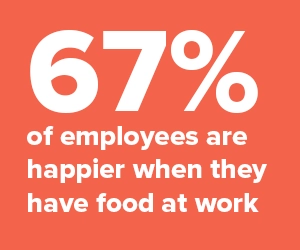
Findings from the Fooda survey can attest to this, with 80% of employees feeling more excited about work when the company provides lunch. And food-related perks were the top factors that would improve the office experience for employees.
Yet most companies treat it as an afterthought, and that’s exactly why they struggle with poor workplace experience.
Meanwhile…
These numbers clearly indicate that food and fulfilling lunch breaks can significantly improve the daily workplace experience for employees.
This translates to better business benefits in the form of:
Fooda’s flexible and reliable workplace food solutions help you build an office lunch program that’s tailored to meet the daily needs of your employees.
You can choose from a range of workplace food models to build a customized program that meets your unique needs. Whether you need fresh meals from chef-driven restaurants served in the breakroom or individual boxed meals delivered straight to the office, we can build a customized workplace food program that works for you.
Fooda lets you set up Popup Restaurants, where top local restaurants serve fresh meals prepared in their own kitchens. This requires zero day-to-day management and helps you save on setup costs.
You can also do Office Lunch Delivery instead and have a rotating selection of multiple restaurants daily with consolidated delivery to the office - a perfect fix for workplaces with limited space.
Meanwhile, you can delight your employees with Corporate Event Catering, which serves high-quality meals for everything from company holiday events to important investor meetings.
Round it out with Fooda Pantry to elevate your snack and drink selection with a diverse product mix you can customize based on employee demand.
Or if you’re looking for a full-fledged cafeteria replacement, Orange by Fooda lets you bring in a rotating lineup of guest restaurants to cook on-site.
Companies like Hulu have been able to improve employee productivity through Fooda’s Popup Restaurant program. The company brings top-rated restaurants on-site, so employees can enjoy a constant variety of fresh and authentic meals without leaving the Hulu campus.

“Fooda has absolutely increased our employee productivity. And most importantly people are eating and lunch is fun again. Sometimes when you have back-to-back meetings there’s no time to eat, causing you to be ravenous toward the end of the day. Now, employees are always satisfied and excited to see what restaurant is coming next.”
— Manager of Facilities at Hulu
Ready to turn lunch into your fastest workplace experience that makes an impact on day one? Let's build a program that fits your office. Get in touch with Fooda today to find a solution that works for you.