Return to office mandates naturally get people working in person again, but it doesn't instantly guarantee that employees will enjoy the experience. As they leave the comfort and convenience of working from home, employees have high expectations from their employers to make it worth their while.
That’s why more and more companies are looking to build workplace experiences that offset the long commutes and inconvenience. In response, there’s been a rise in demand for the workplace experience manager role to help bring the vision to life.
As you know, it’s not easy to please everyone in a big office, every employee wants something just a bit different and it can feel impossible to find programs that cover all of their wants and needs.
In this post, we dig deeper into the workplace experience manager role, exploring everything from what they do to what challenges they face. We also share practical tips on how to improve the workplace experience with food as the differentiator.
A workplace experience manager is the person who’s responsible for designing a daily office experience where every employee feels happy, comfortable, and engaged.
They make sure that every variable of the office environment – from the physical space to the tools and technology to the culture and community – effectively contributes to employee productivity and dedication.
Traditionally, you had facilities managers or office managers whose main focus was on improving the physical environment. The workplace experience manager role is one that evolved from the traditional facilities manager role, taking a more people-first approach.
As a workplace experience manager, your responsibilities may include:
Office experience managers are under a lot of pressure to solve modern workplace problems, especially when working with tight budgets and specific requirements.
Here are some of the biggest challenges that you’ll have to face:

In-office models are becoming the norm again, with more companies declaring return to office mandates. Fooda’s “What’s Happening in the Workplace Now?” survey found a 2x increase in on-site working between 2024 and 2025. There’s also no signs of this stopping as we advance into 2026.
As beneficial as this may be for companies, workplace experience managers have their work cut out for them. Now that employees have to give up the convenience of working from home - the challenge to create an experience that offsets the long commute to work is present and demanding.
The challenge gets even harder now that workers are expecting more from their companies. As the world gets more expensive, employees are losing time and money to grocery shopping and meal prepping - just to have an affordable meal they can enjoy in the middle of the work day.
As the stress of sourcing lunch literally eats away at daily productivity, companies have to do a lot more than the bare minimum to keep employees performing at a high level.
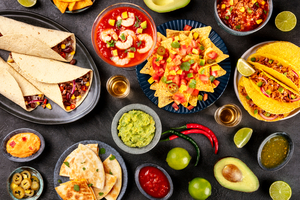
Basic cafeteria food, instant coffee, and processed snacks are no longer going to cut it. Office experience managers have to get more innovative with their employee engagement strategies.
The workplace is shifting to options with variety that pleases everyone, daily rotating menus, gourmet coffee or drink options, healthy snacks, and more.
Then there’s the fact that you can’t just implement the initiatives or programs on your own.
Everything has to get approval from leadership, which requires showing the potential return of each workplace investment. Even after implementation, you’ll have to keep proving value to convince leadership to continue investing in it.
When it comes to a workplace food program, you’ll have to have technology to gather data that shows metrics like employee satisfaction, participation, and cost savings over time to make the investment worthwhile.
Fooda found that the top factors that would improve the office experience for employees were food-related. To be specific, the top two votes were for:
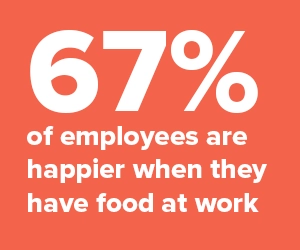
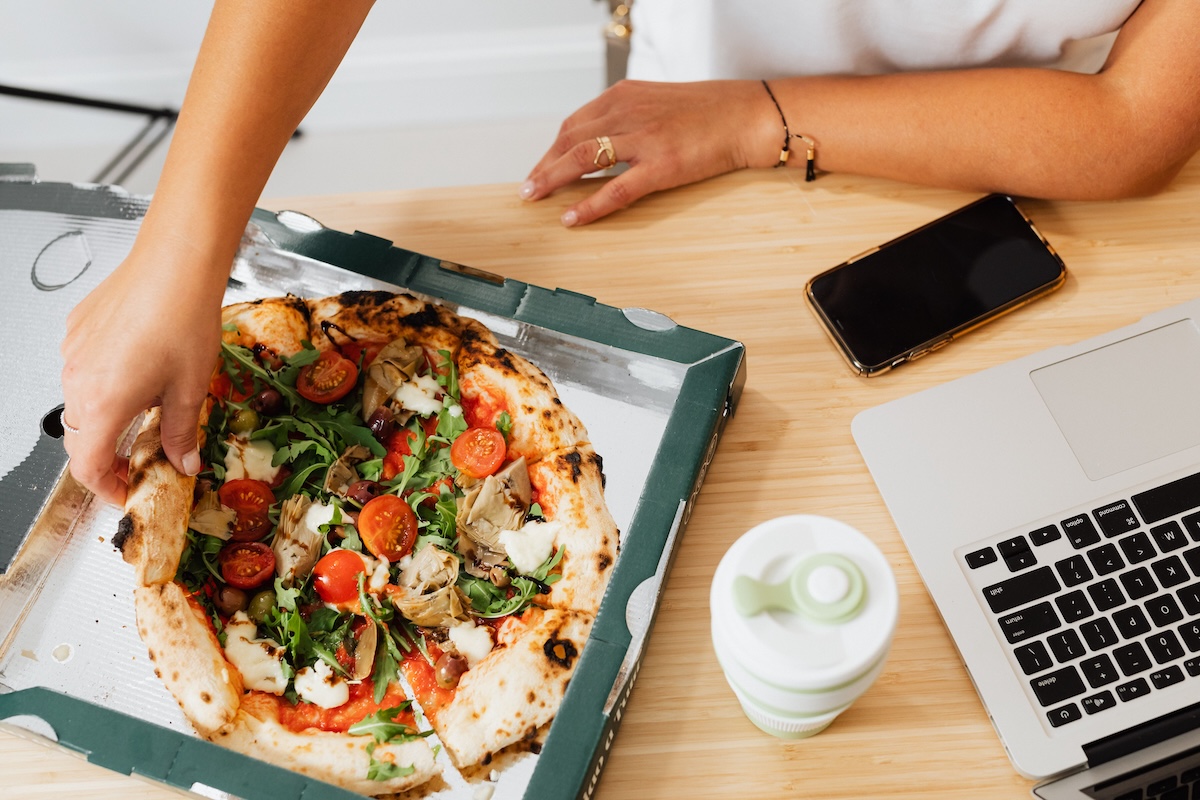
While factors like schedule flexibility and physical spaces also play a role in the office experience, it’s clear that food is the biggest differentiator. The Fooda survey even found that 80% of employees are more excited about work when they get lunch from the company.
Additional research consistently shows that lunch breaks are a powerful driver of workplace experience. A Tork survey found that 94% of employees feel happier when they take a lunch break, with 88% saying they return to work feeling refreshed and reenergized. Meanwhile, 91% of both employees and bosses agree that stepping away is essential for maintaining mental focus, confirming that a midday pause directly improves energy and engagement throughout the afternoon.
Lunch breaks also sharpen output. According to a Staples Workplace Survey, 86% of workers acknowledge that taking a break makes them more productive, with 78% saying they feel noticeably more productive afterward. That boost in focus and clarity ultimately strengthens employees' daily contributions.

Beyond individual performance, shared lunch breaks make a workplace feel like a community. The APA’s Work in America Survey found that 92% of workers say it's important to work for an organization that values their emotional and psychological well-being, and 95% want to feel respected at work. A shared lunch creates a natural setting for that and gives colleagues a chance to step away, connect over common interests, and build the kind of everyday relationships that strengthen team culture.
On top of that, food perks like free or subsidized meals are so vital to the workplace experience that 61% of employees might even change jobs because of them. So in addition to the direct impact on office experience, food-related perks also contribute to employee retention.
A workplace food program can make a real impact from day one when you focus on a few key principles:
Checking all of these boxes in-house is a tall order… which is where a workplace food program partner like Fooda comes in.
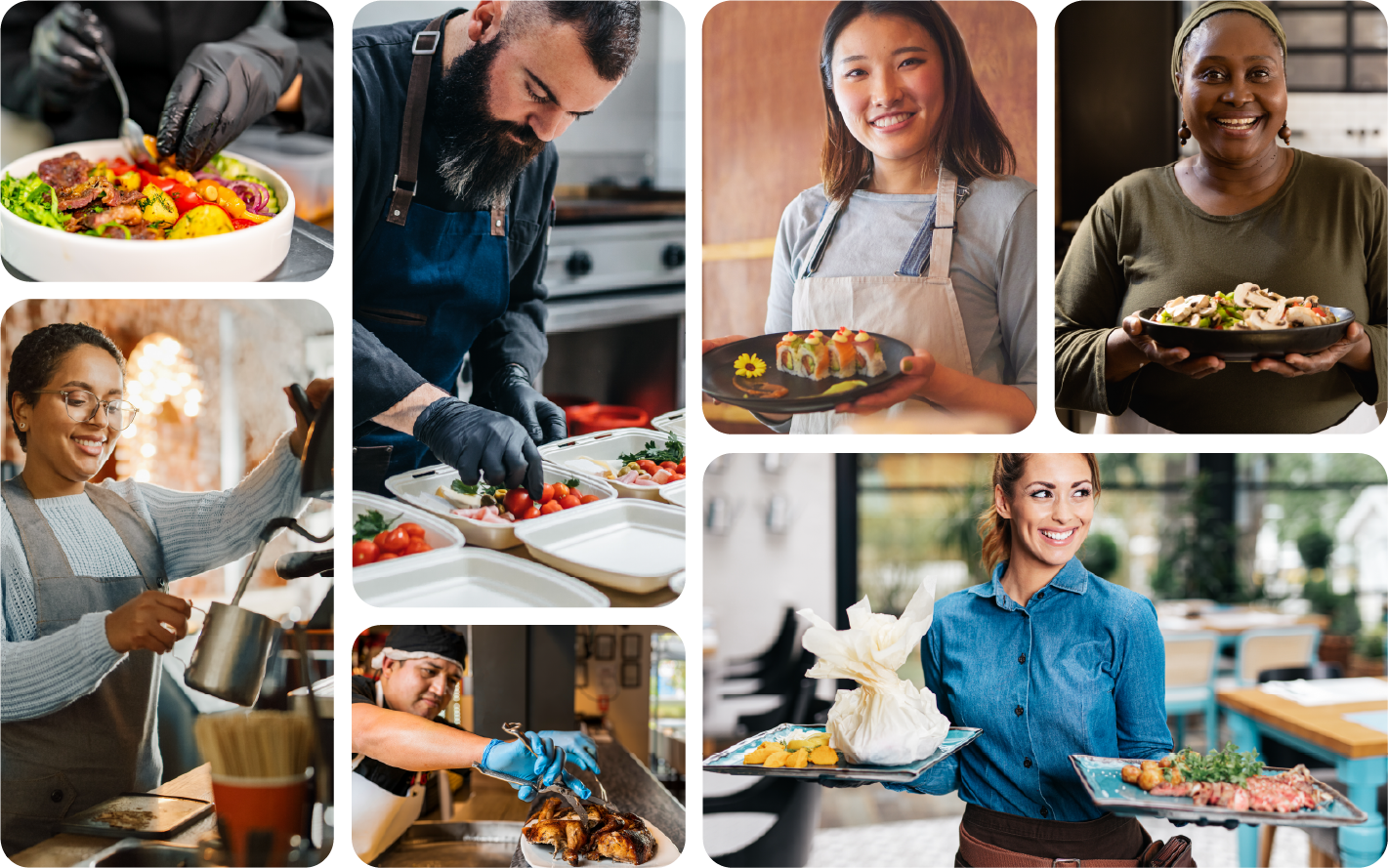
Fooda offers a suite of corporate food solutions built around convenience, variety, and flexibility.
We partner with over 4,500 local and community restaurants across the country that help us make a direct positive impact on your neighborhoods. It also allows us to design a highly customizable program that enriches the daily workplace experience for every client we work with.
Check out the table below and determine what would be best for you to implement in your office as the workplace experience manager:
Fooda is standing by and ready to help you design a workplace food program that meets all of your companies wants and needs.
Ready to incorporate food into your workplace experience program? See how Fooda can help.

How long does it take to launch a workplace food program?
Timelines vary depending on the solution. A Popup Rrestaurant or Office Lunch Delivery program can typically be up and running within a few weeks, while a full cafeteria replacement with Orange by Fooda may take longer to coordinate and install on-site infrastructure. Your Fooda team handles the logistics either way, so the lift on your end is minimal.
What size office do you need to make a food program worthwhile?
There's no one-size-fits-all threshold. Fooda's consumption-based models like office lunch delivery scale to fit whether five people order on a given day or five hundred. Popup Restaurants work well for mid-size to large offices, while Fooda Pantry can serve even smaller satellite locations. The key is matching the right solution to your headcount and foot traffic.
How do you drive employee participation in a new food program?
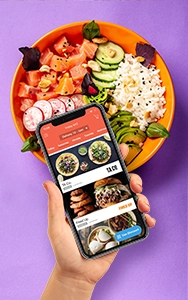
Communication and first impressions matter. Promote the launch with previews of upcoming menus, offer an introductory subsidy to lower the barrier, and gather early feedback so employees feel heard. Fooda's daily menu emails and app notifications help keep your program top of mind, and the rotating restaurant model naturally builds curiosity as people want to see what's coming next.