For most workplace and people leaders, attendance has become one of the hardest numbers to move. Mandates put bodies in seats for a few weeks, then drift sets in, and the snack walls and pizza parties stop getting a reaction. The companies winning the attendance battle in 2026 are treating workplace food as an operational necessity, not a thank-you gift.
The evidence keeps pointing the same direction. In Fooda's 2026 Workplace Lunch and Food Program Survey of more than 100 companies, 83% said food has a moderate to significant impact on culture, and 41% called it a core part of culture.
That signal comes from the people overseeing the daily workplace experience, and food perks have emerged as a leader for making a positive impact on employee attendance.

Office occupancy doubled in 2024, climbing from 30% to 60% as more companies rolled out structured in-office days, according to Robin's 2025 Office Space Report. But getting people in the door is only the first half of the problem. Keeping the office worth coming back to is the second, and it is the half most policies neglect.
Robin's data is direct about why hybrid workers resist the office: 41% say the commute is too long, 32% point to high gas prices, and 20% cite parking costs. The same report found that 44% of hybrid workers ranked office perks like catered lunches as a top draw of coming in, and 39% said they would be more likely to come in if the company covered commute costs.
When you ask people to spend an hour in traffic, what they find on the other side has to be worth the trip. A Robert Half survey put a price tag on getting that wrong, finding that 23% of workers have left a job because of a bad commute. Attendance, retention, and the daily workplace experience all sit on the same scale.
Food works as an attendance motivator for three practical reasons, each grounded in employee behavior rather than non-tangible perks.
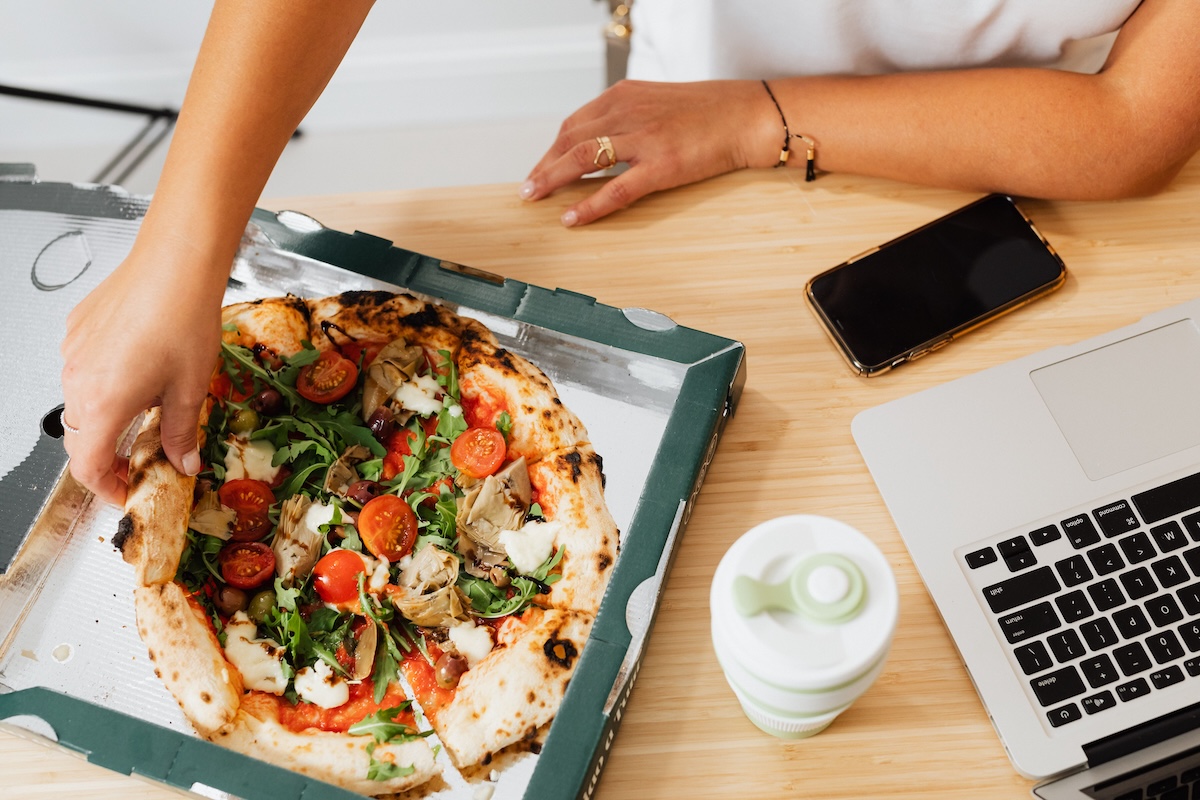
When lunch is reliable, varied, and visible on a calendar, employees plan their week around it.
Fooda's survey found that 61% of companies actively encourage employees to take a real break away from their desk and 47% encourage team members to eat together. Those rituals only stick when the food is consistent enough to anchor them, which is why one-off events rarely produce lasting attendance gains.
With grocery prices still elevated, a daily employer-paid or subsidized meal is one of the few perks that translates directly to take-home budget relief. As WorkLife reported in its coverage of free food and RTO, employees who returned to the office often saw their personal food bills drop by hundreds of dollars a month. That is real disposable income, and it changes the calculation of whether the commute is worth it.
A great workplace food program also saves employees time and removes decision fatigue. When people don’t have to think about making, packing, or sourcing a lunch in the morning, they can focus on work and get back all of the time they’d otherwise spend making a choice and standing in long lines.
Deloitte research found that employees who feel they belong perform about 56% better than those who do not, and a 15-month Cornell University study of firefighters showed that crews who regularly ate meals together earned stronger performance ratings from supervisors.
Shared meals build the relationships calendars never quite produce, and those relationships are what pull people back into the office voluntarily. When people eat together, they work better together, and at the end of the day - both employee and employer benefit from a workplace food program that encourages collaboration.
Once employees are on-site, what happens at lunch shapes whether they want to come back tomorrow.

That is the business case CFOs should sit with. Against the math of turnover risk, missed-lunch productivity loss, and the commute calculation employees run every Sunday night, the cost and ROI of a structured food program look very different from the line item it appears to be on a budget review.
The companies pulling this off share a few habits we cover in more depth in the fastest way to improve the daily workplace experience:
83% of leaders in the Fooda survey said variety is important or extremely important in their program. Menu fatigue kills participation faster than budget cuts, because employees stop opting in long before they complain. Rotating local restaurants keeps the program feeling fresh week after week, which is why 87% of leaders also said supporting local restaurants matters to their food strategy.
A quarterly catered event is forgettable. A standing weekly or daily program becomes a habit, and habits drive attendance. As we cover in why food is at the center of building community in the workplace, repeated interaction is what turns colleagues into coworkers who know each other, which is the dynamic that makes the office feel worth being in.
Thirty-three percent of companies in Fooda's survey do not currently offer a food program, and another 12% optimize purely for cost. Both groups leave attendance and retention dollars on the table because they treat lunch as expense rather than infrastructure.
The companies seeing the biggest impact use a balanced approach (32% in the survey) where employees feel real value without the employer absorbing full cost.
Fooda was built in 2011 to remove the logistical challenge of getting great local food into the workplace. That’s why, depending on your space, headcount, and goals - every employee meal program will look a bit different.
Here’s what Fooda has to offer:
The companies treating workplace food as serious infrastructure are the ones whose attendance numbers hold steady past the mandate honeymoon. The companies treating it as an afterthought are still writing memos about Tuesday occupancy.
To see what a program tuned for your space, headcount, and budget looks like, get connected with Fooda and design a highly customizable food program today.
How does Fooda handle dietary restrictions and food allergies?
Dietary accommodation is built into how Fooda programs are designed. Menus surface vegetarian, vegan, gluten-free, and major allergen information at the dish level, and dietary preferences are tracked across the program so the same employee data carries from one day's Popup Restaurant to the next week's Office Lunch Delivery order. The rotating restaurant model helps structurally: instead of asking one vendor to cover every diet daily, the weekly lineup is curated so vegetarian, vegan, and allergen-friendly options are regularly visible. That visibility is what keeps participation high among employees who would otherwise default to bringing their own lunch.
Which days of the week should companies offer free lunch for the biggest attendance impact?
Most workplace leaders concentrate food investment on the lowest-attendance days of the week, which in a hybrid model are usually Mondays and Fridays. The logic is straightforward: food gives employees a specific reason to commute on days they would otherwise default to remote. Companies running fully in-office models tend to standardize across all five days to build a daily ritual, since inconsistent days reset the habit each week and weaken the attendance signal.
How do food perks compare to other RTO incentives like commute subsidies or wellness benefits?
Food perks and commute subsidies are the two RTO incentives with the strongest published data behind them, and they solve different problems. Food perks tend to outperform wellness benefits like gym memberships in attendance studies because food is daily, universal, and tied to a specific in-office moment, while fitness perks are used by a smaller share of employees and rarely connect to a specific commuting day.