Keeping top talent in New York City has never been more competitive. Finance, tech, media, and healthcare companies compete for the same candidate pool, and the benefits that differentiate employers carry real weight in hiring and retention.
A well-run workplace food program may not be the first perk that comes to mind, but it's one of the fastest to make an impact on day one of implementation. In a city that demands this much from its employees, that immediacy can quickly turn morale around.
Employee turnover is expensive everywhere, but the math hits harder in NYC. According to the Work Institute's 2025 Retention Report, replacing an employee can cost between 50% and 300% of their annual salary once recruiting, onboarding, and lost productivity are factored in. In a city where salaries are already elevated, that extra cost eats away at bottom lines.
The commute adds another layer. The average one-way commute in New York City runs 40 to 44 minutes, among the longest of any major U.S. city. Employees traveling in from Brooklyn, Queens, the Bronx, or New Jersey are spending a significant portion of their day just getting to and from the office.
When the in-office experience doesn't feel worth that investment, problems like employee burnout arise, and disengaged employees are far more likely to leave.
Workplace food programs earn their place as a retention tool because they don't address just one driver of disengagement — they address several at once. The meal is the mechanism, but the outcomes go well beyond lunch.

Most employee benefits take months or years to feel tangible. A food program changes the daily workplace experience from day one, because it directly shapes what the day feels like.
When employees have access to good food at work, they aren't spending mental energy deciding where to eat, navigating crowded Midtown lunch spots, or waiting in long lines. That reduction in daily friction translates into a better overall work experience.
In-office days carry extra weight in a hybrid model, which is when teams align, key decisions get made, and collaboration happens that a video call can't fully replicate.
That productivity depends on employees having the energy and focus to engage. The NYC Comptroller's Office has documented that New York City workers log more combined work and commute hours per week than employees in any other major U.S. city.
When the workday runs that long, having access to good food is what sustains focus and performance through the afternoon.
Hybrid work means fewer spontaneous moments of connection, and those moments are what build real relationships at work. Shared meals are one of the simplest ways to bring them back.
When lunch brings different teams together, relationships form that wouldn't otherwise, and culture becomes something employees live rather than just read about in a handbook.
A University of South Florida study published in the Journal of Marketing Research found that food-related benefits produced the strongest impact on employee performance and loyalty compared to gym memberships, health benefits, and mindfulness programs.
Food perks also contribute to an employee's sense of value and commitment to their employer. When attendance is tied to something people genuinely appreciate, that shift from obligation to preference shows up clearly in presence and productivity.
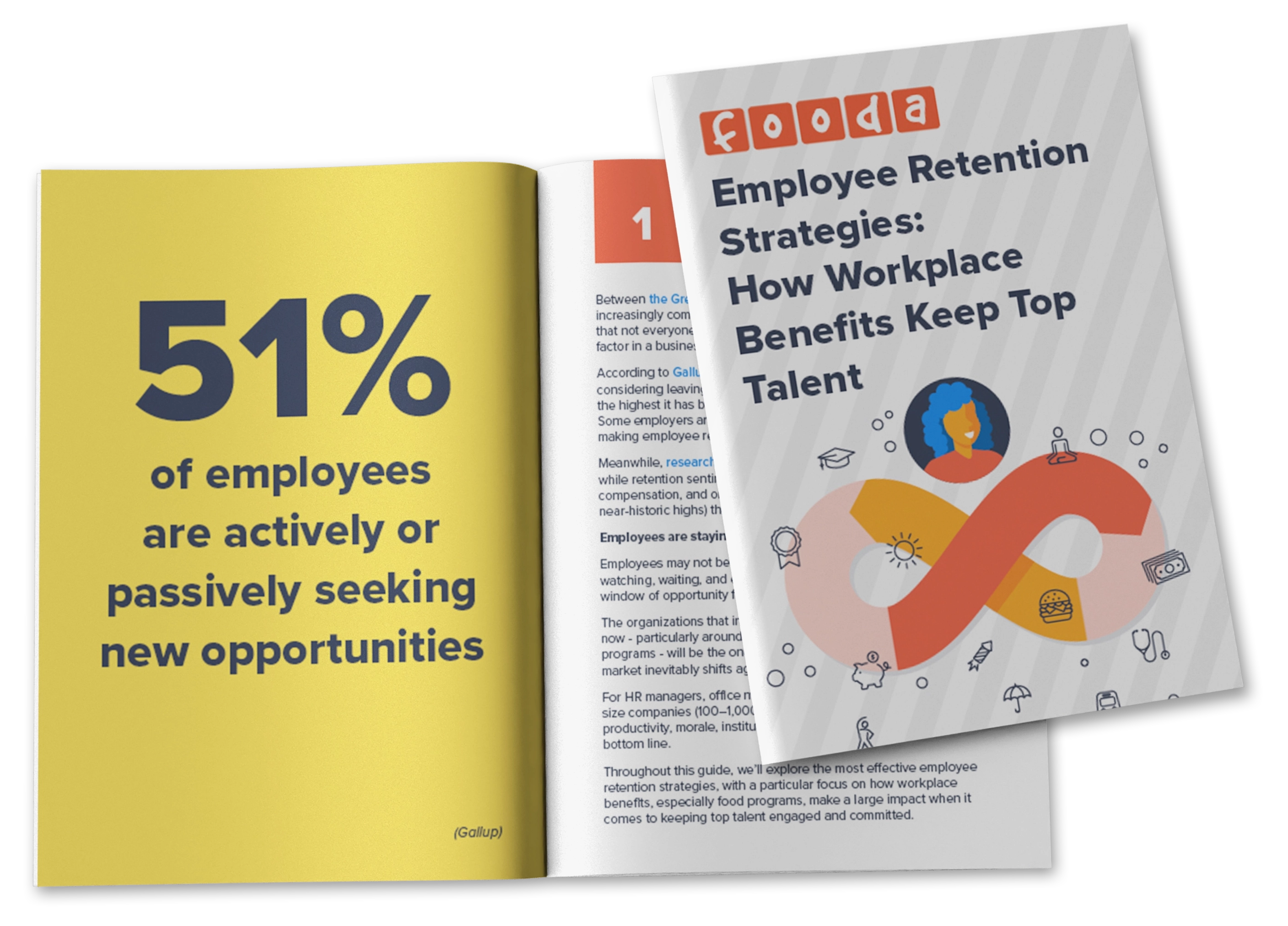
For a deeper look at how workplace benefits influence whether people stay, explore Fooda's employee retention strategies guide.
New York City has one of the most diverse and demanding food cultures in the world. From the iconic dishes NYC is known for to the best new restaurants of 2026, the city sets an exceptionally high bar. Employees who live in that food culture bring those expectations with them to work, which means a food program that feels generic or repetitive will lose engagement fast.
Fooda's 2026 Workplace Lunch and Food Program Survey found that 83% of companies believe variety is important in their workplace food programs. In NYC, that preference runs even deeper. A program that rotates through a wide range of local restaurants keeps the experience genuinely exciting week over week. It also supports the local NYC restaurant community, giving employees something to feel good about beyond just the meal itself.
Hybrid schedules mean the office looks different every day. Different teams are in on different days, last-minute changes are common, and accurate headcounts are nearly impossible to predict in advance.
Fixed-quantity food orders either run short and leave employees without lunch, or over-deliver and generate waste and budget overruns. Neither outcome is sustainable and leaves both sides discouraged.
Freight elevator windows, limited staging space, simultaneous vendor deliveries, and the general pace of Manhattan office buildings create operational pressure that doesn't exist in the same way elsewhere.
For many office managers, the time spent coordinating vendors and troubleshooting day-of problems becomes a part-time job on top of everything else. That administrative burden is often what causes a well-intentioned food program to quietly disappear.
An uninspiring food program stops functioning as a retention perk. Once employees know what to expect every week, the novelty fades and participation drops.
Sustaining genuine variety and quality requires access to a large, rotating pool of restaurant partners, along with the infrastructure to manage it reliably.
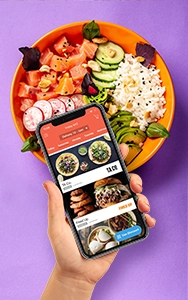
Fooda's model is built for hybrid work. Employees opt in each day through the Fooda App, so meals are prepared for exactly the people who showed up.
Fooda also partner with over 4,500 local restaurants nationwide, and the NYC network reflects the full range of what the city's food scene has to offer. From neighborhood staples to rising culinary destinations, the majority of Fooda's restaurant partners are independent local businesses, meaning every order puts real money back into the communities your employees live and work in.
Fooda's AI-powered scheduling platform builds your weekly restaurant lineup based on your building's actual buying habits, so the rotation stays relevant and genuinely exciting. That anticipation is a small but meaningful part of what makes in-office days feel worth the trip.
When creating a workplace food program with Fooda, you can mix and match the following solutions to best suit your office or building needs:
Get connected with Fooda and let us help you design a highly customized workplace food program for your NYC office.

Can Fooda accommodate different dietary needs?
Yes. Fooda's rotating restaurant roster spans a wide range of cuisines and dietary preferences, including vegan, gluten-free, halal, and allergy-conscious options. Because employees order individually, it's easy to find something that works for everyone.
Can Fooda work within our budget?
Fooda's programs scale to fit your budget. You control which services to offer, how frequently, and how much to subsidize per meal, making it easy to start at a level that makes sense and expand from there. Use this calculator to help design your program.
Does Fooda work for smaller NYC offices or satellite locations?
Yes. Office lunch delivery is well-suited for smaller teams because orders are placed individually, so you're never over-ordering for a partially-full office. Pantry is another strong option for teams that want all-day access to food without the coordination of a daily program.
What's the difference between giving employees a meal stipend and running a structured workplace food program?
A meal stipend gives employees a budget to spend wherever they want, but it puts the logistics entirely on them. They still have to find food, step away from the office to get it, and they often end up eating alone. A structured program like Fooda brings the food directly to the office on a rotating schedule, handles all the coordination, and creates a shared lunchtime experience that builds culture, which a stipend alone can't replicate.