Spend enough time around workplace dining programs and you start noticing something. Even when lunch breaks look simple from the outside, inside, they’re a small logistical circus.
Someone orders catering for 80 people. Forty show up. Twenty people grab two plates because the food is already sitting there getting cold. Meanwhile the rest of the office is refreshing their delivery apps while a parade of drivers circles the building trying to find the right entrance.
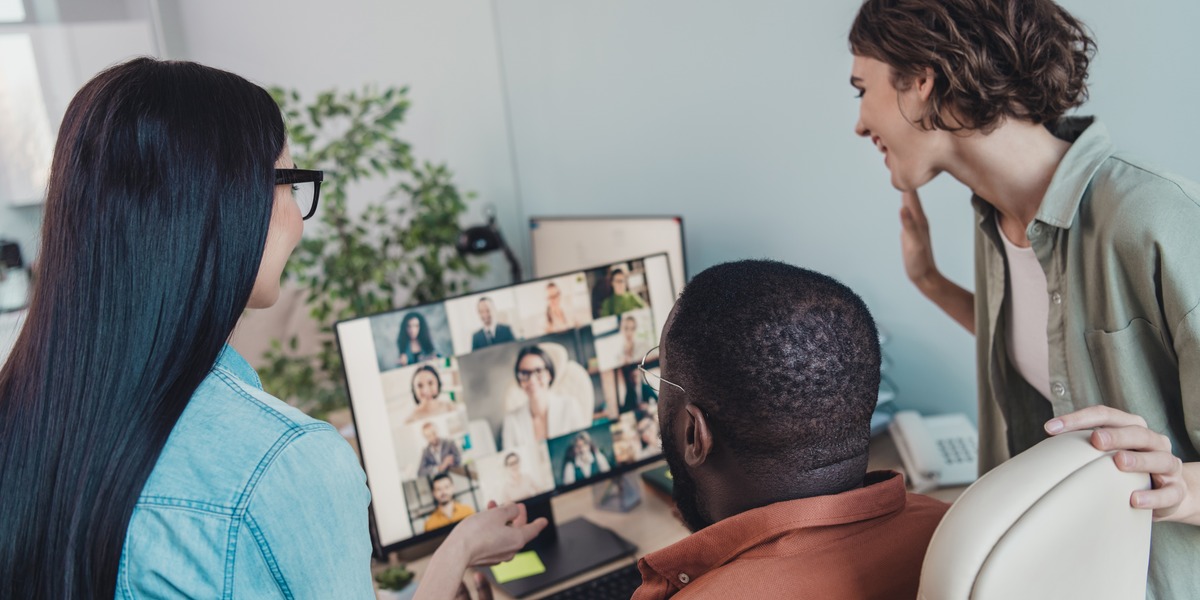
Hybrid work has added even more moving pieces to the equation. Some days an office is packed. Other days it’s half empty. A traditional cafeteria can’t adjust to that kind of unpredictability, which is one reason so many companies have quietly shut theirs down over the last few years. Meanwhile employees still expect the kind of lunch options they see outside the office.
So, new ideas started to take over, like the virtual food hall…

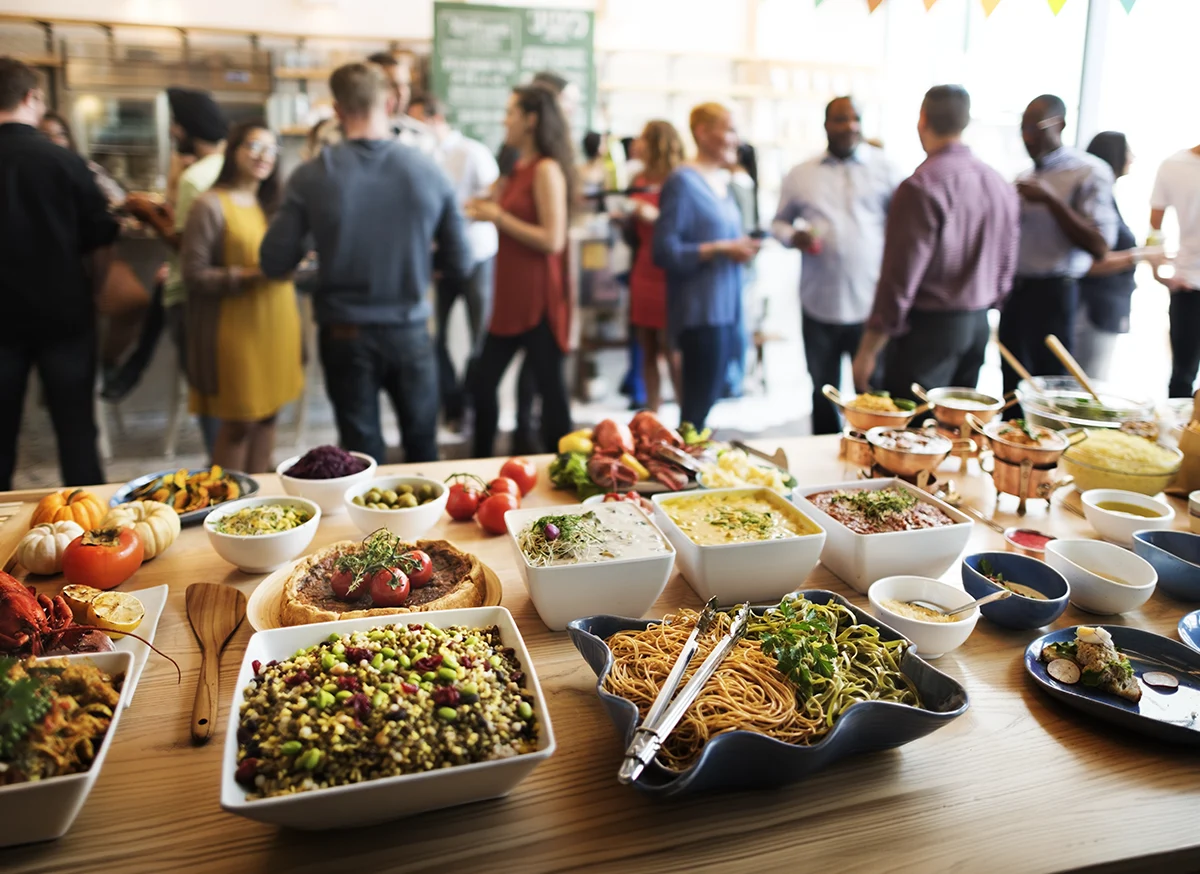
In a workplace context, a virtual food hall is a managed dining program that gives employees access to multiple local restaurants through a single ordering system. Instead of one cafeteria kitchen preparing everything, real restaurant partners rotate through the program, each cooking their own menus. Employees choose their meals individually. Restaurants cook exactly what's ordered. Everything arrives together through a single coordinated delivery window.
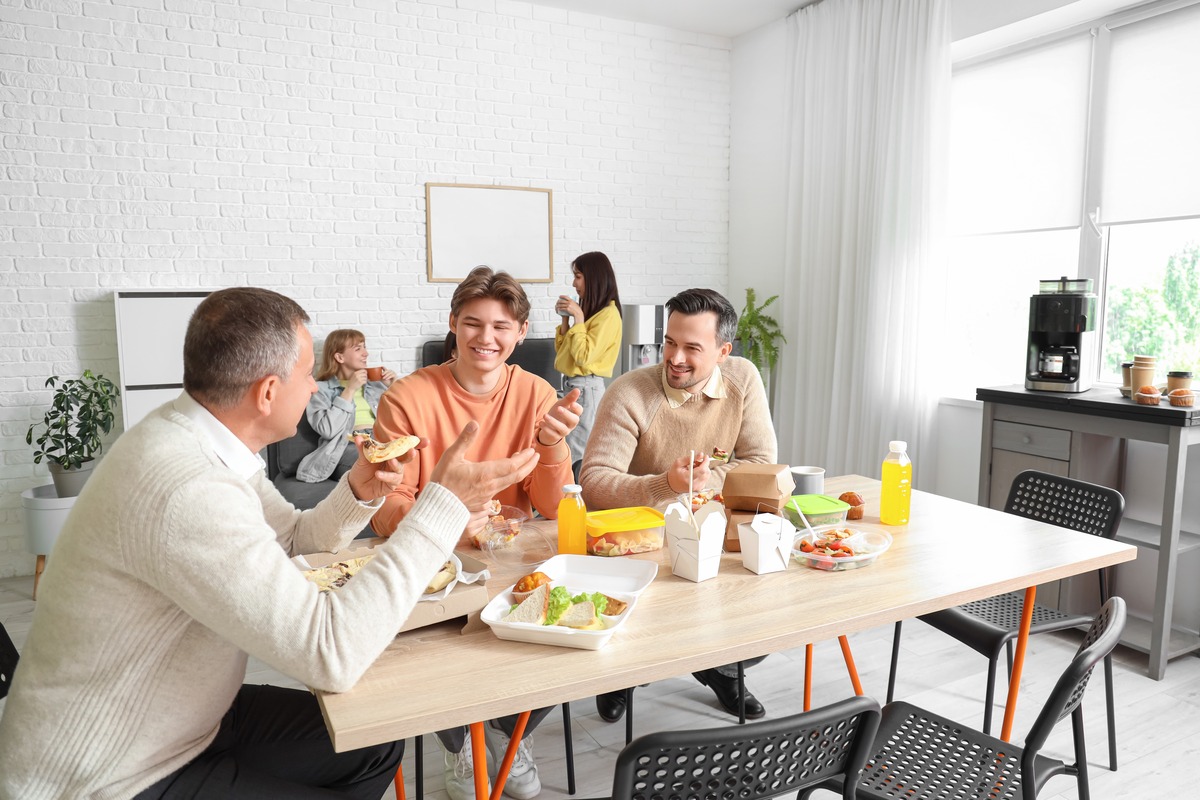
A virtual food hall immediately solves the group lunch problem a lot of offices have. When five people want five different things, one restaurant will never work. A virtual food hall fixes that. Everyone orders what they want. Nobody argues about where to eat. And nobody has to juggle three different delivery apps to make it happen.
The key difference between a virtual food hall and simply ordering off a delivery platform is structure. Delivery apps hand the logistics to the employee. A virtual food hall handles them behind the scenes - restaurant curation, order coordination, delivery timing - so the employee just picks a meal and moves on with their day.
The biggest problem a virtual food hall tackles is menu fatigue. It’s hard to eat the same thing every day, even if you love it. Well-run cafeterias operate from one kitchen and catering rotates dishes, but the experience still comes from the same source. After a few months, employees notice and branch out for more authentic options.
A virtual food hall changes that by rotating the restaurants themselves. One day lunch might include Mediterranean bowls, ramen, and sandwiches. The next day it will look completely different - because entirely different kitchens are cooking.
But variety is only part of the story. Here's why virtual food halls are gaining traction in offices across the country.

Corporate cafeterias were designed around predictable traffic. Five hundred people in the building. Lunch rush between noon and one. Kitchens could prep a certain number of meals and expect most of them to sell. Hybrid work scrambled that rhythm.
Even with return-to-office strategies, attendance is often unpredictable, and that makes traditional lunch production difficult. A virtual food hall works differently. Employees place individual orders, and restaurants cook to that demand - no overproduction, no empty trays, no waiting in lines.

Over the past decade employees got used to browsing multiple restaurants from their phones. The global food delivery market now generates well over $1 trillion.
That evolution changed how people think about lunch. They expect options, speed, and the ability to choose exactly what they want to eat. Bring those same employees into an office with one cafeteria counter and the experience feels limited.
A virtual food hall meets that expectation inside a structured workplace program. Employees get the variety and choice they're used to. The company gets a coordinated system instead of a free-for-all of delivery drivers. Fooda bridges that gap as a food hall management company by handling the restaurant relationships, the ordering platform, and the delivery logistics - so neither side has to compromise.

Ask employees what they remember about a typical office day and lunch usually appears somewhere in the story. Who they sat with. Who they ran into. Whether they actually stepped away from their desk.
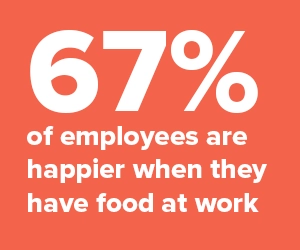
Shared meals remain one of the few moments when people naturally gather without a meeting invite. They’re how companies build authentic communities within the workplace, strengthen connections, and improve engagement, while reducing feelings of stress and burnout.
A customizable office food program gives employees a reason to pause, talk, and reset before the afternoon calendar begins, particularly when there are plenty of options to talk about.

Behind every workplace dining program there’s usually a workplace manager handling logistics. That can mean coordinating vendors, answering employee questions, and dealing with delivery drivers arriving at different times.
When companies introduce a virtual food hall for offices, that scattered process becomes a single organized workplace food delivery program. Instead of juggling several vendors, the workplace team oversees one system.

The idea behind a virtual food hall is straightforward. Multiple restaurants. One place to order. Lunch arrives at the office together. The execution is where most programs fall apart.
Without a clear system, workplace food delivery turns into a steady stream of drivers wandering through the building, late orders, and reception desks stacked with takeout bags.
Fooda keeps the process tight - and the difference starts with who's cooking the food.
Every restaurant in the Fooda network is a real, local kitchen. These aren't virtual brands operating out of a shared commissary. They're the neighborhood spots employees already know and love, brought into the workplace through a managed program. That's what makes the variety feel genuine rather than algorithmic.
Each day, a rotating group of restaurant partners offers menus through Fooda's ordering platform. Employees browse, place their orders, and pick up lunch during one planned delivery window. Every restaurant cooks its own meals, but the program runs through one organized system.
One ordering platform means employees don't jump between apps while administrators get visibility into participation, billing, and feedback - all in one place.
And Fooda isn't limited to delivery. Depending on the office, the program can also include on-site Popup Restaurants, where a local restaurant partner sets up right in the building and serves meals fresh. For many companies, the Popup model adds an energy and experience that delivery alone can't replicate — the smell of food being prepared, a chance to interact with the people cooking it, and a reason for employees to actually leave their desks.
On top of that, Fooda adapts to how your company approaches lunch. Some organizations subsidize meals. Others sponsor lunches on anchor days to drive in-office attendance. Some simply want a structured food option available to employees without the company covering the cost. Fooda programs can be structured around any of those goals and adjusted as needs change.
Most teams assume it requires building something new inside the office. A kitchen. A service area. A lot of equipment. That’s almost never the case. The real work happens earlier, when the workplace team decides how lunch should function inside the building.
Watch how people eat currently. Some employees leave the building every day around noon. Others rely heavily on delivery apps. Some bring food from home and never participate in catered lunches. Those patterns tell you a lot about what you need.
In many hybrid offices, lunch demand follows the same pattern as office attendance. Tuesday and Wednesday tend to be the busiest days. Monday and Friday often feel quieter.
That rhythm matters. Companies that align their food program with those anchor days usually see stronger participation from the start.
Companies launch lunch programs with different goals in mind, and getting clear on yours early makes every other decision easier.
Some want to make the workday more convenient. When employees stop leaving the building to search for food, the midday rush settles down and people get time back. Others use lunch to support return-to-office strategies. A virtual food hall gives people a reason to gather without forcing another meeting onto the calendar. And sometimes the goal is cultural. Food shapes how employees feel about the office more than many leaders realize.
Once a company decides what it wants its food program to do, the rest of the choices - how often to run it, whether to subsidize, which days to prioritize - become much clearer.
Variety is the whole point of a virtual food hall. Instead of one vendor supplying everything, the program introduces different restaurants into the lineup.
Fooda has a network of over 4,500 community and local partners and handles the restaurant curation based on what works for your office - factoring in cuisine preferences, dietary needs, and what's generating the most engagement. Companies don't need to source and manage vendor relationships on their own. That said, employee input matters. Quick surveys or informal feedback go a long way toward making sure the rotation reflects what people actually want to eat.
If ordering lunch takes ten minutes, most employees won't bother.
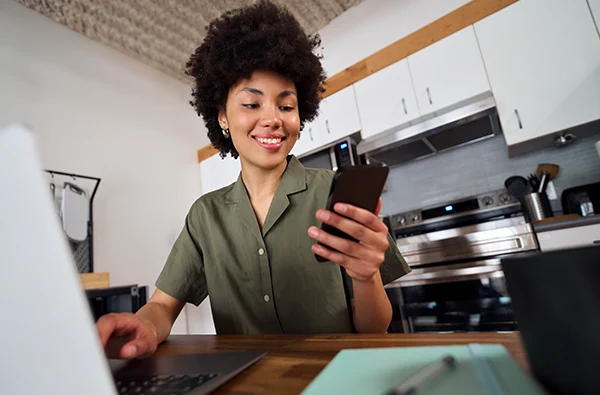
People are busy and the workday moves quickly. The best programs keep ordering simple. Employees glance at a few restaurants, choose a meal, and move on.
Behind the scenes the system groups those orders so restaurants know exactly what to cook. Kitchens prepare meals based on real demand instead of guessing how many people might show up. That change alone cuts down a surprising amount of food waste.
If lunch pickup happens in a crowded hallway, the program quickly feels stressful. If the location is too far from the main workspace, employees stop participating.
Successful programs usually settle on a consistent pickup location that employees pass naturally during the day. Break areas or open collaboration zones tend to work well. Fooda works with workplace teams to figure out the right setup for the building - including what's needed for on-site Popups if those are part of the program.
Once employees know exactly where lunch will appear, the routine becomes second nature.
The first few weeks of a virtual food hall reveal a lot.
Some restaurants generate immediate demand. Others attract fewer orders. Certain cuisines resonate strongly with a particular office population. Fooda's platform gives administrators real data on participation, order volume, and restaurant performance - so adjustments aren't based on guesswork.
That feedback loop helps workplace teams connect lunch programs with broader goals like engagement, attendance, and employee satisfaction. And because the restaurant rotation is flexible, changes can happen quickly.
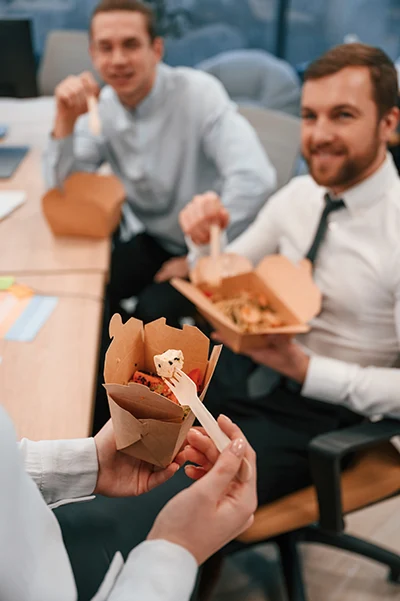
The problems with outdated lunch programs are familiar. Employees leave the office every day to find food. Delivery drivers crowd the front desk. Catering trays show up and half of them go untouched. Those problems add up - in wasted time, wasted food, and missed opportunities to bring people together.
A virtual food hall fixes the structure. Employees choose from real local restaurants. Orders are coordinated through one system. Lunch shows up in a predictable window. The experience feels effortless for employees and manageable for workplace teams.
The good news is it doesn't require a kitchen renovation or a complicated rollout. Fooda makes it easy to build a program around how your office actually works - whether that means delivery, on-site Popups, subsidized meals, or all of the above.
If you're ready to build a lunch program that drives engagement, simplifies operations, and gives employees something to look forward to, contact Fooda today. We'll help you get started.