The workforce in Boston is nothing short of impressive. The city is a leader in many different fields, so it’s no surprise that offices in Boston are also leading the way when it comes to office culture.
According to a survey done by the Greater Boston Chamber of Commerce, 85% of the 120 Greater Boston businesses surveyed use hybrid work models, with most offices having employees in office three days a week. Although hybrid offices make up the majority of Boston’s workforce, hybrid teams are still a difficult terrain to navigate, especially when it comes to feeding them.
When attendance varies each day, it can be challenging to ensure that all of your employees are getting fed without an abundance of leftover food and wasted resources. While finding ways to feed your hybrid team can be hard, there are solutions out there that adjust to your team's needs and deliver consistent results every time.
This guide breaks down the most effective strategies Boston companies are using right now to keep their hybrid teams fed, satisfied, and motivated to make the commute worth it.
When working with a hybrid team, it is crucial to understand your team's attendance patterns in order to make your food program as effective as possible. This is best done by mapping in-office days and keeping track of attendance.
It’s also helpful to note what days are anchor days versus flex days for your team. Headcount variability can be difficult to work around depending on the food program or service you use, so keep this in mind when deciding how you are going to feed your team.
Beyond attendance, knowing your team's dietary needs makes meals feel inclusive rather than something certain employees feel left out of. Allergies, religious diets, and health-related preferences all shape how people eat, and accounting for them brings your team together. A simple survey asking about dietary needs and in-office lunch days is the best way to plan accordingly.

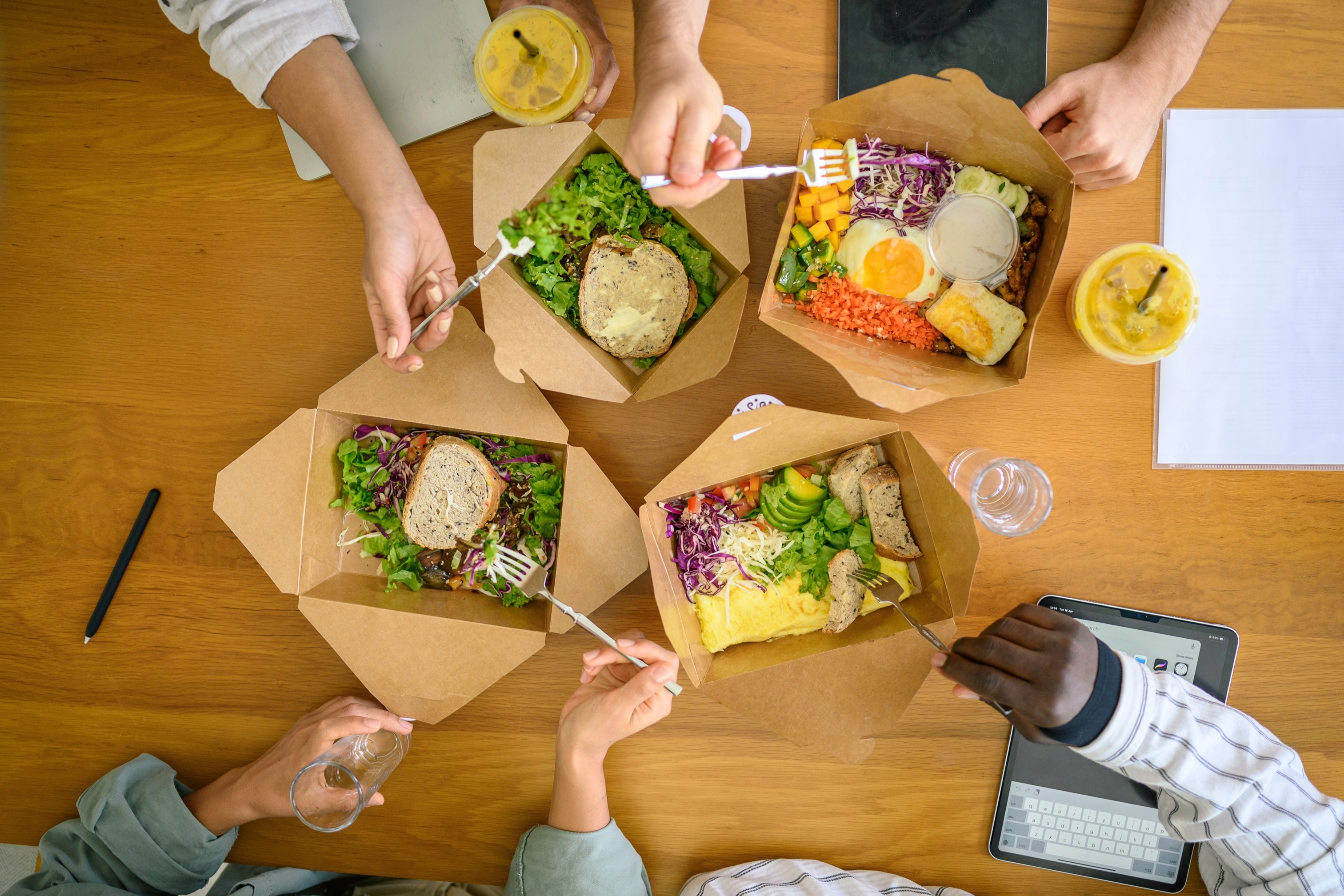
Group catering is one great way to feed your hybrid employees. Ordering corporate catering in Boston is practical when you know you have a large group of people to feed, which could be the case depending on if it’s an anchor day.
Natural, casual connections over shared meals from local restaurants are filled with moments that are exactly what in-office work is supposed to preserve. Considering Boston has a history of culinary depth, the food you bring in will make a lasting impact on the team. From North End Italian spreads to Seaport-adjacent seafood, the options for delicious group and corporate catering are endless.
Because the attendance of hybrid teams can be unpredictable, it’s best to look for caterers who offer variable minimums or per-head pricing rather than locking you into a fixed order size weeks out.
If your hybrid office has a lot of variation between what days people come in, or if you have a large population of employees that don’t come into the office at all, it can be difficult to try and manage ordering food and making sure everyone has access to it.
Subsidized employee programs and stipends are a smart choice for those wanting to feed a hybrid team. There are plenty of great corporate lunch delivery options in Boston and helping your employees save time and money around lunch comes with many productivity-related benefits.
Providing subsidies or stipends gives all employees, whether remote or in-person, equal opportunities to use a food benefit. The standout advantage here is equity: every employee, regardless of whether they commuted in that day, feels like they're getting something.
Micromarket and pantry services are a great option for those teams in smaller offices or ones that want to offer snack and drink options around the clock.
In Boston's competitive talent market, this kind of ambient perk signals that the leadership team values the time, effort, and sacrifices employees make to get to the office. Vendors like Fooda serve Boston offices of all sizes and can tailor assortments to match your team's preferences, including allergen-conscious options and local brand selections.
If you are looking for an all-inclusive option with low barrier to entry, this service typically includes specialty coffee and drink machines, healthy snacks, and elevated fresh vending options.
If you want something a bit more scaled back, you can offer a more limited selection of packaged snacks and coffee. The appeal of pantry services and micromarkets is that they’re available every day, meaning they work great no matter who shows up that day.
One of the best ways to get people excited about coming to the office is with a local Popup Restaurant. Boston has a vibrant food scene, and bringing your team's favorite restaurants to your workplace for a weekly team lunch or monthly all-hands creates a sense of event that standard catering rarely achieves.
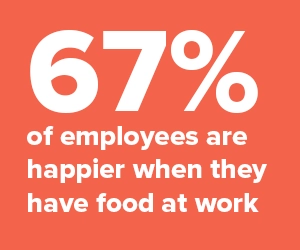
The easiest way to bring Popup Restaurants into the office is through platforms like Fooda, which specialize in exactly this model for office buildings. Popups also give you a natural way to rotate concepts and keep the calendar feeling fresh, which matters more than most HR teams realize. In Fooda’s 2026 survey of more than 100 companies, 83% said that food has a moderate to significant impact on workplace culture. A catering program that feels predictable can quickly lose its value as a perk, and utilizing this model is a great way to avoid menu fatigue

The most important aspect of planning how to feed a hybrid workforce is to take into account what the day-to-day looks like for your specific team. No two teams are the same when it comes to the number of people in the office, days of the week people are in office, and budget allotted for food benefits. Because of this, it's best to assess what bottlenecks you might encounter in advance and find a partner who can work within any constraints you have.
The companies getting this right in Boston aren't picking one solution, they're layering two or three in a way that matches how their team operates. Combining corporate food services is the simplest way to meet individual and organizational food needs while taking the logistical burden off of your people managers.
When making the case to leadership, you can frame food perks as an attendance and retention tool that generate a noticeable return on investment from the day they’re implemented.
There's no universal answer to feeding a hybrid workforce. However, there is a right answer for your team, and it starts with understanding how your people actually work.
With Fooda's Popup Restaurants, you can bring a daily rotation of local restaurants directly into your office space with no infrastructure required. Guest restaurants set up in lobbies, breakrooms, or any available common area, and employees get to explore a new cuisine from a neighborhood chef every day. Companies using Popups consistently report the biggest drops in menu fatigue and the biggest jumps in participation.
Fooda handles all restaurant sourcing, scheduling, and coordination, so there’s no extra lift on your administrative team. For hybrid teams specifically, the rotating format gives employees a genuine reason to check what's on the menu before deciding whether to come in, which is exactly the kind of soft attendance incentive that doesn't require a policy.
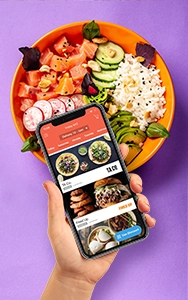
Fooda's Office Lunch Delivery is built for individual ordering. Each employee can mix and match exactly what they want from a rotating virtual food hall on the Fooda App. From there, it gets delivered via a dedicated delivery driver and arrives labeled and ready at the office, making it well-suited for days when headcount is unpredictable since the service scales up or down without a fixed commitment.
Our Corporate Event Catering covers the more traditional group-order case. This product features drop catering and staffed service for recurring programs or one-off events.
To round out the suite, Fooda's Pantry Solutions stock offices with snacks, coffee, and grab-and-go options, with each program designed to involve local businesses rather than national distributors.
The practical advantage of using Fooda across multiple formats is consolidation. You have one vendor relationship, one billing system, and a consistent restaurant network of over 4,500 partners that works no matter the Fooda product you’re using.
Whether you're using group catering to drive anchor-day attendance, rolling out a meal stipend to include your remote employees, stocking a kitchen to create daily ambient value, or booking Popup Restaurants to make the office genuinely fun, the goal is the same. You’re trying to make coming in feel worth it.
Boston has the vendors, the food culture, and the infrastructure to support a genuinely great hybrid food program. You just need a strategy that fits your headcount, your schedule, and your budget.
If you’re ready to build your highly customizable workplace food program, contact Fooda today to learn more about how to bring delicious food to your hybrid team in Boston.
Yes! Many Boston-area vendors offer scaled options for companies under 20 people, and platforms like Fooda let you set hard monthly spending caps so there are no surprises. Starting with a $15/person weekly lunch and a stocked snack shelf is a realistic entry point for startup companies competing for talent against larger firms.
This depends heavily on the format and the season. Traditional catering typically requires 48–72 hours for standard orders, but popular vendors in high-demand areas like the Seaport or Kendall Square can book out 2–3 weeks for larger events. Popup vendors booked through platforms like Fooda usually need 1–2 weeks of lead time.
The safest approach is to collect dietary restrictions during onboarding and maintain a standing list (most catering platforms let you attach it to every order). For Popups and other vendors, build a two-item minimum rule: always have at least one gluten-free and one fully plant-based option regardless of headcount.