The commute to work is costing your employees more than just time.
Research shows that just 20 extra minutes of daily commuting can feel as damaging to job satisfaction as a 19% pay cut. With commute dissatisfaction now driving 15% of voluntary employee departures, it's becoming a retention problem along with a morale one. It also doesn't help that 49% of workers expect return-to-office mandates to increase in 2026. More commuting is coming, and employees recognize that.
While you can't shorten your employees' commute to work, there are things you can do to make it worth it. This guide breaks down why the commute to work is an employer problem too, and the practical steps you can take to turn it from a daily frustration into a reason employees actually look forward to showing up.
According to the 2025 Office Space Report by Robin, commute-related concerns are the single biggest reason hybrid workers resist coming into the office. The study shows that 41% say their commute is simply too long. But what does "too long" actually mean? And how much are employees spending on this?
According to the United States Census Bureau, the average commute to work in the US was 27.2 minutes as of 2024. That’s a slight increase from the previous year’s 26.8 minutes, although the number has been gradually rising since companies started bringing employees back to the office.

Of the 78% of workers over the age of 16 that commute, the average spends roughly $6,700 a year out of their own pocket on commuting expenses. That expense does not come lightly, especially as the cost of living increases. As an employer, it's important to understand the costs of commuting for your employees in order to better understand what employees need from the workplace.
A reasonable commute to work is around 30 minutes or less each way. But this is also up to personal preferences and location-specific standards.
In cities with heavy traffic like New York, for instance, a slightly longer commute would be considered reasonable. The average commute to work in the city is 44 minutes. And over 17% of workers in the city spend more than an hour commuting.
But in cities like Columbus and Memphis, workers spend an average of around 22 minutes each way. So anything longer than that could be considered unreasonable for the market.Why the Commute to Work is an Employer Problem Too
Long commutes mean loss of leisure time and higher transport costs for employees. But employers also feel the indirect impact. Here are some of the reasons why the commute to work also concerns employers:
Long commutes mean loss of leisure time and higher transport costs for employees. But employers also feel the indirect impact. Here are some of the reasons why the commute to work also concerns employers.

Whether employees get stuck in heavy traffic surrounded by blaring horns or get crammed into crowded trains, they are already exposed to multiple stressors long before they get to the office. This could leave them mentally and physically exhausted before they even make it to work, leading to a higher risk of employee burnout.
When the daily commute takes up too much time, employees don’t always get to enjoy quality time with family, indulge in their hobbies, or even watch their favorite TV show.
When they have less time for meaningful activities outside of work, it leads to poor work-life harmony. Add in the cost, mental stress, and physical fatigue from all the travel, and you have employees who are unhappy and prone to quiet cracking.
If employees often have to deal with long and stressful work commutes, there’s a good chance they’ll have less energy to focus on their work. This means they could be less productive and engaged, leading to poor performance. One study even found that the mental effort involved in the morning commute impaired daily job performance.
More employers are initiating a return to office (if they haven’t already).
According to Fooda's "What's Happening in the Workplace Now?" report, 41% of workplaces are fully back in-office. That’s a 2x increase from 2024 numbers. Meanwhile, 31% are also following a hybrid model with set in-office days.
As these trends continue, commuting has become the expected norm again.
As a company, there is plenty you can do to help make employees feel like their commute to work is worth it.

In-office work models don't necessarily have to be rigid. Instead of sticking to a typical 9–5 schedule, give workers the freedom to come into work and leave at a time that works for them.
This flexibility allows them to avoid peak travel times or run personal errands as needed. They can time their commute to avoid heavy traffic, which will cut down travel time and reduce the commute to some extent.
For example: Let’s say someone lives 20 minutes from the office but spends about 15-20 minutes getting stuck in traffic one way. Their daily commute ranges between 60–80 minutes. But if they have the flexibility to start later (or earlier) in the day, they could skip the heavy traffic and get to work in 25–30 minutes. That's almost 30 minutes saved per day on commuting time.
Even just not having to rush to the office in the mornings means employees are less worried about making it on time and are ready to focus once they get to the office.
If employees are paying for their own gas and travel fares, it adds to their financial burden. So even a 20-minute commute can seem less worthwhile than a 40-minute commute where an employer handles the costs.
The aforementioned Robin survey found that 32% of hybrid workers cited high gas prices as a reason for resisting the office. Meanwhile, 20% cited expensive parking. Yet, 39% of workers would be more likely to come in if the company covered commuting costs. Offering subsidized transport is a straightforward way to reduce one of the biggest barriers to showing up. Companies can offer:
Alternatively, you could also provide other ways to travel. For instance, company shuttle services or bike-to-work initiatives can improve the commuting experience.
Alongside the duration and cost of commuting, employees also look at their workplace experience to determine if their commute to work is worth it.
If employees are greeted at the office with the same, lackluster cafeteria food (or worse, no food at all) after making the trek in, they may feel as though their commute wasn’t worth it. Great food, excellent facilities, and a space that feels welcoming and supportive can significantly improve the daily workplace experience.
When you factor in workplace perks that positively impact employees daily, it makes the whole commuting experience feel much more worthwhile.
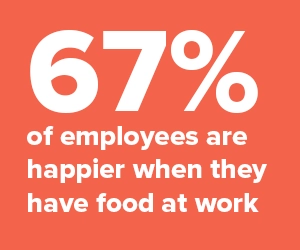
Even if employees are offered gas stipends and transit benefits, they may still not enjoy coming into the office. However, data shows that there is one thing that could instantly make the daily commute worth it: food.
That says a lot about the impact of food on people’s attitudes toward on-site attendance. Building and implementing a thoughtful workplace food program can help you create workplace experiences that make the commute to work worth it.
Here are some food-related perks that could offset the burden of commuting:
Fooda’s workplace food programs let you design food perks that make your employees’ commute to work more worthwhile. From expansive menus and adaptable models to low-cost, subsidized meals, you can build a program that fits your needs.
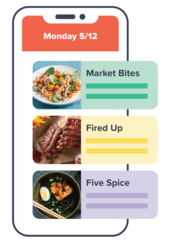
Fooda lets you build a program where employees truly look forward to eating at work. According to a survey of over 100 companies done by Fooda, 87% say supporting local restaurants is important, extremely important, or nice to have. By partnering with Fooda, you can offer a diverse selection of authentic cuisines from top-rated local restaurants, so lunch feels more satisfying and rewarding.
Additionally, employees aren’t stuck having to choose from the same 10 items day after day. You can experiment with new cuisines, bring back their favorites, and have a new restaurant lineup daily.
As employees see the upcoming lineups ahead of time through the Fooda App, the commute to work feels a lot more exciting.
Food benefits give you a competitive advantage and offset the burden of commuting. However, cost could be a make or break factor in the decision making process for any company.
The Fooda model is uniquely low-cost for employers because it mainly focuses on revenue share with partner restaurants. It offers an affordable way for employers to set up food programs that employees will actually use and enjoy.
You also have the flexibility to design a custom solution that works specifically for your company. Whether you want to bring in Popup Restaurants, order office lunch delivery, or set up a full service cafeteria, Fooda has solutions that work for businesses of all sizes, budgets, and setups.
Fooda also helps you offer subsidized meals, and you can customize the program to pay for all or some of the food, putting money directly back in your employees’ pockets.
Fooda Pantry helps you take office snacks and drinks to the next level.
From grab-and-go food options to high-quality coffee, you can provide fun and healthy snacks that are equally delicious and convenient. You can also stock up on your employees’ favorite brand of potato chips or protein bar using sales data from the Fooda software.
When you know there’s an iced vanilla latte and fresh fruit waiting for you when you reach the office, the commute to work doesn’t feel as daunting.

Whether you want a full cafeteria revamp, or you’re just looking for better snacks to get employees excited about coming into the office, Fooda has got you covered.
From increased employee retention to building a sense of community in the workplace, and of course, making the commute to work more worth it, the benefits of food at work are endless.
Learn more about how Fooda can help you implement a workplace food program in your office today.

Are commuter benefits tax-deductible for employers?
Yes, for employees. Under IRS Section 132(f), qualified transportation fringe benefits - including transit passes, vanpool, and qualified parking - can be offered pre-tax, meaning employees don't pay federal income tax or FICA on those contributions (up to $340/month in 2026). This makes commuter benefits a meaningful financial perk. Note that employer deductibility changed under the 2018 Tax Cuts and Jobs Act, so consult a tax professional for your specific situation.
How do I find out what commute-related perks my employees actually want?
Start with a short, anonymous survey asking about commute length, mode of transport, biggest pain points, and which perks would make the biggest difference. This prevents you from investing in benefits that don't move the needle. For example, parking subsidies won't help a workforce that mostly takes public transit.
Should we factor commute distance into hybrid scheduling?
It's worth considering. Some companies let employees who live farther away come in fewer days or choose which days they're on-site so they can batch meetings and collaboration into fewer trips. This approach reduces total weekly commute time without sacrificing in-person connection.
How much does employee turnover from commute dissatisfaction actually cost a company?
Commute dissatisfaction now accounts for 15% of voluntary departures in the U.S. When you factor in replacement costs, which run between $4,000 and $21,000 per employee depending on seniority, even a modest reduction in commute-driven turnover pays for most workplace perk programs many times over.