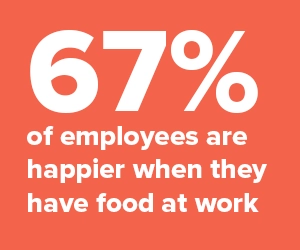
Food at work is consistently ranked as one of employees' most appreciated company perks. Unfortunately, when the program isn’t working as planned - people notice, they stop participating, and then suddenly your inbox is flooded with complaints about the office lunch.
Even worse, they have to start leaving the workplace in the middle of the day for a decent meal or spend time figuring out where to order from and hunting down their delivery order. Then what started as an employee benefit intended to improve productivity becomes another daily stressor in your employees' already busy lives.
But don’t panic yet - even if your first attempt was unsuccessful, this is the perfect opportunity to create a better employee experience through a workplace food program. And those complaints? They tell you exactly what’s bugging your employees!
In this post, we show you how to handle employee complaints and how easy it is to run a highly curated office lunch program with Fooda.
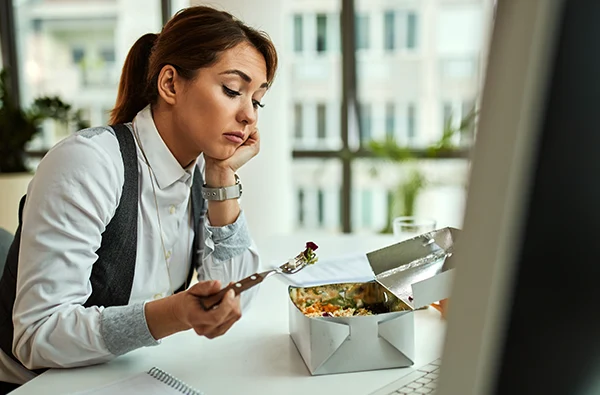
First things first, what are employees complaining about? Here are some of the biggest workplace food complaints and how you can address each of them.
With many companies leaving employees to fend for themselves at lunch or rely on outdated cafeteria models, it’s no surprise that quality is often a major complaint. Bland flavors, cold dishes, and low-quality ingredients are a recipe for disaster that leads to workers eating out or ordering delivery even when they have on-site meal options.
The most effective fix is replacing cafeteria-style food with freshly prepared meals from community or local restaurants. Whether they cook on-site or bring food directly to your office, quality improves immediately, and so does participation.
If you're not ready for a full program change, start with the ingredients: swap frozen staples for fresh local produce and seasonal items where possible. The difference in flavor and nutritional quality will be noticeable by employees.
Even if the food is good, employees will disengage if they're choosing from the same options week after week. A cafeteria with a fixed rotation of four or five dishes (even well-made ones) eventually becomes background noise. Employees stop looking forward to it, participation drops, and the complaints start again.
This applies to the menu itself, but also to snacks and beverages. A basic coffee machine and a vending machine don't cut it when employees can walk to a specialty coffee shop in five minutes.
Rotate menus daily or weekly rather than running a fixed rotation. Changing cuisines throughout the week - Mediterranean on Monday, Mexican on Wednesday, Asian on Friday - keeps things feeling fresh without requiring an overwhelming number of options on any given day.
You can even use seasonal produce to drive natural variety: what's on the menu in August shouldn't look the same as what's on the menu in November.
For snacks and beverages, expand beyond the obvious. Gourmet coffee options, flavored waters, a mix of healthy and indulgent snacks. These small additions signal that the program is thoughtfully maintained, not just stocked and forgotten.
To stay ahead of what employees truly want, build in a feedback loop. Create polls that let employees vote on new cuisines or menu items to introduce. Include an open field for suggestions beyond the listed options since employees often want something you didn't think to put on the list.
You can even go as far as to back that up with ordering data: the items your team reorders most frequently are telling you something, and seasonal trends in that data can help you build menus that align with real preferences.
No one likes to waste most of their lunch hour waiting for food. Long cafeteria lines and late deliveries cut directly into employees' lunch breaks. In some cases, employees end up skipping meals entirely because by the time food arrives, there's no time to eat it.
Wait times may be less visible than food quality, but they generate just as much frustration.
This is primarily a partner problem. Reliable catering requires partners who treat timing as non-negotiable, whether that means kitchen-to-office delivery that arrives ahead of the lunch window or on-site Popup restaurant setups that are fully ready before the break starts.
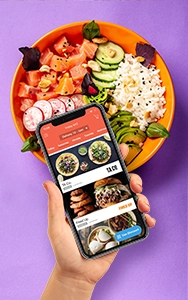
Order-ahead technology helps significantly. With Fooda, employees can browse menus and place orders in advance through the mobile app, so their meal is ready for pickup the moment their lunch break starts. No lines, no waiting, no lost time.
Variety doesn't automatically mean nutritious. A rotating menu full of indulgent options still leaves health-conscious employees without much to choose from.
This gap shows up in snacking too: a lunch menu might include a protein bowl that they feel okay eating - but if the break room snack supply is chips and candy - employees who care about what they eat are left without a good option between meals.
Solving this requires more than adding a salad to the rotation. A real response incorporates menus around a broader nutrition framework. Goal-based options like keto-friendly dishes, high-protein meals, and plant-forward choices let employees with specific health goals find something that works for them every day, not just occasionally.
For snacks, move toward refrigerated grab-and-go options (like Farmers Fridge) alongside pantry staples. The goal is making the healthy choice the easy choice, not something employees have to hunt for.
This complaint carries more weight than most. An employee with a nut allergy who has to worry about cross-contamination at every meal experiences what should be a daily event bringing people together as a health risk.
And vegan or gluten-free employees who can't find anything on the menu will get frustrated and annoyed with the fact they're being excluded from a benefit the rest of the team can access without thinking.
Ignoring dietary restrictions feels like a deliberate oversight. It's a meaningful gap in how the program serves your team. That could easily be a problem if you’re not actively preventing certain allergens from accidentally getting into their food during preparation.
The easiest way to address this office lunch complaint? Individual lunch delivery, where each employee selects their own meal from a menu filtered by their dietary needs. This is one of the most efficient options for companies scaling their businesses and headcount.
For programs that use shared menus, buffet catering, or cafeteria formats - clear labeling is essential: gluten-free, vegan, vegetarian, contains nuts, contains dairy. Each dish should be clearly marked so employees can make informed choices in seconds, not after a lengthy conversation with the caterer.

Fooda’s workplace food solutions let you build a customized food program that effectively solves all these major employee complaints.
Fooda lets you bring a rotating lineup of chef-driven restaurant Popups into the office. That way, you can serve a diverse selection of fresh and exciting meals from top-rated restaurants. We have a large network of partner restaurants to choose from, menus that change daily, and food is always fresh. So you get to address some of your staff’s biggest complaints around quality and variety.
The Fooda platform keeps track of your employees’ unique buying habits and uses the data to create weekly schedules. This takes the guesswork out of restaurant scheduling, allowing you to bring in your staff’s favorites at the right time.
Tired of pushing back meetings because your lunch delivery keeps running late? Or repeatedly apologizing to hungry and frustrated staff?
Fooda gives you an office lunch delivery service you can count on. Employees can browse menus in a virtual food hall, mix and match items from different restaurants, and have their meals delivered by one driver all at the same time.
Everyone still gets exactly what they want, and the entire team gets to eat lunch at the same time. Restaurant options change daily, giving your workers more variety. And with a dedicated driver who’s familiar with your building, you’ll never have to worry about hunting down your lunch again.
Getting recurring complaints from employees who are tired of the snack selection in your office? With a workplace pantry solution like Fooda Pantry, it’s easier than ever to provide your staff with a wide range of high-quality snacks and beverages.
You can set up micro markets and smart vending machines to stock up on a diverse selection of fresh fruits, healthy grab-and-go snacks, and cold beverages.
Additionally, premium water dispensers add even more variety and keep your team hydrated. Coffee options can also include gourmet flavors to give your staff an extra moment of indulgence.
Fooda Pantry lets you personalize your product mix and keep your shelves stocked with your team’s favorite snacks – whether it’s truffle chips or a certain brand of organic protein bars. And if there’s a request for a new item, we can quickly add it to your pantry.
If you’re looking for an upgrade from the traditional cafeteria experience, Orange by Fooda is just what you need. This cafeteria replacement solution lets you bring in a rotating lineup of guest restaurants alongside permanent resident restaurants.
So you can keep things fresh and exciting without sacrificing the consistency, helping you create an employee experience that truly delights.
Ready to design a food program your employees love? Get in touch with Fooda today and explore our workplace food solutions.
Frame it as a retention and productivity investment, not a food cost. Start with participation data: if a significant portion of your team isn't using the program, that's money going to waste. Then pull any available data on how long employees spend away from the office for lunch (even 20–30 minutes per person per day adds up across a team).
Pair that with external research: food consistently ranks among employees' most appreciated workplace perks and the cost of replacing a single mid-level team member can run 50–200% of their annual salary - meaning a well-run food program that improves retention by even a small margin pays for itself multiple times over.
It varies based on program type, team size, and how much the company subsidizes. A fully catered daily lunch program typically runs $12–20 per person per meal, though many companies offset a portion through employee co-pays. A pantry or snacking program tends to run lower - often $5–10 per person per week depending on what's stocked. The most important cost frame is per-employee per-day rather than total program spend, which makes it easier to budget against headcount and compare to other benefits on a per-person basis.
Yes, for in-office days, a rotating catering program works well - employees know which days food is available, which often drives office attendance on its own. For remote employees, meal stipends or delivery credits tied to a platform give them equivalent access without requiring them to be on-site. The key is making the benefit feel equitable across both groups rather than something only available to employees who come in.