Boston companies are rethinking how they feed their employees, and it's been paying off.
Across industries, from biotech firms to financial services companies, employers are investing in workplace food programs as a strategic tool for attracting talent, building culture, and keeping employees engaged.
This shift reflects a broader reality. In one of the most competitive talent markets,the office experience matters. Employees have more choices than ever about where and how they work, and companies that make the day-to-day experience better, starting with something as fundamental as a good meal, are seeing real returns.
This isn't about lavish cafeterias or unnecessary excess. It's about smart, flexible programs that bring a variety of great local food to the workplace in a way that mirrors how your team already eats without having to leave the office.
Boston is known as a leader in many different disciplines. As home to a dense concentration of biotech firms, financial institutions, technology companies, world-class healthcare facilities, and higher education institutions, the city hosts some of the most sought after employees in the country.
That competitive pressure has intensified in recent years. As companies navigate the tension between remote flexibility and in-office collaboration, the question of “why come in?” has never been more urgent.
Food is one of the most effective answers available. It’s immediate, tangible, and repeatable. Unlike a gym subsidy or a wellness stipend that employees may or may not use, a workplace food program delivers value every single day, every time someone walks through the door.
Alongside the practicality of food as a perk, Boston also has a rich, diverse food culture that employees genuinely care about. A workplace food program that taps into that and features local restaurant partners, seasonal menus, and regional flavors feels like more than just a corporate perk. It helps employees engage with their community and find their place outside of work itself.

Recruiting is expensive and replacing a mid-level employee can cost anywhere from 50% to 200% of their annual salary when you factor in lost productivity, recruiting fees, onboarding time, and the institutional knowledge that walks out the door.
Incorporating a workplace food program could be the competitive advantage that helps keep employees and attract new ones.
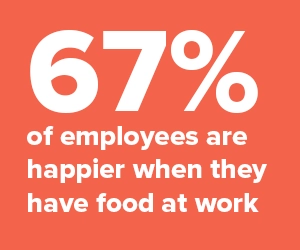
Food consistently ranks among the most valued workplace benefits. According to a study done by marketing researchers led by the University of South Florida, food-related benefits had the strongest impact on employees compared to other benefits.
Free or subsidized meals are a top-tier perk, often ranking above other common offerings like commuter benefits or gym memberships. It’s something employees can realistically use daily, and it lets employees know that the company is willing to invest in the people who work there.
For recruiting, that signal matters even before someone accepts an offer. Candidates today do their research and will always ask questions about the company culture and community. When you can point to a robust food program, you have a visible, credible signal of a people-first culture.
For employee retention, the effect compounds over time:
When the cost of a food program is weighed against the cost of turnover, the math tends to favor the investment
What we eat directly affects how we think, focus, and sustain energy throughout the day. The midday slump is a well-documented phenomenon. Poor nutrition, blood sugar crashes, and the mental overhead of figuring out lunch all contribute to afternoon productivity losses that employers rarely track but consistently experience.
A workplace food program that offers convenient, quality options during the workday quietly removes a source of friction that most people don’t even register as an issue. When employees don’t have to think about the logistics of lunch like where to go, whether there’s time to get there and back, and how much it’ll cost - that cognitive load frees up.
With the right food service partner, employees get access to the food they want and come back to their desks energized and ready to work.
There’s also a broader wellness dimension. For companies with mental health and well-being initiatives, food is an underutilized lever.
Offering varied menus that accommodate dietary restrictions signals genuine inclusion and reduces the daily stress that can come from feeling like your needs aren’t accounted for at work.

One of the persistent challenges of modern office life and hybrid work is that people are increasingly only interacting with their immediate team. Cross-functional relationships don’t exist like they used to. The informal connections that used to happen naturally in hallways and break rooms don’t happen as much in today’s work environment.
A well-designed workplace food program creates the conditions for those connections to happen again. When employees gather around a shared food experience like a Popup Restaurant in the lobby, a communal lunch hour, or even just a shared table, they interact with people they might never encounter in their day-to-day work.
Those interactions build trust, surface shared interests, and strengthen the social relationships of a team. According to Fooda's 2026 Workplace Lunch & Food Program Survey of 100+ companies, 83% say food has a moderate to significant impact on workplace culture.
For companies navigating the return-to-office conversation, this is really important. The office needs to offer something that remote work can’t replicate. Spontaneous, energizing human connection is exactly that. Food is one of the most reliable ways to create the conditions for this.
When a workplace food program features beloved local restaurants (like iconic Boston pizza joints), it reinforces a sense of place and pride. That connection to community matters, especially for workers who want to support the hard-working businesses in their neighborhood that they know and love.
Although there are plenty of cultural and human benefits to workplace food programs, the decision ultimately has to make business sense too. Here’s what the ROI of a successful workplace food program can look like when organizations do the math.
Reduced turnover is one of the biggest financial impacts. If a food program contributes to even modest improvements in retention, like keeping one or two additional employees per year who might otherwise have left, the savings in recruiting and onboarding costs alone often cover the program’s annual investment.
Productivity gains are harder to quantify but widely observed. Less time spent away from the office at lunch, fewer afternoon slumps, and higher engagement scores all translate to more output over time. Some organizations have also found that food programs reduce absenteeism, as employees with better nutritional support tend to be healthier and more resilient.
The model matters, too. Not all food programs are created equally. Heavy infrastructure investments (like building out a cafeteria, hiring kitchen staff, managing vendors) can make the economics unfavorable.
Programs that operate on a more flexible, scalable model tend to deliver better returns. Investing in a food program that brings curated restaurant experiences into the office without requiring significant capital investment can adapt more easily to fluctuating headcounts and hybrid schedules.
Fooda offers a suite of solutions that Boston companies can mix and match based on their size, culture, office attendance, and budget. There's no one-size-fits-all answer, which is precisely the point. We will help you design a workplace food program that meets your organizational needs.
Fooda’s Popup Program features a rotating selection of local restaurants that set up, serve, and break down inside the office. Fooda's platform draws from a network of more than 4,500 restaurant partners, and its AI-powered scheduling learns employee preferences over time to keep the rotation fresh and relevant.
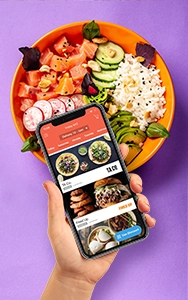
Employees receive daily menu emails and can browse the week's lineup through the Fooda app, ensuring there's always something worth showing up for. Popups are particularly well-suited to driving in-office community. When everyone is eating at the same time and place, the social dynamics that make shared meals valuable, like spontaneous conversation, cross-team connection, or a shared experience, happen organically.
For companies where not everyone can gather at the same time, or where employees are distributed across floors and departments, Fooda's Office Lunch Delivery offers a compelling alternative. Employees order through the Fooda app and can choose from multiple rotating local restaurants daily. They have the ability to mix and match from different places and all orders for a location arrive together at lunchtime.
There's no parade of individual delivery drivers, no late food, and no missed orders. It's consolidated, reliable, and draws from the same network of local restaurants as the Popup program. Delivery is also a strong fit for hybrid offices where headcount fluctuates day to day. It scales naturally with attendance rather than fighting against it.
For recurring team lunches, client meetings, all-hands events, or days when you want a fully employer-paid meal experience, Fooda's Catering Program delivers restaurant-quality food directly to the office.
Companies can choose from drop catering (food arrives, you serve it) or fully staffed setups depending on the occasion. Fooda accommodates dietary restrictions and preferences across the board, and the variety in its restaurant network means catering doesn't have to mean the same sandwiches from the same deli every time.
Fooda's suite extends beyond lunch. Pantry programs stock offices with snacks, beverages, fresh fruit, and grab-and-go items. This keeps employees fueled throughout the day without requiring a full meal program every time.
For companies with dedicated dining spaces or higher-volume needs, Fooda also manages modern café and full cafeteria programs, including hybrid models where resident stations are supplemented by rotating restaurant partners.
Underpinning all of it is Fooda OS, our proprietary platform that handles scheduling, demand forecasting, restaurant curation, and program management. Employers don't have to figure out logistics. Fooda handles that. With flexible subsidies, the result is a program that can be as lightweight or as comprehensive as a company's goals and budget require, all with a technology layer that makes the whole thing run smoothly and get smarter over time.
Ready to bring Fooda to your Boston office? Contact us here to learn more and talk to our team!
How is a workplace food program different from giving employees a DoorDash, Grubhub, or Uber Eats stipend?
Individual delivery stipends push logistics, decision fatigue, and a steady parade of drivers onto employees and the front desk. A managed workplace food program consolidates ordering, curates the restaurant lineup, and arrives as a single coordinated delivery or popup at a predictable time. The result is a shared lunch experience that actually builds culture. Plus tighter cost control, since employers set the subsidy and the variety instead of reimbursing whatever each person spends. It's also far less work for office managers, who don't have to greet a dozen different drivers at the lobby every day.
How long does it take to launch a workplace food program in a Boston office?
A new Popup or Office Lunch Delivery program in Boston can typically go live within two to four weeks of signing, depending on building access requirements and your desired launch date. Catering and pantry programs can often launch in similar time frames. Fooda's local Boston operations team handles restaurant onboarding, scheduling, and building logistics so the employer isn't coordinating vendors directly.
What KPIs should Boston employers use to measure the ROI of a workplace food program?
Common metrics include participation rate (the percentage of in-office employees who use the program on a given day), meals per employee per week, employee satisfaction scores tied to food and culture, in-office attendance on program days versus non-program days, retention rates among heavy program users, and turnover cost avoided. Fooda provides program-level analytics in its platform so HR, People, and workplace experience teams can see exactly what's landing. Pairing those numbers with engagement survey questions about culture and belonging tends to give the clearest picture of return.
Do Boston companies need a long-term contract to start a workplace food program?
Programs are designed to be flexible, and Fooda regularly works with Boston companies that want to start with a pilot before committing to a longer engagement. Pilot programs typically run long enough to establish real participation patterns (usually a few weeks to a couple of months), after which employers can adjust frequency, mix of services, and subsidy levels based on actual data rather than guesswork.