According to Deloitte, 83% of employees say they’re struggling to achieve their well-being goals. 30% of those surveyed cited a heavy workload or stressful job as a significant contributing factor.
Employers need to be concerned with their employee’s job satisfaction, because employee turnover is costly in more ways than one.
There are plenty of ways to reduce employee turnover but we want to focus on one method that impacts the daily workplace experience across all organizations: Food.
Lunchtime provides employees a chance to breathe and reset, but if not handled properly, it can turn into an inconvenience rather than a true break.
Especially in Chicago’s busy downtown environment, having to hunt down food regularly creates decision fatigue, is time-consuming, and getting more expensive every year. This prevents employees from eating how they would outside the workplace and enjoying everything Chicago’s rich culinary scene has to offer.
Food is currently underutilized by Chicago companies as a workplace perk that reduces turnover. With a partner like Fooda, implementing a workplace food program is easy, effective, and creates real impact from day one.

Simply put, employee turnover is the rate at which employees leave a company.
While some turnover can be beneficial, bringing in new talent and fresh ideas, excessive turnover is costly. It results in productivity loss, crumbling morale, and forces you to spend extra time and resources training new employees.
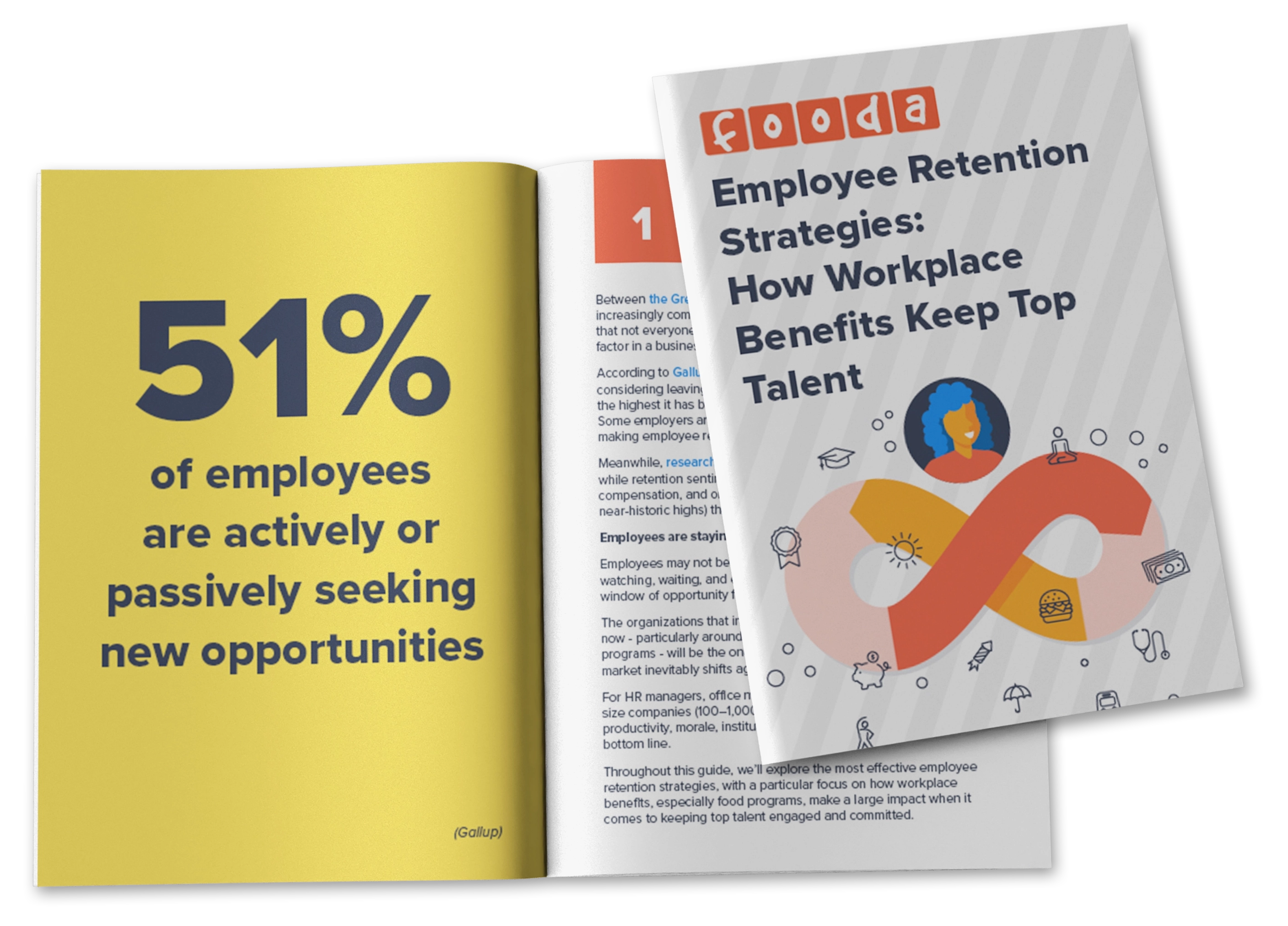
Bottom line, if you don’t give your employees a reason to stay, they won’t. While they may not immediately quit if they’re dissatisfied, they’ll certainly be on the lookout for new opportunities. If they find what they’re looking for, there’s nothing to stop them from seizing the opportunity. And leaving you down a valuable employee.
Luckily, there are ways to motivate them to stay.
To improve employee retention and reduce turnover, you first have to understand what’s causing them to leave.
If employees don’t feel valued, appreciated, and recognized, they can lose sight of the company’s mission. It is difficult to feel loyal to an organization that doesn’t seem invested in your success or wellbeing. Under-appreciation can also lead to employees feeling taken advantage of. This inhibits their desire to meaningfully contribute to the company’s success.
Over time, employees disengage. Burnout sets in. Employees start “quiet quitting.” Doing the bare minimum instead of raising the bar and striving for innovation. As their motivation wanes, meaningful collaboration and productivity suffer.
Ultimately, it boils down to this: When employees lose interest in their work, there is little to prevent them from seeking out new opportunities. And your employee retention rates suffer for it.
In addition to being passionate about their work, employees need to feel connected to the people around them. Building a strong company culture is about more than avoiding a toxic environment. It’s about building connections, relationships, and camaraderie between employees. Creating an environment they’re grateful to be part of.
Again, your employees are unlikely to feel a sense of loyalty to people they barely know. Without significant ties to coworkers, employees become uninvested in their team’s success.
This lack of connection then leads to a lack of collaboration. It encourages isolation rather than cohesive operation.
All of this works to lower employee satisfaction, which encourages higher employee turnover.
Everyone is busy. We all have work and family obligations, housekeeping to do, and errands to run. It’s a lot to keep track of, and each commitment adds to the pressure of managing work-life harmony. The last thing anyone wants on their plate is more responsibility.
Unfortunately, the obligations surrounding the workday don’t start and end at the office. Employees have to get ready in the morning and worry about meal prep. Not to mention the potential hour plus long commute both ways in and out of the city.
Time is valuable, and this adds up to a lot of lost time. It takes a toll, and if employees then have inconveniences to worry about during the workday, like tracking down lunch, it only exacerbates the problem.
There is good news: you can alleviate the pressure. In fact, all these employee retention concerns can be addressed through small but meaningful perks.
More specifically, through food!
It may seem like a small change, but the more you dig into it, the clearer its impact becomes. Ultimately, workplace meal programs can provide a huge incentive for employees to stay with your company.
Between meetings, projects, and deadlines, your people have a lot to stay on top of. It’s easy to get overwhelmed.
Now add one more thing they have to worry about during the workday: lunch. When left to their own devices, employees are left with these four options:
This might lead to the least hassle during the workday, but it requires time and pre-planning. It just adds another outside-of-work obligation.
Not a great way to start the day. Unless you’re an especially early riser (which, let’s be honest, most people aren’t), this option leads to scrambling, extra stress, and something always gets left behind.
Not a horrible choice, until you factor in delivery fees, wait times, and tracking down lost delivery drivers. Though this option provides variety, the pros don’t outweigh the cons.
Walking through congested city streets and braving the weather makes this option less than relaxing. Now add travel time, wait time, and the trek back, and there’s barely enough time to eat the food, let alone enjoy it.
This is, fortunately, a problem you can solve. Regardless of what your workplace food program looks like, the objective is the same. It elevates the daily workplace experience. It simplifies lunchtime and gives them one less thing to worry about. Coworkers get time to talk. Fewer meals are skipped. And you help save your employees time and money every day.
When considering employee perks, it’s easy to overlook lunchtime, but it’s a critical part of the workday. How your employees feel about it is up to you.
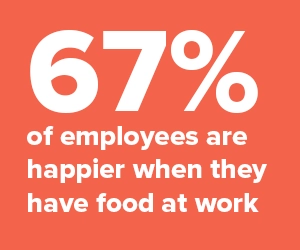
Everyone loves food and by providing meal services, you are telling your people that you’re attentive to their needs, recognize their hard work, and care about their wellbeing.
When done correctly, lunch becomes an opportunity to recharge, connect, and reset. But there’s a catch. It requires more than just providing time for breaks. It needs to be encouraged. One of the easiest ways to do that is by implementing a workplace food program.
By providing your employees with this perk, you’re telling them you’re not supplying that time out of pure obligation. You’re proving you actually want them to take it.
When employees feel that support, they are far more likely to stay encouraged, motivated, and committed in the long term.
According to the World Happiness Report , “Those who share more meals with others report significantly higher levels of life satisfaction and positive affect, and lower levels of negative affect.” Building a space that encourages lunchtime conversation directly contributes to employee satisfaction. It stimulates positive collaboration, fosters engagement, and builds trust.
Building a positive company culture is critical in supporting any employee retention strategy. The experience you create around lunchtime can foster an engaging, supportive environment. It encourages collaboration and productivity. Most importantly, it makes your employees look forward to coming into the office.
It’s as simple as this: when employees feel a sense of belonging, they are more likely to stay committed to their work.
Juggling responsibilities at home and work leaves little room for inefficiency or redundance. Chicago’s long commutes, harsh winters, and busy downtown environment only exacerbate the problem.
Workplace meal programs prevent employees from having to dedicate extra time to meal prepping. It also keeps them from having to navigate overcrowded downtown streets or plan for Chicago’s seemingly unpredictable weather patterns.
In addition to convenience, workplace food programs allow employees to enjoy one of Chicago’s biggest draws: the food.
Chicago is home to a diverse tapestry of cultures, and that is reflected in the local cuisine. From the Thai place on the corner to the Polish restaurant you order from every Thursday night, Chicagoans are never short on options.
According to Fooda’s 2026 Workplace Lunch and Food Program Survey of 100+ companies, 83% say variety of food options is important, and 87% value supporting local restaurants. In a city with such a rich culinary history and plethora of local restaurants, there’s no reason not to take advantage of Chicago’s thriving restaurant scene.
Whether you have a small team or a full office, Fooda makes it easy to introduce a high-impact perk without operational complexity. Everything can be customized to your needs, and it’s all designed to support your existing workplace culture.
Regardless of size, industry, or budget, Fooda’s workplace food programs make lunch an experience employees can look forward to every day.
Whether you have a small team or a full office, Fooda makes it easy to introduce a high-impact perk without operational complexity. Everything can be customized to your needs, and it’s all designed to support your existing workplace culture.
Regardless of size, industry, or budget, Fooda’s workplace food programs make lunch an experience employees can look forward to every day.
Fooda’s offerings are designed to meet the needs of any size company. Have lots of mouths to feed? Look into Orange by Fooda, our customizable cafeteria solution. Orange features rotating local restaurant partners, allowing employees to dine on diverse, fresh cuisine, all in one place. Orange is an evolution that brings excitement back to the traditional corporate cafeteria setup.
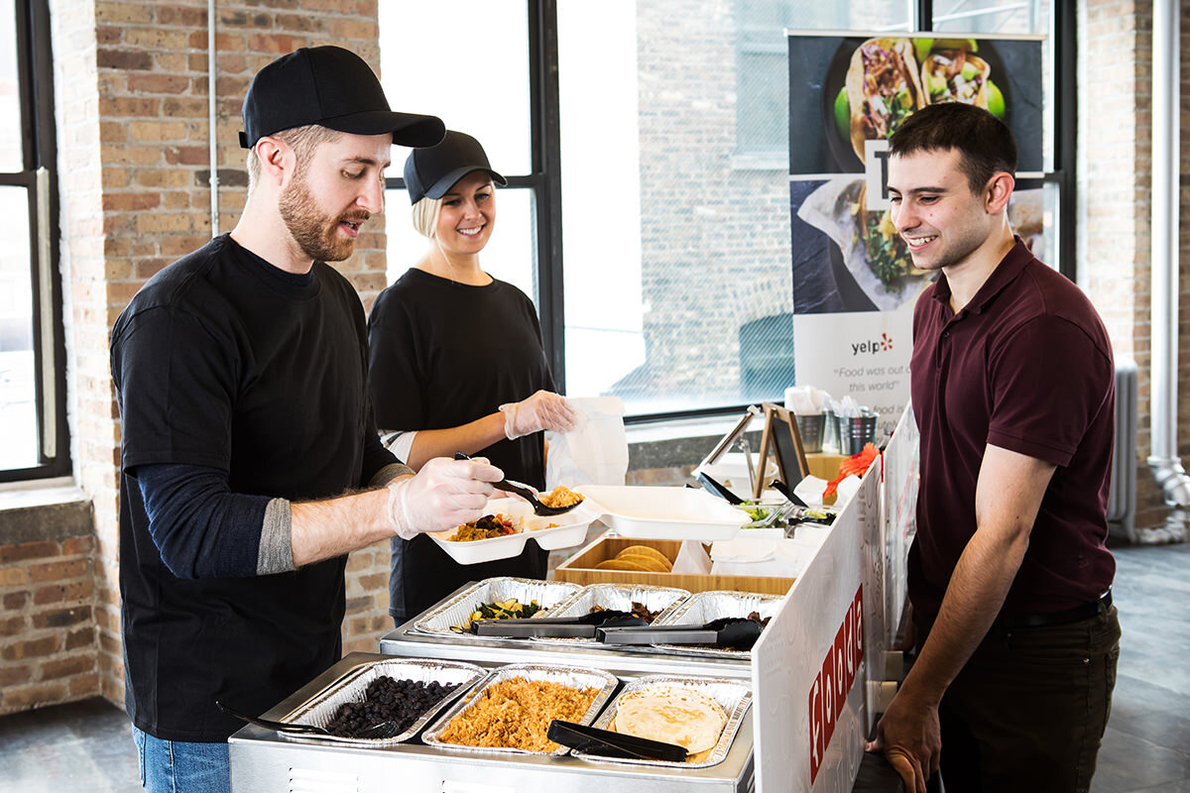
For mid-sized companies, Fooda Popup is a great choice. Fooda Popup brings a rotating roster of local restaurants right to the office floor. Each day, new restaurants set-up on site and serve lunch straight to your employees, creating an exciting, dynamic dining experience without the need for any additional construction or infrastructure.
Fooda delivery provides a wide variety of options, and each employee gets complete control over what they order. No more arguing about where to go for lunch- Fooda delivery puts the choice directly in each person’s hands.
This solution produces zero food waste, ensures everyone gets exactly what they want, and takes any tension out of lunchtime decision-making. Everything is delivered in one, seamless, professional delivery, encouraging employees to take their breaks together. It’s the perfect solution for any size company.
Food-based perks don’t have to be limited to lunch. Fooda Pantry makes it easy to elevate your office’s snack and beverage options. The best part? It is 100% free to employees, meaning they can grab what they need, whenever they need it.
Whether it’s granola bars, potato chips, or yogurt, Fooda Pantry ensures your people have access to food all day long. You can even make sure you’re stocking your employee’s favorites with Fooda’s AI powered inventory management software.
In addition to the food, all-day access to quality beverages is a game-changer. Free coffee can be very motivating. Especially after a long early morning commute. While often overlooked, snack and drink offerings are a competitive perk that can be a significant employee retention factor.
Get in touch with Fooda to see how we can design you a highly customizable food program.
Can food programs be part of a larger strategy to reduce employee turnover?
Absolutely! Many companies integrate these programs into larger initiatives. Workplace food programs are practical perks with visible impact. This makes it a valuable addition to any retention strategy.
Can Fooda support hybrid and flexible work environments?
Yes. Fooda can be customized to any work schedule, allowing you to offer different services on different days. Fooda is a great way to improve the in-office experience and make those days more rewarding.
What makes Fooda different from traditional catering?
Fooda focuses on variety and authenticity. The meals your employees get are local, restaurant-quality, and ever-changing. It creates a dynamic, engaging experience that simply can’t be replicated by traditional catering.