As a business operations manager, you’re constantly on the lookout for ways to improve efficiency and reduce costs. While the responsibility feels heavy, this also puts you in a prime position to bring in innovative solutions that transform how the company operates.
That’s how you come across solutions like implementing a workplace food program.
Hours of deep dives and mountains of research later, you’ve concluded that a food program could solve some of your biggest operational headaches - from poor productivity to high employee turnover.
This post guides you through the next stages, helping you figure out what to look for in a program and how to get buy-in from leadership. Let’s get started.

A business operations manager designs, oversees, and optimizes the daily processes of an organization. They collaborate with different departments to align teams and ensure cross-departmental coordination for greater efficiency.
Their responsibilities include but are not limited to:
The ops manager role is broad and one of the most ambiguous in an organization. So their exact role will always look very different based on the size and unique needs of the company.
For instance, they could be responsible for implementing a workplace food program, which means they’ll have to compare solutions, handle partner relationships, and oversee budgeting.
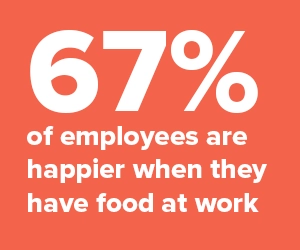
A solid workplace food program directly improves employee satisfaction. But how does it affect other aspects of your operations? Let’s take a look.

Employees lose precious time when they have to leave the workplace to get lunch, leading to productivity losses. A well-organized food program makes lunch convenient to access those same options.
Whether you’re having lunch delivered or providing food on campus. This cuts down the time spent getting food - which leads to more time to take a real break, and results in a more productive back half of the day.
Some office food programs are a money drain, with companies paying for food their employees don’t even eat.
For example, ActiveCampaign worked with a provider that brought in food for every employee, regardless of whether they wanted to eat or not. This meant they were paying the same to feed 100 employees vs. 50, while creating unnecessary food waste.
Optimizing your food program for scalability can cut down costs and minimize waste, resulting in greater operational efficiency. With the right workplace food program partner, orders are only prepared and paid for based on the number of people who order.
An attractive food program helps you win over the best candidates to speed up the hiring process. Effective recruitment creates operational continuity as you quickly fill in vacant roles with high-quality talent.
Meanwhile, a subsidized or free meal program could be the difference maker when an employee gets an offer from another company. When you show employees you care about the workplace experience, you can improve employee retention and avoid bottlenecks due to turnover and the high cost of replacing people.
.png)
Knowing how to implement a workplace food program starts with a clear understanding of what to look for. Here’s a checklist to make sure you have the essentials covered.
Confining your program to a rigid, one-size-fits-all food solution is a recipe for inefficiencies.
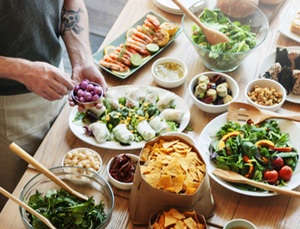
Look for a program that you can tailor specifically for your business, whether you need catered lunches for a special event or deliveries for day-to-day meals.
For instance, Fooda lets you customize your program with different types of food service solutions. You could arrange for Popup Restaurants to visit your site, have individual boxed meals delivered from outside, or even set up a full cafeteria with a rotating lineup of guest restaurants.

A scalable food program ensures that you’re only paying for what your employees eat, helping you reduce spend and eliminate waste. Instead of fixing a specific number of plates or deliveries per day, look for a program that scales with your daily headcount.
Consumption-based models are particularly essential for hybrid teams, as demand changes daily.
Look for programs that allow employees to choose their own meals or place their own orders. So you no longer have to plan meals based on anticipated attendance. Instead, spending and food prep scale with actual demand.

Building a food program often involves coordinating with multiple vendors, especially if you plan on offering variety. For instance, you might have one vendor to keep your vending machines stocked and functional while 2-3 other vendors provide freshly cooked meals.
This comes with a lot of operational headaches as the admin tasks pile up. From managing contracts and tracking performance to handling invoices and payments, multi-vendor partnerships only add to the complexity of your food program. This creates more work for business operations managers.
You can streamline the process by looking into programs that consolidate your vendor relationships.
This means partnering with a food service provider like Fooda, with experts managing your entire food operations and coordinating with specialized vendors on your behalf. So instead of going back and forth with multiple vendors, you only need to coordinate with one provider who will handle the rest.
Tech makes everything easier, whether it’s browsing menus, placing orders, tracking consumption habits, or managing meal stipends. Look for a food program that uses technology to streamline lunch for your employees.
At the bare minimum, employees should be able to browse menus online and place their own orders using an app. That way, you don’t need a dedicated food account manager to track employee orders and coordinate with restaurant partners.
You should prioritize easy tech-enabled payment solutions like scan-to-pay or mobile wallet payments. This allows employees to pay for their own meals or take advantage of subsidies and rewards programs while minimizing the workload for business operations managers.
You may be sold on the benefits of a workplace food program for operational efficiency. But leadership will need a little convincing before you get the green light to implement one.
This is where you need to present the potential ROI of a workplace food program, focusing on operational impact. Lean on data from Fooda's 2026 Workplace Lunch & Food Program Survey of 100+ companies to make the case in language leadership cares about:
Even after you implement the program, make sure to keep proving value to gain continued buy-in from leadership. Present reports that highlight key metrics to prove operational improvements. For instance, metrics related to productivity and cost savings could justify the investment.
Fooda offers workplace food solutions to solve your biggest operational challenges. Whether you need individual boxed lunches to tackle food waste or an app that lets you seamlessly manage your meal subsidy programs, Fooda has you covered.
With Fooda, you get to choose from a variety of workplace food solutions that are all consumption-based:


Each of these models allows you to scale quickly based on daily demand, helping you manage your food expenses more effortlessly.
Fooda’s tech also simplifies your subsidized meal program, as subsidies are automatically applied in the app. Employees only have to verify their identity with the app to access subsidized meal options. The Fooda app lets you manage employee meal stipends with ease, adding or removing members, allocating funds, and adjusting amounts in just a few taps.
Ready to implement a workplace food program that brings you efficiency gains? Get in touch with Fooda to see how we can help.

How long does it take to implement a workplace food program?
A workplace food program with Fooda can typically be implemented in weeks to months, depending on the model. Office Lunch Delivery and Popup programs can launch in as little as two or three weeks, while full-service cafeterias usually require 6–12 weeks for menu design, vendor onboarding, staff training, and infrastructure buildout if needed.
What KPIs should a business operations manager track for a workplace food program?
The most important KPIs are participation rate (% of employees ordering), cost per meal eaten, food waste percentage, employee satisfaction (via NPS or survey), vendor performance (on-time delivery, quality complaints), and program-attributed retention or recruiting wins. Consumption-based programs make most of these metrics naturally cleaner to report on, since spend tracks one-to-one with actual demand.
How much should a company budget for a workplace food program per employee?
Budgets vary widely based on location, frequency, and subsidy level, but most companies running consumption-based programs see per-employee, per-meal costs in the $10–$15 range for Delivery and Popup meals. Subsidy levels typically range from a $5–$10 employer contribution per meal up to fully subsidized lunches several days a week. Consumption-based pricing ties spend to actual usage rather than headcount, which is what keeps the budget predictable.