Corporate events in Phoenix come with a set of variables that planners in other cities never have to price in.
Food is where most of that pressure lands. It carries the tightest timing window, the most dietary complexity, the least tolerance for delay, and the longest afterlife in what attendees remember.
This guide covers what changes when the event is in the Valley, how to match a food format to the type of gathering, and where delivery, catering, and popups each fit.
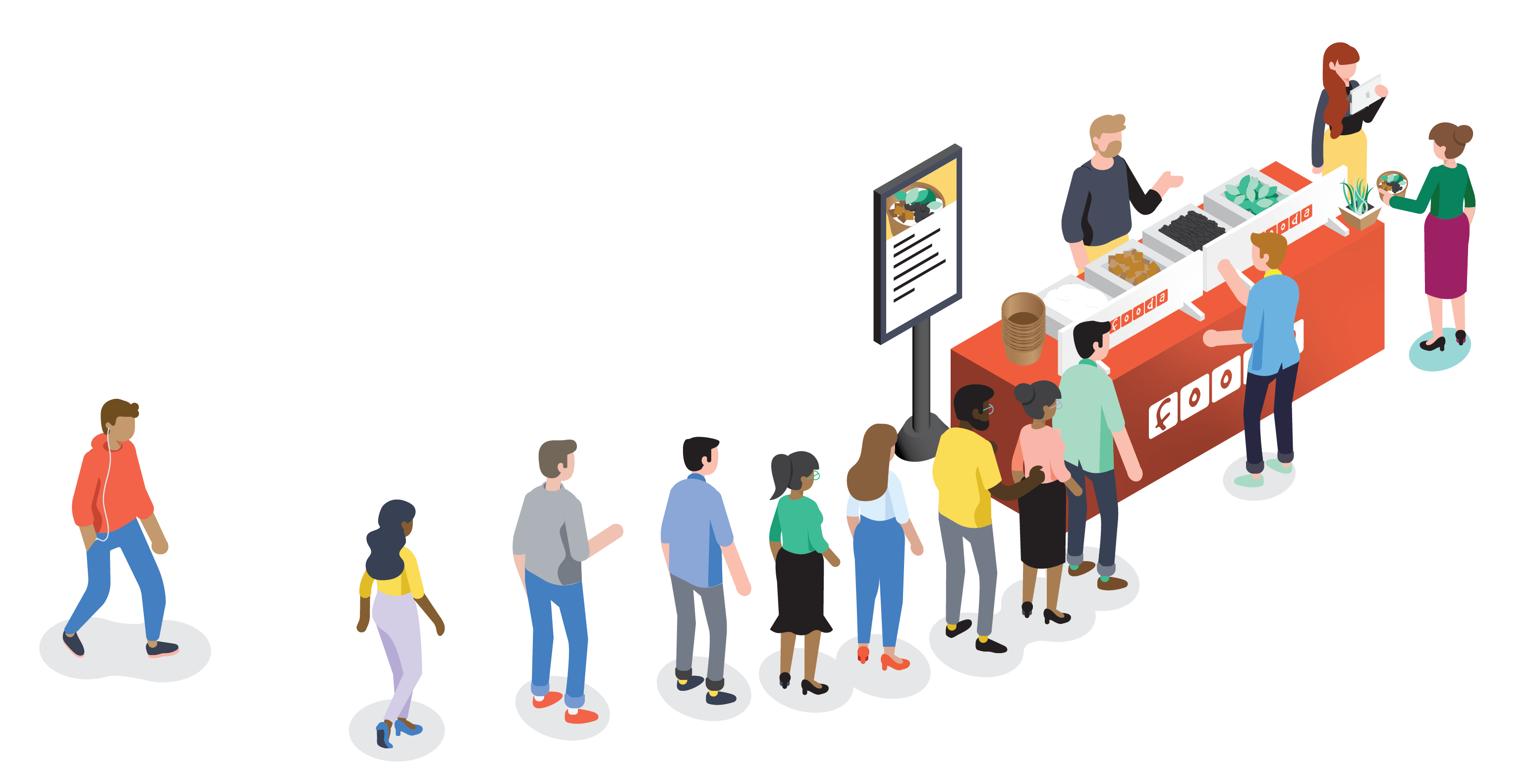
As of the 2020 census, the Phoenix metro spreads across roughly 14,500 square miles and holds close to 4.9 million people as of the 2020 Census, making it one of the most horizontally distributed major markets in the country. A company with offices in Chandler, Tempe, and North Phoenix is coordinating across distances that would cross state lines in the Northeast.
For event food, that geography sets two constraints. Kitchens have a realistic delivery radius, so a vendor who serves your downtown office well may not reach a Deer Valley site inside the same window. And when attendees travel 40 minutes to reach the event, arrival times spread out, so food staged to peak at a single moment will miss half the room.
Phoenix average highs run well over 100 degrees on any given day. Those numbers rule out most outdoor programming from late spring through early fall, and they change the indoor logistics too. Food that sits in a courtyard, a loading dock, or a car for even a few minutes in July degrades in ways it would not in October.
The practical consequence is a seasonal split in how Valley companies plan:
Phoenix offices run hybrid at scale, so RSVP counts drift. Traditional catering asks you to commit a fixed quantity days in advance, and every point of drift becomes either a shortage or a pile of leftovers. Formats that scale with real attendance absorb that variance, and the gap between the two approaches widens as the event gets larger.
Matching Corporate Food Delivery and Catering to Your Phoenix Event
Most planning mistakes trace back to using one food format for every occasion. The table below maps common event types to the format that tends to fit, with the reasoning behind each.
For the deeper mechanics on any one of these formats, including per-person cost ranges and buffet versus plated tradeoffs, Fooda's breakdown of corporate event catering styles goes format by format. For menu inspiration specifically, the list of 49 unique corporate catering ideas is a useful starting point.
Get started on planning your coprorate event by following these best practices...
Planners tend to schedule forward from the start time. Working backward from the moment food needs to be on the table exposes the steps that get compressed: the drive, the walk from the vehicle, setup, and the buffer for traffic.
In a metro with this much distance between kitchens and offices, that buffer is the single most useful number in the plan. Fooda's corporate event planning guide walks through the full sequence.
The gap between the curb and the table is where Phoenix events lose food quality. Structured parking, badge-controlled doors, freight elevators, and long interior corridors all add minutes, and in summer the first stretch of that path is often outdoors. Three things to lock down in advance:
A vendor who has never been to your building will not solve any of this on arrival.
.png)

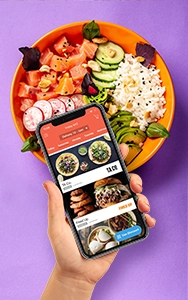
Collecting restrictions through a coordinator introduces a translation step where detail gets lost, and allergen information is the wrong place for that risk. Formats where each attendee sees the full menu and selects for themselves remove the middle layer entirely. This matters more at events than at a daily lunch, because attendees at a company event have no fallback if their meal does not work for them.
Base your quantities on what turned up for the same event type at the same site last time. Invite lists reliably overstate. Where a format lets you pay for what people take, that structure handles the variance for you and clears the leftover problem in the same move.
One event spanning three Valley offices should not produce three vendor relationships and three invoices. A single point of contact earns its keep less on event day and considerably more in the two weeks after, when someone has to reconcile all of it.
A Fooda Popup places a local restaurant on site with a chef-prepared menu served fresh to your attendees. For events specifically, three properties do the heavy lifting.
Popups also combine cleanly with the other formats. A three-day summit might run a popup for lunch, drop-off catering for breakfast, and a supplemented pantry for the afternoon, all coordinated through one partner.
Fooda covers corporate events in the Valley through four formats that can run separately or together:
Because Fooda works with local Phoenix restaurants across the metro, the vendor lineup adjusts to your site instead of asking your site to accommodate the vendor. Programs run at your own offices and facilities as well as at offsite venues, and companies with more than one location administer all of it through a single account.
If your team also wants a standing daily program between events, the same restaurant network supports office lunch delivery in Phoenix.
Ready to plan your next Phoenix corporate event? Get in touch with Fooda to see which local restaurants and formats are available at your location.

October through April is the window most Valley companies target, because outdoor space becomes usable and travel is comfortable for attendees flying in. The tradeoff is competition for that window: venues in particular book months ahead for those dates, so the venue decision drives your calendar more than the food decision does. Summer events are entirely workable indoors and frequently cost less, since regional demand drops.
Shorten every exposure. Schedule the program for early morning or after sunset, keep the food service itself indoors or under permanent cover even when the event is outside, and stage the handoff at the closest interior door to the serving area. Chilled and composed items hold up better than anything meant to be served hot, and beverage volume should be planned at roughly double what you would order in a temperate month.
Drop-off catering, individually boxed meals, and onsite popups all function without venue kitchen access, since each arrives ready to serve. Three questions for the venue come first:
Those three answers narrow the format list faster than any menu discussion.
Yes, and it is usually the better structure. A single partner with restaurant coverage across the metro can serve a Tempe site and a North Phoenix site on the same day using vendors appropriate to each location, under one agreement. Running separate vendors per city duplicates the vetting, the dietary setup, and the reconciliation every time you hold an event.
Widen the service window and pick a format that tolerates a spread arrival. A 45-minute drive from the far East Valley in morning traffic means a 9 a.m. start has people walking in at 9:25, and a buffet timed to a single peak will be picked over by then. Individual orders held until the room fills, or a popup station that keeps serving as people arrive, both handle staggered arrival without holding hot food for an hour. Publishing a realistic food service time in the invite helps too. Fooda's corporate event catering FAQs cover lead times, proposals, and day-of logistics in more detail.




%2010.49.58%E2%80%AFa.%E2%80%AFm..png)