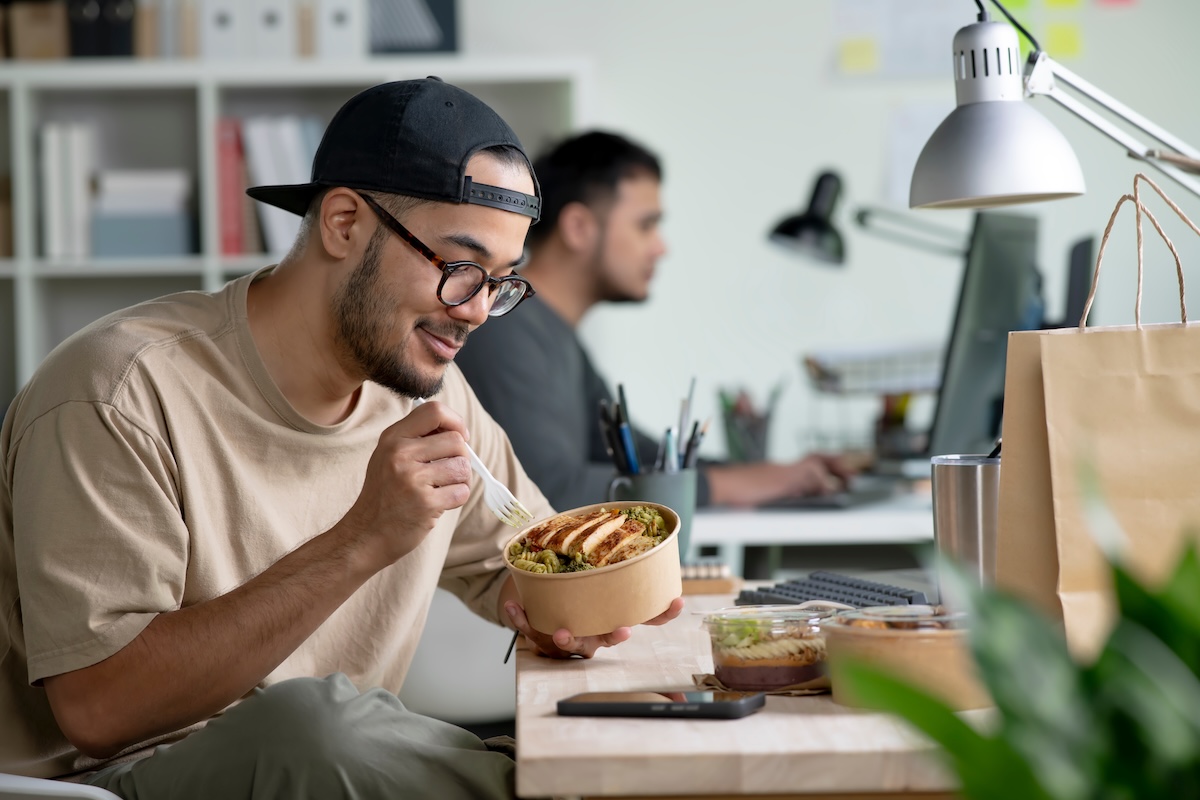
Feeding a Phoenix office is a logistics problem before it is a food problem. Teams are spread from Deer Valley down to Chandler and hybrid schedules mean headcount swings from one day to the next. On top of that, Phoenix averages 111 days a year at 100°F or hotter, which turns delivery timing from a convenience question into a food quality one.
Meanwhile, offices are filling back up. The Valley posted its third consecutive quarter of positive office absorption in Q2 2026, with North Scottsdale and North Tempe leading the recovery. More people in the building means more lunches to solve for, and more pressure on whoever has to handle it all.
Below are three Phoenix restaurants worth putting in front of your team, plus a practical read on how the delivery models compare and which partner qualities keep a program alive past month one.
Most Phoenix workplaces land on one of three approaches. Each solves a different problem, and each breaks in a predictable way.
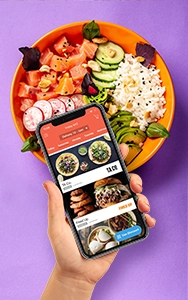
The third model has gained ground in Phoenix for a specific reason: it separates individual choice from delivery logistics. Employees still pick their own meal, but the office receives one scheduled delivery at a set time in place of forty separate arrivals.
That distinction keeps a program running without an office manager babysitting it, and it sits at the center of Fooda's workplace delivery model.
Food type: Baja-inspired coastal Mexican
Best for: Mixed groups where you need something lighter than the usual lunch order
Rubio's built its reputation on a single dish: the original fish taco, brought north from San Felipe, Baja California, by founder Ralph Rubio. The menu has since grown into bowls, burritos, and grilled plates, and the Valley footprint runs deep, with locations on Indian School Road, on Bell Road, and out in Chandler and Tempe.
For office ordering, the practical advantage is range without compromise. Grilled fish and shrimp plates give people a midday meal that will not put them to sleep during a 2 p.m. call, while burritos and quesadillas cover the crowd that wants something substantial. Vegetarian orders come together without special requests, and that removes a step for whoever is coordinating.
Food type: Nashville-style hot chicken
Best for: Team days, celebrations, and anyone who treats spice tolerance as a competitive sport
Twist Hot Chicken opened in Peoria in 2022 as one of the first places in the West Valley to take the hot chicken trend seriously. Sandwiches, tenders, and nuggets come in heat levels running from mild through a top tier that customers sign a waiver to order, so a single delivery can serve both the cautious and the reckless without a separate menu.
For an office rotation, the flexibility underneath the gimmick matters more than the novelty. Nearly every item can be made vegan, and the side list runs deep enough that a group order feels varied on its own. Loaded crinkle fries, sweet potato waffle fries, mac and cheese, cheese curds, and a dozen-plus dipping sauces give people a way to build a meal on their own terms. Fried food also holds heat better than most delivery categories, a real consideration in July.
Food type: Italian-American, built-to-order pasta
Best for: Large groups and all-hands lunches where per-person cost has to stay predictable
Started in Tempe by five lifelong friends, The Spaghetti Shack keeps the menu tight and the format simple: pick a pasta portion, pick a sauce, add a protein. Spaghetti, meatballs, and garlic bread anchor everything else.
That build-your-own structure suits lunch for large groups very well. Twenty people can order twenty different combinations off one short menu, so prep stays fast and portions stay consistent. Pasta also travels well across the Valley, holding temperature better on a drive from Tempe to a North Phoenix office than most plated entrees.
Restaurant quality is the easy part. The variables below decide whether a program lasts past its first month.
The Phoenix metro spans roughly 60 miles end to end. A vendor list that looks strong for a Roosevelt Row office may thin out considerably for a team in Goodyear or Gilbert. Ask specifically which restaurants serve your address on your days before committing.
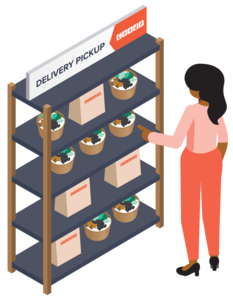
A scheduled drop at a fixed time, handed off to a person on site, protects food quality in a way that a stack of bags left in a lobby does not. Fooda runs a 95% on-time delivery rate for exactly this reason, and consistency compounds: people plan their day around lunch arriving when it is supposed to.
Menu fatigue is the quiet killer of workplace food programs. Fooda's 2026 Workplace Lunch Report found that 80% of leaders say variety matters to their food program, and the reason is behavioral, not decorative.
When the same four restaurants cycle through every week, people start bringing lunch from home again and the program looks like a failure when the real issue is repetition.
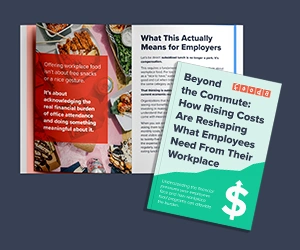
Whoever owns lunch already has a full job. The right setup removes the collection spreadsheet, the reimbursement chase, and the headcount guessing. If you are the person managing this today, Fooda's guide for executive assistants and office coordinators walks through where those hours usually go and which ones a managed program gives back.
Fooda operates workplace lunch delivery as a rotating virtual food hall. Four to five local restaurants are available on a given day, employees order what they want from any of them, and a Fooda team member handles the drop on site.
The network behind it is deliberately local. Fooda works with more than 4,500 restaurant partners nationally, over 70% of them independently owned. That density is why a Phoenix lineup can pair a familiar name like Rubio's with neighborhood operators like Twist and The Spaghetti Shack in the same week.
A few operational details that tend to matter during evaluation:
Ready to bring Phoenix restaurants into your office rotation? Get in touch with Fooda to see which local partners are available and build your workplace lunch program!

How much should a Phoenix company budget per person for office lunch delivery?
Most workplace lunch programs land between $10 and $18 per employee, with the spread driven by cuisine and portion size more than by city. Phoenix sits in the middle of that range. The number that matters more is your subsidy split: covering $8 of a $14 meal keeps participation high while holding a predictable line item, and participation, more than menu price, decides your real cost per person served.
Does office lunch delivery reach Tempe, Scottsdale, Chandler, and the West Valley?
Yes, though the daily lineup varies by address. Submarkets with dense restaurant clusters such as North Tempe, Old Town Scottsdale, and downtown Chandler typically see the widest rotation. Outlying offices see a tighter list built around the kitchens that can reach them reliably at the same time every day, which is the constraint worth testing before you sign anything.
Is there a minimum office size for an office lunch delivery program in Phoenix?
Consistent daily participation matters more than raw headcount. Roughly 25 to 30 people ordering regularly is enough to support a full daily rotation, and smaller teams often start with two or three days a week or share a program with other tenants in the same building. The threshold exists because of restaurant economics: a kitchen needs enough volume in a single drop to justify reserving capacity for it.
What happens if someone orders lunch and then ends up working from home?
Every day has an ordering cutoff. A plan change before the cutoff takes the order off the list at no charge. After it, the meal has been cooked and gets billed, the same as any restaurant order. Your exposure either way is one meal, never a tray sized to an attendance estimate made days earlier.
Can office lunch delivery work for warehouse and distribution sites around Phoenix?
Yes, and the West Valley industrial corridor is a common use case. The requirements shift: deliveries need to align with shift changes rather than a single noon window, and drop points are often break rooms far from the main entrance. Fooda's office lunch delivery FAQs cover multi-shift and distribution center logistics in more detail.