Planning a business event? Whether you're organizing a client meeting, a company celebration, or a team-building retreat, the food you serve says a lot about your organization. That's why corporate event catering deserves more attention than most planners give it.
When business event catering is done well, it creates connection. It tells your team and your guests that this moment matters and that their experience is a priority. Below, we'll walk through how to choose the right service style, build inclusive menus, budget wisely, and find the right catering partner.

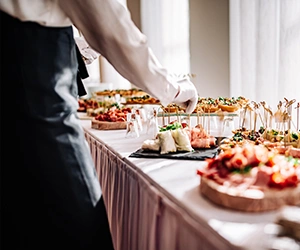
Food is one of the first things people remember about any event. A thoughtful menu adds warmth and personality to even the most structured corporate function, which is why the best caterers source seasonal ingredients, design inclusive menus, and handle everything from setup to cleanup.
Here's why investing in quality business event catering pays off across your organization:
Corporate catering covers far more ground than the occasional holiday party. Understanding the full range of business events catering can support helps you plan more strategically throughout the year.
Here are the most common corporate functions where professional catering makes an impact:
The service style you choose shapes the flow, energy, and atmosphere of your event. There's no single best option; the right choice depends on the format, guest count, and tone you're going for.
Here's a breakdown of the most popular corporate catering service styles and where each one works best:
Accommodating diverse dietary needs is one of the biggest responsibilities in corporate function catering. A successful menu makes every guest feel included, and that takes thoughtful planning.
The best corporate catering menus balance creativity, inclusivity, and practicality. Here's what to keep in mind:
Having a general cost framework helps you plan realistically and avoid surprises.
Several variables shape your final cost. Understanding them helps you make tradeoffs that protect the guest experience without overspending:
A smart approach is to anchor your budget around the per-person rate for your chosen service style, then layer in any add-ons.
With consideration to the factors listed, the chart below will help get a better idea of how much you should spend per person based on the type of catering.
Booking too late can limit your options, especially during busy seasons like the holidays. Here's a general timeline that will keep you on track:
Once you've locked in your caterer, use this checklist to stay organized:

Staying current with these trends helps your events feel fresh and shows your team and clients you're paying attention to what people value.
More companies are prioritizing eco-friendly catering, from compostable silverware and locally sourced ingredients to zero-waste packaging. Choosing a caterer with strong local restaurant partnerships is one of the easiest ways to support this.
Build-your-own bars (tacos, grain bowls, desserts) continue to grow in popularity because they give guests control and create natural conversation points.
Diverse teams want diverse food. Menus featuring Korean, Mediterranean, Indian, Latin American, and other global cuisines reflect the makeup of modern workplaces and keep things interesting.
Plant-based proteins, functional ingredients, and lighter preparations are becoming standard expectations rather than special requests.
Finding the right corporate catering business to partner with means evaluating more than the menu and trends. Here's what to look for:
Schedule a tasting or trial order before committing to a large event. It's the best way to evaluate food quality, presentation, and service firsthand.
If you're looking for a corporate catering partner that combines restaurant-quality food with the flexibility modern workplaces need, Fooda offers a suite of office catering solutions designed to fit a range of business events and everyday dining needs.
What makes Fooda different is the breadth of the platform. With access to over 4,500+ restaurant partners across the country, including local favorites and popular national brands, Fooda gives your team variety that a single caterer simply cannot match.
Here's how Fooda's services break down:
For corporate function catering that needs to impress, Fooda's Boxed Lunch and Event Catering service delivers restaurant-quality meals for meetings, client events, holiday parties, and company celebrations. Choose from a curated selection of cuisines and customize your order based on guest count, dietary needs, and event format. A dedicated concierge team handles the details so your event runs smoothly.
Fooda's Office Lunch Delivery lets employees place individual orders from a rotating selection of restaurants, with all meals delivered together by a dedicated Fooda team member. It's a flexible, employee-driven approach that takes the guesswork out of daily office meals.
With Fooda Popup Restaurants, a different local restaurant sets up in your office each day, bringing a fresh, chef-prepared menu right to your team. It's like having a new lunch spot in your building every day, with the option to subsidize meals fully, partially, or not at all.
Fooda's Employer-Paid Programs let companies provide subsidized or fully covered meals as an employee benefit. These programs support recruitment, retention, and daily productivity by removing the lunch hassle and giving teams one more reason to look forward to being in the office.
Keep your workplace stocked with quality snacks, beverages, and essentials through Fooda's Pantry program. It's a simple way to keep your team fueled between meals and show employees you're investing in their day-to-day comfort.
Whether you need one-time corporate event catering or an ongoing workplace dining program, Fooda brings the restaurant variety, technology, and hands-on support to take logistics off your plate and make it work.
Get in contact with Fooda today and let us make the food at your next corporate event easy and delicious.
Yes. Many businesses use recurring catering programs for daily or weekly team lunches. Platforms like Fooda specialize in this, offering rotating restaurant options and flexible meal programs that keep the experience fresh without adding work for your team.
Tipping practices vary by caterer. Some include a service charge or gratuity in the invoice, so check your contract first. If gratuity is not included and on-site staff provide attentive service, a tip of 15 to 20 percent of the food total is a common guideline. For drop-off orders with no on-site staff, tipping is less expected but always appreciated for delivery drivers.
Hybrid events where some attendees are in-person and others are remote require a different approach. For the in-person group, standard catering applies. For remote attendees, consider sending meal delivery credits or gift cards so they can order food on their own and feel included.
Send a short survey within 24 hours while the experience is still fresh. Keep it to three or four questions: overall satisfaction, food quality, variety, and one open-ended prompt for suggestions. Tracking feedback over time helps you identify patterns, like whether certain cuisines consistently score higher, and gives your catering partner useful input for future orders.
Start by choosing a service style that fits. Boxed lunches and individually packaged meals need minimal setup space. If you're doing a buffet, a single long table against a wall works better than a center-island layout because it keeps foot traffic moving in one direction. Make sure the area is near outlets if you need warming trays, and keep drinks on a separate table to reduce bottlenecks at the food line.




.jpg)