You've got a meeting on the calendar, people are expecting food, and you need to figure out catering fast. Whether you're feeding 10 people in a boardroom or 300 at a company milestone, the decisions you make about corporate meeting catering shape how the entire experience feels.
This guide walks you through how to order for corporate meetings, how to scale up for larger corporate event catering, and why so many companies are moving to platforms like Fooda to simplify the process.

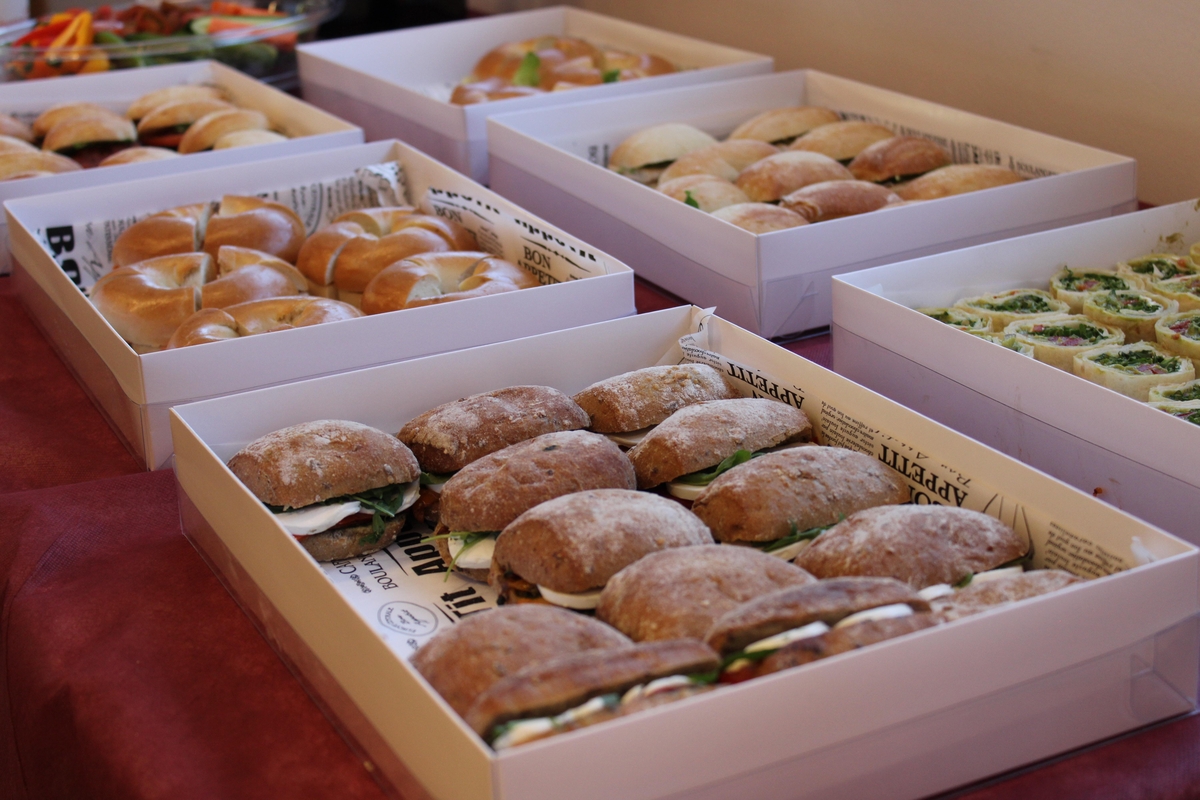
Food is one of the first things people notice when they walk into a meeting, and it quietly sets the tone for everything that follows. Thoughtful catering (the right portions, dietary options covered, and good variety) signals that someone planned ahead and that attendees' time is valued.
That's why treating catering as a strategic part of meeting planning pays off. Research from Harvard Business Review shows that small logistical details, including food, separate productive meetings from forgettable ones.
If you've ever wondered "how do I order catering for a corporate meeting?" and felt overwhelmed by the options, breaking the process into clear steps makes the whole thing manageable, and understanding why each step matters helps you avoid the most common pitfalls.
A board meeting for a handful of executives and a lunch-and-learn for 60 employees require completely different approaches. Why? Because the format dictates service style, portion sizes, and the level of presentation attendees expect.
Corporate catering cost per person varies more than most people expect. For everyday meetings, plan for $15 to $25 per person. For larger events with plated service or multiple stations, that range climbs to $30 to $85 depending on menu, service style, and location.
Why so wide? Delivery fees, setup labor, service staff, and disposables can add 20–30% on top of the base menu price. Knowing what type of service you want from the start helps you build a realistic catering budget per employee.
If you cater on a recurring basis, ask about volume pricing. Recurring agreements give your caterer predictability, and they'll often pass that stability back at a lower per-order rate.
Matching the service style to the right meeting type is important since it can make or break the presentation flow. Finding the restaurants in your area that can meet any specific requirements is much easier when you know what you're looking for ahead of time.


Send a dietary survey roughly a week before before the meeting. Why that window? It gives your caterer enough lead time to source specialty items without scrambling. Plan for vegetarian, vegan, gluten-free, halal, kosher, and nut-free options as a baseline, and label everything clearly so people with restrictions can serve themselves confidently. If you add a menu item on at the last second to accommodate someone's diet, the dish will feel like extra and they'll feel soloed out during the meeting.
Fooda's research on dietary accommodations in the workplace covers why this affects inclusivity and retention.
For a straightforward business meeting food order under 30 people, 48 hours' notice usually works. For larger corporate events, reach out 2 to 4 weeks ahead because complex orders require menu customization, dietary sourcing, and venue coordination. The earlier you order, the more options you'll have.
Designate one on-site point of contact. Why? When the delivery or setup team has questions, a single contact eliminates miscommunication and keeps everything running smoothly

Corporate catering for holiday parties, milestones, and off-site events operates on a different scale. The jump from 20 people to 200 introduces logistics that a single caterer and a buffet line can't handle alone.
Higher headounts mean longer service windows and greater dietary variety to manage. Lines get long, food runs low unevenly, and the experience suffers without the right setup.
As numbers scale, having multiple cuisines and stations keeps guests engaged and reduces waste.
Everything comes with a trend in this day and age and the workplace isn’t immune to them. Keep these types of catering in mind when looking for something that will grab the attention of everyone at the event or meeting.

Fooda connects you with a curated network of local restaurants, so every order comes from real kitchens with specialized menus. This matters when you’re frequently catering because your team gets rotating cuisines and dietary-friendly options that keep them engaged week after week.
Fooda’s technology and platform handles ordering, logistics, and coordination through a single point of contact, eliminating the back-and-forth that eats up admin time when you're juggling multiple vendors. Whether you need corporate catering for small meetings or a 500-person event, a partnership with Fooda flexes across sizes and scales up or down as needed.
When you combine Fooda's Corporate Meeting Catering, Office Lunch Delivery, and Popup Restaurants programs into one workplace food program, the experience is seamless and comes directly to your building without any extra work.
Ready to get started? Get connected with Fooda today.

How much food should I order per person for a corporate meeting?
A good rule of thumb is one main dish, two sides, and two beverages per guest. For buffet-style setups, plan for roughly half a pound to one pound of food per person. If your meeting starts early (7:30 a.m. breakfast meetings, for example), plan for larger portions than you would for a 10 a.m. brunch, because attendees are more likely to arrive hungry.
How do I know if my corporate catering provider is the right fit?
Track three things over time: participation rates (are people eating the food?), waste levels (how much is left over consistently?), and direct feedback (are employees requesting changes?). If engagement is low or the same dishes keep going untouched, the issue is usually menu fatigue or a format mismatch.
What is the difference between drop-off catering and full-service catering?
Drop-off catering means the food is delivered, set up, and the team leaves. Full-service catering includes staff who serve, replenish, and clean up throughout the event. Drop-off works well for informal team lunches and weekly standups where someone internal can manage the spread. Full-service is worth the investment for client-facing events, board dinners, or large corporate gatherings where you want your team focused on the meeting.
How do you handle corporate catering for outdoor company events?
Outdoor events introduce variables that indoor meetings don't, including temperature, wind, and limited access to power or refrigeration. Choose foods that hold up in warm weather (grain salads, wraps, and chilled proteins over cream-based dishes), and confirm that your caterer can bring portable warming or cooling equipment. Food safety standards require hot items to stay above 140°F and cold items below 40°F, and outdoor setups make that harder to maintain without planning ahead.