Most companies treat food for employee appreciation day like an afterthought - something to check off, not something to get right. But employee appreciation food ideas can do more than just feed people for an hour. A big lunch gets catered, a couple treats get delivered, and someone gives a quick speech recognizing the hard work everyone has done recently.
But a week later? No one’s quoting the speech. They’re talking about the brisket they didn’t get to try because it disappeared in twenty minutes. Or the fact that they ended up at a table with someone from another team and had a real conversation that didn’t involve deadlines. That’s what people remember.
Food shapes the entire vibe of the day. It determines whether people eat at their desks or sit down together and enjoy their breaks. Food is the part that everyone physically experiences. You can’t tune it out. That’s why memorable employee appreciation food ideas matter.
Before you repeat last year’s offerings, pause for a second. Don’t think about what looks impressive in a photo or what’s easiest to reorder. Think about what type of lunch your team would genuinely look forward to and feel celebrated by.
Employee food doesn’t need explanation. You don’t have to click into it. You don’t have to decode it. It doesn’t arrive in your inbox with bullet points. It shows up, you smell it from down the hall, and you end up in line next to someone you’ve only ever emailed. You sit down, eat, connect with colleagues, and feel better about the rest of your day.
It’s that universal, sensory, and physical experience that makes providing food to your employees so valuable (and so different from every other common recognition tactic). It changes how people interact.
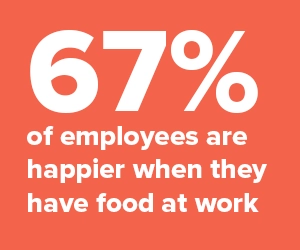
On top of improving office engagement, look at the day-to-day stats. A survey of over 1,000 office workers found that 67% of employees are happier when food is available at work and nearly half say food programs influence whether they stay with an employer.
There’s something old-school and simple about feeding people. It’s hospitality. It’s care. It’s the kind of thing humans have done forever to signal, “You matter here.” A solid meal does more for morale than most carefully crafted messages ever will.
Providing food for your team to show appreciation positively impacts everyone involved. The community restaurants who provide the meals, the employees who save time and money on lunch, and the businesses who see more effective workers.
To go even further, food scales. You can start with a catered meal for employee appreciation day, then build on your long-term recognition program with boxed lunch deliveries once a week.
One-time food events can still be fantastic, as long as they’re executed properly.
A tray of sandwiches is appreciated on any random day in the office, but it doesn’t always feel special, especially if people didn’t know in advance and brought a lunch from home. If you’re really celebrating your employees, you need your staff appreciation food ideas to stand out.

A catered meal for staff appreciation day lunch works when it feels like someone picked it on purpose.
There’s a big difference between “corporate sandwich platter #3” and the local Lebanese place that half the team already orders from on Fridays. Familiar restaurants show your team members that you’ve been paying attention.
Just remember that the details matter. Clear dietary labels. Enough portions that no one hesitates in line. Set up that moves quickly instead of bottlenecking the room. Realistic planning for lunch for large groups makes or breaks the experience.
Catering still anchors many employee appreciation day food ideas for a reason. It’s visible. It creates a pause in the schedule and signals that time was carved out intentionally.
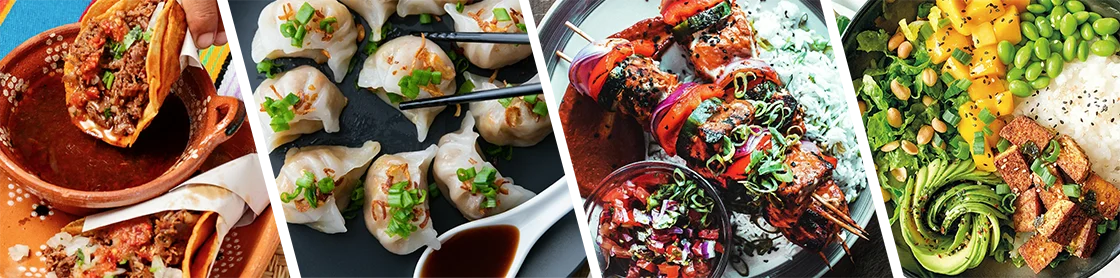
Instead of relying on a single meal on one day, stretch it. Different restaurants each day for a week. Or once a week for a month. Ramen bowls on Monday. Caribbean comfort food midweek. A taco concept that normally has a long line by Friday afternoon. Make it a regular part of your employee’s food experience.
When the menu changes, people pay attention. Curiosity keeps them coming back for more.
That’s the same logic behind structured corporate dining Popups. Vendors rotate based on interest. That keeps appreciation from feeling repetitive.
To show the most appreciation, spreading meals across a few days often lands better than putting the entire budget into one oversized event.

Everyone loves an interactive food experience.
Put out pre-plated trays, and people will grab something and head back to work. Set up a taco station with locally sourced fresh ingredients and suddenly it becomes much harder to ignore.
People compare toppings. Someone debates salsa choices. It becomes hands-on instead of transactional. Same thing with pasta bars or grain bowls. When people build their own plate, they feel considered.
Don’t forget that dietary needs matter here. Allergies. Gluten-free. Halal. Vegan. If you skip over those details, someone opts out.
Interactive setups also mean less food in the trash. People take what they’ll actually eat. It’s practical, and it feels better.
Themes only work if they’re specific. If it’s just flags and generic menu labels, employees can tell. But if you partner with a restaurant that lives that cuisine every day, the experience shifts. It’s not “global lunch,” it’s someone’s actual craft.
Food reflects identity in a way few workplace perks do. Choosing vendors carefully signals inclusion in a visible way. Especially if you pay attention to the mix of cultures that already make up your office. Or ask your team members for insights into the kind of cuisine they’d like to try or share.

Food trucks change the tone immediately. People step outside. They stand in line. They compare orders. It feels less like a corporate function and more like a neighborhood event.
You don’t need a whole fleet of trucks. Depending on your expected headcount, two or three is usually a good number; it gives you variety without overwhelming choice and logistical headaches. One savory concept. One comfort-driven menu. Maybe a dessert option.
Food trucks also make life easier than most people expect. You don’t have to perfectly guess how many people will show up. They’re cooking on site, in real time. If turnout is lighter than expected, you’re not hauling leftovers back into the office kitchen. If it’s heavier, they keep serving.
Also, when you bring in local trucks, it shows you’re willing to invest in the neighborhood your office sits in.
Desserts and snacks don’t carry the weight of a full employee lunch, and that’s part of the appeal. They’re a quick, casual sugar break that makes the afternoon feel lighter.
A mid-afternoon ice cream cart or a table of warm cookies interrupts the day in a way that feels playful, not scheduled. People can justify stepping away from their desks because it feels like a small treat instead of a calendar commitment.
Employee appreciation food ideas don’t always need to revolve around full meals. Coffee and beverages work because they sit inside a daily ritual.

Most people already have a coffee routine. Changing that routine, even slightly, feels noticeable. A mobile barista cart in the lobby signals that something is different today.
Specialty drinks feel like a small upgrade from the usual office routine. A caramel latte from a barista hits differently than the standard drip machine. Set up a smoothie or cold brew station during a heavy week, and the message is clear: we know you’re pushing hard.
Drinks are also easy to participate in. No long commitment. Grab one. Chat. Head back to your desk. Low effort. High impact.
Cooking together changes the energy in a room. When people are rolling handmade pasta or figuring out how not to overstuff dumplings, titles fade into the background. It’s just people trying something new. There’s no agenda. No slide deck. Just shared effort and a bit of mess. That’s the point. It shows you value your team beyond their output.
This works best at a smaller scale. Twenty to forty people. A department milestone. A leadership retreat. It’s not about feeding the entire building. It’s about deepening connection within a group.
People tend to remember making something far longer than they remember eating something. That memory carries the recognition forward.
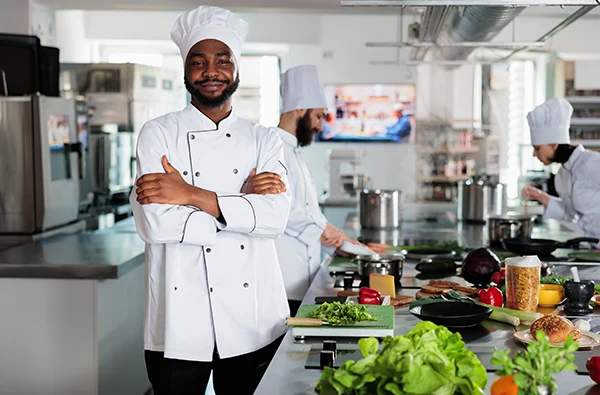
Not every team wants to cook. A chef demo keeps the experience elevated without putting anyone on the spot. Small tasting plates paired with short explanations create a sense of curation. It feels intentional. Thoughtful. A little different from standard lunch service.
This format works especially well for milestone anniversaries or executive-level appreciation. The atmosphere feels composed without being stiff. Recognition here comes from refinement. Instead of “here’s food,” the message becomes “we brought something special for you.”
It stands apart from the everyday rhythm of the office, which helps it register as a true appreciation moment.
Outdoor meals change how people interact.
When teams step outside on a beautiful day, even briefly, posture and attitude shifts. Conversations loosen. Meetings don’t feel like meetings. Open seating removes hierarchy in subtle ways.
Grilled vegetables, burgers, simple sides. Nothing complicated. The simplicity is part of the appeal. It feels relaxed rather than orchestrated. It’s a fresh, casual take on employee food. Outdoor appreciation works because it provides breathing room and interrupts the typical environment.
Planning employee appreciation food ideas sounds easy until you actually try to do it.
There’s the budget spreadsheet. The hybrid attendance reality, all the dietary questions that show up the day before the event. It’s a lot to figure out, which is why you can’t just choose “whatever sounds the most fun”. Here are some steps to take to make sure you get it right.

One great lunch proves you care. A predictable rhythm proves you’re serious.
Recurring food programs change the tone of a workplace in subtle ways. People stop wondering how they’re going to handle lunch and start looking forward to it. Teams start syncing meetings before or after meal windows. That consistency becomes part of how the office runs.
The impact compounds. When meals show up multiple times a week, participation patterns stabilize, and engagement levels go up. Attendance clusters around anchor days. Cross-team interaction increases without scheduling another workshop. Leaders stop guessing whether appreciation “worked” because participation itself becomes the signal.
If food is going to matter beyond one annual celebration, it needs consistency.
Start with how your office actually functions.
Is Tuesday your peak in-office day? Anchor meals there. Does your team cluster around mid-month deadlines? Align food with those cycles.
Recurring doesn’t automatically mean fully employer-paid.
Options include:
What matters is clarity. Employees should know what to expect and how to utilize the workplace food programs.
If planning food causes admin headaches, it won’t last. HR teams can abandon good food programs quickly when they require manual dietary tracking, reimbursement receipts, and headcount guessing every single week.
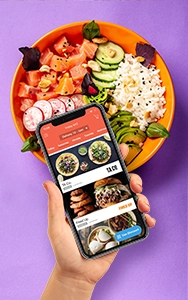
Work with a partner that gives you the software you need to handle everything smoothly. Recurring programs only succeed when ordering is centralized, headcounts are tied to real participation, and reporting is built in. Otherwise, someone burns out behind the scenes.
Everyone loves pizza. Until it shows up every week. Recurring food programs don’t have to feel repetitive. Rotate restaurant partners. Change menus with the seasons. Throw in the occasional surprise.
Variety keeps participation strong. When people know something new is coming, they don’t default to ordering their own lunch out of habit.
Participation tells you whether people value the program. If 80% of the office orders weekly, you have alignment. If participation slides to 30%, the issue isn’t appetite. It’s probably the format. Recurring employee food programs work when they’re treated like infrastructure, not events.
That’s when appreciation stops being a single date on the calendar and starts shaping the week itself.
Once companies move past one-off lunches, they usually discover the same thing. The ideas aren’t the hard part. Running them consistently is.
Fooda fixes that problem. Instead of locking you into one static menu or traditional catering service, Fooda gives you options.
For recurring programs, Fooda supports:
Dealing with hybrid attendance? No problem. Orders are tied to actual participation, not forecasts. That reduces waste and avoids the awkward “we ran out” problem.
Plus, admin effort drops because ordering, dietary filters, billing, and participation tracking sit inside one system. Food becomes something the office can rely on instead of something someone has to manage.
A single lunch for Employee Appreciation Day feels good at the moment. Photos get shared. People say thank you. Then the calendar moves on.
But if you zoom out, appreciation shows up in patterns. Does the team have something predictable to look forward to? Is lunch easy or chaotic? Do people actually pause together during the week, or does everyone scatter?
That’s where strong staff appreciation food ideas separate themselves from one-off gestures.
The best employee appreciation day food ideas spark something. The smartest ones evolve into rhythm. A rotating restaurant day. A weekly anchor lunch. A snack program that quietly reinforces the message that people matter.
If employee food already shows up in your office sporadically, the opportunity isn’t to add more events. It’s to add structure. When appreciation becomes part of the workweek instead of a single date on the calendar, participation changes. So does culture.
If you’re ready to see what a recurring food program could look like in your workplace, Fooda can help you build it. We’ll design something that fits your team and budget perfectly.
Officially, it's the first Friday of March. Mark it. Plan something. But don't let it be the only day you show up for your team.
The companies that actually have strong cultures treat appreciation like a habit, not a holiday. One Friday in March is a starting point. What you do the other 51 weeks is the real question.
Recognition is tied to something specific - a project milestone, a quota hit, a promotion.
Appreciation doesn't need a reason. It says you matter here, not just what you produced here. Both are important, but food tends to land in the appreciation category. It's not a reward for performance. It's a signal that the people themselves are valued.
A rough benchmark that many companies use is $15–$25 per person for a solid catered experience, and $8–$15 for lighter formats like snacks, coffee, or dessert breaks.
But budget matters less than consistency. $20 per person once a month beats a $100 per person blowout once a year. Recurring investment communicates more than a single splurge.
The honest answer: you have to be intentional. A meal in the office doesn't translate to someone on a laptop in another state.
Options that work: meal delivery stipends sent ahead of time so remote employees can order lunch on the same day, a digital gift card to a local restaurant, or a small care package sent in advance. The goal is that no one checks Slack and sees photos of food they weren't part of.
No. Food is one of the most effective recognition tools you have, but it works best alongside other signals: flexibility, genuine feedback, growth opportunities, public acknowledgment. Think of employee food as the thing that creates the conditions for connection. It doesn't replace a good manager or a fair salary. It reinforces the culture those things are trying to build.