The U.S. gluten-free products market was estimated at $2.27 billion in 2024 and is projected to grow at nearly 9.7% annually through 2030, driven by both medical necessity and broader health awareness.
Gluten-free dining used to be a niche workplace request. Today, for many employees, it's a baseline expectation your food program needs to meet. Employees increasingly expect gluten-free options at work, and expect them to be safe, clearly labeled, and not a backup dish ordered specifically for them.
When gluten-free workplace dining is done right, it feels seamless, part of the same shared experience everyone enjoys. When it's done poorly, it creates confusion about what's safe and leads employees to skip meals altogether.
Having a gluten-free option on the menu is only the starting point. The real goal is offering meals from restaurants employees trust, with enough variety that no one feels like they're getting the "backup" option. Building a workplace dining setup that makes dietary needs easier to manage pays off across your entire office
For employers managing office catering, understanding the importance of dietary accommodations is essential to getting orders right, consistently and at scale.
In most offices, gluten-free needs fall into three categories, ranging from strict medical necessity to personal preference. The level of risk varies across these groups, but every team expects food that is safe, clearly labeled, and handled with care, which is why one consistent process needs to cover all three.
When gluten-free meals aren't handled correctly, employees with celiac disease can become seriously ill, and missed workdays and lost productivity often follow.
Research shows that people with celiac disease miss an average of 23 days of work or school per year due to illness, creating a real impact on efficiency and team consistency.
When employees with celiac disease don't trust what's being served, they often bring their own food or double-check every detail just to be safe. Over time, that chips away at the team experience and isolates individuals. No one should have to navigate it alone or opt out of shared meals altogether.
Planning gluten-free office catering goes beyond swapping ingredients. It's about choosing formats and menus that are easier to execute safely while still delivering a great experience, which is why the most effective approach is to start with foods that are naturally gluten-free, then build from there.
Why start here? Because the simplest way to reduce risk in gluten-free corporate catering is to lean on foods that already work well in multi-vendor office programs. This reduces the need for substitutions and lowers the risk of cross-contamination, one of the most common issues in workplace catering.

In practice, that means prioritizing:
From there, it’s about choosing formats that actually work in an office setting.

Best for keeping things simple. This format lets employees mix and match their own meals from multiple rotating restaurants daily.
Works well when everything is clearly separated and labeled properly.


These require clear separation, labeling, and stricter handling protocols.
The right format depends on your workplace and could be a mix of all three. Either way, this approach keeps variety high while reducing execution risk across vendors.
Cross-contamination is one of the most overlooked risks in workplace catering, and one of the hardest to control at scale. It happens when gluten-free food comes into contact with gluten through shared surfaces, utensils, preparation areas, packaging, or serving setups.
In a workplace setting, gluten-free needs go far beyond how meals are prepared. Risks appear quickly when multiple dishes are being handled at the same time, and even small traces can make a meal unsafe.

The challenge comes down to making sure food is properly packaged, labeled, transported, and served without introducing risk along the way. Clear labeling matters most when meals are placed out at the same time, because that's when mix-ups happen fastest.
During setup, strong execution means dedicated serving utensils, clearly marked gluten-free stations or trays, and physical separation as a baseline (or avoiding shared setups altogether when that level of control can't be guaranteed).
Because these details vary widely by vendor, consistency across catering setups matters just as much as the food itself.
If you’re getting ready make a change to your food service operations, it’s important to ask the following questions:
A strong corporate catering partner builds gluten-free meals into the program from the start rather than treating them as a special request. That's why execution matters so much. Employees shouldn't have to double-check ingredients or wonder whether their meal is safe. They should be able to order with confidence and get the same reliable options every time.
This matters most in workplace programs where food shows up as part of the weekly routine rather than an occasional event. In that context, reliability matters just as much as variety or quality, which is why the best programs are set up so dietary needs are handled the same way across orders, vendors, and locations.
Real inclusion in workplace catering goes beyond setting aside a separate plate. It means creating an environment where everyone can eat from the same spread with confidence. The real question is whether dietary needs are built into the program or handled manually every time.
Coordinating gluten-free corporate catering across multiple vendors is where most food programs break down. Every order can mean re-checking ingredients, passing along dietary needs again, and trying to keep everything consistent across kitchens, deliveries, and office setups.
That's why Fooda is built differently. We handle variety, safety, reliability, and day-to-day execution so office teams and employees don't have to.
Fooda partners with a curated network of over 4,500 local restaurants, each vetted for quality, reliability, and the ability to execute dietary requirements at scale. We also provide the technology and data to keep your favorites front and center.
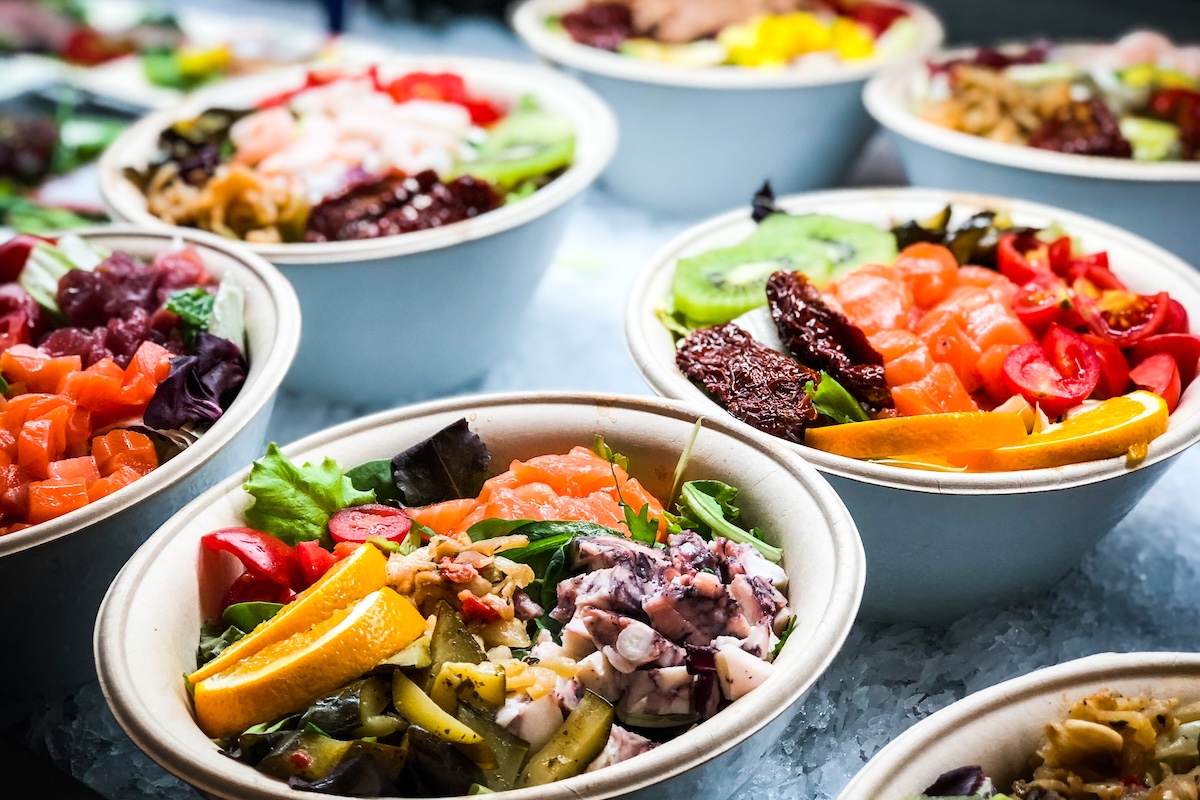
That's why workplaces get real variety without having to start from scratch every time a new caterer comes into play, think: grain bowls, taco bars, Mediterranean spreads, Thai, and more. Every restaurant in the network is set up to meet the labeling and handling standards your program needs from day one.
Fooda saves gluten-free preferences across recurring orders, so employees never have to re-explain their needs and admins never have to re-communicate them to a new vendor.
Dietary requirements follow the order automatically, which means gluten-free employees get the same reliable experience whether they're ordering lunch on Tuesday or a full catered meeting on Friday.
Every Fooda menu includes clear allergen information. Office admins can place orders with confidence, and employees can pick their meal in seconds without hunting for ingredient lists or messaging the restaurant. That labeling carries through to delivery, so meals arrive identified and easy to grab from a shared setup.
Because Fooda operates as an ongoing program rather than a one-off catering order, the process stays consistent even as the menu rotates.
Teams with multiple offices, recurring orders, or a mix of daily lunch and event catering get the same standards applied everywhere. The food changes. The handling doesn't.
A Better Experience for Everyone in the Office
In the end, Fooda means fewer moving parts to manage for office teams, fewer surprises at delivery, and a better meal for every employee, gluten-free or not. That's what improves the daily experience and makes workplace dining simple with Fooda.
Ready to see it in action? Contact our sales team to learn how Fooda can build gluten-free handling into your workplace food program from day one.

How does a multi-vendor workplace dining program help maintain gluten-free consistency?
A multi-vendor workplace dining program only works for gluten-free needs when dietary preferences, labeling, and handling instructions are managed consistently across all vendors, rather than left to individual restaurants. Centralizing this process reduces variation between orders and helps ensure employees receive a predictable experience every time food is delivered to the office.
What role does menu rotation play in making gluten-free office catering easier to manage?
Menu rotation works best for gluten-free office catering when dietary requirements are already built into the rotating restaurant network. This allows teams to keep variety in meals without having to re-communicate or adjust instructions for each order, reducing friction while still maintaining flexibility in the program.
How can companies ensure gluten-free catering remains consistent across multiple office locations or teams?
Consistency across locations depends on standardizing how gluten-free meals are ordered, labeled, and executed across the entire workplace dining program. When those guidelines are applied uniformly across vendors and offices, employees get the same level of clarity and confidence in their meals regardless of location.