The modern workplace is always evolving, and it’s not slowing down anytime soon. Some companies are doubling down on full return-to-office mandates, while others are embracing fully hybrid schedules with flexible hours. Regardless, all of them are fighting to attract and retain talent in an increasingly competitive market.
Employees are becoming more and more selective about where they choose to work. They’re looking beyond job title and compensation. As culture, benefits, and perks become increasingly important decision drivers, companies that don’t adapt to these changes risk being left behind.
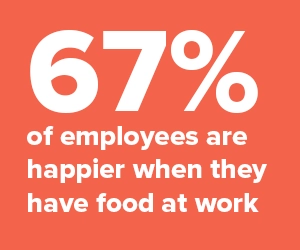
It’s important to consider all angles, and workplace food is one of the most powerful perks available. A USA Today study found that 67% of employees report being happier when they have food at work.
But a Fooda survey of 100+ companies found that 33% of employers don’t offer any type of food program. Implementing one is a great way to improve employee engagement, retention, and satisfaction.
But a food program has to be done right. Traditional models, such as the legacy cafeteria or old-school meal stipends, aren’t working anymore. Workplace food needs to be flexible, local, high-quality, and convenient, both for the employees and the employers.
Here are 10 trends proactive companies are focusing on in 2026:

Now more than ever, employees want food that reflects their lives outside of work. Their cities, their culture, their preferences. In fact, Fooda found that 87% of employees value supporting local restaurants with their workplace food programs. As more and more companies move away from legacy providers to local vendors with chef-crafted menus, the demand for high-quality, authentic food only increases.
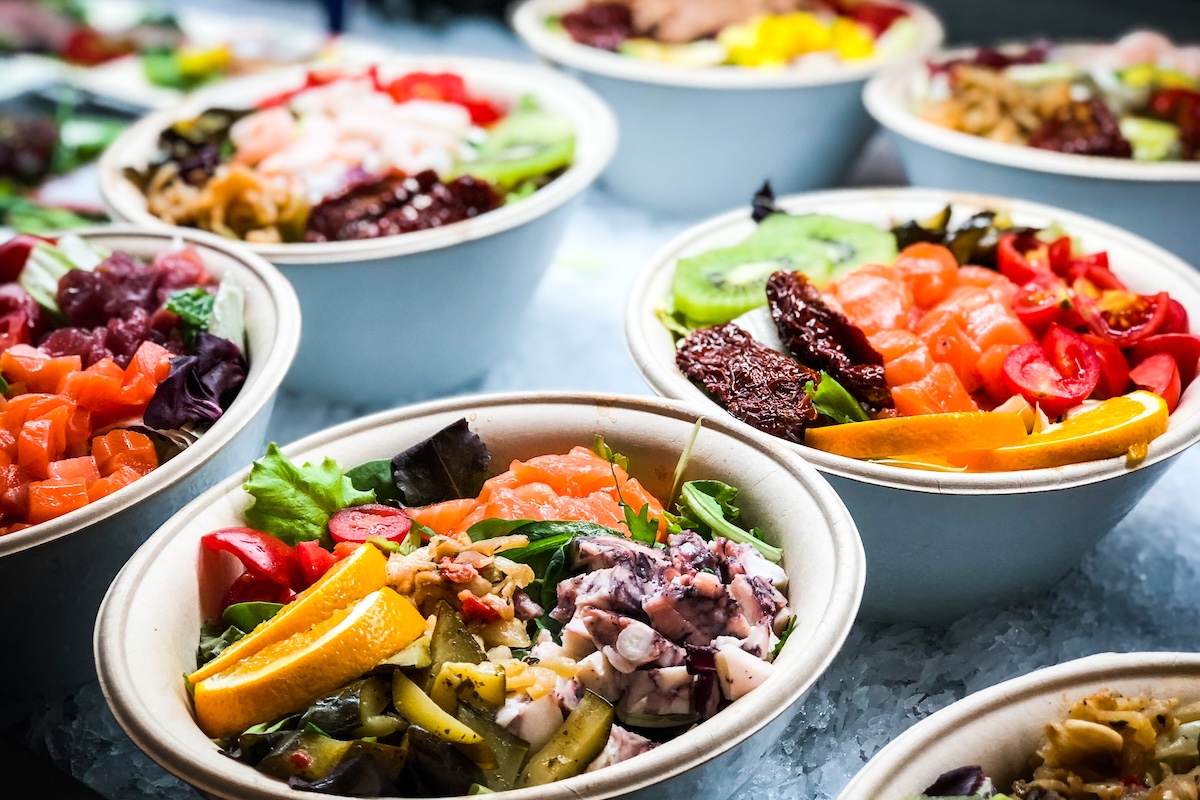
For decades, the workplace food default has been generic menus. Frozen chicken tenders, deli sandwiches, a salad bar, soup of the day. Now imagine this: Hand tossed pizza. Flavorful street tacos. Authentic Korean rice bowls. Or anything else your team might want that day. It’s more personal and enticing.
Out of Fooda’s 4,500+ restaurant partners, 70% are independently owned. This unique local-first approach allows us to deliver higher quality food to your employees. It also allows us (and, by extension, you) to give these restaurants an additional stream of revenue, supporting the community and local economy.
But quality isn’t the only factor to consider. With over 80% of surveyed companies saying, “variety is extremely important in their food program,” even the most enticing local food can begin to feel stale if employees are left with the same menu day after day. This eventually drives down participation as employees begin to seek new options outside the workplace.
By offering new selections daily, menus stay fresh and exciting, and employees can fully enjoy all of their favorite foods. Rotating restaurants allow you to continually switch up your menu. Employees can explore, expand their palates, and appreciate diverse cuisines.
All Fooda programs have rotating restaurants built in. Whether you go with delivery, Popups, or an Orange cafeteria, employees will always have new things to try, and lunch menus will never feel repetitive.
As the workplace evolves, food inclusivity is growing more and more important. Companies are adopting new initiatives to ensure everyone feels safe to eat and welcome at the table. But it’s easy to overlook dietary diversity.
WorldHealth.Net found that 1 in 6 Americans follow some sort of specialized diet. When you adopt a new workplace food program, if anyone is left out it will be noticed. It shows a lack of care and attention to detail. And it can very easily turn your workplace food program from a positive perk into a point of contention. It not only negatively impacts the excluded employee, but morale as a whole.
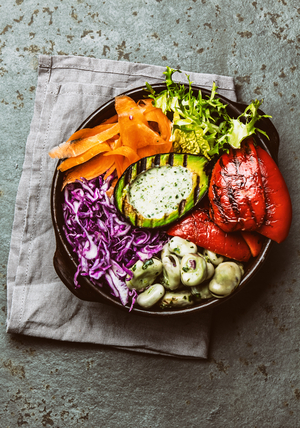
The best way to avoid this is by providing diverse options that meet the needs of your team. By providing vegan, halal, kosher, gluten-free, and allergy-friendly meal choices, you prove that you care about the interests of everyone on your team.
Fooda’s vast network of restaurant partners allows you to create custom menus that accommodate your team on an individual level. You can work with your dedicated account manager to consider your needs, review your options, and design a program that supports everyone while still providing variety. Everyone will have something to eat, every single day.
Every workspace is different. No two will have the same preferred flavor profile. Providing a variety of options won’t pay off if they don’t align with your employees’ tastes. As the demand for high-quality food goes up, so does the demand for personalized menu options.
Fooda offers AI-driven data analysis that allows you to customize menus to best suit your employees. Our technology analyzes participation data to provide insights into what your organization enjoys most.
Maybe they tend to favor Mexican food towards the middle of the week. Maybe everyone’s really loving that Thai place you only offer once a month. Maybe people tend to bring lunch from home on Tuesdays and you need to scale back your operations.
The longer your food program runs, the more information it gathers. Menu options get more enticing over time, and employee satisfaction keeps increasing.
Employees expect seamless dining experiences. If the point of sale system is buggy or difficult to use, they simply won’t use it. They know fast, user-friendly tech exists, and they’ll hold you to that standard.
Tech also needs to be accessible from the administrative side. If it takes a week to process a new employee’s subsidy, administrators lose valuable time they need to be spending on other projects. The employees also have to wait, preventing them from using their perks right away. It doesn’t create a great first impression, and it's an inefficiency that puts unnecessary burden on your team.
Ultimately, the companies that leverage available technology will have more successful food programs. With machine learning and AI-driven reporting and scheduling, programs can be especially efficient. They can get better insights into what their employees want, easily make changes, and continually improve their programs.
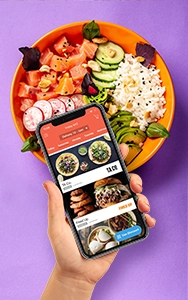
Fooda’s purpose-built tech is made to maximize efficiency while minimizing operational overhead. Our point of sale system makes checkout simple. Applying subsidies to meals and splitting payments is easy, and the app is straightforward and intuitive.
Fooda uses AI technology to analyze participation data and provide valuable performance metrics. Our online portal allows you to visualize your program’s success, local impact, and budget. It’s always gathering information, learning, and improving. The longer the program runs, the better it gets.

As more companies opt to permanently adopt hybrid schedules and flexible work hours, the need for food outside the traditional lunch period grows. Provided lunch is an amazing perk, but the restricted time frame can leave some employees feeling left out. Others might need an additional pick-me-up at 3pm and have to either go without it or lose time searching for food.
Office pantry services and micromarkets are filling these gaps, allowing 24/7 access to a variety of products and services, including snacks, coffee, and grab-and-go meals. It extends employee appreciation beyond lunch time and makes sure they’re covered all day long.
Pantry services can also be a cost-effective way to accommodate hybrid schedules. They allow you to provide food even on low-attendance days when demand isn’t high enough to justify the cost of other services.
Fooda has a robust, highly customizable pantry service. It’s fully scalable, and can fit within any budget. Whether you want to offer pre-packaged snacks and fresh fruit or a full market complete with a coffee machine and pre-made sandwiches, we’ve got you covered.
Everything is managed by dedicated account managers, and associates handle maintenance and restocking. Fooda Pantry can be used alone or in conjunction with other services, making it the perfect solution for any workplace.
In addition to ever-evolving industry trends, the attendance patterns and hours at each individual workplace are always changing. This makes it even more important for your food program to have adaptability and room for growth.
Attendance fluctuation can present a number of challenges when implementing a workplace food program. Food halls and daily catering have limited flexibility and often don’t allow for last-minute changes or operational adjustments. You’ll end up running a program designed to accommodate more people than necessary. This creates additional, unnecessary costs and labor.
To avoid this, you need to be able to scale up or down on any given day. That may involve adjusting how much you order, only offering services on certain days, or opting for delivery so everyone orders their own meals. Most importantly, these solutions need to maintain this level of flexibility without sacrificing quality.
It’s also important to consider growth potential. As companies evolve, new talent is brought on and operational needs change. A food program that was initially intended for 200 people might fall apart when that number doubles.
The last thing you want is to have to scrap your current program and start over with one that suits your needs, only to repeat that process in a few years. Picking one that’s built with that possibility in mind saves you time, money, and a significant amount of disruption down the line.
Fooda models are built to be scalable. You can choose what services to offer on what days. You can change the number of restaurants operating in your cafeteria. You can add new programs whenever you need. It’s all designed to best fit your needs while staying within your budget.

Green initiatives are becoming more common, and expected. Companies are looking for ways to cut their carbon footprints. Implementing a sustainable food program is a great place to start.
According to ReFED’s 2026 Food Waste Report, 29% of the United States’ food goes to waste every year. One of the most effective ways to reduce food waste in your company is to properly size your food programs. This is another perk of Fooda’s scalability. By accommodating attendance patterns, you can eliminate the need for that ‘just in case’ over ordering that will inevitably end up in the trash.
In addition to cutting down on food waste, companies can also pay attention to their food supply chains. Not all food comes at the same environmental cost. Large food service companies require food to be shipped cross-country (or sometimes internationally). This long-range transportation generates carbon emissions, and lengthy travel times can lead to food spoilage, creating even more waste.
Conversely, local restaurants tend to have much shorter supply chains. Many source ingredients locally. It’s not only the greener option, but it tends to be more cost-effective for them. This means leaner operations, fresher ingredients, and a lower environmental impact.
By choosing Fooda’s local partners over large legacy corporations, you can significantly reduce your company’s carbon footprint and scope emissions. Fooda’s scalable programs also take the guesswork out of ordering, saving you money while cutting down on food waste.
Though some offices have chosen to embrace the hybrid workstyle, others are looking for ways to encourage on-site attendance. But many companies are encountering resistance to their return to office mandates. Employees simply don’t want to commute to the office for an experience they can replicate at home.
Workplace food programs are emerging as a powerful attendance motivator. They offer convenience, quality, and affordability. But the best programs move beyond the basics.
Fooda’s rotating local restaurants with chef-curated menus keep food choices fresh and exciting. Subsidies make these options more cost-effective than ordering in at home. Seamless and efficient point of sale systems make checkout easy. It’s more than just food. It’s a truly unique dining experience that eliminates any choice fatigue.
Employees get something to look forward to at work, and it makes your return to office initiative run more smoothly.

Hybrid schedules have broken down one of the most important pillars of office culture. Employee bonding creates a sense of familiarity that makes the workplace a more comfortable place to be. But less time face-to-face and higher output demands have made it more difficult for employees to connect, especially across teams.
Many companies are attempting to fill that culture gap by encouraging a true meal break. Structuring them into the workday with a workplace food program encourages employees to step away from their desks and eat together. It creates an opportunity for genuine connection that can’t be replicated through video calls.
Sitting down and sharing a meal provides a familiar social framework that anyone can feel comfortable in. It’s a low-pressure way to get to know one another in an informal setting. That rapport makes professional interactions feel more natural. People are more eager to speak up and share ideas, and they’re more committed to supporting each other’s success.
Fooda makes this easy. Scheduled Popups and deliveries signal that it’s time to eat, and employees are encouraged to dine together. Employees stay on-site, and lunch becomes a shared experience rather than an inconvenience.
When this is repeated, day after day, week after week, bonds grow stronger, and so does your company culture. People get a better feel for each other. They start to speak the same language, and they’re more excited to come into the office.
Workplace food is becoming more than a passive perk. It’s more than long cafeteria lines and bland, repetitive menus. Employees expect more out of their employers and the food programs they provide.
They want quality, variety, and personalization. They want solutions that are forward-thinking, inclusive, and built to last. Most importantly, they want to know their needs are being considered.
Fooda is built to help. We combine local restaurant culture, cutting-edge technology, and fully managed operations to create programs that delight employees while suiting administrative needs.
Whatever your workplace looks like, Fooda can build a program to match. Connect with a sales representative today to get started.

Can Fooda accommodate offices with multiple locations?
Yes. Fooda operates across most major markets in the United States, with restaurant partners in each. For companies with multiple locations, Fooda can run simultaneous programs with site-specific plans for each. Reporting insights are available for each location in our Fooda for Business Portal, making it easy to keep track of every location.
How are subsidies structured? Can the amount be customized?
Subsidies are fully customizable. You can choose to offer partial or full subsidies, or opt out altogether. The amount you choose to subsidize often impacts participation rates, and Fooda can help you find the right fit for your company. Administrators can make changes at any time through the app, giving companies full control.
How do I know what Fooda services are best for my workplace?
This heavily depends on a number of factors including: Office size, attendance patterns, hours of operation, and budget. Fooda’s dedicated account managers can help you design a program that works for you. Whether that means standalone pantry services, daily Popups, delivery, or a full cafeteria, the goal is to help you get the most out of your workplace food program.