Business events thrive or fall short based on the smallest details, and food is one of the few details every attendee notices. When lunch shows up late to a board meeting or the “vegetarian option” turns out to be a side salad, the whole room remembers.
Sourcing catering for business events is less about finding one great meal and more about finding a repeatable process that delivers a great meal every time, whether you are feeding a six-person strategy session or a company-wide holiday party.
This guide walks workplace decision makers through what business event catering covers, why consistency is so hard to lock in, how to match the right format to each event, and how to plan portions and vet providers so you stop reinventing the process for every calendar invite.
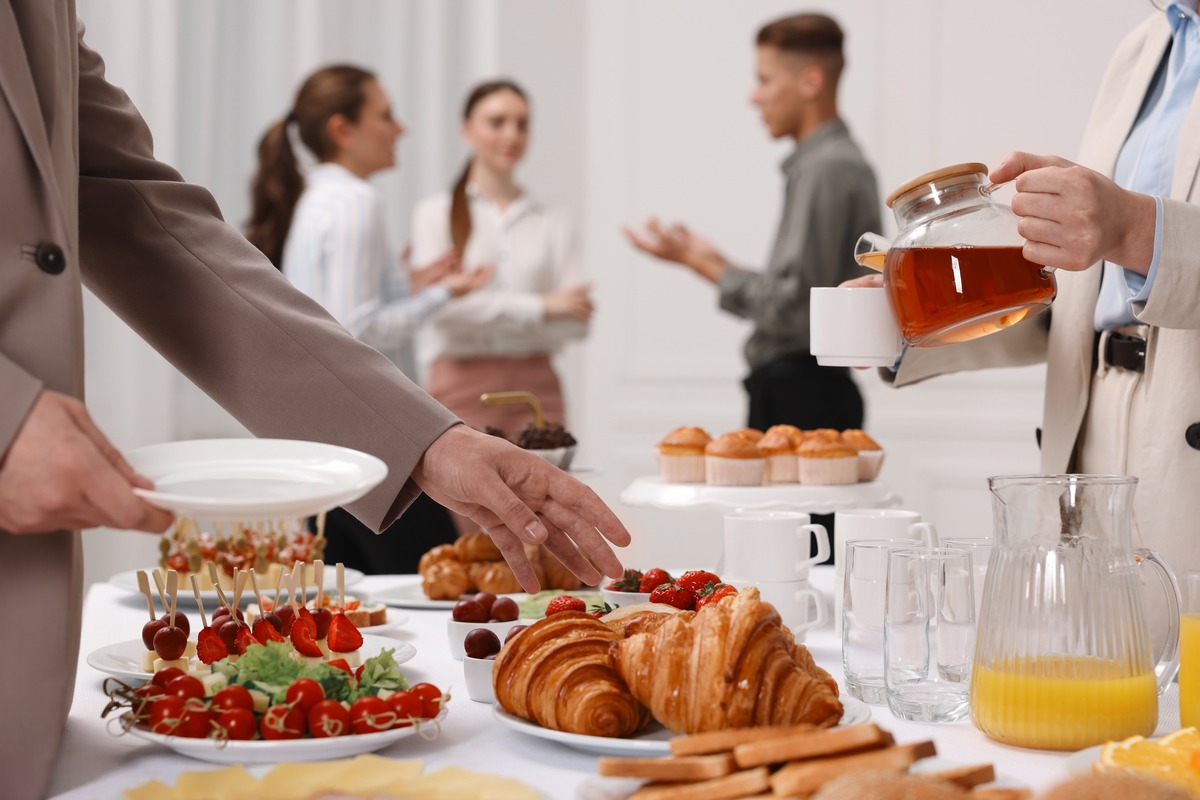
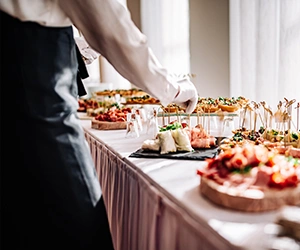
Catering for business events covers any food service brought in to support a work gathering, from a social gathering to a board meeting. In practice, it spans a few distinct formats:
The right one depends on the occasion, because a quarterly board meeting and a 200-person offsite ask completely different things of a caterer.
The audience for this kind of catering is usually the person who owns the outcome: an office admin, executive assistant, people officer, HR partner, or any workplace experience manager.
Their goal is rarely just “get food.” It is to make the event run smoothly without adding hours of coordination to an already full week, which is why the sourcing decision matters as much as the menu.

Ordering food once is easy. Getting the same quality, timing, and service across dozens of events a year is where most programs break down, here’s why:
Consistency comes from removing those variables, not from hoping each order goes well. That means standardizing on a provider who can flex across formats, scale with fluctuating headcounts, and give you one accountable contact for every order.
For a deeper look at planning repeatable meetings, the corporate meeting catering guide breaks the workflow down step by step.
The single fastest way to make catering feel consistent is to standardize how you choose a format.
Use the table below as a starting point:
Getting quantities right is half the battle, and it is where budgets quietly leak. The general rule of thumb is one pound of entrée per three to four people, plus about four ounces of sides per person, then you adjust for cuisine, event type, and duration.
Heavier cuisines like BBQ or Italian let you scale back the sides, while lighter Mediterranean or veggie-forward menus call for a starch to leave everyone satisfied. Here is a quick reference:
Portions only tell you how much to order; cost per person tells you what it will run. Here’s a rough budget guide for business event catering:
Where you land inside those ranges depends on three things: cuisine (pasta and sandwiches sit at the low end, while sushi and hot full-service meals reach the top), whether you choose drop-off or full-service, and how much menu variety you need.
Sourcing from a broad restaurant network lets you match the price point to the event instead of locking into a single caterer's rate card, which is what keeps repeat catering affordable across very different occasions.
Duration matters as much as headcount, since longer events draw more drop-ins and grazing. For a full breakdown by cuisine and event length, use the catering per person guide.

When you are vetting corporate caterers for repeat business events, the menu is only one input. Weigh these criteria, because they determine whether the experience stays consistent after the first order:
For a side-by-side sense of how a local restaurant-based model compares to a single traditional caterer, the Fooda corporate catering delivery service overview is a useful reference.
Fooda was built around the exact problem this guide describes: making workplace food dependable across every format an event might need. Our corporate event catering covers breakfast through bar service, with both traditional drop catering and individually boxed lunches drawn from hundreds of local restaurants and chefs.
Every order is managed by a dedicated account executive who prices things out, confirms quantities, and tracks the delivery, so someone other than you owns the “did we order enough” question. Because a one-off event, a recurring in-office day, and an all-day offsite are different problems, Fooda pairs a few complementary formats under one roof.
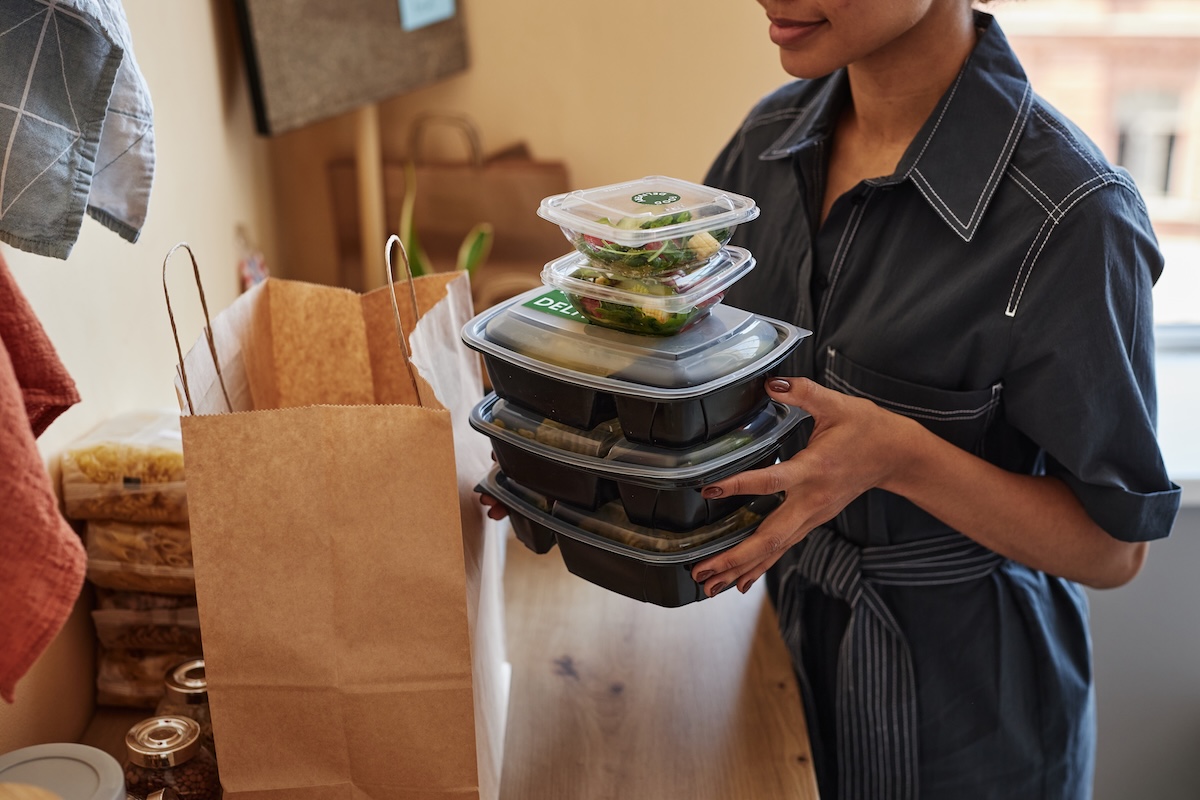
For most meetings, drop-off catering is the workhorse. The caterer delivers ready-to-serve food and leaves your team to handle setup, which keeps cost and complexity down. Boxed lunches take that a step further by pre-portioning each meal, which matters more than it seems: labeled boxes let attendees with dietary restrictions choose safely, speed up distribution across floors or rooms, and eliminate the awkward buffet-line slowdown during a tight agenda.
That is why boxed formats have become the default for board meetings and any training that runs longer than a couple of hours.
Recurring events and hybrid schedules create the trickiest math, because you rarely know the exact headcount in advance. Two formats solve this without over-ordering. Fooda Delivery lets every employee order their own meal from a rotating lineup of local restaurants, with everything arriving together in a single, timed drop, so you only pay for what people order.
Fooda Popup Restaurants brings a rotating set of chef-driven local restaurants on-site to sell fresh food directly to your team, which turns a daily lunch question into a standing amenity. Both scale with attendance instead of forcing you to guess, which is what makes them dependable for events that repeat.
Longer events need more than one meal moment. A supplemented workplace pantry keeps coffee, cold beverages, fresh fruit, and grab-and-go snacks stocked between sessions, so attendees stay fueled during the stretches when a full catered spread would go to waste. For an all-day workshop or a multi-day offsite, pairing scheduled catered meals with a stocked pantry gives you steady coverage from the first coffee to the afternoon slump without paying for food no one touches at 3 p.m.
Running these formats through one provider is what makes catering feel consistent. It means one relationship, one point of contact, and one billing setup across everything. The payoff shows up in culture, too, since 83% of workplace leaders say food has a moderate-to-significant impact on workplace culture (Fooda 2026 Workplace Lunch & Food Program Survey).
Fooda brings the restaurant variety, on-time reliability, and dedicated support to make that repeatable, whether you need boxed lunches for Tuesday's board meeting or a full spread for the company party.
Ready to make business event catering one less thing to worry about? Talk to Fooda and build a program that fits how your team works.

How do you keep catering consistent across recurring business events?
Consistency comes from standardizing three things: the provider, the format-to-event mapping, and the point of contact. When one provider can flex across drop-off, boxed lunches, delivery, and pantry, and a single account manager owns each order, quality stops depending on which vendor you happened to book that week. Documenting a simple “this event type gets this format” rule removes most of the guesswork before it starts.
Can one provider handle catering, daily lunch delivery, and pantry for a business?
Yes, and consolidating is usually the point. Using a single provider for event catering, recurring lunch delivery, and pantry gives you one relationship, consolidated invoicing, and consistent service standards across formats. Fooda is designed to mix these by day and by need, which suits hybrid offices that require different coverage on different days.
What is the difference between one-off event catering and a workplace food program?
One-off catering solves a single event with a calendar invite, such as a board lunch or a holiday party. A workplace food program is an ongoing setup (recurring delivery, a Popup, or a stocked pantry) built for daily volume. Stretching event-style catering into an everyday solution tends to create waste and admin, so matching the format to the frequency keeps both cost and effort down.
How do you cater a hybrid business event when the final headcount is uncertain?
Choose a consumption-based format instead of a fixed order. Individual delivery scales to whoever shows up and orders, so you avoid both over-ordering and last-minute shortfalls. For on-site crowds that vary, a Popup lets people buy fresh food directly, which sidesteps the headcount question entirely.
How much lead time do you need to book catering for a large business event?
For standard office lunches, 48 to 72 hours is usually enough. For events of 50 or more people, aim for about a week, and for holiday parties or premium menus, give yourself two to three weeks, since popular restaurants book out fast around Q4 and major holidays. A provider with account managers can often turn around same-day or next-day orders when plans move fast. More answers are collected in the corporate event catering FAQs.