Hospital cafeterias have a notorious reputation. Staff dread them, visitors avoid them, and hospital administrators struggle with costs and staffing. If you walk through most hospital cafeterias at noon, you'll see the same scene: long lines, uninspired food, and a staff that looks as exhausted as the menu.
For visitors, it's a minor inconvenience. For the nurses pulling 12-hour shifts who rely on it multiple times a week, it's a daily disappointment. It’s also something that quietly affects morale, retention, and how your hospital is perceived as a place to work. Yet, this doesn’t have to be the case.
Hospital cafeteria services are more complex (and more consequential) than most people give them credit for. This guide breaks down what modern hospital food service involves, how the traditional models work and where they fall short, and what a better approach looks like in practice.
Download our free Cafeteria RFP Template to get started immediately - complete with all essential sections, sample questions, and evaluation criteria.
While most people think of a standard, food-court set-up, hospital cafeteria services go beyond that. Similar to operations inside hospitals, the food services are complex and require particular work and attention to detail. With an inefficient service, a hospital could end up wasting thousands of dollars and pounds of food on initiatives that aren’t being used to their full potential.
Although the term sounds simple, hospital food service is a multi-layered operation with several distinct functions that all serve different purposes:
Getting all of this right requires a service model that's both operationally sound and genuinely responsive to the people it serves.
Traditional cafeteria service models are what people envision when they think of a hospital cafeteria. Most hospitals that use these models fall into one of two approaches to cafeteria management:
If a hospital’s cafeteria services are self-operated, this means the hospital runs its own food service entirely. They are in charge of hiring kitchen staff, managing procurement, planning menus, and handling all operations in-house.
This model offers maximum control but comes with significant overhead. Labor costs are high, turnover in food service roles is persistent, and the people managing the cafeteria are often nutrition or facilities professionals whose expertise lies elsewhere.
The bigger problem is menu quality. When a small internal team is responsible for feeding hundreds of people daily with limited resources, consistency and cost-efficiency tend to win out over variety and quality. The result is the institutional menu that hospital food has become notorious for.
Large food service management companies offer a turnkey solution: they staff it, manage it, and run the whole operation under a long-term contract. This removes the administrative burden from the hospital, but it often introduces a different set of problems.
These contracts tend to be rigid. Menus are standardized across dozens or hundreds of facilities, meaning your staff in Chicago is eating the same rotation as facilities in Phoenix and Atlanta.
Customization is limited, and because these large operators have their own purchasing and labor structures, they can be slow to adapt to what your specific workforce needs. Pricing models tend to be heavy on management fees and focused on sourcing food at the lowest price point for profitability, leading to poor food quality and limited options.
Neither model is wrong. Yet, both have meaningful blind spots, especially around labor flexibility, menu variety, and the ability to feel locally rooted. Modern cafeteria services have evolved to address these issues.
With the right hospital cafeteria model, bottlenecks are eliminated from your hospital food service operations. The benefits that follow a successful program support everyone connected to the organization:
From uplifting employees to supporting your local communities, cafeteria services can change the way a hospital is perceived by employees and visitors alike. This is important to keep in mind when looking for a cafeteria service provider or management company.

If you're assessing your current model or exploring alternatives, here are the questions worth asking:
It can be difficult to determine which hospital cafeteria service provider is right for you. It’s helpful to have a list of questions to ask when vetting a cafeteria management company to ensure you’re investing in the best possible company to help you implement (or improve) food services for your healthcare facility.
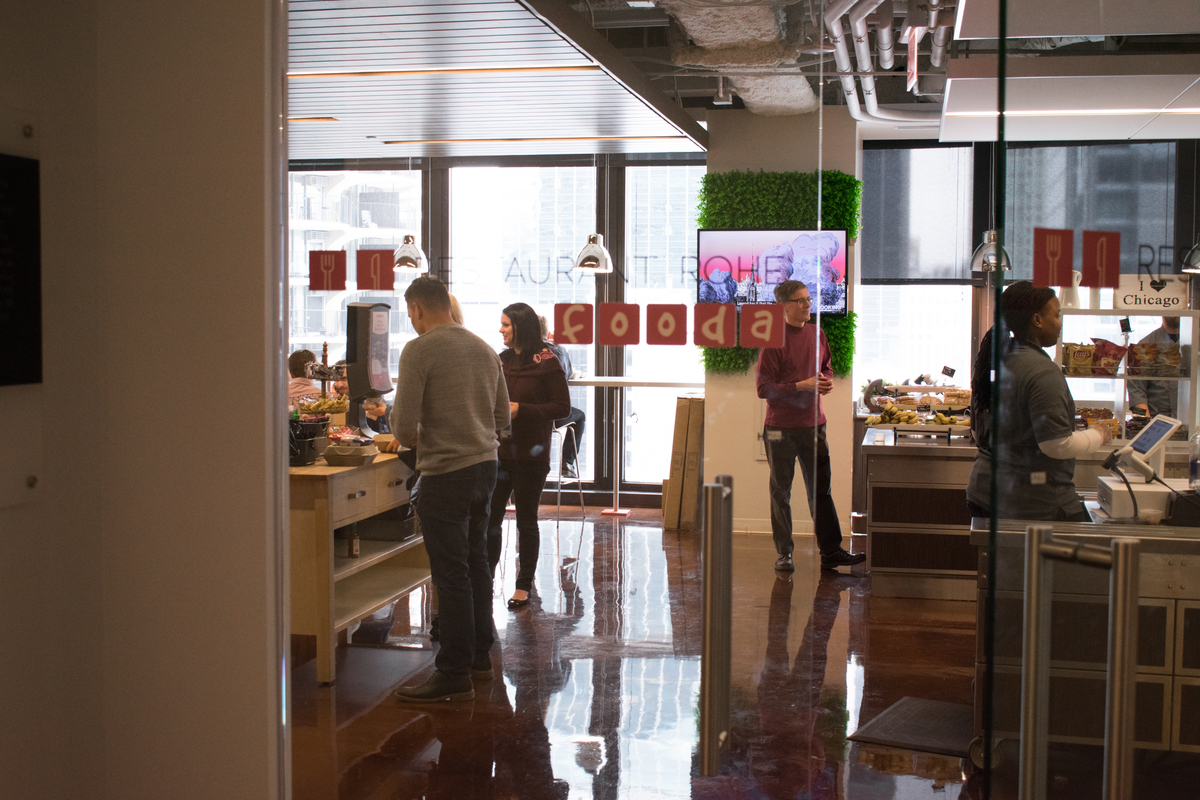
By partnering with Orange by Fooda, you’ll get the benefits of traditional models, along with flexibility, variety, and community integration that today's healthcare workforce expects. Here are some services that Fooda can bring to your hospital or healthcare office that traditional models can’t:
Instead of relying on a central kitchen or a standardized contract menu, forward-thinking hospitals are bringing in local restaurants to operate within or alongside the cafeteria. This does several things at once:
One hospital in the Midwest integrated over 90 local restaurant partners into its campus program, returning more than $1.5 million to the local community in the process.

Popup Restaurant concepts within hospital spaces offer a flexible alternative to permanent food stations. They allow hospitals to:
For hospitals dealing with post-renovation uncertainty or variable occupancy, the scalability of a Popup model is a major operational advantage.
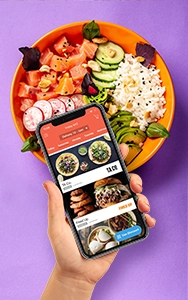
Mobile ordering apps, self-checkout stations, and integrated hospital cafeteria POS systems are becoming standard in high-performing hospital cafeterias.
The benefits compound quickly:
24/7 access doesn't require a fully staffed kitchen around the clock. Pantry services including micro markets, smart vending solutions stocked with fresh options, and grab-and-go sections can extend the cafeteria's effective hours and give employees access to fresh food without proportional increases in labor cost. For night shift staff, one of the most important and often most neglected populations in a hospital, this makes a genuine difference.
By partnering with hospitals, Fooda works to reimagine hospital cafeteria services. Through local restaurant integration, flexible Popup dining, and technology-enabled operations, Fooda is able to modernize food services within healthcare facilities, all without the overhead of traditional food service management.
Ready to rethink your hospital's cafeteria? Get in touch with Fooda today!
Download our free Corporate Cafeteria RFP Template to get started immediately - complete with all essential sections, sample questions, and evaluation criteria.
Costs vary significantly depending on the model. Self-operated cafeterias carry the full burden of labor, food procurement, and equipment maintenance, which can run into the millions annually for a large facility. Legacy contract companies often charge management fees on top of food costs, which can obscure true pricing. Modern models like Fooda's work differently: because local restaurant partners bring their own staff and supplies, hospitals eliminate significant overhead while gaining flexibility. The best way to evaluate cost is to request a breakdown of management fees, labor costs, and food costs separately from any provider you're considering.
These are typically two separate operations. Patient meal service is managed by the clinical nutrition and dietetics team and follows strict medical dietary protocols. Staff and visitor cafeteria service is a separate retail operation. The connection between them is capacity: a well-run retail cafeteria frees the nutrition team to focus exclusively on patient care rather than splitting attention between both functions.
Food safety in a hospital environment is non-negotiable. Any provider should be able to clearly explain their HACCP compliance procedures, temperature monitoring protocols, and how they manage allergen separation. If local restaurants are involved, ask how the program ensures consistent safety standards across all partners. Credentialing and auditing processes matter here.