Food at work has always been a powerful lever for attendance, culture, and retention. HubSpot found that 88% of companies report a 50%+ increase in office attendance when food is available, and 78% of employees say food at work makes them feel more valued.
But the way companies deliver on that promise is changing. Traditional corporate cafeteria services were built for predictable schedules, consistent headcount, and a familiar lunch rush - but that version of office life doesn't really exist anymore.
Placer.ai found that only 12.4% of weekday office visits happened on Fridays in 2025, compared with 24.3% on Tuesdays and 23.7% on Wednesdays. That kind of uneven traffic is brutal for corporate cafeterias that depend on fixed labor, fixed prep, and fixed expectations.
The demand for workplace food is stronger than ever. What's shifting is the format and more companies are exploring cafeteria alternatives for offices that match how their workplace operates each day.
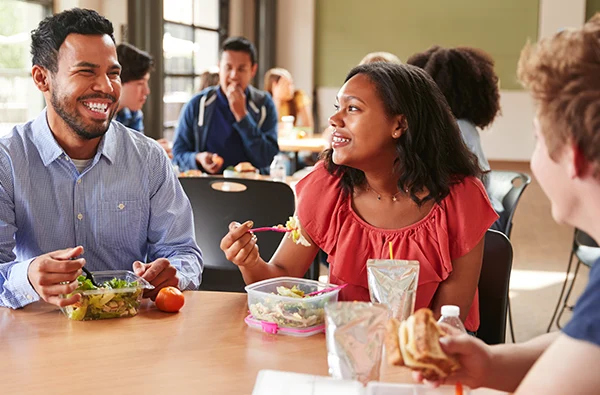
Corporate cafeterias became a staple of office life because when attendance was steady, they worked.
People came in five days a week, lunch happened in a tight window, and the volume justified the overhead. The decline didn't happen because employees stopped caring about food. They actually care more about it now - they just want speed, variety, quality, and clear dietary options instead of the same rotating menu.
Hybrid work has only made things harder. Gallup found that 52% of remote-capable employees were hybrid in late 2025, which means predicting daily cafeteria traffic is a guessing game. XySense reported average North American workplace utilization of just 36% in mid-2025. That's a tough environment for any food model that depends on consistent foot traffic.
Meanwhile, the cost pressure keeps building. Food away from home rose 3.9% year over year in February 2026, and full-service meals rose 4.6%. That hits cafeterias from every direction: ingredients, labor, and vendor costs. The tax math also got worse: for amounts paid after 2025, employers generally can no longer deduct food and beverage expenses for qualifying employee eating facilities.
Layer on the waste problem (the FDA estimates that 30% to 40% of the U.S. food supply is wasted) and you have a model where costs keep rising, participation keeps fluctuating, and the experience hasn't kept pace with what employees expect.
The cafeteria didn't die. People still want lunch at work, and employers still want food positively impacting the daily experience. What's changing is the delivery model.
Traditional corporate cafeteria companies were designed around average volume, but averages hide problems. An office that looks busy across a full week might have two packed days and three dead ones.
Smarter employers are building food programs around anchor days, scaling service up and down by expected on-site patterns, and treating lunch as a flexible service rather than a fixed institution.
This was probably inevitable. Employees got used to better food, more choice, and faster ordering in their personal lives. One kitchen running the same cycle of hot entrées, deli stations, and salad bars doesn't hold up anymore. That's why more corporate dining services are shifting toward restaurant-powered models with rotating vendors, Popups, and virtual food halls that reflect how people actually eat.
The IFIC found that 57% of Americans followed a specific eating pattern or diet in the past year, up from 36% in 2018. And JAMA Network Open estimated that 10.8% of U.S. adults have food allergies before accounting for religious diets, vegetarian and vegan preferences, or health-driven eating patterns.
One repetitive menu can't answer that. More variety means better odds that employees find something they actually want to eat.
The best modern corporate cafeteria management systems use tech to solve actual operational pain: long lines, clunky ordering, low visibility into demand, messy subsidy tracking, and weak feedback loops.
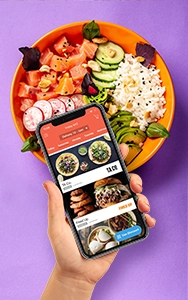
When employees can order ahead, skip the line, and get the meal they wanted (and employers can track participation and control subsidies without spreadsheets) the whole experience improves.
Once a one-size-fits-all cafeteria stops working, companies rarely jump to a single replacement. They start mixing: a virtual food hall on high-attendance days, boxed lunches for meetings, popup restaurants for variety, grab-and-go setups for lighter traffic, and subsidized programs tied to team anchor days.
When a food program is looked at from this lens, the question becomes: "What mix of food options truly fits this workplace?" and a successful program is built from the ground up.
When you put the two models side by side, the differences go well beyond the food. Here's how they compare across the factors that matter most to operations, cost, and employee experience.
The biggest difference isn't the menu, it’s structure. Traditional corporate cafeteria services ask the company to predict demand and carry the overhead regardless. Modern cafeteria alternatives adjust to reality as it happens.
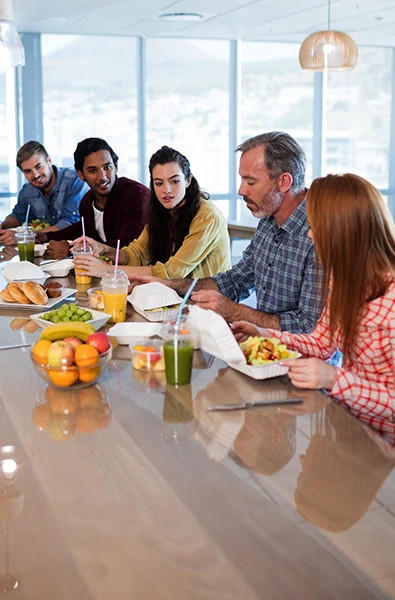
Fooda solves for the things that break traditional corporate cafeteria services in the first place: uneven demand, menu fatigue, clunky ordering, too much forecasting, and too much admin work.
The model works because it's built around participation, not projections.
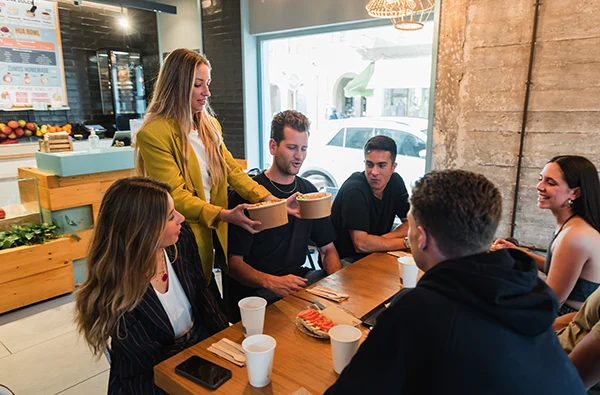
If food at work has turned into a headache, the answer isn’t automatically to tear out the cafeteria and blow everything up. It’s to find a model that actually fits the way your workplace runs now.
A few signs it’s time to take a harder look at cafeteria alternatives for offices:
No amount of better messaging will save a corporate cafeteria model that was built for a version of office life that no longer exists. The workplace food setup worth investing in is the one that fits the way your office actually runs.
Get in touch with Fooda to build a food program that works for the people you have, the schedule you have, and the office you're running.
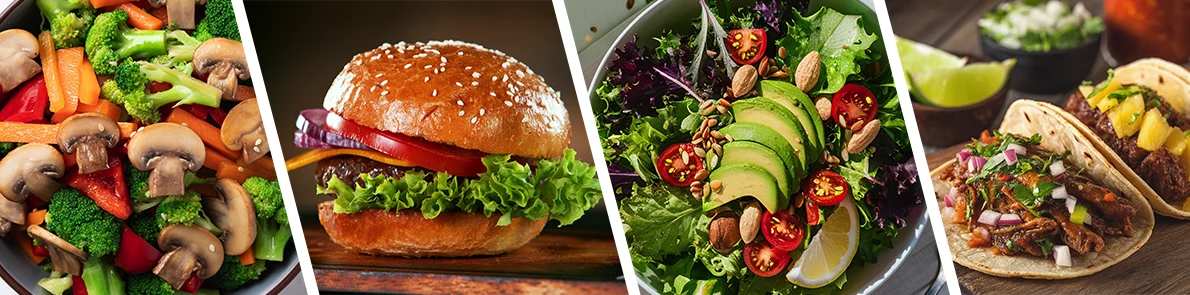
Yes, and many companies do exactly that during a transition period. Running both in parallel lets you compare participation, cost, and employee satisfaction side by side before committing to a full switch. It also reduces risk - employees still have a familiar option while the new program builds traction.
That depends on the terms of your current agreement. Some contracts include early termination clauses or natural renewal windows that create an opportunity to transition. A food program partner like Fooda can help you plan around those timelines so the switch doesn't create a service gap or unexpected costs.
There's no strict minimum, but the advantages are most obvious in mid-size to large offices with hybrid schedules where daily headcount fluctuates. That said, smaller offices that can't justify a full cafeteria often benefit the most from flexible models like delivery and popups, which require no dedicated kitchen space or staffing.
Track participation rates, daily order volume, employee satisfaction scores, and food waste. Compare on-site attendance on program days versus non-program days. The strongest programs also monitor cost per meal over time to make sure the economics are holding up as the program scales.