Most college food service companies still run on a decades-old contract management model: long-term agreements, fixed menus, centralized supply chains, and minimal flexibility once the deal is signed. That arrangement works fine if your student body never changes and always wants the same food, but that’s never the case.
National operators like Aramark, Sodexo, and Compass, own most large campus contracts. But now a new class of university food service solutions partners - like Fooda - work with local restaurants, plug into existing infrastructure, and lean on technology to handle ordering, meal plans, and reporting.
The right model for your campus depends on what your students want and how much contractual flexibility you can keep. This guide breaks down what college food service companies do, how legacy and modern models compare (including a direct Fooda vs Aramark look), what students are asking for in 2026, and how to evaluate a partner before you sign or renew.

A college food service company manages some or all of the food operations on a university campus: residential dining halls, retail outlets, catering, concessions, convenience stores, and the mobile ordering and meal plan technology that increasingly sits underneath all of it.
Most operate on either a management contract (the provider runs the program for a fee) or a profit-and-loss contract (the provider keeps revenue above an agreed threshold and absorbs the risk below it).
Historically, the category has been dominated by a small set of national operators. Aramark Collegiate Hospitality, Sodexo Universities, and Compass Group hold the majority of contracts at large public and private universities. They typically run cafeterias, branded restaurant concepts, and event catering through the same master agreement.
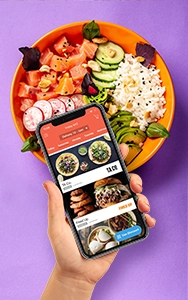
When you work with Fooda, instead of replacing an existing operator, we layer onto campus dining by bringing rotating local restaurants into underused dining stations and event spaces. The contracts are flexible, the menu rotates daily, and the technology is built around mobile-first student behavior.
Before changing the program, your student body and staff need an opportunity to voice their opinions. Their preferences tend to cluster around four pillars: variety and authenticity of cuisines, dietary accommodations, affordability, and convenience.
Variety sits at the top of the list. Fooda's 2026 Workplace Lunch & Food Program Survey found that 83% of food program decision-makers rate variety as important or extremely important in their program. That expectation doesn't begin at age 22. Today's college students become tomorrow's workforce, and they already eat with the same expectations: rotating menus, real cuisines, and the freedom to choose.
To map preferences on your specific campus, send a college-wide survey with questions like:
Once you have responses, look for patterns. If students consistently leave campus to eat, skip meals due to cost, or name the same few cuisines they wish were available, those signals point directly to where the current program is falling short.
Cost almost always surfaces as a top concern. Being a broke college student is a rite of passage, and any program that helps a meal card stretch further will see steady use. Affordability alone, though, won't carry the program.
Students still leave campus when the food feels repetitive or off-target, even when swiping their meal card is the cheaper option. Hitting all four pillars (variety, dietary options, affordability, and convenience) is what creates a dining program students return to on their own.
So how do you get there? It starts with understanding how modern university food service solutions operate compared to the traditional approach.

Traditional college food service providers operate on a contract model designed in the 1980s: lock the client into a long-term agreement with a fixed scope, run the program through a regional supply chain, and adjust pricing through annual escalators.
The economics typically favor the operator, and any deviation from the original scope triggers renegotiation or change orders. Modern university foodservice solutions are built around three shifts:
The next sections show how the models stack up side by side, including a direct look at Aramark.
If you're researching a switch or a supplement to your current contract, the cleanest comparison is between a legacy operator like Aramark and a modern partner like Fooda. The two models often coexist on the same campus, so the framing here is less about replacing one with the other and more about understanding what each does well.
Aramark Collegiate Hospitality is the higher-education division of Aramark Corporation. It runs residential dining halls, retail outlets, branded restaurant concepts, and concessions across hundreds of college campuses in the U.S. Its primary strength is scale: full-service operation of residential dining for thousands of students per day, supported by national supply-chain and labor infrastructure.
The trade-offs that universities frequently raise during contract review are limited menu flexibility once the agreement is signed, heavy reliance on national branded concepts rather than local restaurants, and long-term contracts (typically 5 to 10 years) that make mid-contract changes expensive.
Aramark Catering at the college level handles event-based food service: alumni events, athletic banquets, commencement, board meetings, donor functions, and on-campus conferences. When Aramark holds the master dining agreement, catering menus and pricing are usually set by that contract rather than negotiated event by event, which can limit flexibility for individual event organizers and student groups.
Fooda operates alongside Aramark and other legacy operators rather than as a replacement. While it can be used to fully replace cafeterias, the platform brings rotating local restaurants into food courts, retail stations, Popup spaces, and catering moments where students and staff want more variety.
Contracts run shorter, the menu rotates weekly, and the technology handles ordering, meal plan acceptance, and reporting. Universities can pilot a program in a single food court before scaling it across campus.
Here's how the two models stack up side by side:
In practice, most universities run both. The full-service partner stays on the residential dining contract, and a modern partner like Fooda layers in to fill the gaps that drive student satisfaction.
Overhauling, or even supplementing, your campus dining program goes beyond happier students. The right college food service company delivers measurable benefits across student life, operations, and community impact.
Here's what universities typically see when they move beyond the traditional model:
The benefits above are the destination. The next step is figuring out who can deliver them on your campus.
You've surveyed your students, mapped how modern food service models operate, and seen the benefits they can deliver. Now comes the harder part: finding, vetting, and choosing the right college food service partner.
Not every provider that markets "innovative dining solutions" can back it up. Some are traditional cafeteria management companies with a fresh coat of marketing. Others are legitimately new but won't fit your campus size, budget, or student demographics.
Before you start taking sales calls, get clear on what matters most for your program. At minimum, dig into:
That's a lot to cover in a single vendor conversation. To make sure you ask the right questions and don't get smooth-talked past the important details, we put together a deeper guide: The 7 Best Questions to Ask When Vetting a Cafeteria Management Company. It will help you cut through the pitch and figure out which provider can meet your expectations.
What does this look like in practice? At Fooda, we built our model around the challenges above by bringing variety, affordability, and local flavor to campus without forcing schools to rip up their existing contracts.
We partner with local restaurants to set up Popup Restaurants inside campus dining halls and underperforming food stations. Students get access to authentic cuisines from restaurants they'd seek out on their own, with the lineup changing regularly so there's always something new to try.
Our model is built on partnership. The university, the existing food service provider, and the local restaurants all share in the revenue. That structure is a low-risk way to upgrade a dining program without the budget headaches of a full overhaul.
Whether you're a large residential university or a commuter-focused community college, Fooda provides the technology and can scale or adjust programming to fit your student body. The contracts stay flexible and the menus stay local.
Want to see how this works on a real campus? Check out our case study on how Fooda partnered with Marquette University to transform their campus dining experience. It walks through the challenges they faced, how the program was structured, and the results they saw.
If your current program isn't delivering, it's time to explore what modern university food service solutions can do. Ready to see what Fooda can do for your campus? Get in touch to learn more about our college and university food service programs.

Aramark is a full-service residential and retail dining operator, while Fooda is a partnership platform that brings rotating local restaurants into existing campus dining. Most universities use both: Aramark (or another legacy operator) for residential dining, and Fooda for variety, local sourcing, and tech-enabled mobile ordering in food courts, retail stations, and event catering. The two models are complementary more often than they compete.
Yes, when the new provider is structured as a partnership or supplemental program rather than a full replacement. Modern university foodservice solutions like Fooda are designed to operate alongside existing master contracts in food courts, retail outlets, popup spaces, and underused dining stations, which avoids termination fees and contract renegotiation. The legacy operator keeps the residential dining agreement intact while the new partner fills the gaps that drive student satisfaction.
A meal plan is a prepaid package students purchase at the start of the semester, with a fixed number of swipes or a declining balance. A food subsidy program is when the university covers part of the meal cost for students or staff, usually as a per-meal discount or a daily dining allowance. Subsidy programs offer more flexibility than traditional meal plans and tend to fit commuter campuses, graduate programs, or schools looking to lift dining participation without mandatory meal plans.
Key metrics include participation rates (how many students eat on campus), revenue per transaction, student satisfaction scores, and food waste levels. Modern college food service companies should provide reporting dashboards that track these KPIs over time. Indirect measures matter too: student retention rates, dining hall traffic patterns, and event-day attendance often reveal whether the dining program is driving engagement beyond the food itself.