The corporate cafeteria has been a staple of office culture for decades. Having food available just downstairs was convenient, and simply having food available acts as a meaningful perk.
But the workplace is changing and employee expectations are shifting. Talent acquisition is getting more competitive and offices are transitioning to and away from hybrid schedules. The traditional model simply isn’t cutting it anymore and companies are looking for corporate cafeteria alternatives to fill the gaps.
Legacy cafeterias fall short in a lot of ways. The quality of the food is variable. They offer limited menu choices. Fluctuating office attendance leads to underutilization and food waste. They’re stagnant with no room for growth or evolution. They require a lot of oversight and overhead. Ultimately, they rarely match what employees need in the modern workplace.
Fortunately, there’s Orange by Fooda, an evolutionary corporate cafeteria alternative.
This program brings local restaurant food across every cuisine with high-quality ingredients into the workplace. Restaurants rotate daily, keeping menu options fresh and exciting. Operations can be scaled up or down to accommodate varying in-office attendance. Our point of sale system keeps track of order data that our machine-learning software uses to improve scheduling. Fooda handles all of the logistics for you, cutting overhead costs and eliminating administrative stress.
Ultimately, you need your workplace food program to work for everyone in your organization, not just a select few.. Orange by Fooda is the most effective way to feed a large workforce for five specific reasons:
Legacy cafeterias miss a valuable opportunity: connecting with the local food scene. Every city hosts a unique range of culinary offerings. If they ignore all of the delicious food available to them, they skip out on a lot of untapped potential. Exciting, high-quality food is the best way to get the most out of a corporate cafeteria because it matches the way employees want to eat outside of the workplace.
Fooda has spent years curating a network of over 4,500 restaurant partners. Over 70% of them are independently owned. By partnering with us, you can bring diverse, chef-crafted meals directly to your employees without the hefty price tag.
When you bring in local restaurants, employees can engage with local culture. They discover new go-tos and revisit old ones. Give them the opportunity to eat the way they want, and ‘workplace food’ becomes much more appealing, and appreciated.
This positive impact expands beyond the workplace. By supporting local businesses, you earn a place in the neighborhood. The restaurants gain new sources of income, allowing them to keep growing. Your organization becomes one that invests in its community, not just its bottom line.
When you source locally, the positivity radiates outwards. Employees are proud to be a part of the company. Restaurants are happy to partner with you. The community appreciates your presence.

Although traditional corporate cafeterias don’t typically serve the exact same thing every day, the rotating options they provide can quickly begin to feel repetitive. Pasta on Mondays, burgers Wednesday, pizza every Friday, maybe an occasional international selection. The food feels more like an obligatory offering than a true perk.
In a 2026 survey of 100+ companies, Fooda found that 83% value variety in their lunch menus. Mediocre options lead to lower participation rates and those that choose to use the cafeteria end up doing it out of convenience rather than genuine interest. Over time, even that can lose its appeal as employees grow tired of paying for food they don’t enjoy.
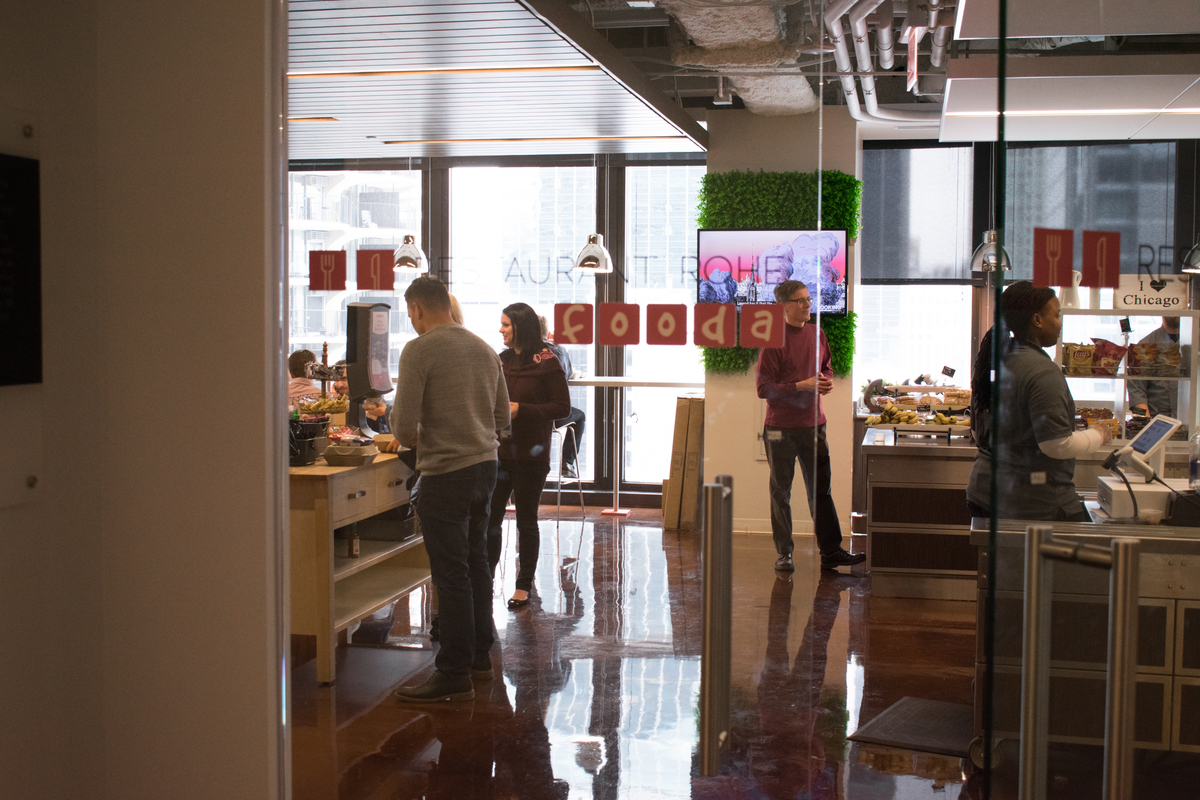
Orange by Fooda provides a unique corporate cafeteria alternative with rotating restaurants. Although every cafeteria we design looks a bit different, they all host a limited number of permanent restaurant installations while the rest is filled in with visiting restaurants. It creates a dynamic, exciting dining experience while maintaining some level of daily familiarity.
Employees get to try new foods, find new favorites, share meals amongst their peers, and don’t have to suffer through menu fatigue. They’ll be more engaged during lunch and at work, taking the on-site cafeteria from a standard offering to a truly competitive perk.
Workplace expectations are ever-changing, and this evolution has accelerated in recent years. In new, hybrid-first workplaces, the traditional corporate cafeteria model just doesn’t hold up.
Why? Because attendance patterns are turbulent and always changing. Month-to-month, week-to-week, day-to-day. In contrast, the legacy cafeteria is stagnant. Sure, you can close certain stations on days that you think will have lower attendance, but without any real way to track those patterns, you’re not always going to get it right.
The result? Over ordering, over prepping, over staffing, unnecessary labor, food waste and sunk costs. It just creates more work for everyone, and it negatively affects your bottom line.
Orange by Fooda, on the other hand, is scalable by design. With the rotating model, restaurants bring their own ingredients on-site, so you don’t end up with inventory you won’t use. Each vendor handles their own prep. There’s less food waste and no unnecessary expenses. It’s a corporate cafeteria alternative built for the new, evolving workspace.
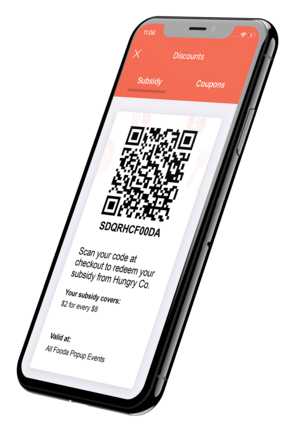
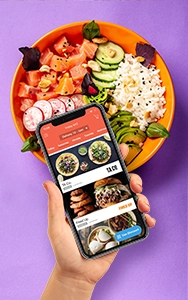
Fooda’s cafeteria point of sale system makes ordering and check-out simple. Employees can get their food, apply their subsidies or rewards, and pay for the remainder in one simple transaction. It’s streamlined, straightforward, and stress-free.
But this system serves a deeper purpose, too. It’s constantly gathering data, recording how many people are using it, what they’re buying, and when. Our system is always learning, and the more information it has, the better it gets.
As more people make purchases, our AI powered predictive modeling software analyzes their purchase information, and uses it to inform scheduling recommendations. It considers what cuisines and restaurants are most popular, and on what days. By serving the right food at the right time, employees get exactly what they want, and you get the most out of your corporate cafeteria alternative.
It not only looks at what you should be serving, but how much. Based on participation data, it estimates how many people will want to buy from the cafeteria each day. This is where Orange’s scalability really shines. We use this information to adjust the number of restaurants available each day. It’s faster, easier, and more accurate than making these predictions by hand.
Legacy cafeterias require a lot of daily supervision. There’s staff to manage, maintenance to stay on top of, and vendors to coordinate with. Operations are often scattered and disjointed, making collaboration difficult. The issues and costs can add up quickly, exhausting resources that could be better allocated elsewhere.
As rewarding as working with a roster of rotating local restaurants can be, coordinating that many vendors quickly becomes complicated and taxing. That’s why Fooda assigns a dedicated cafeteria manager and team to oversee it for you. We coordinate with the restaurants on your behalf, manage schedules and offer insight into how much to prep. Your employees get exciting, high-quality meals without the administrative and logistical headache.
Fooda also handles the initial setup. We retrofit existing cafeterias, altering them to suit your needs. If you don’t already have a cafeteria, we can design one that works for your company. We’ve spent a lot of time building and improving our processes. All to ensure that implementation runs as smoothly as possible.
Both on the front-end and behind the scenes, we take cafeteria management off your plate entirely, allowing you to make the most of a successful workplace food program.
Before partnering with us, Northern Trust was using a food hall to feed its 8,000+ employees. Executives believed that having a place for people to gather and eat together was better for morale, productivity, and company culture. Which it is, but there was one problem: no one was using it.
Employees reported being dissatisfied with the quality and variety of the food. Because they were located in downtown Chicago, it was easy for them to simply walk to nearby restaurants for lunch instead. The bank was left shouldering the costly overhead of a program nobody was using.
By upgrading their cafeteria with Fooda, they were able to draw people back. Employees got access to convenient food with variety, authenticity, and value. Executives were happy seeing people gathering for lunch again, rather than scattering. Local restaurants got new loyal customers and additional revenue. It was a transformative, long-overdue addition to Northern Trust’s headquarters.
If you’re ready to transform your corporate cafeteria into an authentic, dynamic food hall, speak with a Fooda sales representative today.
.png)
How long does it take to implement Orange by Fooda?
Timelines can vary widely depending on a number of factors including the scale and condition of your existing cafeteria. If you do not have an existing cafeteria, it will take longer. Fooda handles the entire setup process, so the transition causes minimal disruption to your team’s normal operations.
What happens if attendance drops unexpectedly?
Sudden dips in attendance have much less impact with Orange than with a corporate cafeteria. Restaurants bring their own ingredients and staff, minimizing the consequences of these dips. Additionally, because Fooda’s AI adjusts scheduling based on participation data, this is much less likely to happen than with a traditional model.
Is there a minimum company size or employee count required?
Fooda works with a range of organizations. A sales representative can help determine if Orange by Fooda is the right fit for your company. We also offer many other dining solutions, including: Popup restaurants, Office Lunch Delivery, Pantry Services, and Corporate Event Catering
How does subsidy management work?
Employers can select and manage custom subsidy amounts. They can choose to fully or partially subsidize, or opt out of subsidies altogether. Subsidy amount tends to have a significant influence on participation rates, so it all depends on where your priorities lie. These subsidies are automatically applied at checkout with Fooda’s point of sale system. This makes it easy for employees to apply their benefits without the need for complex reimbursement processes.