Lunch has always been a pivotal part of the workday experience, especially in a city like Los Angeles where people expect good food and plenty of variety everywhere they go. But for many teams, office lunches still mean leaving the building, waiting in long lines, or ordering the same meals on repeat.
More workplaces are looking for ways to make lunch easier and offer employees more options during the workday. Bringing local restaurants directly into work gives employees access to better food options while helping restaurants build more consistent weekday business with nearby companies.
As more companies look for flexible food options, connecting with a partner that focuses on supporting local restaurants is becoming a practical way to directly impact the many diverse neighborhoods in LA while also giving employees a reason to stick around for lunch every day.
The food and culture that shapes LA has helped define the city’s past, present, and future. From neighborhood taco spots and delis to family-owned sushi restaurants and Mediterranean cafes - independent restaurants bring an authentic mix of cuisines into the local communities they operate in.
For many restaurants, weekday lunch traffic has become less predictable as office schedules and on-site attendance continues to change. More restaurants are looking for reliable ways to reach nearby customers during the workday and build steadier lunchtime demand.
Workplace dining programs help create more consistent opportunities for restaurants throughout the week. Instead of depending only on walk-in lunch traffic, restaurants can serve employees directly inside office buildings or workplaces and become part of teams’ regular lunch routines.
But the benefits run both ways. While supporting local restaurants puts money directly back into the community, it also helps companies create workplaces that feel more connected to the city and people around them. The food employees have access to during the day can influence how often teams spend time together, and how connected they feel to the workplace itself.
Local restaurant partnerships also help keep workplace dining fresh and keep the supply chain short. Rotating different restaurants throughout the week gives employees more choices, which is crucial considering 83% of workplaces say variety is important or extremely important in their food program (2026 Fooda Workplace Lunch & Food Program Survey).
For hybrid workplaces, that can make a real difference. As companies continue looking for ways to make office days more worthwhile, convenient access to great local food can help create a workplace employees actually enjoy spending time in.
At the same time, workplace dining programs introduce local restaurants to employees who may continue supporting those businesses outside of work, helping companies build stronger connections with the surrounding community.
Los Angeles has an endless number of food scenes, all happening at the same time. They all bring a unique history and story to the table that’s worth experiencing for yourself.
That mix is part of the team's daily life. For employees, lunch depends on what they’re in the mood for that day, and what’s close enough to fit into a busy work schedule. Employees used to that kind of variety tend to notice quickly when lunch options feel repetitive.
That’s why local restaurants play such an important role in shaping the workplace dining experience in Los Angeles. They bring the everyday favorites employees are already familiar with into the workplace.
Fooda partners with over 4,500 restaurants across the country, including many local favorites in Los Angeles. Here are five of our favorite restaurants in LA that reflect the diversity of the city’s food scene:
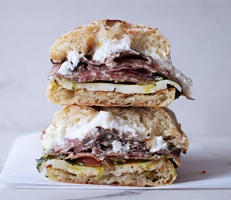
Food type: Deli & Italian focused on classic sandwiches, pasta dishes, and familiar Italian-American flavors.
Best for: A comforting, reliable lunch that feels homemade but still quick enough for a busy office day.
Si Roma is the kind of place that fits easily into a routine. The menu is built around familiar deli and Italian-American staples: sandwiches, pastas, and simple combinations that don’t require much thinking, just ordering.
It’s straightforward in a way that works. The focus is on consistency and comfort, the kind of food that feels reliable whether it’s the first time someone tries it or the fifth time in a month.

Food type: Traditional sushi and Japanese-inspired food based on fresh fish and clean ingredients.
Best for: A lighter, cleaner lunch that still feels thoughtful and high-quality.
Aja Mori House keeps things simple and intentional. The menu focuses on fresh fish, clean flavors, and sushi that doesn’t try to overcomplicate what it already does well.
It’s a natural choice for people who want something lighter during the day without feeling like they’re compromising on quality. Everything is built around clarity, nothing extra, nothing distracting.
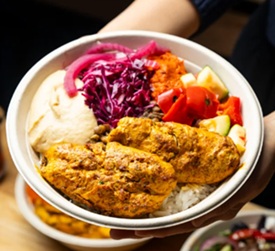
Food type: Mediterranean bowls, wraps, grilled proteins, and salads built for mix-and-match ordering.
Best for: A flexible, build-your-own style lunch that works for mixed teams and different dietary needs.
JeJe works because it’s flexible by design. Bowls, wraps, salads, grilled options, the menu is built so people can combine things in a way that makes sense for them.
That flexibility makes it especially easy in group settings. Everyone can order differently, but still land on something that feels aligned in terms of freshness and balance.
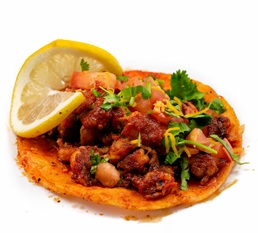
Food type: Mexican comfort food built around tacos, burritos, and classic LA-style street-inspired dishes.
Best for: A bold, satisfying lunch that feels like a real break from the middle of the workday.
Sky’s Gourmet Tacos leans into bold, direct flavors. Tacos, burritos, and classic Mexican dishes that feel grounded in LA’s everyday food culture.
It’s the kind of food that doesn’t need context or explanation, it just shows up strong and satisfying, especially when people want something more substantial for lunch.

Food type: Hawaiian-style comfort plates with rice, proteins, and classic island-inspired combinations.
Best for: A unique, comfort-heavy lunch that breaks people out of the usual.
Rutt’s Hawaiian Café has a very distinct feel in the LA food mix. The plate lunches combine rice, proteins, and sauces in a way that feels different from typical big chain bowls.
It stands out because it’s not what people order every day, which makes it memorable when it shows up in a workplace rotation.
These are just five examples from a network that spans cuisines, neighborhoods, and price points across the city of LA. The variety employees experience through a workplace dining program is what makes it sustainable and what keeps them coming back on their office days.
The easiest way to improve workplace lunch in LA is by bringing in the local restaurants employees already know.
Fooda helps companies do exactly that by making it simple to bring local restaurants into the office through rotating lunch programs, scheduled meals, and flexible workplace dining options. Instead of relying on the same menu every day, employees get access to different LA restaurants throughout the week, the same places they’d normally visit around the city.
Fooda is in charge of bringing structure and consistency to the workplace dining through a set of flexible solutions built around how offices actually operate.
Some days it’s a Popup Restaurant, where different local restaurants set up inside the office and employees can walk down and order fresh lunch on the spot, just like they would in the restaurant itself. It keeps things simple for teams while bringing real variety into the building.
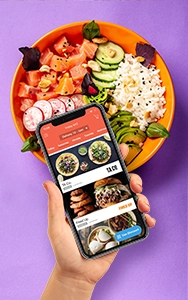
Other days, especially on lighter office days, it’s Office Lunch Delivery. Where meals from nearby spots are ordered individually through the Fooda App from a rotating group of restaurants and delivered by a dedicated driver who has access to your building.
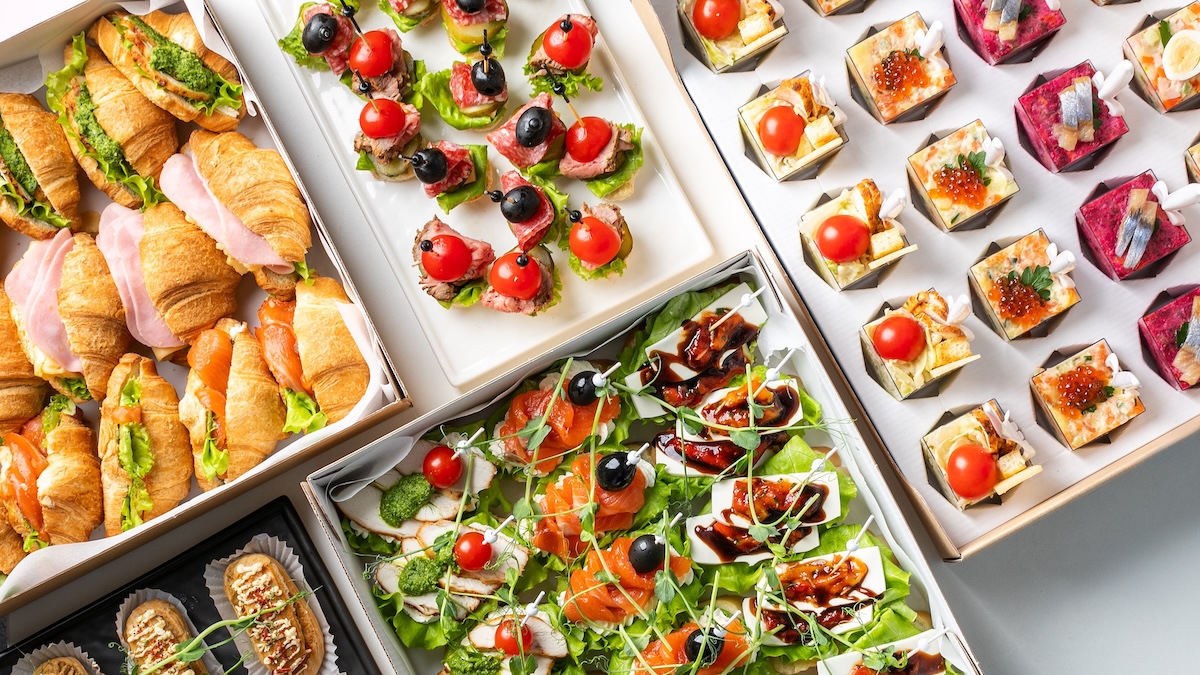
And for bigger office moments, Corporate Event Catering brings that same approach into staff meetings, team lunches, or company events, handling the logistics in the background so internal teams don’t have to think about execution. Check out this blog for our favorite catering restaurants in LA.
Supporting local restaurants doesn’t need to be limited to occasional office lunches or one-off catering orders. With a food program like Fooda, Los Angeles companies can bring local restaurant meals into the everyday rhythm of the workday.
If you’re looking for a simpler way to make lunch better for your team while supporting local restaurants, talk to a Fooda expert and explore what a workplace food program could look like for your Los Angeles office.

Can a company subsidize or cover the cost of employee lunches through a workplace dining program?
Yes. Many companies choose to subsidize employee meals partially or fully through a workplace dining program. Fooda supports flexible funding models and employers can cover the full meal cost, provide a daily credit that employees apply toward their order, or offer the program as an unsubsidized perk where employees pay directly through the app. The right structure depends on company size, budget, and how the program fits into the broader employee benefits strategy.
How do workplace dining programs handle dietary restrictions and food allergies for employees?
Fooda gives employees visibility into each restaurant’s menu before they order, which makes it easier to identify options that fit specific dietary needs. Because the restaurant lineup rotates throughout the week, teams with diverse dietary requirements (vegetarian, vegan, gluten-free, halal, or allergen-conscious) typically have access to suitable options more consistently than they would with a single fixed vendor. Employees order individually through the app, so there’s no need to coordinate a group order around the lowest common denominator.
How does joining a workplace dining program help a local Los Angeles restaurant grow its customer base?
Participating in a workplace dining program gives local restaurants consistent, recurring access to employees who might not have discovered them otherwise. Over time, employees who try a restaurant through an office lunch program often become regular customers outside of work: visiting for dinner, ordering delivery, or recommending the spot to friends. For restaurants in competitive LA neighborhoods, that kind of organic brand exposure within nearby office buildings can be a meaningful driver of new long-term customers without requiring additional marketing spend.
Is a workplace food program still worth it for a hybrid team that’s only in the office a few days a week?
Hybrid schedules are actually one of the strongest use cases for a flexible workplace dining program. When employees are only in the office two or three days a week, having great food available on those days gives them a concrete reason to make the commute worthwhile. Programs like Fooda are designed to flex around hybrid attendance — whether that means scheduling popups on high-attendance days, offering advance-order delivery for smaller inoffice groups, or adjusting the frequency of restaurant rotations to match the actual rhythm of the team.