Hospitals provide service around the clock. With this level of care comes the need for employees that work night shifts to keep things running smoothly. While these employees are critical to the operations of a hospital, they are often forgotten when it comes time to provide accessible meals and food service to hospital staff. The result is staff members that feel excluded and aren’t fueled properly, thanks to food service that runs on a 9-to-5 system.
Hospital food service software exists to close that gap, coordinating staff dining, ordering, and reporting across every hour a hospital is open.
Today, it consists of hospital food service software that runs staff dining, ordering, and reporting all at once. However, many hospitals are still trying to juggle disconnected systems, resulting in long lines, no data on food cost or waste, and teams that are trying to manage both patient meals and retail dining.
This guide breaks down what hospital food service software actually includes, the main types of providers on the market, what to look for when evaluating a platform, and how modern, tech-enabled programs are changing what's possible in healthcare dining.
Hospital food service software is the technology used in hospitals that is designed to automate and streamline everything related to food in a hospital. Cafeteria operations, patient meals, ordering and payment, inventory, and reporting functions are just some of the things that this technology helps track and manage.
This software can be broken down into multiple different platforms, systems, and tools:
Understanding what functions a piece of software actually covers is the first step in evaluating any provider. Many platforms marketed as "hospital food service software" only address one or two of these functions, not the full picture.
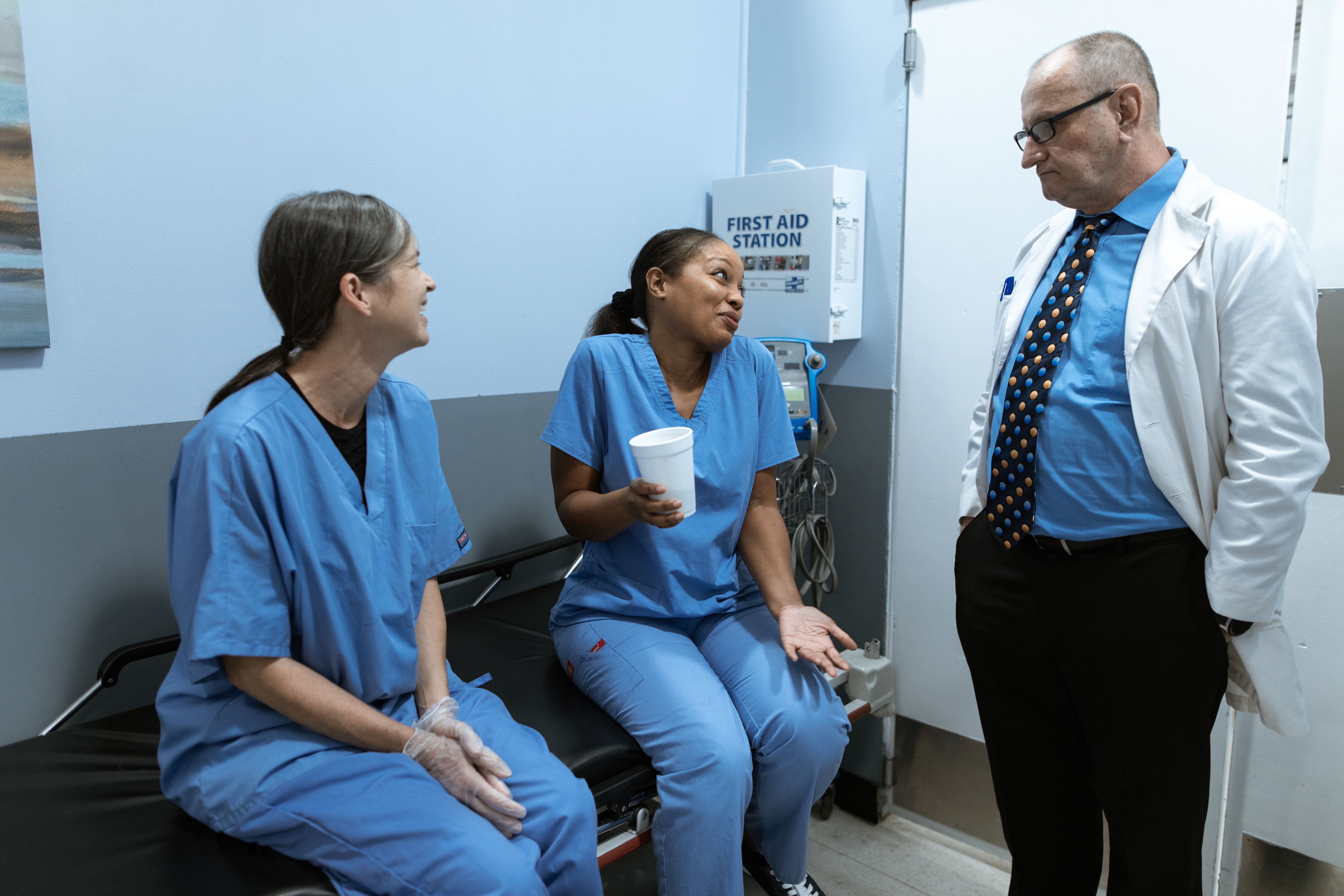
While it may be tempting to treat hospital food service like any other food retail operation, the reality is hospitals are much more complex. Hospitals are managing food that needs to fuel staff and the public, while being available throughout all hours of the day.
Hospitals run food service around the clock, not just during standard daytime hours. This means that software needs to support after-hours and night shift workers in addition to the lunchtime rush. At the same time, most hospitals are managing multiple food operations at the same time, often with the same limited administrative bandwidth.
Then there’s the compliance and allergen tracking requirements specific to healthcare settings, the tightly time-constrained ordering windows created by shift breaks, and the variety of payment methods hospitals need to support (badge-based payment, payroll deduction, and employer-subsidized programs), and it becomes clear why generic retail software tends to fall short.
Without software built for these specifications, the results speak for themselves: long lines, manual entry errors, and no useful data on how money on food is being spent.
When evaluating a platform, focus on the features that solve the specific operational problems hospitals face:
There are many different types of hospital food service software providers, each with their own strengths and limitations. Take a look down below to discover the different types of providers and what they have to offer.
Choosing the right hospital food service software for you can be intimidating and overwhelming. Knowing what questions to ask before committing to a hospital food service software will help you make the right decision.
Consider asking these questions before deciding on a software for your hospital:
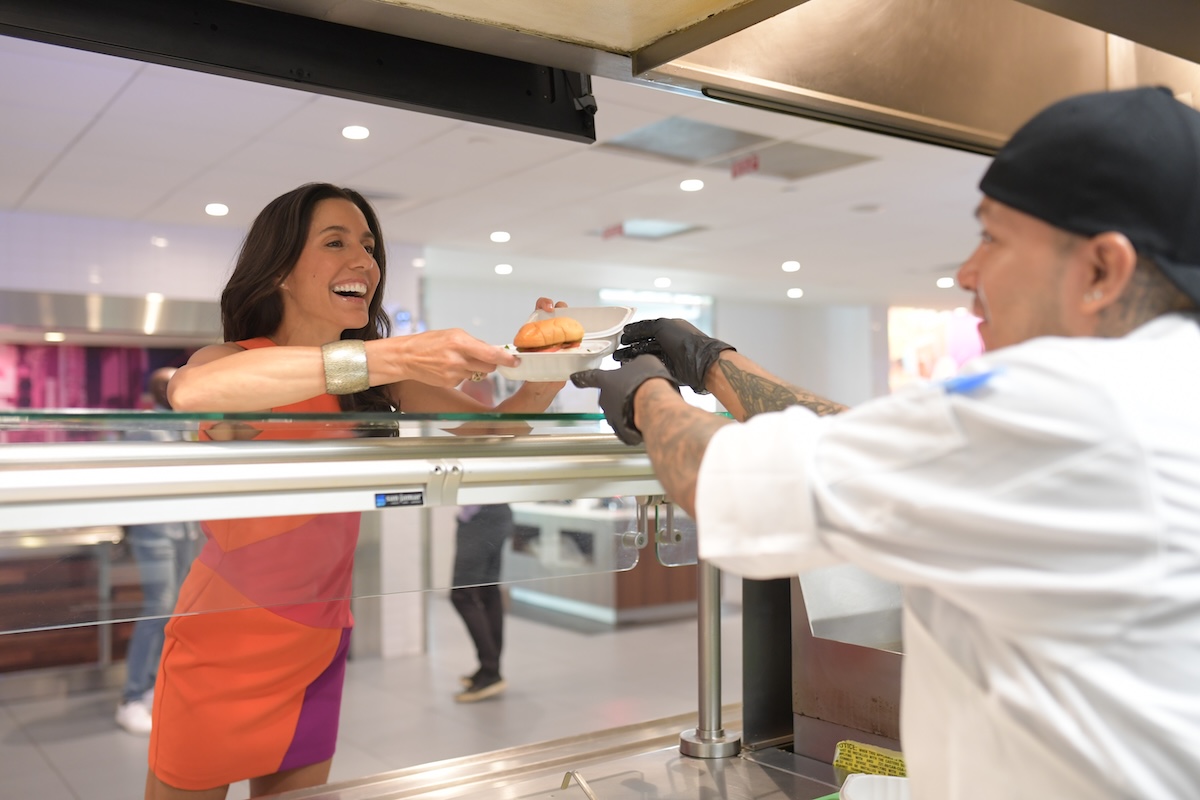
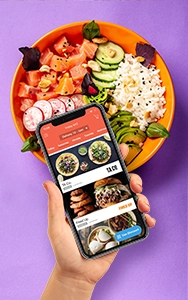
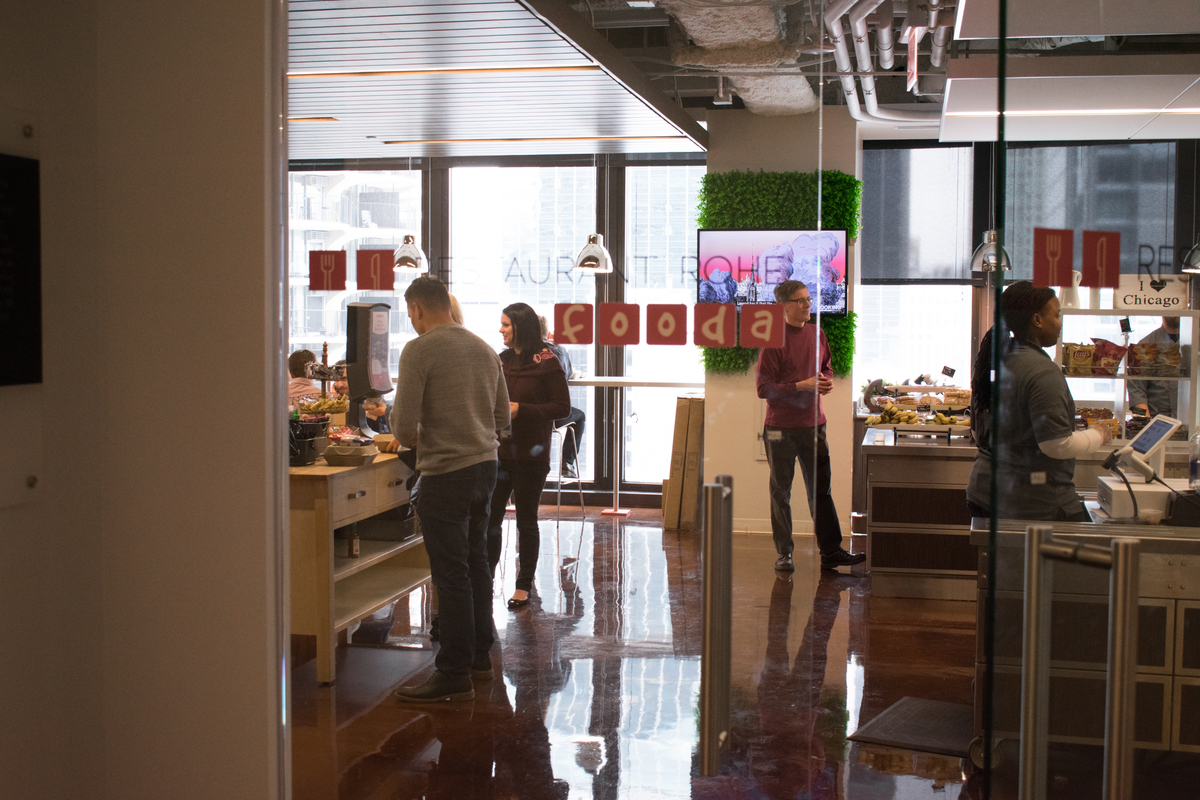
Orange by Fooda was built to address these problems. Instead of a single standardized food service contract, Orange builds hospital dining around a network of local restaurant partners, a dedicated onsite dining manager, and technology that powers mobile ordering, integrated payments, and real-time reporting all in one platform. The cafe itself adapts to your population, scaling up for a busy Wednesday and scaling back on a quiet Friday. This helps ensure hospitals get variety without the overhead of a traditional model. For administrators trying to modernize food service technology while keeping staff fed (including the ones working through the night), Orange offers a smarter foundation to build on.
One hospital in the Midwest used this model to integrate over 90 local restaurant partners into its campus food program, returning more than $1.5 million to its local community in the process. This was made possible by the technology that keeps that many rotating local restaurant partners organized, trackable, and easy to manage.
Modern hospital food service software should give administrators the visibility and flexibility to run a food program that works for staff, patients, and the bottom line. By combining ordering, POS, and reporting into one connected platform, Orange by Fooda helps hospitals move away from rigid, outdated systems that have defined hospital food service for decades.
Ready to modernize your hospital's food service technology? Get in touch with Fooda today.
What is hospital food service software used for?
Hospital food service software manages the technology behind a hospital's food operations, including staff and visitor ordering, point-of-sale transactions, patient meal service, inventory tracking, and reporting. Rather than a single tool, it typically refers to a stack of connected systems that together handle everything from a nurse ordering lunch on her phone during a 12-hour shift to a dietary team tracking allergen restrictions for patient trays. The goal is to reduce manual work, cut down on wait times, and give administrators visibility into what's actually happening across their food operation day to day.
Is hospital food service software different from patient meal management systems?
Yes, though the two are often confused. Patient meal management systems are clinical tools used by dietary and nutrition teams to track medically necessary diets, allergen restrictions, and tray delivery for admitted patients. Hospital food service software, in the broader sense, typically refers to the retail side of the operation — staff and visitor dining, cafeteria POS, mobile ordering, and catering. Some healthcare systems use entirely separate platforms for each function; others look for a provider that can support both under one roof. When evaluating software, it's worth asking a provider directly which side of the operation their platform is built for.
How much does hospital food service software cost?
Pricing varies widely depending on what's included. Standalone POS systems may charge a flat licensing or per-terminal fee. Legacy contract management companies often bundle software costs into their overall management fee, which can make it difficult to see what you're actually paying for the technology itself. Integrated platforms like Fooda's typically build the technology cost into the overall program rather than charging separately, since the software is what powers ordering, reporting, and vendor management across the entire operation. When comparing providers, ask for a clear breakdown of software costs, implementation fees, and any ongoing licensing or support charges.
Can hospital food service software integrate with our existing cafeteria vendor or systems?
It depends on the provider and the systems already in place. Some hospital food service software is designed to plug into existing infrastructure, such as employee badge systems, payroll deductions, or facilities management platforms. Others operate as closed systems that require a hospital to rebuild its ordering and payment workflows from scratch. If integration matters to your operation, ask any provider specifically which systems they've connected with before, and whether that was a custom build or a standard integration. This is a good early filter for how flexible (or rigid) a platform really is.
Does hospital food service software help with after-hours and night shift dining?
It can, but only if the software is built with that use case in mind. Many legacy systems are designed around standard daytime meal service and don't account for the reality that hospitals run 24/7. Look for software that supports things like micro-market and vending integration, mobile ordering that works outside standard cafeteria hours, and reporting that shows usage patterns across all shifts, not just peak lunch hours. For hospitals trying to improve retention among night shift staff, this is one of the more overlooked but impactful features to evaluate.
What kind of reporting should hospital food service software provide?
At a minimum, administrators should expect real-time or near-real-time data on sales, popular menu items, peak ordering times, and waste. More advanced platforms also break this data down by department, shift, or location, which is useful for hospitals with multiple buildings or campuses. If a software provider can't show you sample reporting during the evaluation process, that's usually a sign the platform wasn't built with administrative visibility as a priority.