For healthcare employees, long hours and high-stakes cases lead to overwhelmed teams and high rates of burnout. For visitors, high anxiety and concern for loved ones make hospital environments feel stressful and unwelcoming. Providing access to comforting, affordable, and delicious meals can alleviate stress on both sides, raising retention rates and visitor satisfaction scores.
When it comes to hospital food service management, it’s important to consider operational costs, food quality, and administrative burden. Traditional hospital cafeteria setups come with high overhead, generic food, and heavy lifts that can exacerbate problems rather than solve them.
Conversely, innovative, modern solutions are designed to maximize performance metrics while minimizing overall costs and labor spend. Here’s what you should consider when choosing a food service model for your hospital.
Hospital food service management consists of two parts: patient meal programs and staff and visitor dining.
Both are typically managed by dedicated food service managers or administrators, hospital facility coordinators, or hospital administration. HR and finance often have a stake in hospital food services as well.
While patient meal programs have strict requirements, managing a wide variety of specialized diets and restrictions, staff and visitor dining are much less restrictive and more expansive, focused around experience rather than specific nutritional needs.
Because patient meal programs are so regulated, there is little room for change. They follow long-established models designed to meet patient needs. Staff and visitor dining services, on the other hand, have much more opportunity for variety and innovation; they don’t have to be limited to standard cafeteria models.=
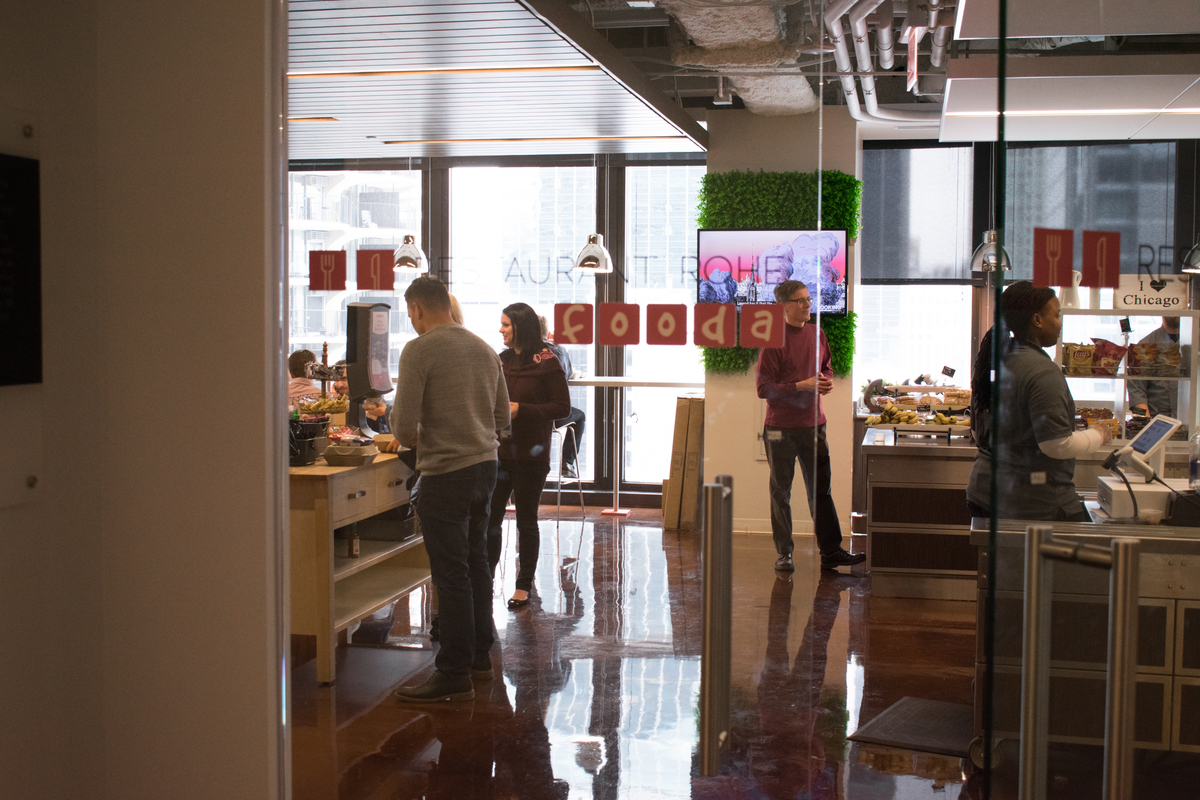
By re-examining the traditional hospital cafeteria, hospital food service managers and administrators can create a dynamic food hall powered by local restaurants that improves the staff and visitor experience while putting emphasis on hospitality.
Before deciding what food service model you want to implement, it’s important to review all of your options carefully. These are some of the most common hospital food service management solutions.
Opting for traditional solutions isn’t going to work for every (or even most) facilities. There are a lot of factors to consider before committing to any one hospital food service model.
In general, running a cafeteria requires a significant amount of overhead. That problem is even more prevalent in hospitals, where large crowds are common.
Beyond initial implementation, which requires a sizable budget on its own, running a hospital cafeteria comes with ongoing costs that can be unruly and unpredictable. Staff salaries and benefits, weekly food costs, janitorial services, and maintenance needs add up quickly.
Fluctuating visitor flows can make order volumes difficult to predict. The number of mouths you need to feed is rarely consistent.. To avoid running out, you have to prepare based on best estimates, leading to unnecessary costs and food waste that make budgeting a challenge.
That’s why it’s important to examine your options and look for hospital food management models that offer low, predictable ongoing costs and reliable attendance pattern tracking.

“Hospital food” has an exceedingly negative connotation. It’s perceived as low-quality and bland. Many dread having to head to the hospital cafeteria, but long hours and an inability to leave the campus leave them with few other options.
For healthcare employees working twelve hours or more at a time, it’s especially important that they get time to take a real break to reset and relax for a moment, but sub-par food can make mealtimes feel dull. If employees don’t get anything out of their breaks, they’re more likely to burnout and succumb to exhaustion, negatively impacting their job performance.
Visitors often walk into the cafeteria exhausted, upset, and anxious. Whether they’re staying with a loved one after a routine operation or waiting with them in the emergency room, if they’re in the hospital cafeteria, it’s likely they’ve been there for a while. For many, grabbing a quick bite to eat gives them a moment to take a breather. If they’re greeted by disappointing food, it won’t do anything to lift their spirits.
By paying attention to the quality of your food, you can combat these problems, improving employee morale and raising visitor satisfaction, both of which will benefit your bottom line in the long run.
Whether you’re establishing hospital food services for the first time or switching from one model to another, having limited or unavailable dining options for long periods of time can frustrate both staff and visitors. Even short-term stalls can drive down visitor satisfaction and exhaust employees. These consequences are likely to increase exponentially as time goes on.
Selecting a food service model that can be implemented quickly can minimize downtime and keep people happy. Certain models, like self-managed programs and traditional hospital food management companies are often slow to implement, as they require significant coordination, requiring you to hire large amounts of staff and install extensive infrastructure.
Conversely, vendor-based models are run by existing restaurants and their employees, minimizing hiring times, as you only need to hire cashiers, maintenance, and janitorial staff. These models also give you the option of having restaurants prepare food off-site to bring in and serve, which cuts down on installation time and costs.
When you partner with legacy providers or choose to manage in-house, you’re left with a significant managerial burden. Both require you to retain and run full staffs, coordinate deliveries, and handle budgetary logistics. This puts significant strain on hospital administrators and food service managers, who end up having to take on and delegate these logistics.
That’s why partnering with an external hospital food service management company can be a more cost-effective and sustainable option. By letting someone else handle the details, you can decrease your workload, making it easier to focus on other projects.
It’s important to maintain a point of contact, however. If you don’t choose your food service partner wisely, you can end up out of the loop or tied to restrictive contracts. You know the needs of your hospital best, so it’s important to maintain control. Look for a company that takes a collaborative, customizable approach.
Vendor-based models make hospital food service management simple and cost-effective while satisfying both employees and visitors. Here are the top three reasons more and more hospitals are migrating towards these modern solutions:

A recent study published in the American Journal of Lifestyle Medicine found an inverse relationship between good nutrition and burn out among healthcare workers. Those that reported excellent or very good overall diets reported lower burn out scores than those who reported their diets as fair or poor.
Meanwhile, a 2026 survey conducted by Nursing Solutions Inc. found that turnover among healthcare workers is on the rise at 18.5%, a significant increase from 2024. By creating an engaging dining experience built around quality and variety, you can give employees a safe space to relax, socialize, and refuel. They can take a rewarding break rather than having to tolerate another bland, low-quality meal.
This small show of appreciation can go a long way, proving that you care about your employees’ physical and mental wellbeing, giving them a reason to stay.
Given the rising healthcare worker turnover rates, it’s not surprising that most states are experiencing employee deficits that are only expected to continue growing. This has turned the healthcare industry into an exceptionally competitive talent market, with hospitals and clinics all over the country struggling to find enough staff to fill the gaps.
The growing competition makes it more important than ever to pay careful attention to the employee experience. While high salaries and robust benefits packages are a great place to start, smaller, immediately visible perks can truly set you apart.
Long, draining shifts and a constant stream of visitors make hospital cafeterias a necessity. Simply providing food on-site isn’t enough to draw in potential employees, especially if your food options feel bare-bones.
By offering quality local food and consistent variety, you make hospital food services feel less like an obligation and more like a thoughtful gesture. Attending to employees’ nutritional needs proves that you care about their wellbeing. It’s a massive green flag that can give you a strong competitive edge.
Most hospital visitors aren’t there under the best of circumstances. They’re often irritable, exhausted, and on edge. Going to the hospital cafeteria for a sorely-needed meal only to be greeted with dull, sub-par food won’t help matters.
Conversely, when they step in to find delicious, authentic local food, they’ll be pleasantly surprised to have access to healthy, satisfying meals. By creating a welcoming environment and mitigating stress as much as possible, you can create a more positive atmosphere for visitors, which will then reflect back on the patients. Rather than having their loved ones return dissatisfied and even more frustrated, they’ll be greeted with refreshed faces, easing everyone’s overall anxiety.
Working to provide a positive experience also helps raise the hospital’s reputation, drawing in more patients and increasing revenue, allowing you to expand your operations and better serve your patients.

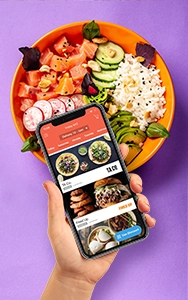
Fooda has redesigned the traditional hospital cafeteria model to create a dynamic, ever-changing dining experience with Orange by Fooda. With our network of 4,500+ local restaurant partners, we bring fresh, local flavors and chef-curated menus to the workplace. Our unique approach is designed to keep the daily dining experience engaging for both employees that dine there every day and visitors coming in for the first time.
Every Orange cafe is fully managed with dedicated account managers supporting operations, from implementation and beyond. We work with you to design a cafe that fits your space, budget, and visitor volume. No matter what your needs are, we can make it happen.
Orange’s dining managers supervise all staff operations, ensuring that your cafe always has friendly, hospitable service. They also handle vendor relations via our pre-existing network, allowing you to rotate restaurant partners without the need for extra coordination.
All of this leads to significantly lower overhead costs than large food service providers or self-managed solutions, with no need for batch orders, minimal staff required, and less infrastructure to maintain.
Orange cafes are also always improving. Our purpose-built technology tracks participation data that provides valuable insights, allowing us to more accurately predict attendance patterns, minimizing waste, and improve our offerings to better appeal to customers.
Orange by Fooda is a universally appealing hospital food service management solution that works for any hospital. To learn more, contact one of our sales associates today.
What's the difference between patient meal programs and staff or visitor dining?
Patient meal programs are tightly regulated and built around clinical nutrition needs, leaving little room for adjustment. Staff and visitor dining has far more flexibility, giving hospitals have an opportunity to innovate.
How long does it take to switch hospital food service models?
This depends on whether you already have a cafeteria and which model you decide to switch to. Self-managed programs and traditional food service companies are typically slow to implement since they require hiring full staffs and building out infrastructure. Vendor-based models can move faster because restaurant partners bring their own staff, and preparing food off-site limits the amount of new infrastructure needed.
Who manages hospital food service programs day to day?
Programs are usually overseen by food service managers, hospital facility coordinators, or hospital administration, often with input from HR and finance. The level of hands-on involvement required depends heavily on which model a hospital chooses. Fooda takes a collaborative approach, limiting operational burden without forcing the hospital to relinquish control entirely.
How does Orange by Fooda work in a hospital setting?
Orange by Fooda brings a rotating network of local restaurant partners into the hospital cafeteria, run by dedicated account and dining managers. Hospitals don’t have to manage staff or vendor relationships directly, and menu variety remains high for both employees and visitors./