Between the empty cafeterias and the piling food waste, it may seem like your campus dining services hardly see any usage. In fact, 60% of food and beverage purchases happen off campus and 36% of students don’t even use their meal plans.
While these findings are specific to educational institutions, they’re not the only ones struggling with campus dining. It’s the same familiar scene anywhere a large community eats in one place on a routine schedule. Think: hospital campus dining, corporate campuses, and multi-site institutions.
Large-scale campus dining services often see low participation while institutions are stuck with expensive multi-year contracts and one-size-fits-all cafeterias. This is due to uninspired menus, time constraints, and lack of convenience.
In this post, we take a closer look at modern campus dining solutions and how Orange by Fooda directly addresses these challenges.
Be it a college, a hospital, or a corporate building - campuses all struggle with the same issues. Here’s a quick breakdown of the top challenges that campuses face with legacy contract models.
Legacy campus food service companies only offer a limited selection of foods that are sourced from national supply chains at the lowest possible price points. This is a formula for low-quality meals that leave out a huge portion of your community whose dietary needs aren’t accommodated.
Even when there are options, people eventually get bored of eating from the same tired menu every day. Participation will consistently dwindle as they seek out new and better options elsewhere.
Most campus dining services are planned around lunch. But lunch isn’t the only time when people need food, which is especially true in institutions that see 24/7 operations.
For example, medical campus dining services will need healthy snacks to keep hospital staff fueled throughout the night.
Dining services that only operate for a few hours each day will naturally see lower participation as people resort to off-campus solutions for their daily meals.
Long lines at the cafeteria are a common scene during peak hours. But workers have limited lunch breaks, and students have to get to their classes on time. So instead of spending 20 minutes waiting for food at the cafeteria, they pick up something quick and easy even if it isn’t particularly tasty or healthy.
As a result, your outsourced campus dining services fail to serve the people you’re implementing them for.
Campus dining service providers often implement fixed, one-size-fits-all cafeterias and subsidy models across institutions. This won’t always work out, as each campus has a unique population with varying needs, habits, and routines that a single solution just can’t meet.

Improving the dining services for your campus is not only about improving the experiences of diners. It’s also about efficient campus cafeteria management and scalable solutions that help you cut down on unnecessary expenses.
Here are some practical tips on how to improve campus dining services:
You don’t need to rely on food sources you can’t trace! Your local restaurant network gives you a wide variety of food options to keep your community fed. Having multiple restaurants serve food on campus is the easiest way to maintain menu variety. You could switch things up daily or weekly and rotate between different cuisines to prevent menu fatigue.
Plus, a diverse selection of local restaurants makes it much easier to accommodate everyone’s dietary needs. You could bring in different restaurants that serve gluten-free meals, vegan options, and so on.
Relying on a single cafeteria throughout the campus leads to long wait times and overwhelmed dining halls. Not to mention the risk of scheduling clashes that might leave a lot of people with nowhere else to eat but off campus.
You need a program that blends multiple campus dining solutions for more flexibility. Say your corporate campus dining services feature a cafeteria where staff can grab freshly made meals throughout the day. Meanwhile, a resident café stays open 24/7 for snacks and coffee for night shift employees. And a pantry offers quick grab-and-go options and healthy snacks for mid-shift convenience.
This type of flexibility is especially useful for multi-building campus dining, as it lets you cater to the unique needs and schedules of each office. Any type of large campus dining service also benefits from it, as it’s the easiest way to accommodate the diverse dietary needs and preferences of diners.
Under legacy contract models, campus dining management companies will have you pay for every tray, regardless of whether people actually ate. This equals excess food and wasted spend that eat away at your bottom line.
The best campus dining services use consumption-based pricing and allow you to scale effortlessly based on daily demand. Food prep is done based on actual orders and the only food paid for is what your employees or students eat.
Sometimes, the holdup at your campus cafeteria isn’t just because of long prep time and high demand. Delays resulting from clunky cafeteria POS systems all add up to longer wait times.
As such, tech should be a key consideration in your campus dining services RFP (request for proposal).
With the right tech, you can significantly speed things up with online ordering, scan-to-pay solutions, and self-checkout options. Even an extra two minutes saved on each order could equal hours of time saved each day on larger campuses.
Finding the best campus dining services for your university, hospital, or workplace requires knowing how to write a campus dining services RFP. More than that, you need to start with a clear understanding of the different solutions available to you.
Legacy operators like Aramark, Sodexo, and Compass have long served as the backbone of campus dining. But working with these campus dining service providers often requires heavy investments with rigid, multi-year contracts. The fixed menus and one-size-fits-all cafeterias don’t exactly bring in participation, either.
Orange by Fooda is a cafeteria replacement solution designed to offer better flexibility with shorter contract terms and rotating menus.
Here’s a quick comparison to understand how Fooda is the best Aramark alternative for campus dining.
Orange by Fooda brings you a modern alternative to the legacy contract model. It features a blend of rotating and resident local restaurants that keep your campus fueled exactly how you need to.
With customizable solutions built for high-headcount sites, Orange by Fooda fits the natural home of campus dining - large college, medical, and corporate campuses alike.
Unlike traditional campus dining services, Orange by Fooda is powered by a network of over 4,500 local restaurants that serve authentic flavors right within your campus.
You can bring in multiple restaurants to provide a wide variety of chef-crafted menus to your community. This makes it much easier to accommodate diverse dietary needs and preferences throughout the campus.
This model focuses on supporting community restaurants and putting dollars directly back into the independent restaurants that are loved throughout the neighborhoods you operate in.
Orange by Fooda runs on a transparent, consumption-based pricing model. That means food prep is done based on actual attendance and demand. So a slow day doesn't leave you paying for unsold trays, minimizing wasted spend.
Our model makes it easy to scale up or down based on the day without extra logistical work.
Fooda lets you tailor your campus dining program exactly according to your needs. This means you get to blend Orange by Fooda with other solutions and existing cafeteria operations.
While it can fully replace your campus cafeteria, it can also operate alongside providers like Aramark and Sodexo. Additionally, you can feature Fooda Pantry solutions like micromarkets and smart vending machines to improve the snacking experience and offer even more flexibility.
For example, Marquette University replaced one of their underperforming cafes with a resident partner through Fooda. They also brought in a rotation of Popup Restaurants to provide more variety. Meanwhile, Sodexo continued to offer low-cost items under their existing partnership.
Today, the university averages 2.5x in incremental profit even through just two stations, as participation significantly increased.
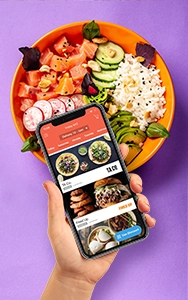
Fooda’s proprietary tech streamlines every aspect of your campus dining service. Online menus mean people can take their time to find exactly what they want without holding up the line. Mobile ordering allows them to order ahead, pay for, and pick up their meals easily.
Pantries powered by self-checkout kiosks also ensure convenient, round-the-clock access to meals and snacks minus the additional workforce. And with meal subsidies automatically applied, Fooda makes checkouts seamless across your campus.
Fooda’s approach relieves the administrative headache for campus operations managers. A dedicated on-site team handles every aspect of Orange by Fooda operations including: staffing, maintenance, logistics, and vendor coordination.
This ensures efficient campus cafeteria management that reduces wait times and improves the overall experience for everyone.
Ready to transform your campus dining services with Orange by Fooda? Talk to us today.

How do we improve campus dining services?
You can improve campus dining services by integrating tech-enabled convenience (like mobile ordering and scan-to-pay solutions) with diverse, restaurant-style dining options. Focus on accommodating varied dietary needs and boosting student engagement through food-focused events.
How do I write a campus dining services RFP?
To write a campus dining services RFP (request for proposal), clearly outline your institution's meal plan structure, facility requirements, and budget expectations. Prepare a document with standardized vendor responses to help you objectively evaluate and select the best partner.
How do we reduce wait times in campus cafeteria?
To reduce wait times in a campus cafeteria, implement digital pre-ordering that allows people to pick up food at scheduled slots. Additionally, establish express lanes for cashless/pre-booked meals, and set up self-service kiosks to speed up transactions.